What the kWh/m³ Number Actually Means on a Decanter
Specific energy is the figure that drives a tariff-based audit: kWh consumed per cubic meter of sludge feed. Drive power is kW measured at the motor terminals and is what sizes the electrical infrastructure. Vendor nameplates and engineering brochures routinely print the second figure, then ask procurement to defend the first — and that confusion is the single most common reason a 2026 capital-approval case collapses on a sanity-check question.
The defensible 2024 benchmark comes from a model validated against experimental data at 18–20 m³/h with R² above 97% and RMSE of 2.59E-02 kWh/m³: 1.88 kWh/m³ at 15 m³/h, 1.76 kWh/m³ at 20 m³/h, and 1.57 kWh/m³ at 25 m³/h (Dotto et al., ScienceDirect 2024). A wider commercial range of 0.8–2.5 kWh/m³ appears in the HydropureWater engineering FAQ; the spread is driven by feed solids concentration, target cake dryness, and the specific gravity of the particles being dewatered. A 2-point cake dry solids (DS) rise from 23% to 25% cuts sludge volume by approximately 8% (Flottweg, cited in the HydropureWater guide), so the lowest-kWh/m³ point on a nameplate is not necessarily the lowest-cost point once downstream haul-off is included. A full OPEX reconciliation across the same operating envelope is in the decanter centrifuge operating cost in 2026 breakdown.
| Parameter | Value | Source / scope |
|---|---|---|
| Specific energy at 15 m³/h | 1.88 kWh/m³ | Dotto et al., ScienceDirect 2024 |
| Specific energy at 20 m³/h | 1.76 kWh/m³ | Dotto et al., ScienceDirect 2024 |
| Specific energy at 25 m³/h | 1.57 kWh/m³ | Dotto et al., ScienceDirect 2024 |
| Model R² (validation at 18–20 m³/h) | > 97% | Dotto et al., ScienceDirect 2024 |
| Model RMSE | 2.59E-02 kWh/m³ | Dotto et al., ScienceDirect 2024 |
| Commercial industry range | 0.8–2.5 kWh/m³ | HydropureWater engineering FAQ |
| Energy recovery ERec at 15 m³/h | 5.88 kW | Dotto et al., ScienceDirect 2024 |
| Energy recovery ERec at 20 m³/h | 0.31 kW | Dotto et al., ScienceDirect 2024 |
| Energy recovery ERec at 25 m³/h | 12.10 kW | Dotto et al., ScienceDirect 2024 |
The Five Engineering Levers That Move Decanter Centrifuge Energy Efficiency
The five variables an operator can actually turn on an existing machine are: VFD on the main bowl motor, VFD on the back-drive with regenerative braking, differential speed Δn tuning, feed-rate right-sizing, and hydraulic centrate recovery. They are not equally attractive in dollars per kWh saved, and the defensible sequence is bowl VFD first, Δn plus feed rate next, regenerative back-drive, polymer automation, and hydraulic centrate recovery last.
Lever 1 — VFD on the main bowl motor. A VFD on the bowl matches speed to actual feed solids and is the foundation of every modern decanter (Dotto et al., ScienceDirect 2024). A bowl VFD retrofit can cut energy by 15–30% versus a fixed-speed baseline by eliminating across-the-line starting currents and trimming bowl speed during low-loading hours (HydropureWater guide). The most common failure mode on legacy retrofits is resonance at low Hz, which is why a VFD/motor pairing check belongs in the scope.
Lever 2 — VFD-driven back-drive with braking energy recovery. The screw regenerates torque during normal deceleration; legacy fixed-speed units see a 5–12% reduction, and already-VFD units see 2–5% (HydropureWater guide). ANDRITZ markets a regenerative back drive as standard and a direct drive that adds another 5% by avoiding recirculation losses (ANDRITZ separation decanter centrifuges product page). Regen units need a line filter to keep harmonics off a shared bus.
Lever 3 — Differential speed Δn tuning. Δn is a direct 0–3% lever, but its real job is to stabilize cake DS and protect downstream OPEX. The 2024 model shows cake DS falls as Δn rises, so the operator should set Δn at the lowest value that still hits target centrate clarity and verify with a scroll-torque trace (Dotto et al., ScienceDirect 2024). Under-tuning pushes cake compaction up, spikes scroll torque, and trips the motor.
Lever 4 — Feed-rate right-sizing. The 0.31 kWh/m³ gain from 1.88 to 1.57 kWh/m³ as feed rises 15→25 m³/h (Dotto et al., ScienceDirect 2024) is real, but only if polymer dose scales proportionally. Under-dosing re-stabilizes the colloid and the kWh/m³ gain evaporates as centrate quality collapses. A deeper treatment of each lever, including the pond-depth trade-off and the Recuvane-style ERec curve, is in the decanter centrifuge energy reduction 2026 engineering guide.
Lever 5 — Hydraulic centrate recovery. Recuvane-style systems can return 10–30% of drive energy, and ANDRITZ reports up to 15% from the HHP rotating assembly and up to 30% from TurboJet weir plates as stand-alone features (ANDRITZ separation product page). The 0.31 kW ERec at 20 m³/h in the Dotto dataset is the mid-range warning that headline numbers are flow-dependent, and a plant that commits to a hydraulic retrofit on a nameplate alone will not hit the advertised payback.
Why the 10–30% Recovery Headline Is Only Half the Story
The 2024 model reports ERec of 5.88 kW at 15 m³/h, 0.31 kW at 20 m³/h, and 12.10 kW at 25 m³/h, and the headline result is that high energy recovery is not necessarily linked to increased energy saving (Dotto et al., ScienceDirect 2024). The 12.10 kW value is a peak tied to centrate head, not a continuous offset the operator can bank against the utility bill.
A mid-range plant running 18–20 m³/h sits near the 0.31 kW valley and will not see the 10–30% reduction the Recuvane-style vendor literature advertises. Pond depth is the free tuning variable that controls this trade-off: deeper pond improves clarification but reduces recoverable centrate head, so a plant running maximum pond depth is leaving recovered energy on the table. The Dotto paper's own conclusion is the safest line to quote when a hydraulic-retrofit payback is being defended to a procurement committee that has already read the brochure — quote the model, not the marketing sheet.
Bowl Geometry and Pond Depth: Free Levers That Do Not Need a New Utility Connection
Bowl geometry and pond depth are "free" tuning variables that do not draw a new utility connection, but they require operators to standardize the procedure rather than leaving the weir plate at a vendor-commissioned position (HydropureWater guide). Independent bowl and scroll VFDs (Simp-Drive) make the geometry usable because the operator can hold Δn constant while changing pond depth.
The ANDRITZ HHP rotating assembly reduces the discharge radius of the clarified liquid and recovers kinetic energy of the fluid for up to 15% reduction, and the TurboJet weir plates add up to 30% as a stand-alone feature by creating liquid jets that oppose bowl rotation (ANDRITZ separation decanter centrifuges product page). Geometry-driven DS gains feed back into OPEX: a 2-point DS rise from 23% to 25% cuts sludge volume by approximately 8% (Flottweg, cited in the HydropureWater guide), so even a no-energy-change retrofit can pay back through haul-off, disposal, and transport. Weir plates in the bowl cover are adjustable; standardize a quarterly pond-depth check tied to feed solids, and re-tune whenever influent DS shifts more than ±0.5 points.
Ranked Retrofit Priority: kWh Saved per $1,000 of CAPEX
The five levers are not equally attractive on a dollars-per-kWh-saved basis, and stacking them in the wrong order is a common procurement mistake. The table below ranks each retrofit by the figure a 2026 plant engineer should quote to procurement, alongside the payback trigger condition that should unlock each line item.
| Retrofit | kWh/m³ or % impact (typical) | Payback trigger |
|---|---|---|
| VFD on main bowl motor | 15–30% vs. fixed-speed baseline (HydropureWater guide) | Frequent start/stop cycles per shift; harmonics on a shared bus |
| Feed-rate instrumentation + Δn tuning | 0–3% direct, plus stabilizes cake DS (Dotto et al., ScienceDirect 2024) | Variable feed throughout the day; often under 18-month payback with no mechanical rebuild |
| VFD on back-drive with regen | 5–12% on legacy, 2–5% on already-VFD units (HydropureWater guide); +5% with direct drive (ANDRITZ) | Pair with line filter to control harmonics on shared bus |
| Polymer automation (torque feedback) | 10–20% polymer reduction in field retrofits (HydropureWater 2026 field data) | Polymer spend above 15% of centrifuge OPEX; coupled OPEX win that protects cake dryness |
| Hydraulic centrate recovery (Recuvane-style) | 10–30% headline; ERec is flow-dependent (Dotto et al., ScienceDirect 2024) | Highest CAPEX; only when pond depth and feed composition are stable |
Polymer automation is not a kWh/m³ lever directly, but it consistently lowers polymer dose 10–20% in field retrofits (HydropureWater 2026 field data) and protects the DS that the energy retrofits are trying to buy. An automatic polymer dosing system tied to scroll-torque feedback is the simplest way to make that coupling stick.
Worked Example: Two-Shift Decanter at 20 m³/h, 4,000 Hours per Year
Take a single decanter running two-shift duty at roughly 4,000 h/yr on thickened waste-activated sludge at 20 m³/h, with a baseline of 1.76 kWh/m³ (Dotto et al., ScienceDirect 2024). Annual electrical draw is 1.76 kWh/m³ × 4,000 h/yr × 20 m³/h = 140,800 kWh/yr.
The retrofit sequence that survives a tariff-based audit is: VFD on the bowl motor first, then Δn plus feed-rate tuning, then VFD on the back-drive with regenerative braking, then polymer automation, then hydraulic centrate recovery (HydropureWater guide). VFD and hydraulic recovery should not be stacked on the same machine before Δn is re-tuned, because a re-tuned bowl that lowers ERec headroom reduces the centrate-recovery payback in the first year. The example holds provided polymer dose scales with feed rate and the pond-depth check is on the maintenance schedule. For a deeper cost reconciliation, the decanter centrifuge operating cost in 2026 breakdown applies the same 4,000 h/yr envelope to OPEX line items beyond the electrical draw.
Operating Practices That Erase Retrofit Gains
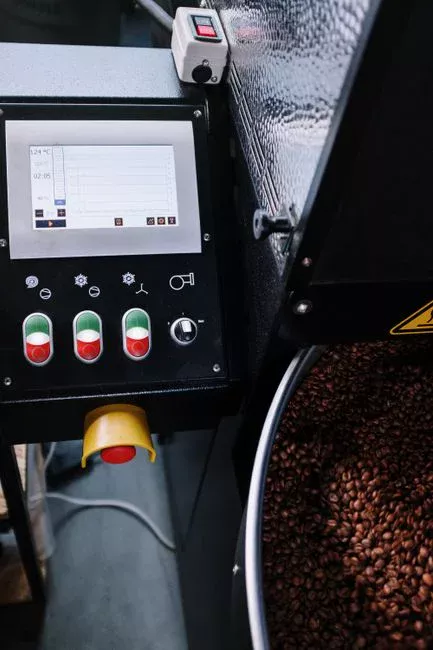
Bad operating practice can erase the gains from every retrofit listed above, and the four items below are the ones a 2026 plant engineer should treat as a pre-retrofit checklist before signing a CAPEX justification.
- Overdosing polymer raises centrate viscosity and forces higher bowl speed to recover DS, which directly inflates kWh/m³; an automatic polymer dosing system tied to scroll-torque feedback is the coupled fix.
- Running the bowl at full speed regardless of feed solids wastes power during low-loading hours and is the single most common reason a "VFD-equipped" decanter still bills at fixed-speed energy.
- Ignoring wear on scroll flights raises Δn demand for the same DS, pushing specific energy up while degrading cake.
- Leaving pond depth at the commissioning setpoint means the operator is not capturing either clarification or hydraulic-recovery gains; foam carryover from upstream biology is a related failure mode that destabilizes the feed envelope.
Where dewatering follows thickening upstream, a well-tuned plate and frame filter press on the polishing stage can shift the cake dryness target and reduce the energy demand on the centrifuge itself.
Frequently Asked Questions
What kWh/m³ should a 2026 decanter centrifuge actually be running at?
The defensible 2024 number is 1.57–1.88 kWh/m³ across 15–25 m³/h, with 1.76 kWh/m³ at the 20 m³/h mid-point (Dotto et al., ScienceDirect 2024). A wider industry range of 0.8–2.5 kWh/m³ is cited in the HydropureWater engineering FAQ, with the variance driven by feed solids concentration, target cake dryness, and the specific gravity of the sludge particles. A buyer should request a site-specific figure from a vendor, not accept a nameplate value.
Which retrofit pays back fastest on a decanter centrifuge, and how should that drive a 2026 capital decision?
Differential speed Δn plus feed-rate tuning, often under 18 months with no mechanical rebuild; the cheapest CAPEX line is a VFD on the main bowl motor. Both are reversible, both avoid harmonic-mitigation scope, and both should clear a capital-approval gate before any hydraulic-recovery line is opened. A buyer should request a tariff-quoted payback for each lever at the site's operating point, not a brochure percentage.
How much can a VFD retrofit save on a decanter centrifuge, and what sizing risk should a buyer flag?
15–30% versus a fixed-speed baseline (HydropureWater guide); a regenerative back-drive adds another 5–12% on legacy units and 2–5% on already-VFD units, with a further 5% available from a direct-drive upgrade on the screw (ANDRITZ). A buyer should request a VFD/motor pairing check on legacy units, because resonance at low Hz is the most common reason a VFD retrofit underperforms its nameplate.
Is the 10–30% centrate-recovery number reliable for procurement, and what compliance or supplier-selection check should I run before approving it?
Only at the high-flow operating point. The 2024 model shows ERec of just 0.31 kW at 20 m³/h versus 12.10 kW at 25 m³/h, and the paper's own conclusion is that high energy recovery is not necessarily linked to increased energy saving (Dotto et al., ScienceDirect 2024). Before approving the line, a buyer should ask the supplier for an ERec value at the plant's actual flow point — not at the maximum on the brochure — and confirm that pond depth and feed composition have been stable for at least one quarter, since hydraulic recovery is the most flow-sensitive of the five levers. For a cross-technology comparison that places this number next to a screw press energy efficiency in 2026 benchmark and the broader sludge dewatering machine comparison for 2026, those two references carry the supporting data.