What 'RO System Energy Efficiency' Actually Means in 2026
Specific energy consumption (SEC), expressed in kWh of electrical input per cubic metre of permeate produced, is the industrial RO efficiency metric that absorbs pump efficiency, recovery ratio, and energy recovery device (ERD) performance into a single defendable number. Recovery rate (the percent of feed converted to permeate) and energy efficiency (kWh/m³) are not interchangeable; a train can sit at 75% recovery and still waste energy if the high-pressure pump is oversized or no ERD is fitted, which is why procurement teams that spec only on "recovery %" routinely miss the kWh/m³ line item that drives their electricity bill.
The three physical levers that dominate SEC are feed pressure, recovery ratio, and the number of pressure vessels per stage; feedwater salinity, temperature, membrane age, and annual operating hours are second-order but real contributors that the operator has to monitor on top of the design point. A useful reference baseline is the brackish water RO (BWRO) band of roughly 3–4 kWh/m³ reported in the secondary trade literature (Morui, 2025), which gives a sanity floor when a vendor quotes sub-0.7 kWh/m³ at high feed salinity — the math usually does not close. This article provides an operating-envelope framework so the engineer can match the SEC target to their feed pressure, recovery, and hours/year rather than buying a brochure curve.
How Pressure, Recovery and Staging Move the kWh/m³ Number
Industrial reuse and brackish RO trains typically operate at 6–20 bar (90–290 psi) depending on feed salinity and recovery target (WWDmag, 2025). The WPC Hofstade RO stage in Belgium, for example, runs at 6.7–13.9 bar (100–200 psi) at 75% recovery and produces 54 m³/h of permeate and 18 m³/h of concentrate; that envelope is the operating point where ERD payback is fastest because there is still meaningful hydraulic energy in the concentrate stream but the train is not so high-pressure that an ERD becomes a default. Pushing recovery harder is where staging starts to matter: a 2025 Applied Energy study found that a 3-stage RO train running at 95% total recovery can reach a minimum specific energy of 4.62 kWh/m³ in the high-pressure RO (HPRO) brine leg, versus 5.41 kWh/m³ for a conventional 2-stage train at 80% recovery (Applied Energy, 2025). The catch is that the per-stage recovery ratio (RR) is the critical tuning knob: choose it wrong and a 3-stage train can consume more energy than a well-tuned 2-stage. For engineers reading vendor curves, staging without per-stage RR optimisation is just adding membranes, not adding efficiency.
| Operating regime | Feed pressure band | Typical total recovery | Indicative SEC band (kWh/m³ permeate) | Source |
|---|---|---|---|---|
| Municipal reuse (WPC Hofstade) | 6.7–13.9 bar (100–200 psi) | ~75% | Pre-ERD baseline; 23% plant energy reduction with LP PX ERD | WWDmag, 2025 |
| Industrial reuse (Tangshan, with ERD) | Low-pressure RO band | ~70% | ~0.77 kWh/m³ (down from ~1.03) | WWDmag, 2025 |
| High-pressure RO, 2-stage brine polishing, RR=80% | High-pressure (>20 bar) | 80% | 5.41 kWh/m³ | Applied Energy, 2025 |
| High-pressure RO, 3-stage, optimised per-stage RR, RR=95% | High-pressure (>20 bar) | 95% | 4.62 kWh/m³ (minimum) | Applied Energy, 2025 |
Existing industrial RO systems require an audit of their position on the performance curve to determine if staging adjustments are necessary rather than simply adding vessels. Engineers who want a worked walkthrough of how staging interacts with feedwater characterisation can use the step-by-step 2026 RO sizing guide for potato starch wastewater as a worked example of the same logic on a difficult feed.
Where Energy Recovery Devices Pay Back — and Where They Don't
An energy recovery device — typically a pressure exchanger (PX) or turbocharger in this pressure band — transfers hydraulic energy from the pressurized concentrate (brine) stream directly into the low-pressure feed stream, which lets the high-pressure pump handle only the net permeate work rather than the full feed flow. This mechanism makes ERDs a standard in seawater RO and an increasingly common retrofit in lower-pressure reuse and brackish trains (WWDmag, 2025). Two 2025 reference cases anchor the savings claim: at WPC Hofstade (Belgium, municipal reuse), a low-pressure PX ERD cut total plant energy use by 23% with an estimated payback of around three years at design conditions; at a Tangshan industrial reuse plant (Hebei, China), the same class of LP ERD cut RO pump power by 25% and dropped SEC from ~1.03 to ~0.77 kWh/m³, saving ~394,200 kWh/year and ~265 t CO₂/year, with minimal downtime on the operating train (WWDmag, 2025). Specific energy savings of up to 30% are achievable with ERDs in lower-pressure reuse and brackish RO, provided the benefit is calculated against system pressure, recovery ratio, and operating hours. The four inputs a buyer should request from any ERD vendor before sizing are: design pressure band, target recovery, design flow, and expected SEC at the design point. Buyers also need to plan the membrane and pressure vessel envelope around any ERD retrofit, because the retrofit usually shifts the pump curve.
ERD Go/No-Go: A Decision Framework for 2026 RO Retrofits
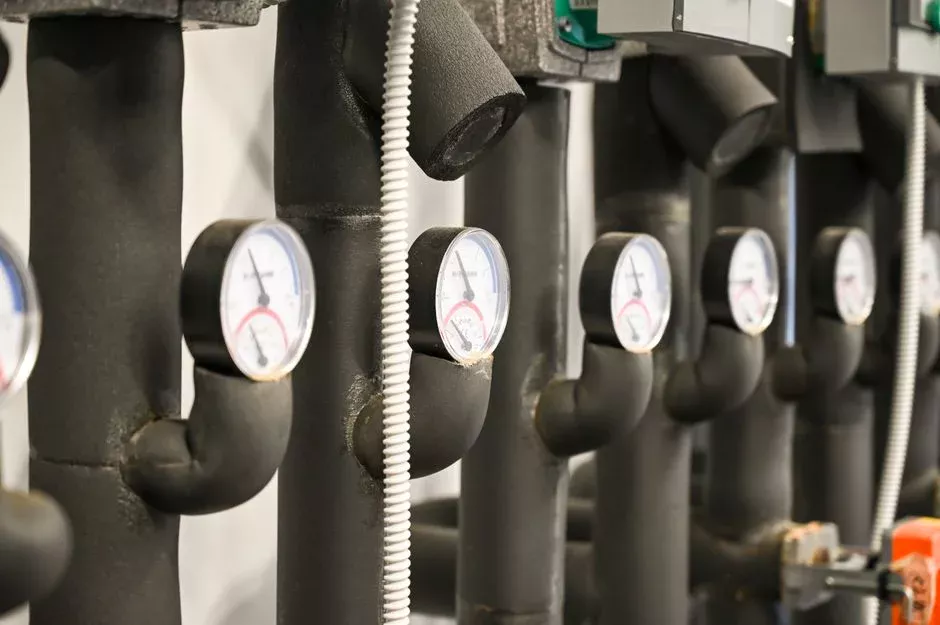
An ERD retrofit is a viable investment when the train runs continuously, sits above ~65–70% recovery, operates above ~6 bar feed pressure, and is on a tariff where the kWh/m³ delta converts to cash fast — the regime where the WPC Hofstade and Tangshan cases sit. Retrofits are generally not recommended when operating hours are low, the train is single-pass and intermittent, the feed pressure is so low that recoverable hydraulic energy is trivial, or membrane-cleaning downtime already dominates the energy budget. The Tangshan case shows that a properly designed ERD retrofit can be installed with minimal downtime on an operating train, which matters for plants that cannot afford a week-long shutdown (WWDmag, 2025). Buyers should also confirm that the valves, gauges, and high-pressure piping on the existing train are rated for the transient pressures an ERD introduces during startup and upset.
| Operating regime | Pressure band | Indicative SEC with ERD | Indicative ERD energy recovery | Typical payback window | Anchored reference case |
|---|---|---|---|---|---|
| Low-pressure municipal/industrial reuse | 6–14 bar (90–200 psi) | ~0.77 kWh/m³ (Tangshan); pre/post split at Hofstade | ~23–25% plant/pump energy reduction | ~3 years at Hofstade | WPC Hofstade; Tangshan (WWDmag, 2025) |
| Brackish RO (BWRO) | 10–20 bar (145–290 psi) | Reference band 3–4 kWh/m³ (Morui, 2025); ERD delta scales with pressure and recovery | Up to ~30% specific energy savings where applicable | Site-specific; request vendor design SEC | Morui, 2025 |
| High-pressure RO brine polishing (HPRO, 2- vs 3-stage) | >20 bar | 4.62 kWh/m³ (3-stage, optimised) vs 5.41 kWh/m³ (2-stage, RR=80%) | ERD/PRO not the primary lever; staging is | Compare LCOW, not payback | Applied Energy, 2025 |
From kWh/m³ to Operating Cost: A Worked Example
Using the Tangshan operating envelope as the worked case: each RO train runs at ~70% recovery with ~80 m³/h of high-pressure concentrate, and the SEC moved from ~1.03 to ~0.77 kWh/m³ after the ERD retrofit — a 0.26 kWh/m³ cut (WWDmag, 2025). At ~$0.07/kWh, that delta is roughly $0.018/m³ in direct energy cost; over a year of permeate production, the Tangshan retrofit accumulated ~394,200 kWh saved, ~$27,600 in direct OPEX, and ~265 t CO₂ avoided. The WPC Hofstade envelope (54 m³/h permeate, 18 m³/h concentrate, 75% recovery, 6.7–13.9 bar) is a useful second sanity check for any plant that runs in the same pressure band and wants to confirm that an ERD is in the right regime before committing capex. The CO₂ delta matters because the same line-item feeds a sustainability KPI: a site that reports Scope 2 emissions can map the kWh avoided directly into a t CO₂ figure using its grid emission factor, and the Tangshan 265 t CO₂/yr figure is the kind of number a sustainability lead will want reproduced in a board paper. The buyer must request five things from the vendor: design SEC, design flow, design recovery, design pressure, and the local electricity tariff. The same logic is what a 2026 buyer's guide for industrial RO systems in Kuwait applies when the tariff is much higher than $0.07/kWh and the kWh/m³ delta becomes a much larger OPEX line.
Beyond ERDs: Pressure Retarded Osmosis and What's Next
Pressure retarded osmosis (PRO) is a way to recover osmotic energy from HPRO brine on the path to near-zero liquid discharge (n-ZLD), by letting fresh water permeate through a membrane from a low-salinity stream into the pressurized brine and harvesting the resulting volume-driven pressure. The 2025 Applied Energy study explicitly cautions that PRO viability "is strongly dependent on the performance of the PRO membrane, PRO feed water concentration, fouling mitigation strategy, and the choice of PRO pretreatment" (Applied Energy, 2025), which indicates it is not yet a default 2026 specification. For procurement, the practical reading is that PRO belongs on a watch-list alongside other emerging levers — advanced high-recovery staging, and pretreatment that limits fouling-related SEC creep — rather than on a buy-list. An ERD plus correctly chosen per-stage recovery performs the bulk of the kWh/m³ work today, and the UF pretreatment upstream of the RO is what keeps that kWh/m³ number from drifting upward over the membrane's life. The same logic — protect the membrane, recover the energy — is the through-line in the screw press energy efficiency 2026 guide for the sludge-dewatering side of the same plant.
Frequently Asked Questions
What is a realistic kWh/m³ target for an industrial reuse RO train with an ERD in 2026?
For lower-pressure reuse RO at 6–14 bar feed and ~70% recovery, the Tangshan case shows ~0.77 kWh/m³ after an LP ERD retrofit, down from ~1.03 kWh/m³ pre-retrofit (WWDmag, 2025); brackish RO without an ERD sits in the 3–4 kWh/m³ band per Morui (2025).
How do I decide whether an ERD retrofit is worth the capex on my train?
Run the go/no-go test
Frequently Asked Questions
What is a good kWh per cubic metre for an industrial RO system in 2026?
For modern industrial brackish water reverse osmosis (BWRO) systems, a high-efficiency benchmark in 2026 is between 0.35 and 0.60 kWh/m³. For seawater reverse osmosis (SWRO) systems, state-of-the-art plants operating with high-efficiency isobaric energy recovery devices (ERDs) typically achieve between 2.0 and 2.5 kWh/m³.
These figures assume standard feed water total dissolved solids (TDS) concentrations and typical recovery rates. Variations in permeate flux, membrane permeability, and system-wide hydraulic losses can cause these values to fluctuate by 10% to 20% depending on the specific salinity of the source water.
How much energy can an energy recovery device realistically save on a reuse or brackish RO train?
In brackish water and water reuse applications, an ERD can realistically reduce the high-pressure pump energy consumption by 25% to 40%. The exact savings are highly dependent on the system recovery rate; as recovery increases, the brine flow available for energy recovery decreases, which can diminish the net efficiency gains of the device.
While ERDs are standard in seawater desalination, their adoption in brackish systems is increasingly common when the feed pressure exceeds 15-20 bar. In these specific pressure ranges, the hydraulic energy recovered from the concentrate stream significantly offsets the parasitic load of the high-pressure pump.
When is an ERD retrofit not worth it for a reverse osmosis plant?
An ERD retrofit is generally not economically viable if the system operates at a feed pressure below 12-15 bar, as the capital expenditure (CAPEX) for the ERD and associated piping modifications will rarely achieve a payback period of under five years. Additionally, small-scale systems with low flow rates often fail to justify the cost due to the high per-unit price of smaller ERD models and the complexity of integrating them into existing compact skids.
If the existing high-pressure pump is already operating near its best efficiency point (BEP) and the system has low recovery rates, the incremental energy savings may be insufficient to cover the maintenance costs and potential downtime associated with the retrofit installation.
How do I size an industrial RO system to hit a target specific energy consumption?
To hit a target specific energy consumption (SEC), you must first minimize system pressure drops by optimizing the hydraulic design, including the use of low-pressure-drop membrane elements and appropriately sized manifold piping. The total SEC is then calculated by dividing the total power draw of the high-pressure pump (corrected for motor and pump efficiency) by the permeate flow rate.
Engineers must balance membrane surface area against flux rates; utilizing a larger membrane array allows for lower flux, which reduces the required feed pressure and thus lowers the SEC. However, this must be balanced against the increased capital costs of additional pressure vessels and membrane elements.
What should I ask an RO system supplier to compare kWh per m³ and payback fairly?
Request that all suppliers provide a standardized energy projection based on the same feed water temperature, salinity (TDS), and target permeate recovery rate. Ask for a guaranteed SEC value at a specific flux rate, inclusive of all auxiliary power consumption, such as transfer pumps and control systems, rather than just the high-pressure pump power.
To evaluate payback, request a detailed breakdown of the pump efficiency curve, the expected ERD efficiency percentage at the design flow, and the projected maintenance costs for the ERD over a 10-year period. Insist on a sensitivity analysis that shows how the SEC will change if feed water conditions or temperature deviate by 10% from the design baseline.