
Helsinki's centralized reality — and why a packaged plant still matters for housing
Helsinki Region Environmental Services (HSY) supplies drinking water and treats wastewater for more than 1,000,000 residents in the Helsinki metropolitan area, and it runs the network through a formal water-supply service area (HSY, 2025). The metropolitan area generates approximately 130,000,000 m³ of wastewater per year, processed at two rock plants: Viikinmäki in Helsinki, which treats about 270,000 m³/d at 840,000 PE, and Blominmäki in Espoo (HSY, 2025; Baltic Smart Water Hub).
Viikinmäki alone processes about 100,000,000 m³/yr (Baltic Smart Water Hub). For a developer, this is the baseline for project comparison. Connection to the public sewer is the default inside the service area, but a packaged plant is the realistic option for infill plots, peri-urban fringe sites, brownfield redevelopments, or small clusters where a sewer extension is uneconomic. This engineering choice precedes equipment specification.
Is your Helsinki housing site inside the HSY service area or outside it?
HSY defines a formal water-supply service area where the utility supplies clean water and manages wastewater removal and treatment (HSY, 2025). Inside that area, the developer applies for a connection and discharges to the public sewer; non-domestic flows require a licence and an industrial wastewater contract (HSY, 2025). Two sewerage regimes apply: downtown Helsinki uses combined sewerage that carries wastewater and stormwater together to Viikinmäki, while Espoo, Vantaa, Kauniainen, and areas outside downtown Helsinki use separate sewerage that carries only wastewater to a treatment plant (HSY, 2025). The combined-sewer area is being progressively separated during network renovations, which affects how new housing sites manage stormwater (HSY, 2025). If the site is outside the service area — or the cost of a network extension makes connection uneconomic — a packaged sewage treatment plant sized in person-equivalents is the practical alternative.
| Decision factor | Inside HSY service area | Outside HSY service area |
|---|---|---|
| Default wastewater path | Connection to public sewer, treated at Viikinmäki or Blominmäki | On-site packaged plant, plant-specific environmental permit from Uusimaa ELY Centre |
| Stormwater regime | Combined (downtown Helsinki) or separate (Espoo, Vantaa, Kauniainen, outside downtown) | Site-managed; separate attenuation and discharge to local water body |
| Permit body | HSY connection consent; non-domestic discharges also need a licence | Uusimaa ELY Centre plant-specific environmental permit |
| Non-domestic flows | Industrial wastewater contract with HSY required | Discharge consent set per site by ELY |
| Cost driver to compare | Connection fee + sewer extension cost | CAPEX of packaged plant + lifecycle OPEX + permit monitoring |
What Finland's effluent rules do to your equipment choice
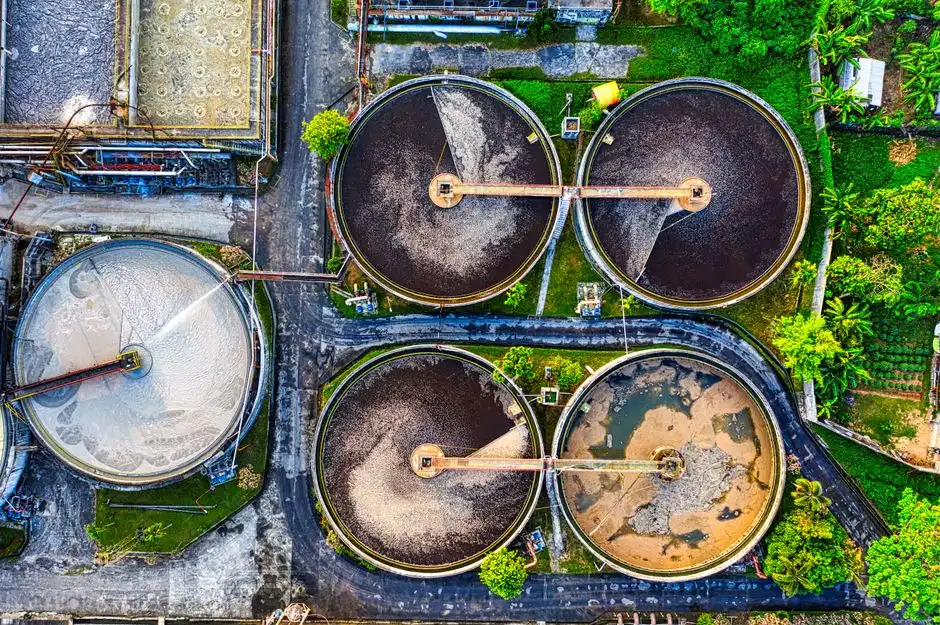
Finnish national wastewater requirements are stricter than the EU Urban Waste Water Treatment Directive, with discharge limits set in a site-specific environmental permit (Baltic Smart Water Hub; HSY, 2025). For HSY's 2024–2027 investment programme, compliance with the EU Water Framework Directive (2000/60/EC), the Drinking Water Directive (98/83/EC), the Urban Wastewater Treatment Directive, and Finnish national environmental legislation is verified by the European Investment Bank (EIB). The Uusimaa ELY Centre monitors how each plant implements its permit, covering effluent quality, sludge handling, and air emissions inside the rock cavern (HSY, 2025; Baltic Smart Water Hub). For housing-scale developers, the practical consequences are tight BOD, COD, total nitrogen, and total phosphorus limits, year-round performance in sub-zero conditions, and sludge handling that meets Metsäpirtti-class quality expectations if composted off-site at Sipoo (Baltic Smart Water Hub). Confirm the exact discharge consent with the Uusimaa ELY Centre for the specific site before specifying a technology.
Three realistic packaged configurations for a Helsinki housing development
Three configurations match the 1–500 PE scale typical of a housing scheme. A buried A/O package sewage treatment plant combines anoxic and aerobic contact oxidation with sedimentation and disinfection in one buried unit, is fully automated, and covers a 1–80 m³/h capacity window. An integrated MBR membrane bioreactor uses activated sludge with submerged PVDF membrane filtration, delivers near-reuse effluent at sub-micron filtration, occupies roughly 60% less footprint than a conventional plant, and operates in a 10–2,000 m³/d range. Modular MBR flat-sheet cassettes with PVDF 0.1 μm sheets in stainless frames come in 80–225 m² configurations that produce 32–135 m³/d per cassette, which suits phased housing build-out. Sizing logic converts housing units to person-equivalents using Finnish design practice, calibrates a per-capita daily flow against HSY's published ~130 m³/yr per resident average, and applies a peaking factor. Cold-climate design requirements include buried installation below the frost line, insulated access covers, heated blower rooms, and biological-stage sizing that maintains nitrification through Helsinki winter temperatures. See this submerged MBR engineering process and selection guide for performance details.
| Configuration | Capacity window | Footprint | Operator needed | Best fit in Helsinki housing |
|---|---|---|---|---|
| A/O package (WSZ) | 1–80 m³/h | Buried, no above-grade visual impact | No, fully automated | 50–400 PE clusters, single-train |
| Integrated MBR | 10–2,000 m³/d | ~60% of conventional | No, fully automated with PLC | 200–1,500 PE, surface-water discharge |
| Modular MBR cassettes | 32–135 m³/d per cassette | Scales with cassette count | No, fully automated | Phased 100–800 PE build-out |
Worked sizing example for a 200-unit housing development
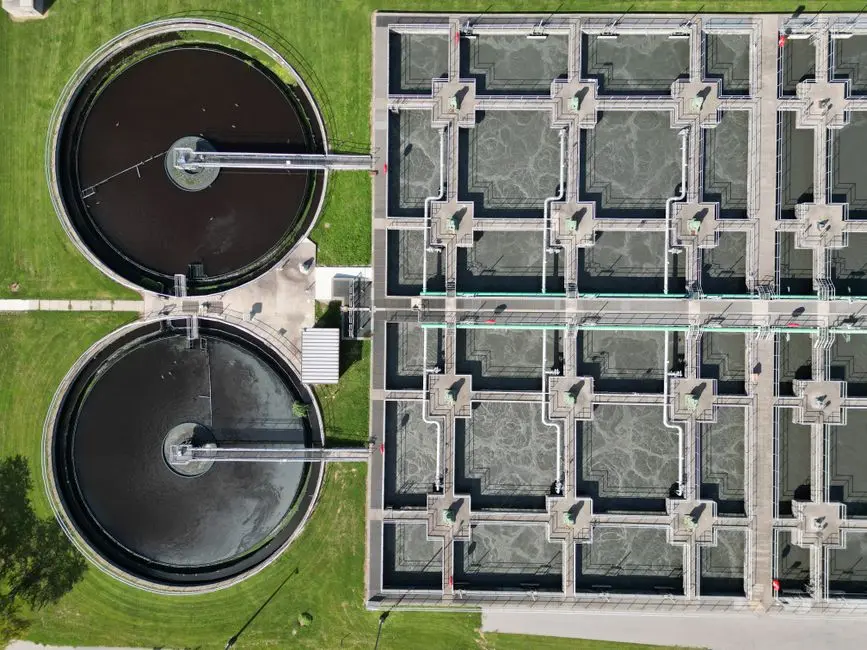
A typical Helsinki-area housing unit houses 2–3 residents, so 200 units implies an initial 400–600 PE, growing with phased occupancy. Using the HSY-published metropolitan average of 130 m³/yr per resident, a 500 PE development sits in the 150–200 m³/d range on average, with daily peaks of 1.5–2× the average. An A/O WSZ-class unit can cover this range within its 1–80 m³/h envelope on multiple parallel trains; a single MBR skid in the 10–2,000 m³/d range covers it with margin. Confirm the Uusimaa ELY Centre consent; if surface-water discharge is required, an MBR train paired with a UV disinfection stage or a chlorine dioxide generator is the standard approach. Budget for buried installation under landscaping to eliminate above-grade visual impact, and size a sludge-storage chamber to the desludging interval agreed with the operator. The high-efficiency sedimentation tank mechanics guide provides further detail on upstream separation.
Procurement and permit checklist for a Helsinki housing scheme
Confirm with HSY whether the site is inside or outside the water-supply service area before specifying equipment (HSY, 2025). If the site is outside, request a plant-specific environmental permit scoping from the Uusimaa ELY Centre to establish discharge limits and monitoring requirements (HSY, 2025). If the site connects to HSY, verify industrial-wastewater contract requirements for non-domestic flows and combined-sewer separation obligations (HSY, 2025). Supplier deliverables for the purchase enquiry must include: guaranteed capacity at Finnish winter temperatures, effluent BOD, COD, TN, and TP guarantees, sludge yield in kg DS/PE·d, maximum buried-installation depth, full automation and PLC scope with remote alarming, and Nordic-climate references. Confirm whether sludge goes to a Metsäpirtti-class composting facility or to an on-site plate-and-frame filter press for dewatering, and pair the biological stage with a chemical dosing system if phosphorus precipitation is required. A fully automated plant with no on-site operator is the standard expectation in Finnish housing. The Kinshasa housing packaged sewage treatment guide offers a useful parallel case study.
Frequently Asked Questions
How much does a packaged sewage treatment plant cost for a 200-unit Helsinki housing development?
Turnkey prices for packaged plants in the Helsinki market depend on PE load, daily flow with peaking factor, discharge consent limits set by the Uusimaa ELY Centre, buried-installation depth, and the disinfection stage. Request a priced bill of materials split into tanks, blowers, membrane cassettes (if MBR), control panel, dosing system, and installation below the frost line to compare bids on equal scope.
What should a developer check before selecting a supplier for a Finnish housing scheme?
Request documented performance at sub-zero ambient temperatures, Nordic reference plants of similar PE, effluent guarantees that meet Uusimaa ELY Centre consent limits, sludge yield figures, and a Finland-based service partner. Ensure the supplier sizes buried installation depth, blower heating, and cabinet heating for Helsinki winters.
Do I always need a Uusimaa ELY Centre permit, or can I just connect to the HSY sewer?
Inside the HSY water-supply service area, the normal route is an HSY connection consent, with an industrial wastewater contract required if non-domestic flows are present (HSY, 2025). Outside the service area, the Uusimaa ELY Centre issues the plant-specific environmental permit and monitors compliance (HSY, 2025). The choice is determined by the service-area map.
What effluent quality should a packaged plant realistically achieve in Finland?
Finland's national requirements exceed the EU Urban Waste Water Treatment Directive, and plants like Viikinmäki are required to outperform their own licence terms. A housing-scale packaged plant must be sized to meet tight BOD, COD, total nitrogen, and total phosphorus limits year-round.