What a Guayaquil factory is actually discharging in 2026
Guayaquil's industrial base in 2026 is dominated by food, banana, shrimp, dairy, beverage, edible oil, and a growing cluster of metal-mechanic workshops; each stream has a different fouling profile, but all share the high organic load and FOG typical of agro-industry effluents. The 2025 LinkedIn post on dairy effluent (S1) gives a useful benchmark for the strongest stream: BOD 1,000–3,000 mg/L, COD 2,000–6,000 mg/L, high oil & grease, suspended solids, variable pH from CIP, and high nitrogen and phosphorus. Banana pulp wash, shrimp thaw water, and edible-oil degumming are not as extreme, but they carry enough emulsified oil to defeat a plain settling tank, which is why the DAF belongs at the front of the train.
Before specifying the ETP, identify the receiving body: the Guayas estuary, the Gulf of Guayaquil, the municipal sewer operated by INTERAGUA or EMAPAG, or on-site irrigation, because the limit you must hit changes with each option. Power reliability in coastal Ecuador is intermittent, so the equalization tank upstream of the DAF is not optional; it is the cheapest insurance against shock loads from milk dumping, banana pulp wash spikes, or batch CIP dumps. A 7-day composite sample covering weekday and weekend shifts is the minimum feed assay a supplier needs before they can quote anything other than a guess.
Ecuador's 2026 compliance frame: TULSMA, MAATE, and coastal outfalls
National discharge rules sit in TULSMA Libro VI Anexo 1, enforced by the Ministerio del Ambiente, Agua y Transición Ecológica (MAATE). Confirm the current revision directly with MAATE before procurement, and put the answer in writing on the RFQ so suppliers cannot quietly dodge it later. Coastal and estuarine outfalls into the Guayas system or the Gulf of Guayaquil typically face stricter parameters than inland rivers, and the receiving-body designation is decided by MAATE based on the factory's coordinates and discharge point rather than the factory's own classification.
Municipal sewer discharge to INTERAGUA or EMAPAG may require a separate pre-treatment contract and a surcharge schedule, which must be obtained in writing before sizing because the surcharge can change the cost case for reuse versus disposal. Banana, shrimp, and food processors should also confirm whether their effluent falls under sectoral annexes for agro-industry in addition to the general table, and whether the Guayas estuary receiving body triggers an extra toxicity or bioassay panel. The compliance language on the RFQ is the single most important line item: a vendor that cannot talk to TULSMA in 2026 is the wrong vendor.
How a DAF unit protects the biological stage
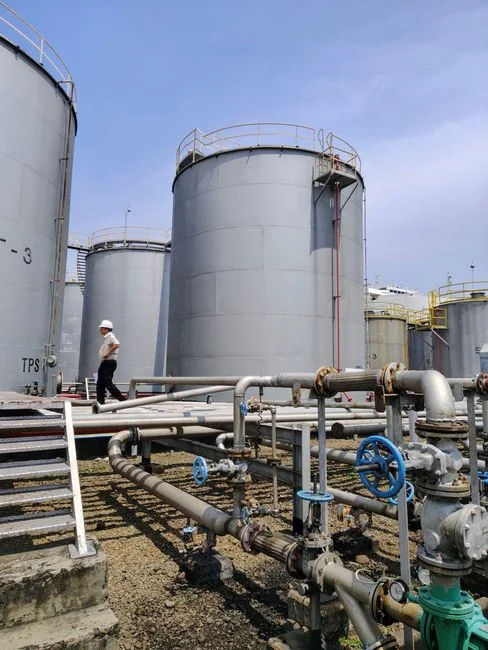
A DAF unit takes a sidestream of clarified effluent, saturates it with air inside a pressurized drum, then releases that stream at atmospheric pressure back into the flotation tank; the pressure drop forms millions of micro-bubbles, 10–100 µm in diameter, that attach to suspended solids and oil droplets and float them to the surface for skimming (Quora, S2, 2025-07). In a refinery ETP, the DAF acts as the vital protective barrier between raw physical separation and biological polishing, because emulsified oil that reaches an aeration tank coats the biomass in a suffocating film, blocks oxygen transfer, and collapses the activated-sludge or MBBR colony (Quora, S2, 2025-07).
Removal performance cited in DAF removal rates by industry for food, petrochemical, pulp & paper, and metalworking applications reaches up to 99% FOG, 92–97% COD, and 95%+ TSS; these are the numbers to put on the RFQ performance table. Chemical dosing of coagulant and flocculant ahead of the DAF is required to break emulsions, and that dosing skid is a separate line item the buyer must include rather than assume the DAF vendor will throw it in. Skipping the chemistry is the most common reason a DAF underperforms its guaranteed removal rate.
Sizing a DAF for a Guayaquil factory: the four numbers that matter
Four sizing inputs must be confirmed before any vendor can quote responsibly: peak hourly flow (m³/h), average daily flow, influent TSS (mg/L), and influent FOG (mg/L); obtain these from a 7-day composite sample rather than a single grab, because food and beverage streams swing sharply between shifts. DAF surface loading is expressed in cubic meters of flow per square meter of DAF surface per hour, and the exact band plus the air-to-solids ratio must be requested from the shortlisted vendor because the supplied research did not include numeric values for this parameter. The standard 2026 DAF engineering specs and decision framework covers the decision logic, while a food-specific food-processing DAF sizing and compliance guide covers the food-stream nuances.
The HydropureWater DAF product line spans 4–300 m³/h across 13 standard models, so most single-line Guayaquil factories will fall inside that band without paying for custom fabrication; request the model selection chart, not just a price, so the audit trail is clear. Always oversize the equalization tank upstream of the DAF to at least 8–24 hours of average flow; this is the cheapest insurance against shock loads and power dips, and it also lets the saturator pump run at steady state instead of hunting during a CIP dump. The four numbers, the equalization volume, and the model selection chart are the audit set a buyer should hand a consultant for an independent check.
| Input | What to measure | Sampling rule | Why it matters for the DAF |
|---|---|---|---|
| Peak hourly flow | m³/h, max shift | 7-day composite + flow logger | Sets the DAF surface area |
| Average flow | m³/d | 7-day composite | Sets saturator pump and equalization |
| Influent TSS | mg/L | 7-day composite, weekdays + weekend | Sets air-to-solids ratio and polymer dose |
| Influent FOG | mg/L | 7-day composite, hexane extract | Decides chemistry package and skimmer duty |
| pH range | units | Continuous logger | Drives pH correction and coagulant choice |
| Temperature | °C | Logger | Affects biological stage, not DAF hydraulics |
DAF vs clarifier: when Guayaquil plants should switch
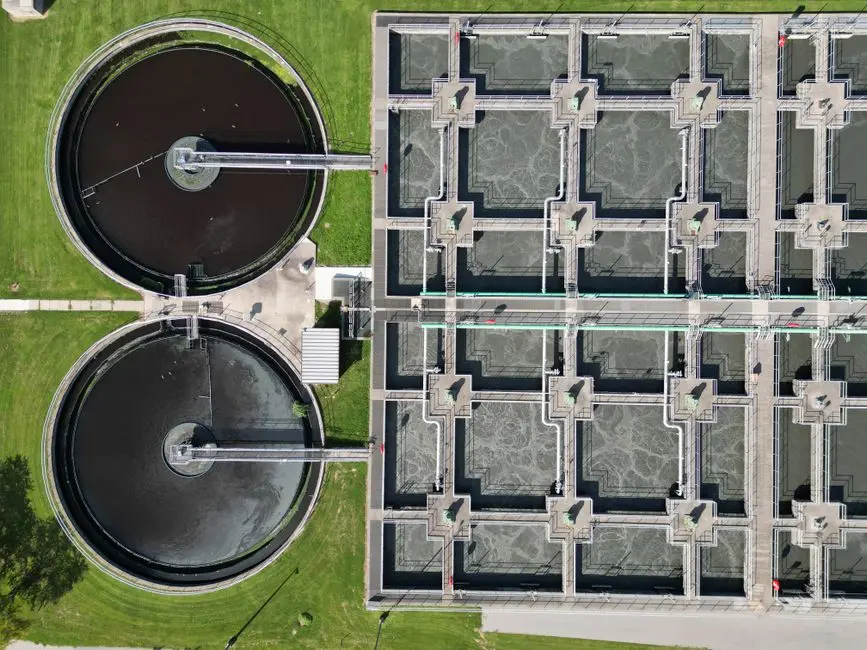
Gravity clarifiers and lamella settlers are cheaper and work for low-FOG, settleable-solids streams; they fail on emulsified oil, fine colloids, and the high-FOG food streams typical of Guayaquil agro-industry (Quora, S2, 2025-07). If the current clarifier effluent shows more than 50 mg/L FOG or 200 mg/L TSS consistently, the downstream biological stage is being damaged and a DAF retrofit will pay back faster than incremental aeration upgrades. A high-efficiency lamella clarifier remains the right choice for non-emulsified streams such as wash water or mine water, while the DAF system for industrial wastewater is the right choice once oil & grease exceed roughly 100 mg/L or the stream carries emulsified products from cookers, degummers, or dairy separators.
Supplier checklist for a Guayaquil factory in 2026
Confirm the vendor supplies a feed-water characterization service, a P&ID, a GA drawing, and a guaranteed performance table, not just a price list, because a price without a performance table is not a quote. Ask for documented removal efficiencies against the specific industry: banana pulp, shrimp cook water, dairy CIP, or edible-oil refining, with third-party or in-house test data attached. Confirm after-sales coverage for Ecuador: local agent, spare-parts lead time, and remote-monitoring capability, and reference the 2026 DAF spare parts and OPEX guide to verify which parts are recurring OPEX lines. Check that the saturator pump, air compressor, and skimmer are sized for intermittent power; require the vendor to declare them in writing, and walk the DAF troubleshooting guide to see how the unit behaves under voltage dips before signing.
| Checklist item | What to ask the vendor | Acceptance evidence |
|---|---|---|
| Feed characterization | Will you run a jar test on our 7-day composite? | Signed jar-test report |
| Engineering deliverables | P&ID, GA, hydraulic profile, load list | Stamped drawings on file |
| Performance guarantee | Guaranteed TSS, FOG, COD removal at peak flow | Performance table with penalties |
| Spare parts in the Americas | Local stock or air-freight lead time | Inventory list or letter |
| Power tolerance | Declared voltage dip and restart behavior | Vendor letter on letterhead |
| Remote monitoring | SCADA tags, alarm setpoints, VPN access | Demo or screenshots |
Matching the rest of the ETP to the DAF
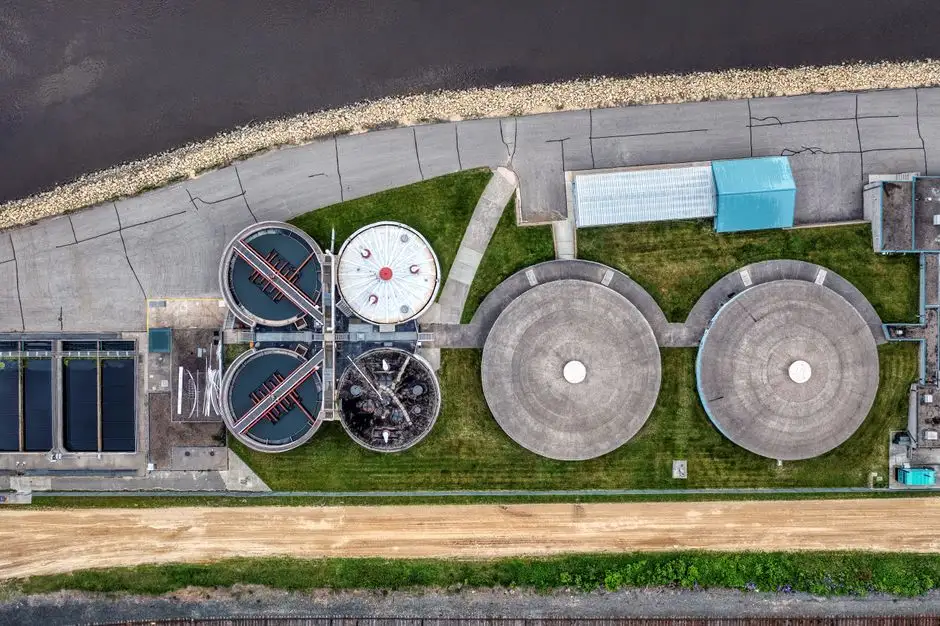
After the DAF, route effluent through equalization and pH neutralization, then a biological stage selected on COD load: MBBR or SBR for medium-strength food streams, ASP for municipal-style mixed streams, and UASB for very high-COD streams such as distillery or concentrated dairy (LinkedIn, S1, 2025). Tertiary polishing with a pressure sand filter, activated carbon, or UF is required if the factory plans water reuse in CIP, boiler feed, or irrigation; request a mass balance from the vendor. Sludge from the DAF must be dewatered with a filter press for DAF float sludge before disposal, paired with an automatic coagulant and pH dosing skid ahead of the DAF and an MBR biological polishing stage if the discharge target is tight enough to need it.
Frequently Asked Questions
What budget should a Guayaquil factory plan for a DAF-based ETP in 2026?
A buyer must request a line-item quote covering the DAF skid, the chemical dosing package, the equalization tank, the biological stage, the tertiary polish, and the sludge dewatering press. Ask each shortlisted vendor to break out equipment, freight, installation, and commissioning as separate lines, and to state the currency, Incoterm, and payment milestone in writing before comparing offers.
How do I shortlist DAF suppliers from Asia or the Americas for an Ecuador project?
Shortlist by documented performance on your specific industry, by the presence of an Americas spare-parts depot or a local agent with stock, and by willingness to put a performance guarantee with liquidated damages on paper. Require a site visit or video audit of a running reference plant on a similar stream, and reject vendors that cannot produce a P&ID, a GA drawing, and a power-tolerance letter.
Which receiving body is hardest to discharge to from a Guayaquil factory?
The Guayas estuary and the Gulf of Guayaquil generally carry stricter parameters than an inland river or the municipal sewer, because MAATE applies estuary-specific toxicity and bioassay panels on top of the TULSMA Libro VI Anexo 1 base table. Confirm the receiving-body designation with MAATE for the factory's exact outfall coordinates before sizing, because the answer changes both the biological stage and the tertiary polish.
How long does it take to deliver and commission a DAF system in Ecuador?
Request a written delivery schedule from each vendor that breaks out fabrication, factory acceptance test, ocean or air freight, customs clearance, site erection, and commissioning. Build at least one buffer month into the schedule for customs paperwork