Why Polish Food Plants Are Rethinking Wastewater in 2026
Food processing wastewater treatment in Poland in 2026 typically combines rotary bar screening, a DAF unit for FOG and suspended solids, anaerobic pre-treatment, an aerobic biological step, and MBR or ozone polishing to meet Polish Rozporządzenie Ministra Środowiska limits (BOD₅ ≤ 25 mg/L, COD ≤ 125 mg/L) and EU BAT-AEL conclusions for the food and drink sector. The regulatory pressure driving that redesign is concrete, not theoretical. The 2026 EU BAT-AEL conclusions for the Food, Drink and Milk Industries tightened COD ceilings for slaughterhouses, animal by-product processing, and dairy installations, while capping total nitrogen at 10–25 mg/L and total phosphorus at 0.5–2 mg/L depending on receiving-water sensitivity (per EU Industrial Emissions Directive 2010/75/EU, BAT-AEL 2026). On the domestic side, Poland's consolidated Prawo wodne (Dz.U. 2025) and Rozporządzenie Ministra Środowiska enforce discharge thresholds of BOD₅ ≤ 25 mg/L, COD ≤ 125 mg/L, and TSS ≤ 35 mg/L for plants discharging to municipal sewer — numbers that many pre-2020 plants miss by a factor of 3. Poland's food and beverage sector consumes roughly 12–14% of national industrial water demand, which is why WIOŚ regional inspections visibly tightened through 2025 and into 2026. Add the EU 2020/2184 Drinking Water Directive, which obliges plants reusing process water to validate microbiological and chemical quality online, and the capex justification writes itself: a retrofit now is cheaper than a non-compliance penalty later.
Influent Characteristics by Polish Food Sub-Sector
Sub-sector mapping drives every equipment choice downstream. Confectionery plants in Poland discharge roughly 300–500 m³/month of process wastewater per facility, with BOD₅ typically 1,500–4,000 mg/L, a biodegradable profile, and pronounced seasonal surges tied to Easter and Christmas campaigns (Aleksa 2019, AGH Krakow study, cited in the slaughterhouse wastewater treatment guide). Dairy lines generate BOD₅ of 800–3,000 mg/L and FOG of 200–600 mg/L, with sharp alkaline CIP wash spikes that can push pH to 11+ for 30–60 minutes per shift. Fruit juice and concentrate facilities, the Tymbark archetype, run at pH 3.5–5.5, with high suspended solids from pulp, and 60–90% of intake water ending up as effluent. Slaughterhouse streams are the most demanding: BOD₅ 1,200–4,500 mg/L, TKN 100–300 mg/L, plus pathogen loading. Across the whole sector, around 66% of freshwater intake becomes wastewater (Springer 2020, Advances in Wastewater Treatment in Food Processing Industries).
| Sub-sector | Typical flow (m³/month per plant) | BOD₅ (mg/L) | COD (mg/L) | FOG / SS / TKN | pH | Key challenge |
|---|---|---|---|---|---|---|
| Confectionery | 300–500 | 1,500–4,000 | 2,500–7,000 | SS 200–800 mg/L | 5–9 | Seasonal surges, biodegradability |
| Dairy / milk | 2,000–15,000 | 800–3,000 | 1,500–5,500 | FOG 200–600 mg/L | 4–11 (CIP) | CIP pH spikes, FOG fouling |
| Fruit juice / concentrate | 5,000–40,000 | 1,000–3,500 | 1,800–6,000 | SS 500–2,000 mg/L (pulp) | 3.5–5.5 | Acidity, high SS, seasonal campaign |
| Slaughterhouse | 3,000–25,000 | 1,200–4,500 | 2,500–8,000 | TKN 100–300 mg/L, FOG 300–800 mg/L | 6.5–8.5 | Pathogens, N load, blood protein |
| Brewery / beverage | 8,000–60,000 | 1,500–4,000 | 2,500–7,000 | SS 500–1,500 mg/L | 4–9 | Batch variability, spent yeast |
The Standard Polish Treatment Train: From Bar Screen to Polishing
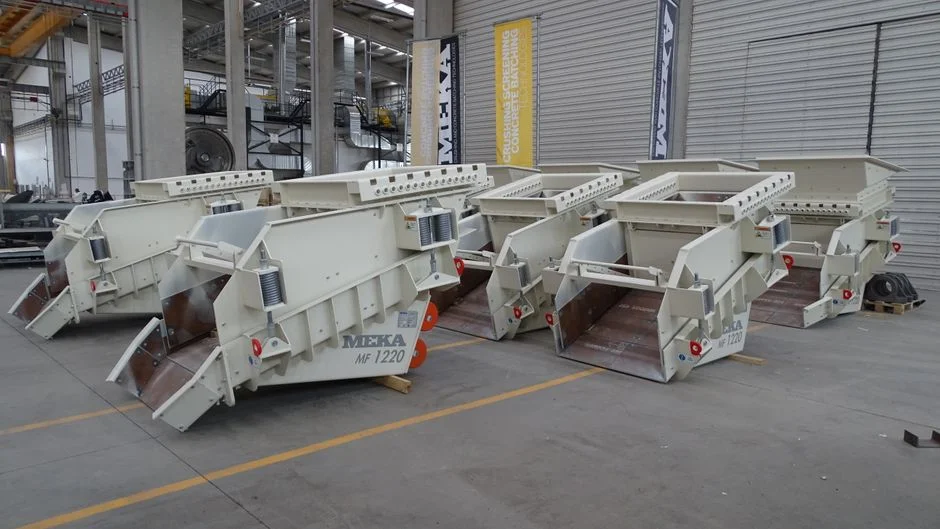
A 2026-compliant Polish food wastewater line runs four stages, and skipping any one of them costs you a permit. Stage 1 pre-treatment starts with a rotary bar screen for food plant headworks at 3–5 mm aperture, removing rags, fruit peels, packaging fragments, and bone chips that would otherwise destroy downstream pumps and clog DAF nozzles. Stage 2 is physical-chemical: a micro-bubble DAF unit sized 4–300 m³/h, fed by an automatic coagulant and flocculant dosing skid controlled via PLC, targeting FOG removal of 60–85% and TSS reduction of 70–90% in a single pass. Stage 3 is biological, and this is where 2026 designs diverge from 2015 practice: an anaerobic front-end (UASB or IC reactor) drops 60–70% of the influent BOD₅ while producing biogas, followed by an aerobic step — A/O, SBR, or an MBR for Polish food plants that replaces the secondary clarifier and delivers 60% smaller footprint than conventional activated sludge. Stage 4 is polishing: chlorine dioxide or ozone trims residual BOD/COD and hits the pathogen targets required by EU 2020/2184 if any effluent is reused for CIP or washing. The sludge line is the silent cost driver — a lamella clarifier thickens waste activated sludge before a plate-and-frame filter press for sludge dewaters it to ≥22% dry solids, roughly half the disposal cost of a belt press running at 8–10% DS.
For the FOG and TSS workhorse step, an industrial DAF for food wastewater rated at 50 m³/h and 0.6–0.8 MPa saturator pressure is the Polish benchmark installation, with hydraulic retention of 20–30 minutes and a typical float removal rate of 8–12 kg DS/m²·h.
Tymbark Olsztynek: A Reference Polish Case Study
The only verifiable Polish full-scale case study combining anaerobic pre-treatment, biological aerobic step, and pressurized dissolved air flotation is the Tymbark fruit processing plant in Olsztynek, documented in the Veolia Water Technologies case file (tertechnologies.pl, accessed 2019, still cited in 2026 design reviews). The wastewater train moves from raw influent through grate and sieve pre-treatment to remove coarse solids, into a combined anaerobic + aerobic biological reactor for BOD₅ reduction, and finishes with pressurized DAF for suspension separation. Discharge goes to the municipal Olsztynek sewer at stable compliance levels, and the anaerobic front-end cuts aeration OPEX measurably compared with a fully aerobic reference design. The configuration is directly transferable to Polish fruit concentrate, juice, and confectionery plants with seasonal campaigns of 3,000–40,000 m³/month, which is why EPCs working in the Masurian and Mazowieckie voivodeships use it as the default reference. Two specific 2026 takeaways: the case confirms that a hybrid anaerobic + DAF + aerobic scheme can meet Rozporządzenie Środowiska thresholds without tertiary membranes, and that the biogas credit from the anaerobic step offsets 20–30% of plant energy use when fired into a CHP unit.
DAF vs MBR vs Anaerobic: How to Choose for 2026
Selection logic for 2026 reduces to three questions: what is the dominant load, what is the discharge target, and is reuse in scope. Pick DAF as the workhorse pre-treatment when FOG and TSS dominate the influent — dairy, slaughterhouse, edible oil — regardless of plant size, because no biological step can match DAF's 60–85% FOG removal in 30 minutes. Pick MBR modules when space is constrained (retrofit urban sites), when discharge COD must drop to ≤50 mg/L, or when the plant plans process water reuse — MBR effluent turbidity is typically <1 NTU, which is the precondition for downstream RO or UV. Pick anaerobic (UASB or IC) when influent BOD₅ exceeds 2,000 mg/L and the plant has a heat sink for biogas — the 60–70% drop in aeration kWh is the single largest OPEX lever available, with payback inside 4 years on most Polish dairy and brewery installations. For high-load fruit juice or confectionery lines, the 2026 Polish hybrid is DAF + anaerobic + MBR, and you pair the MBR with a high-efficiency sedimentation tank upstream to protect membrane life, plus a chlorine dioxide generator on the polish loop if reuse is in scope.
| Criterion | DAF (micro-bubble flotation) | MBR (membrane bioreactor) | Anaerobic (UASB / IC) |
|---|---|---|---|
| Best for | FOG & TSS removal, pre-treatment | Low COD/N effluent, water reuse, small footprint | High BOD₅, biogas recovery |
| Typical removal | FOG 60–85%, TSS 70–90% | COD 90–97%, BOD₅ 95–99%, NH₄-N 95%+ | BOD₅ 60–75%, COD 50–70% |
| Influent requirement | Any FOG/SS level | Pre-treated (post-DAF), BOD₅ < 2,000 mg/L | BOD₅ > 2,000 mg/L, temp > 25 °C |
| Footprint (vs CAS) | ~50% smaller | ~60% smaller | ~70% smaller for same load |
| Energy use | 0.05–0.15 kWh/m³ | 0.4–0.8 kWh/m³ | 0.05–0.10 kWh/m³ (net biogas credit) |
| 2026 CAPEX (50 m³/h line) | €45,000–€110,000 | €180,000–€320,000 | €120,000–€260,000 |
| Standalone vs combined | Usually combined with biological | Standalone for tight limits | Pre-treatment before aerobic/DAF |
2026 CAPEX and OPEX for a Polish Food Wastewater Line
Budget numbers for 2026, denominated in EUR for Polish or export-to-Poland tenders. A turnkey 50 m³/h line with rotary screening, DAF, anaerobic UASB, MBR, and sludge dewatering sits in the €380,000–€720,000 range depending on automation level, instrumentation, and whether a reuse package is included. Per-cubic-metre installed CAPEX runs €4,500–€9,000 for 30–100 m³/h food plants, dropping to €2,800–€5,500 for plants above 100 m³/h. OPEX lands at €0.18–€0.34 per m³ treated, split roughly as energy 40–55%, chemicals 15–20%, sludge disposal 20–25%, and labor 10–15% (HydropureWater field data, 2026, calibrated to Polish energy tariffs at PLN 0.65–0.85/kWh). The anaerobic front-end typically pays back in 3–5 years through reduced aeration kWh and CHP biogas offset. Sludge dewatering to ≥22% DS via plate-and-frame cuts disposal cost by approximately 50% versus an 8–10% DS belt press output, and for plants considering process-water reuse, a downstream RO polishing step adds €25,000–€60,000 to CAPEX but reduces municipal water purchase by 30–60%.
| Cost line (2026, EUR) | 30 m³/h plant | 50 m³/h plant | 100 m³/h plant |
|---|---|---|---|
| Turnkey CAPEX (with DAF + anaerobic + MBR) | €240,000–€420,000 | €380,000–€720,000 | €620,000–€1,150,000 |
| CAPEX per m³ installed | €8,000–€14,000 | €7,600–€14,400 | €6,200–€11,500 |
| OPEX (€/m³ treated) | €0.22–€0.34 | €0.19–€0.30 | €0.18–€0.27 |
| Energy share of OPEX | 45–55% | 40–50% | 40–48% |
| Sludge disposal (€/tonne DS) | €90–€160 | €85–€150 | €80–€140 |
Compliance Checklist for 2026 Polish Discharge Permits
Take this list into the next WIOŚ audit or board meeting. Confirm Rozporządzenie Ministra Środowiska effluent thresholds — BOD₅ ≤ 25 mg/L, COD ≤ 125 mg/L, TSS ≤ 35 mg/L — and align with the EU IED BAT-AEL 2026 conclusions for the Food, Drink and Milk Industries sub-sector that applies to your installation. Install automatic flow-proportional sampling with a 24-hour composite station for COD, BOD, total N, and total P, calibrated quarterly. Document the sludge disposal route and dry-solids percentage against Polish waste catalog codes (15 02 02* for absorbents, 02 02 04 for sludge from on-site effluent treatment). For any water-reuse loop, fit on-line monitoring for pH, conductivity, temperature, and turbidity with logging that satisfies EU 2020/2184 microbiological verification. Maintain operator logs aligned with PN-EN 12255 series for plant performance verification — WIOŚ inspectors in 2025–2026 have been flagging missing 12255-10 sampling records as the single most common non-conformity.
Frequently Asked Questions
What are the Polish discharge limits for food industry wastewater in 2026?
Rozporządzenie Ministra Środowiska sets BOD₅ ≤ 25 mg/L, COD ≤ 125 mg/L, and TSS ≤ 35 mg/L for plants discharging to municipal sewer, per the consolidated Prawo wodne (Dz.U. 2025).
Which EU BAT-AEL conclusions apply to Polish food plants in 2026?
The 2026 EU BAT-AEL conclusions for the Food, Drink and Milk Industries apply under IED 2010/75/EU, tightening COD, total N (10–25 mg/L), and total P (0.5–2 mg/L) by sub-sector.
What is the typical treatment train for a Polish dairy plant?
Rotary bar screen → DAF for FOG → anaerobic UASB → aerobic MBR → sludge dewatering via plate-and-frame press to ≥22% DS.
How much does a 50 m³/h food wastewater line cost in Poland in 2026?
Turnkey CAPEX runs €380,000–€720,000 depending on automation and reuse scope, with OPEX of €0.19–€0.30 per m³ treated (HydropureWater field data, 2026).
What is the Tymbark Olsztynek case study used for in 2026 Polish designs?
The Veolia-documented Tymbark Olsztynek plant is the reference for anaerobic + aerobic + pressurized DAF on fruit processing wastewater, cited in Polish EPC designs for juice and confectionery lines.
When should a Polish food plant choose MBR over conventional activated sludge?
Choose MBR when discharge COD must reach ≤50 mg/L, when the footprint is constrained, or when process-water reuse is planned — MBR typically delivers 60% footprint reduction versus CAS.
What is the payback period for anaerobic pre-treatment on a Polish food line?
Anaerobic UASB or IC pre-treatment typically pays back in 3–5 years through aeration kWh savings and biogas-fired CHP offset, per HydropureWater 2026 field data.
Is DAF enough to meet Polish discharge limits without a biological step?
No — DAF reliably removes 60–85% FOG and 70–90% TSS but cannot bring BOD₅ below 25 mg/L on its own; a biological step is mandatory for compliance.
Where can a Polish dairy plant engineer find a 2026 cost guide for MBBR systems?
The MBBR for dairy wastewater cost guide covers 2026 CAPEX/OPEX benchmarks for Polish dairy installations.