Tehran Industrial Wastewater Treatment DOE Compliance Guide
A Tehran Industrial Wastewater Treatment DOE Compliance Guide starts from the enforced effluent numbers. Surface-water BOD5 is 30 mg/L, with a momentary cap of 50 mg/L. COD is 60 mg/L, momentary 100 mg/L, and TSS is 40 mg/L, momentary 60 mg/L. Fines in local practice reach 2 billion IRR per month.
Oil and grease in the local enforcement table sit at or below 10 mg/L, and total chromium at or below 0.5 mg/L. These figures are applied inside Tehran, including South Tehran Industrial Park and Sharifabad. A missed limit can end in a shutdown, not only a fine.
Water reuse is the other driver. Earlier notes described a Tehran Refinery industrial wastewater project of 52,000 m³/day that saves 1.5% of the city's daily drinking water. According to SHANA on 12 August 2025, that 52,000 m³/day is treated municipal water transferred from the South Tehran Treatment Plant. The refinery's own demand is about 32,000 m³/day.
SHANA also records that phase one has replaced 15,000-20,000 m³/day of municipal supply under an agreement with South Tehran Water and Wastewater Company. According to Miz Energy (mizeenergy.ir, 15 August 2025), the same transfer runs through a 4 km, 32-inch pipeline. The train is sand filtration, ozone, carbon filtration, ultrafiltration and reverse osmosis.
The stated budget is about €25 million plus 1.2 thousand billion toman, with progress near 90%. A separate food-plant case is smaller and closer to the plants we size. Influent TSS of 350 mg/L fell to 35 mg/L, and FOG of 120 mg/L fell below 10 mg/L, after a DAF install. DOE fines at that site dropped by 70% in the first year.
Most food plants we review in Tehran miss the 10 mg/L oil cap before they miss the BOD cap. Fix oil and solids first. Then test the biology.
| Parameter | Tehran DOE Effluent Limit (Industrial) | Typical Influent Range (Pre-treatment) |
|---|---|---|
| BOD₅ | ≤ 30 mg/L | 150 - 1,500 mg/L |
| COD | ≤ 60 mg/L | 300 - 3,000 mg/L |
| TSS | ≤ 40 mg/L | 100 - 1,000 mg/L |
| Oil & Grease | ≤ 10 mg/L | 20 - 250 mg/L |
| Chromium (Total) | ≤ 0.5 mg/L | 0.1 - 50 mg/L |
| pH | 6.5 - 8.5 | 2 - 12 |
How Tehran Enforces the DOE Effluent Table
Tehran DOE enforcement uses the national sewage discharge standard under Article 5 of the Water Pollution Prevention Regulations, not a separate city code. According to the Article 5 text published by Hamadan University of Medical Sciences, surface-water BOD5 is 30 mg/L with a momentary limit of 50 mg/L. Earlier sheets call this set the Iran DOE Environmental Standards for Industrial Effluents (2024).
COD is 60 mg/L with a momentary limit of 100 mg/L. TSS is 40 mg/L with a momentary limit of 60 mg/L. Older plant sheets split these into a national column and a stricter Tehran column. Those two columns are the momentary cap and the base cap of the same surface-water row.
Oil and fat on the DOE table is 10 mg/L for surface water. Hexavalent chromium is 0.5 mg/L to surface water, and trivalent chromium is 2 mg/L. Phenol is 1 mg/L to surface water. Ammonium expressed as NH4 is 2.5 mg/L to surface water.
Surface-water pH is 6.5-8.5 on the Article 5 table. Legacy sheets also list 6.0-9.0 as a national band. Design the effluent inside 6.5-8.5 unless the permit says otherwise. Minimum dissolved oxygen for surface water is 2 mg/L.
Earlier guidance used a Tehran phenol cap of 0.2 mg/L and a national phenol cap of 0.5 mg/L. Ammonia-nitrogen caps on those sheets are 25 mg/L and 15 mg/L, and the oil caps are 15 mg/L and 10 mg/L. Keep the legacy total-chromium line of 1.0 mg/L and 0.5 mg/L in the table below until the permit names the discharge route. The Article 5 text is the number to design to once the route is fixed.
| Parameter | Iran National Standard (mg/L) | Tehran DOE Enforcement (Typical, mg/L) | Key Industries Affected |
|---|---|---|---|
| BOD₅ | ≤ 50 | ≤ 30 | All industrial; especially Food Processing, Petrochemical |
| COD | ≤ 100 | ≤ 60 | All industrial; especially Petrochemical, Pharmaceutical |
| TSS | ≤ 60 | ≤ 40 | All industrial; especially Food Processing, Textile |
| Oil & Grease | ≤ 15 | ≤ 10 | Food Processing, Petrochemical, Metalworking |
| Ammonia Nitrogen | ≤ 25 | ≤ 15 | Petrochemical, Pharmaceutical, Textile |
| Phenol | ≤ 0.5 | ≤ 0.2 | Petrochemical, Pharmaceutical |
| Chromium (Total) | ≤ 1.0 | ≤ 0.5 | Leather Tanneries, Metal Finishing |
| pH | 6.0 - 9.0 | 6.5 - 8.5 | All industrial |
For the route-by-route national limits, read iran wastewater effluent standards discharge surface water absorption well agricultural irrigation bod cod tss 30 60 40 100 200.
Note 3 permits existing industries to reduce BOD5 and COD by at least 90%. Dilution of raw or treated sewage to reach the table is not acceptable. Samples for compliance are composite: a 24-hour sample built from grabs at intervals up to 4 hours.
Measure flow and concentration immediately after the last treatment unit. The standard points to Standard Methods for the Examination of Water and Wastewater, and Tehran plants already report COD by APHA 5220 and TSS by gravimetry. Results go to the Tehran DOE regional office on a weekly or monthly cycle, set by flow and load. Temperature must not shift the receiving water by more than 3 degrees Celsius within a 200 m radius.
Petrochemical effluent often carries TDS above 2,000 mg/L. Food plants fail on FOG. Tanneries fail on chromium. On audits we join, the failure is usually a grab above the momentary cap, not the daily composite.
DAF, MBR and Chemical Dosing Compared
DAF, MBR and chemical dosing cover different Tehran industrial loads, and the right pick follows influent data rather than a brand name. DAF is the FOG and TSS tool. MBR is the BOD and COD tool where the plot is small. Chemical dosing is the pretreatment for metals, pH and a share of TSS.
| Parameter | DAF Systems | MBR Systems | Chemical Dosing (Coagulation/Flocculation) |
|---|---|---|---|
| Primary Application | High FOG, TSS, Oil | High BOD/COD, Nutrient Removal, Low Footprint | Pre-treatment, Heavy Metals, TSS, pH Correction |
| TSS Removal % | 92-97% | >99% | 80-95% (with sedimentation) |
| FOG Removal % | 90-98% | Not primary, but aids upstream bio | 60-80% (requires proper chemical selection) |
| BOD/COD Removal % | 30-60% (as primary) | 90-99% | 20-50% (as primary for soluble) |
| Footprint (m²/100 m³/day) | 15-25 | 10-20 | 20-35 (requires larger settling tanks) |
| CAPEX (IRR/m³/day) | 50-80M | 120-200M | 30-60M |
| OPEX (IRR/m³) | 20,000-40,000 | 40,000-70,000 | 15,000-35,000 |
| Energy Use (kWh/m³) | 0.3-0.6 | 1.5-2.5 | 0.1-0.3 |
| Sludge Production (kg DS/m³) | 0.5-1.5 | 0.2-0.5 | 1.0-3.0 |
Tehran food and petrochemical sites use Tehran-optimized DAF systems for high-FOG industrial wastewater where FOG is high. Local installs in the source notes reach 92-97% TSS removal and up to 98% FOG removal. Most plants we size for high-FOG food waste run DAF energy at the lower end of 0.3-0.6 kWh/m³.
Compact MBR systems for Tehran’s space-constrained industrial zones fit yards that cannot spare a conventional aeration tank. Footprint in the table is 10-20 m² per 100 m³/day, against 15-25 for DAF and 20-35 for dosing with settling. A 200 m³/day pharmaceutical MBR cut COD from 1,200 mg/L to 30 mg/L.
PLC-controlled chemical dosing for Tehran’s small industrial plants is the low-CAPEX step for small metal shops. PAM flocculation in the source notes reaches up to 95% for TSS, and chlorine dioxide disinfection reaches a 99% pathogen kill. Sludge from dosing is the high end, at 1.0-3.0 kg DS/m³, so the filter press has to be in the budget.
High TDS petrochemical effluent often needs reverse osmosis ahead of reuse, or to protect the biology. Tehran temperature swings also move biological rates. Size the air supply and the sludge age for a winter case, not only a summer case.
MBR System Design for Tehran Pharmaceutical Effluent
MBR system design for Tehran pharmaceutical effluent, in the published 200 m³/day case, reduced COD from 1,200 mg/L to 30 mg/L. That effluent COD sits under the surface-water limit of 60 mg/L and under the momentary cap of 100 mg/L. Removal sits in the table band of 90-99%.
How Should a Tehran Pharma MBR Be Sized?
A Tehran pharmaceutical MBR at 200 m³/day should be checked against influent COD of 1,200 mg/L and effluent COD of 30 mg/L. Note 3 permits existing industries to reduce BOD5 and COD by at least 90%, and the MBR band starts at that floor. If the biology cannot hold 90% on a solvent spike, dosing or DAF has to go upstream.
Footprint at 10-20 m² per 100 m³/day is 20-40 m² for this 200 m³/day case. Most pharmaceutical skids we size on tight Tehran plots use the 10 m² end of that band, not the 20 m² end. Energy is 1.5-2.5 kWh/m³, so power cost belongs in OPEX before CAPEX is signed.
Sludge production is 0.2-0.5 kg DS/m³, lower than DAF at 0.5-1.5 kg DS/m³. Phenol design should not stop at the legacy 0.2 mg/L line. The Article 5 surface-water number is 1 mg/L, and an MBR does not replace a phenol-specific step if the raw waste sits far above either number.
Tehran Industrial Wastewater CAPEX OPEX Breakdown 2025
Tehran industrial wastewater CAPEX and OPEX for 2025 run 15-20% above national averages, as reflected in the Iran Construction Cost Index 2025. The ranges below are for a 100 m³/day plant, in billion IRR for CAPEX and million IRR per month for OPEX. Use them as a budget bracket, then reprice steel, membranes and power.
What Does a 100 m³/day Plant Cost in 2025?
A 100 m³/day DAF in the 2025 Tehran table totals 8.5-12.5 billion IRR, against 18.5-29.0 billion IRR for MBR and 3.8-7.0 billion IRR for chemical dosing. Most 100 m³/day DAF budgets we build land nearer 8.5 billion IRR than 12.5 billion IRR when civil work reuses an existing pit. MBR rarely does, because the membrane tank and the cleaning skid add civil scope.
| Cost Component | DAF System (100 m³/day) | MBR System (100 m³/day) | Chemical Dosing (100 m³/day) |
|---|---|---|---|
| CAPEX (Approximate, in Billion IRR) | |||
| Equipment Cost | 5.0 - 7.0 | 12.0 - 18.0 | 2.0 - 3.5 |
| Installation & Commissioning | 1.5 - 2.5 | 3.0 - 5.0 | 0.8 - 1.5 |
| Civil Works & Ancillaries | 2.0 - 3.0 | 3.5 - 6.0 | 1.0 - 2.0 |
| Total CAPEX Range | 8.5 - 12.5 | 18.5 - 29.0 | 3.8 - 7.0 |
| OPEX (Approximate, in Million IRR/month) | |||
| Energy Consumption | 60 - 120 | 300 - 500 | 20 - 40 |
| Chemicals (Coagulants, Flocculants, Disinfectants) | 80 - 150 | 10 - 30 (for cleaning) | 150 - 250 |
| Labor & Maintenance | 40 - 80 | 80 - 150 | 30 - 60 |
| Sludge Disposal | 50 - 100 | 20 - 40 | 100 - 200 |
| Total OPEX Range | 230 - 450 | 410 - 720 | 300 - 550 |
Monthly OPEX in the same table is 230-450 million IRR for DAF, 410-720 million IRR for MBR and 300-550 million IRR for dosing. Energy is the MBR spike, at 300-500 million IRR per month. Chemicals and sludge dominate dosing, at 150-250 and 100-200 million IRR per month.
Payback on the worked 100 m³/day food-plant DAF is 3.2 years. Avoided DOE fines are estimated at 1.5 billion IRR a year. Water-reuse savings are estimated at 500 million IRR a year. Those two credits have to clear both CAPEX and the monthly OPEX, or the payback slips.
Funding paths named in the source notes are DOE subsidies for reuse projects, green loans from Bank Melli Iran, and EPC contracts with local firms such as Shahrab S.T.Co. Subsidy rates are not published in the notes we hold, so confirm any grant in writing. Do not subtract an assumed grant from CAPEX before that letter exists.
Selecting Equipment for a Tehran Industrial Plant
Equipment selection for a Tehran industrial plant starts from the influent, the discharge route and the plot, in that order. A train that meets BOD and misses chromium still fails the permit. The five checks below are the ones we do not skip.
- Influent Characterization: Determine average and peak influent volume (m³/day), and analyze TSS, FOG, BOD, COD, TDS, pH and heavy metals.
- Compliance Needs: Identify the Tehran DOE effluent limits for your industry and the discharge point, whether sewer, surface water or reuse.
- Space Availability: Assess the footprint on the plot. Compactness decides the train in urban Tehran.
- Budget Constraints: Evaluate CAPEX and OPEX, including equipment, installation, chemicals, energy, labor and sludge disposal.
- Operational Complexity: Consider the automation level and the skilled labor needed to run and maintain the plant.
A petrochemical plant with high TDS usually needs DAF for oil and solids, then biology, then reverse osmosis when salinity must fall before reuse. Chemical dosing sits in that train for pH and extra solids removal. Claim only the removal the comparison table supports.
A food plant with high FOG starts with DAF and often follows with MBR where the yard is tight. A Tehran WaterTech Industries dairy project is the local example of that DAF-MBR pair. It cut FOG and BOD together. Ask for the lab sheets, not only the brochure line.
A small metalworking shop with a low flow and a chromium problem is a dosing job, then a filter press. Most metal shops we see should not buy an MBR. The chromium limit, not the COD limit, is the design driver.
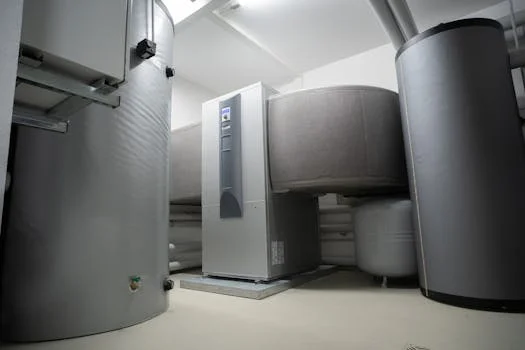
Where the yard is already full, a buried package can take the domestic and light-industrial sewage share. The Underground Package Sewage Treatment Plant (WSZ Series) is the unit we shortlist for that buried duty, while the process train above still handles the industrial line. Do not send raw pharma solvent waste into a domestic package and call it compliant.
Supplier checks in Tehran still matter. Tehran WaterTech Industries is known for petrochemical work, Shahrab S.T.Co. for municipal and industrial hybrid jobs, and NSP Group for large EPC. A red flag is no documented Tehran DOE permit, or no local service crew. Either gap shows up on the first membrane clean or the first DOE visit.
Who This Guide Is For
This guide is for plant engineers, EPC contractors and procurement leads at Tehran industrial sites who must hit a DOE number and price the train. It also fits owners comparing DAF, MBR and dosing at about 100 m³/day. Readers who only need the national irrigation and well matrix should use the linked standards page, not this one.
Look elsewhere if the waste is only domestic sewage with no industrial COD, metals or FOG, or if you need a legal opinion on one permit clause. The tables here are design brackets. They are not a discharge permit.
Next step: send average and peak flow, COD, TSS, FOG, pH and the discharge route with a sized-plant inquiry. Include whether the site is an existing plant, because Note 3 and the momentary caps change the pass-fail test.
Frequently Asked Questions
What DOE fine can a Tehran plant face for a missed effluent limit?
Fines cited for Tehran DOE effluent breaches reach 2 billion IRR per month. The amount depends on violation severity, pollutant load and discharge volume. Persistent breaches can also bring a temporary shutdown or a permanent closure, especially in South Tehran Industrial Park and Sharifabad. Budget the fine as a real OPEX risk: a 100 m³/day food plant in the worked example cut related fines by 70% after DAF startup.
How does Tehran water scarcity change treatment cost?
Tehran water scarcity raises the value of reuse, so plants pay more upfront for MBR or reverse osmosis and then buy less fresh water. The refinery case shows the scale: demand is about 32,000 m³/day, while a transfer of 52,000 m³/day of treated municipal water is in construction. Phase one already offsets 15,000-20,000 m³/day of city water. A food-plant DAF example booked water-reuse savings of 500 million IRR a year against a 3.2 year payback.
Which Tehran industries face the tightest DOE limits?
Petrochemical, pharmaceutical, textile and metal-finishing plants draw the tightest Tehran DOE attention because their loads include oil, solvents, salinity and metals. Surface-water oil and fat is 10 mg/L on the DOE discharge table. Hexavalent chromium is 0.5 mg/L to surface water, and trivalent chromium is 2 mg/L. Phenol on that table is 1 mg/L, while tighter plant specs in local use still quote 0.2 mg/L, and food plants are watched mainly for FOG and TSS.
What treatment train fits a Tehran petrochemical plant?
A Tehran petrochemical train usually starts with DAF for oil and suspended solids, then biological treatment, then reverse osmosis when TDS exceeds 2,000 mg/L. DAF TSS removal in the comparison table is 92-97%, and FOG removal is 90-98%. MBR then takes BOD and COD removal to 90-99% where space is tight. Chemical dosing covers pH and metals ahead of the biology, and most petrochemical plants we size keep DAF as the first oil barrier, not the final discharge step.
How can a small Tehran plant meet DOE limits with a lower CAPEX?
A small Tehran plant can start with PLC chemical dosing, which the 100 m³/day table prices at 3.8-7.0 billion IRR total CAPEX, versus 18.5-29.0 billion IRR for MBR. Dosing energy is 0.1-0.3 kWh/m³, but sludge is higher at 1.0-3.0 kg DS/m³. That trade suits a metal shop that must drop chromium and TSS, not a pharma stream at 1,200 mg/L COD. DOE reuse subsidies and Bank Melli Iran green loans can spread the rest.