Package Wastewater Treatment Plant Cost in Iran
A package wastewater treatment plant cost in Iran is about $15,000–$50,000 for a 10–50 m³/day unit, before duty. Surface-water discharge is held to BOD 30 mg/L, COD 60 mg/L and TSS 40 mg/L. MBR reuse trains sit about 30% above an SBR of the same flow.
Removal targets used on Iranian package bids stay high: COD 90-98%, BOD 92-97% and TSS 95-99%. A 60 m³/day SBR for a Tehran hospital has reached 95% pathogen reduction with ozone. Ahvaz industrial jobs often add DAF when oil and grease reach 500 mg/L. MBR trains take a 30% premium when the effluent must be fit for reuse on 2025 projects.
Why Package Plants Still Get Specified in Iran
Iran’s package-plant demand follows a water stress index of 4.5 out of 5, reported by the World Resources Institute in 2023. According to the World Resources Institute (2026), that score sits in the extremely high band, so Iran uses over 80% of renewable water in an average year. In 2025, rainfall was 40% below the long-term average, and reservoirs serving Tehran fell to about 12% of capacity. Irrigation still accounts for about 90% of national water use, so reuse from a package plant is a supply choice, not only a permit task.
The same 2026 WRI note expects renewable supply to fall from around 670 billion cubic meters in 2019 to roughly 540 billion cubic meters by 2080. Demand on that path rises about 30% by 2050. Tehran, home to about 10 million people, is already inside that squeeze. A package plant that reuses effluent does not close the national gap, but it cuts the freshwater a site must buy.
Industrial facilities around Ahvaz that rely on activated sludge pre-treatment often reach only 85% COD removal. AHWAZ DOC data linked that gap to non-compliance fines quoted under ISIRI 1053. Hospitals in Tehran are still told to reach at least 95% pathogen reduction, and ozone is the method in the Clearfox hospital example for the Middle East. Khuzestan zones add salinity, petrochemical zones add oil, and hospital wastewater adds pharmaceuticals and pathogens.
Approximately 60% of urban residents lack a connection to centralized sewer systems, according to PAA data. On municipal jobs we see, that missing pipe, not the bioreactor, sets the schedule. A buried Underground Package Sewage Treatment Plant (WSZ Series) is the usual fix for a clinic or a small town that cannot wait for a trunk sewer. The same unit still has to meet the limit for surface water, an absorption well or irrigation.
Package Plant Technologies for Iranian Influent
MBR, SBR, DAF and A/O package plants do not remove the same load under Iranian influent. An MBR uses PVDF membranes with a pore size of 0.1 μm and can cut the footprint by up to 60% versus conventional activated sludge. Energy use is 0.8–1.2 kWh/m³, and effluent turbidity is less than 1 NTU. For reuse or high salt, compare MBR systems for high-salinity and reuse-quality effluent in Iran on flux, not on a catalog recovery line.
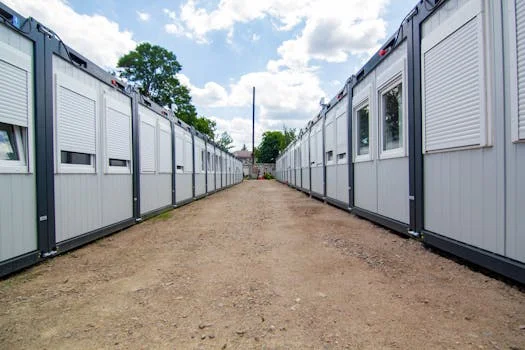
SBR package plants run cycle times of 4–6 hours and usually land at 90–95% COD removal. A hospital SBR plus ozone has reached 95% pathogen reduction in the Clearfox example. Most oil skids we size still need polyaluminum chloride at 50–100 mg/L before a DAF holds a stable float. Micro-bubbles of 30–50 μm then lift oil and solids.
DAF is the pretreatment step when oil and grease reach 500 mg/L. Removal of 90–98% is the range quoted for that load once the chemical dose is in the band above. DAF systems for oil/grease removal in Iran’s petrochemical and food processing industries are specified as that first stage, not as the whole biological plant. Food factories with a similar float are covered in Food Processing Wastewater Treatment in Iran: 2026 Engineering Guide.
A/O package plants are built for nutrients: 80–90% total nitrogen and 70–85% total phosphorus, at 0.3–0.5 kWh/m³. High salinity in some Iranian industrial wastewater slows that biology, so the design has to say so. For a membrane choice beyond this table, the comparison to read is MBR vs MBBR for industrial wastewater in Iran. A/O alone does not replace disinfection.
Table 1: Technical Comparison of Package Wastewater Treatment Technologies for Iran
| Technology | COD Removal | BOD Removal | TSS Removal | Pathogen Reduction (with disinfection) | Footprint Reduction (vs. Conventional) | Energy Use (kWh/m³) | Typical Application in Iran |
|---|---|---|---|---|---|---|---|
| MBR | 95-98% | 95-97% | >99% | >99% | 60% smaller | 0.8-1.2 | Water reuse, industrial, hospital |
| SBR | 90-95% | 92-95% | 95-98% | 95% | 30-40% smaller | 0.4-0.8 | Municipal, small industrial, hospital |
| DAF | 80-90% (for specific contaminants) | 70-85% (for specific contaminants) | 90-98% | N/A (pre-treatment) | Similar to sedimentation | 0.1-0.3 | Oil/grease removal, industrial pre-treatment |
| A/O | 85-92% | 90-95% | 90-95% | N/A (requires disinfection) | 20-30% smaller | 0.3-0.5 | Nutrient removal, municipal |
ISIRI 1053 Compliant Package Wastewater System Iran
ISIRI 1053 does not set sewage limits for a package plant in Iran. According to the published entry for National Standard 1053, the National Standard Organization of Iran approved the drinking-water text on 31 Mordad 1403. The entry covers physical and chemical quality, with drinking-water pH from 6.5 to 8.5. It is the wrong stamp on a wastewater drawing.
Older project sheets still call ISIRI 1053 the wastewater rule and list COD less than 100 mg/L, BOD less than 30 mg/L, TSS less than 40 mg/L and pH between 6–9. Keep those numbers in the bid comparison if a client already used them. They are not the national sewage table. Most bid sets we review still stamp ISIRI 1053 on a sewage P&ID, and that stamp does not set the discharge test.
The sewage discharge standard, written under Article 5 of the Water Pollution Prevention Regulations and supervised by the Environmental Protection Organization, is the table to design against. Surface water and an absorption well both take BOD5 of 30 mg/L, with a momentary 50 mg/L, and COD of 60 mg/L, with a momentary 100 mg/L. Agricultural irrigation allows BOD5 of 100 mg/L and COD of 200 mg/L. TSS is 40 mg/L on surface water, with a momentary 60 mg/L, and 100 mg/L for irrigation.
Screening sheets still carry the string iran wastewater effluent standards discharge surface water absorption well agricultural irrigation bod cod tss 30 60 40 100 200. That string matches the national BOD, COD and TSS pattern above, not a drinking-water code. Oil and grease are 10 mg/L for surface water, absorption wells and irrigation. Digestive coliform is 400 per 100 mL on each route, and total coliform is 1,000 per 100 mL.
Earlier EPO notes still list chromium (<0.1 mg/L), oil and grease (<10 mg/L) and fecal coliform (<1,000 MPN/100mL). The sewage standard’s coliform rows are 400 per 100 mL and 1,000 per 100 mL, and its chromium rows read 0.5 mg/L and 2 mg/L. pH on that table is about 6.5–8.5 for surface water, 5–9 for an absorption well and 6–8.5 for irrigation. Existing industries may be allowed a minimum 90% reduction in BOD5 and COD instead of the absolute cap.
An absorption well, in that standard, must keep its floor at least 3 meters above the highest groundwater. Septic tanks with wells or trenches are prohibited where that gap is under 3 meters. Dilution of raw or treated sewage to fake a pass is not accepted. Samples for compliance are a 24-hour composite built from grabs no more than 4 hours apart, taken after the last treatment unit.
Hospital disinfection still deserves its own line. Chlorine dioxide is quoted at a 99% kill rate in WHO guidance, at 5–10 mg/L and a 30-minute contact time. Ozone is the other method named for Tehran hospitals. Clinics that need a packaged medical train can review compact hospital wastewater treatment systems for Iranian clinics and hospitals.
An MBR usually meets the solids and organic caps and still needs that final disinfection step. An SBR can meet the same caps and often needs tertiary filtration where the limit is tighter. PAA notes flag stricter caps in the Caspian Sea watershed and some different pretreatment rules in Ahvaz industrial zones. Those local letters override the national table when the permit says so.
Table 2: Iranian Wastewater Discharge Standards vs. Package Plant Capabilities
| Parameter | ISIRI 1053 Limit (mg/L, unless specified) | EPO Additional Limits (mg/L, unless specified) | MBR System Capability (Typical Effluent) | SBR System Capability (Typical Effluent) |
|---|---|---|---|---|
| COD | <100 | <60 (for sensitive areas) | <20 | <50 |
| BOD | <30 | <10 (for sensitive areas) | <5 | <15 |
| TSS | <40 | <10 (for sensitive areas) | <1 | <10 |
| pH | 6-9 | 6-9 | 6.5-8.5 | 6.5-8.5 |
| Oil & Grease | <10 | <5 | <1 | <5 (with pre-treatment) |
| Chromium (Total) | N/A (industrial) | <0.1 | <0.05 | <0.1 (with coagulation) |
| Fecal Coliform (MPN/100mL) | N/A | <1,000 (discharged to surface water) | <1 (with disinfection) | <1 (with disinfection) |
Table 4: Sewage Discharge Limits under Article 5 of the Water Pollution Prevention Regulations
| Parameter | Surface water | Absorption well | Agricultural irrigation |
|---|---|---|---|
| BOD5 | 30 mg/L (momentary 50 mg/L) | 30 mg/L (momentary 50 mg/L) | 100 mg/L |
| COD | 60 mg/L (momentary 100 mg/L) | 60 mg/L (momentary 100 mg/L) | 200 mg/L |
| TSS | 40 mg/L (momentary 60 mg/L) | No numeric limit listed | 100 mg/L |
| Oil and grease | 10 mg/L | 10 mg/L | 10 mg/L |
| pH | 6.5–8.5 | 5–9 | 6–8.5 |
| Digestive coliform (per 100 mL) | 400 | 400 | 400 |
| Total coliform (per 100 mL) | 1,000 | 1,000 | 1,000 |
Hospital Wastewater Treatment Package Plant Iran Price
A hospital wastewater treatment package plant in Iran was priced near $35,000 for a 30 m³/day SBR in the Tehran Clearfox example. That figure is equipment-level, not a turn-key civil contract. Ozone disinfection can add about a 15% premium over chlorine dioxide on the same tank. Most hospital packages we price in Tehran stay near that $35,000 mark only while flow stays around 30 m³/day.
Smaller hospital or clinic units in the 10–30 m³/day band are usually quoted from $15,000 to $25,000. A Tehran site can add a 10–20% premium for land and labor. Pathogen removal on these medical bids is still written as 95% with ozone, or 95–99% when the spec asks for both ozone and a membrane. Do not copy a municipal SBR price onto a hospital if the permit names fecal coliform.
DAF Package Plant Cost Iran Petrochemical
A DAF package plant for petrochemical wastewater in Iran costs about 20% more than basic sedimentation at the same oil load. For a 50 m³/day case treated as primary oil and grease removal, Table 3 puts DAF capital at $60,000 and the 10-year total at $107,000. Ten-year energy on that row is $7,000 at 0.3 kWh/m³, while coagulant and flocculant reach $30,000. Most petrochemical DAF skids we check spend more on chemicals over ten years than on power.
Power draw stays the small line because DAF energy use is 0.1-0.3 kWh/m³. The float still depends on 30–50 μm bubbles and a polyaluminum chloride dose of 50–100 mg/L when oil is up to 500 mg/L. Import duty of 15–25% hits the saturator and instruments when they are imported. Some Ahvaz totals in these files sit 5–10% under a Tehran equipment price.
Capital, Operating and 10-Year Cost in Iran
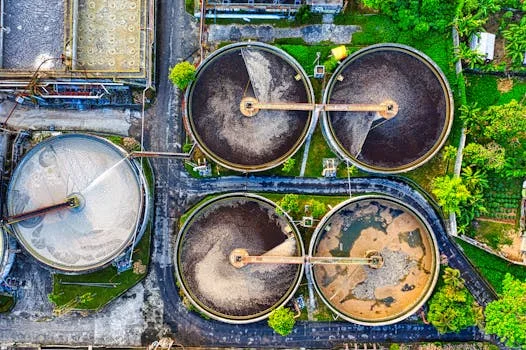
Capital cost for a package plant in Iran runs from $15,000 to $25,000 for 10–30 m³/day. Medium plants at 50–100 m³/day fall within $30,000 to $50,000. Plants above 200 m³/day start from $80,000 and move up with civil scope. These ranges are in USD, and a 2025 planning rate used here is 1 USD ≈ 500,000 IRR, which moves with the market.
Technology changes the capital line. An MBR usually carries a 30% premium over an SBR because the effluent is aimed at reuse. A DAF unit is about 20% more than basic sedimentation. Ozone can add a 15% premium versus chlorine dioxide.
Operating energy is often $0.08–$0.15/m³ of treated wastewater. Chemical cost sits around $0.05–$0.20/m³ and rises when DAF coagulant is continuous. MBR membrane replacement is typically $5,000–$15,000 every 5–8 years. Tehran projects can take a 10–20% premium, while Ahvaz can show a 5–10% discount, and import duty adds 15–25% on non-local parts.
Table 3 puts a 50 m³/day plant on a 10-year ledger in 2025 USD. The SBR total is $87,000, the DAF primary total is $107,000 and the MBR total is $124,000. Most 50 m³/day comparisons we run still show the SBR with the lower 10-year total when reuse is not required. Pick the MBR only when the permit or the reuse spec forces the tighter effluent.
Table 3: 10-Year Lifecycle Cost Comparison for a 50 m³/day Package Plant in Iran (2025, USD)
| Cost Category | MBR System | SBR System | DAF System (as primary treatment for O&G) |
|---|---|---|---|
| Capital Cost (Initial) | $65,000 | $50,000 | $60,000 |
| Energy Costs (10 years) | $22,000 (0.9 kWh/m³) | $12,000 (0.5 kWh/m³) | $7,000 (0.3 kWh/m³) |
| Chemical Costs (10 years) | $10,000 (minimal) | $15,000 (disinfection/pH adj.) | $30,000 (coagulants/flocculants) |
| Membrane Replacement (1-2 cycles) | $15,000 | N/A | N/A |
| Maintenance & Spares (10 years) | $12,000 | $10,000 | $10,000 |
| Total 10-Year Lifecycle Cost | $124,000 | $87,000 | $107,000 |
How to Qualify a Package Plant Supplier in Iran
A supplier for an Iranian package plant should show at least 5 years of work inside Iran and at least 3 reference plants in the same sector. The sector might be hospitals, petrochemicals or general industry. A local service crew has to be named, not implied. The offer should state compliance with the sewage discharge standard, not only with a drinking-water code.
Ask how the plant behaves when influent swings, which is normal across Iran’s industrial and municipal sewers. Ask for kWh/m³ at the design flow, not a best-day number. For an MBR, ask for the membrane warranty and the year a replacement is expected. Ask for chemical use per cubic meter and whether remote monitoring is included.
Walk away if there is no local presence, if the performance promise is vague, or if a pilot is refused on a difficult waste. A missing Operation and Maintenance manual in Persian is the same kind of warning. One Tehran hospital avoided a $50,000 redesign by requiring a 3-month pilot on an SBR, as the Clearfox example records. Most handover disputes we see start when that Persian manual is absent.
A practical payment split is 30% upfront, 40% at delivery and installation, and the remaining 30% after compliance sampling. Add liquidated damages if the effluent misses the permitted limit. Training for the local crew belongs in the same contract. Use the checklist below before you sign.
- Name the receiving body: surface water, absorption well or agricultural irrigation.
- Test a composite sample for BOD, COD, TSS, oil and grease, and salinity.
- Match the process to that limit, not to a catalog recovery claim.
- Record expected kWh/m³ at design flow and at the site temperature.
- Require an O&M manual in Persian and a named local service visit.
- Hold the last 30% until the compliance sample passes.
- Run a 3-month pilot when oil, drugs or salinity is outside the reference plant.
Who This Is For, and the Next Step
This guide is for plant engineers, EPC contractors and buyers sizing a package plant that discharges in Iran. It fits hospitals, petrochemical sites, food plants with an oil pretreatment step, and towns that are not on a sewer. The cost bands above are for screening a budget, not for a purchase order.
Look elsewhere if a municipal plant already accepts the flow with spare capacity and a signed letter. Also look elsewhere if the only spec on the table is drinking-water standard ISIRI 1053. A sewage package plant is the wrong tool for a potable-water specification.
Send design flow, oil and grease, salinity and the receiving body with a package-plant quote request before the process train is frozen. Include whether the outfall is surface water, an absorption well or irrigation. That single choice changes BOD, COD and TSS.
Frequently Asked Questions
Buyers of package plants in Iran usually ask five questions about hospital choice, price, sewers, discharge limits and salinity.
What is the best package wastewater treatment plant for a hospital in Iran?
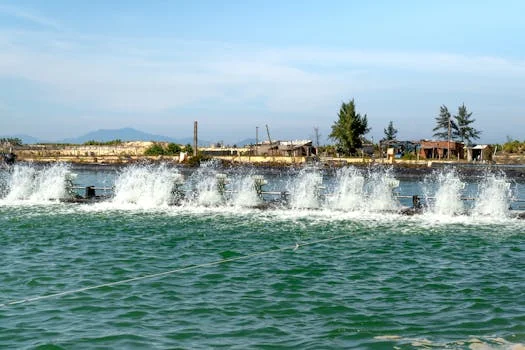
An SBR or an MBR with ozone or chlorine dioxide is the usual hospital choice in Iran. Both are sized for 95–99% pathogen removal and for the fecal numbers buyers still copy from older sheets. A 30 m³/day SBR in Tehran was priced near $35,000 in the Clearfox hospital example. Most hospital packages we size sit near that 30 m³/day flow, with chlorine dioxide at 5–10 mg/L and a 30-minute contact time.
How much does a package plant cost in Iran?
Cost runs from $15,000 for a 10 m³/day system to over $80,000 for a 200 m³/day plant. MBR equipment is typically 30% more than an SBR of the same flow. Tehran jobs often carry a 10–20% premium over other cities because land and labor cost more. Treat the band as an equipment budget, then add duty and civil works before you compare bids.
Does Iran have a sewer system?
Only about 35% of Iran’s urban population is connected to a centralized sewer, according to the PAA figure cited for this question. That leaves about 65% on septic tanks, absorption wells or a package plant. A separate PAA note says about 60% of urban residents lack a sewer connection. Use the city network map, not either percentage alone, before you decide that a package plant is required.
What are the Iranian standards for industrial wastewater discharge?
The binding sewage table, not ISIRI 1053, sets surface-water BOD at 30 mg/L, COD at 60 mg/L and TSS at 40 mg/L. Agricultural irrigation allows BOD 100 mg/L and COD 200 mg/L. Older bid sheets still quote COD below 100 mg/L, BOD below 30 mg/L, TSS below 40 mg/L and pH 6–9 under an ISIRI 1053 label. Oil and grease stay at 10 mg/L on the national table, with total coliform at 1,000 per 100 mL.
Can package plants handle Iran’s high-salinity wastewater?
Yes, a package plant can treat high-salinity wastewater in Iran when materials and biomass match the salt. Use 316 stainless steel or a suitable plastic on every wetted part, and salinity-tolerant biomass in the reactor. An MBR with PVDF membranes still reaches over 90% COD removal at salinity up to 5,000 mg/L. Pilot that salt level before you promise the same removal on a new waste.