What Makes Yeast Wastewater Hard to Treat
Yeast plant effluent is a high-strength, low-pH, warm stream that single-stage treatment cannot stabilize: raw baker's-yeast and brewery-yeast discharges typically run COD 8,000–25,000 mg/L, BOD 5,000–15,000 mg/L, TSS 3,000–10,000 mg/L, pH 4.0–6.5, and temperature 30–45°C, with sulfate 200–1,500 mg/L (HydropureWater field data, 2025–2026; consistent with the CN101734827A coagulative-precipitation precedent). The combination of soluble sugars, residual fermentation broth, and spent cell mass drives BOD; without equalization, batch fermenter dumps swing the feed by 2–4 pH units and 3–5× COD inside a single shift, which collapses downstream biology (per the equalization norm referenced in current suspended solids removal from industrial wastewater guidance).
Spent yeast cells are the secondary problem. They hold resale value as feed-grade protein, but if discharged untreated the same cells release intracellular sugars and proteins that lift BOD by 1,500–3,000 mg/L per percent of cell lysis. Recovery is therefore not just an OPEX line — it is a treatment prerequisite. The 2026 regulatory envelope varies by jurisdiction: China GB 21904-2008 remains the reference for baker's-yeast discharges in 2026 enforcement, the EU Industrial Emissions Directive 2010/75/EU BREF Food sets effluent ELVs for European yeast producers, and the U.S. applies EPA 40 CFR Part 405 subpart D for baker's yeast. Plants targeting reuse or zero liquid discharge layer RO/NF on top of these limits.
| Parameter | Raw yeast effluent (typical range) | 2026 compliance target |
|---|---|---|
| COD | 8,000–25,000 mg/L | <500 mg/L (reuse) / per local ELV |
| BOD | 5,000–15,000 mg/L | <300 mg/L (reuse) / per local ELV |
| TSS | 3,000–10,000 mg/L | <30 mg/L post-MBR |
| pH | 4.0–6.5 | 6.8–7.2 (pre-biology) |
| Temperature | 30–45°C | 35–38°C (mesophilic) |
| Sulfate | 200–1,500 mg/L | Monitor for UASB inhibition |
Four-Stage Process Train for Yeast Wastewater
The defensible 2026 train is four stages plus an optional RO polish: equalization and pH/temperature correction, physical/chemical pretreatment, anaerobic digestion, and aerobic MBR polishing. A well-designed train removes 99% of COD and 99.5% of TSS end-to-end at 100 m³/day, with biogas offsetting 30–50% of aeration energy.
Stage 1 — Equalization and pH/temperature correction. A covered equalization basin sized for 8–24 h HRT absorbs batch spikes; caustic dosing lifts pH to 6.8–7.2 and a plate heat exchanger pulls the stream down to 35–38°C for mesophilic biology. pH swings greater than 2 units cut biological COD removal rates by roughly half (per standard equalization design references).
Stage 2 — Physical/chemical pretreatment. A DAF pretreatment system with PAC 50–150 mg/L coagulant and PAM 1–5 mg/L flocculant strips 70–90% of TSS and 85–95% of FOG before the biological stages, matching the CN101734827A coagulative-precipitation workflow.
Stage 3 — Anaerobic biological. UASB fits plants below ~20 m³/h (HRT 24–48 h, OLR 8–15 kg COD/m³·d, COD removal 75–85%); IC reactors handle higher loads with HRT 4–8 h, OLR 20–35 kg COD/m³·d, and 80–90% COD removal. Biogas yield is 0.25–0.35 m³/kg COD removed (HydropureWater field data, 2026), recoverable for boiler use.
Stage 4 — Aerobic/MBR polishing. An MBR polishing system using flat-sheet DF modules runs at HRT 8–16 h and MLSS 8,000–12,000 mg/L, delivering effluent of <500 mg/L COD, <30 mg/L TSS, and <100 mg/L NH3-N. Optional RO polishing lifts recovery to 85–95% with 99% color and salt removal for reuse or ZLD duty.
| Stage | Equipment | Key parameters | Removal target |
|---|---|---|---|
| 1. Equalization | EQ basin, NaOH dosing, PHE cooler | HRT 8–24 h, pH 6.8–7.2, T 35–38°C | Smooth shock loads |
| 2. Pre-treatment | DAF + coagulant dosing | PAC 50–150 mg/L, PAM 1–5 mg/L | TSS 70–90%, FOG 85–95% |
| 3. Anaerobic | UASB or IC reactor | OLR 8–35 kg COD/m³·d | COD 75–90% |
| 4. MBR polish | Flat-sheet MBR (DF series) | HRT 8–16 h, MLSS 8,000–12,000 mg/L | COD <500, TSS <30 mg/L |
| 5. RO (optional) | Industrial RO unit | Recovery 85–95% | Reuse / ZLD |
Step-by-Step Operating Procedure
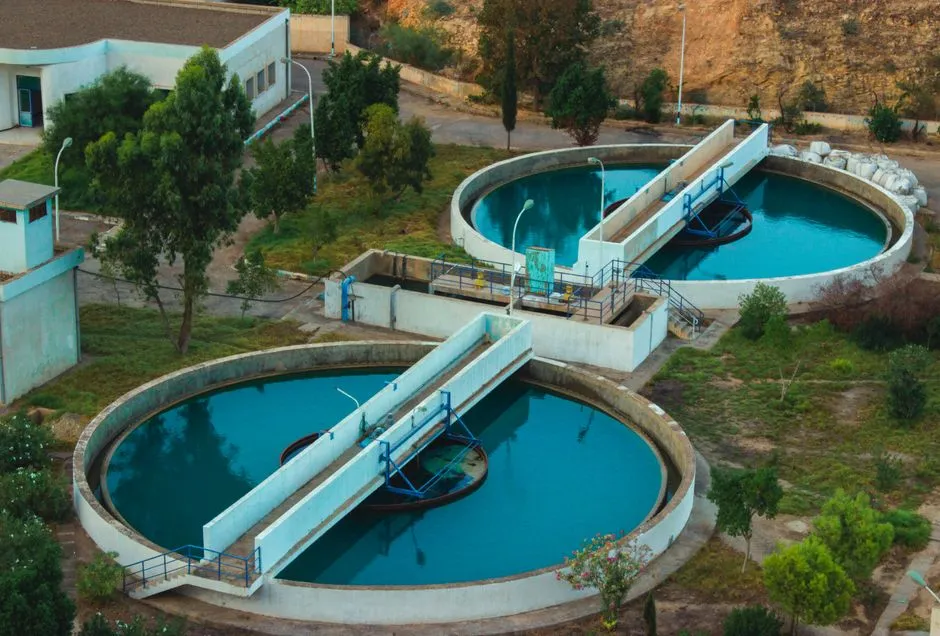
Five operator-grade steps move a yeast plant from raw discharge to a compliant or reusable effluent stream.
Step 1 — Screening. Lift raw effluent through a rotary bar screen (2–5 mm aperture) to capture spent yeast and grain carry-over. Recovered solids go to a holding tank for resale or dewatering. Screening protects the DAF, pump seals, and downstream biology from ragging and cell clumps that would otherwise consume coagulant.
Step 2 — Equalize and condition. Pump screened effluent to a covered basin instrumented with pH, temperature, and conductivity probes. Automatic coagulant dosing systems (or caustic-only loops, depending on the design) lift pH to 6.8–7.2; a plate heat exchanger pulls the stream to 35–38°C. Target equalization HRT 8–24 h.
Step 3 — DAF pretreatment. Dose PAC 50–150 mg/L and PAM 1–5 mg/L upstream of the DAF; run the skimmer cycle and verify TSS removal 70–90% with an inline TSS meter. Float (FOG + cells) goes to sludge handling; subnatant flows to the anaerobic stage.
Step 4 — Anaerobic digestion. Feed the UASB or IC reactor at the design OLR (8–15 or 20–35 kg COD/m³·d). Hold pH 6.8–7.4 and VFA/alkalinity below 0.3 to protect methanogens; sulfate above 1,500 mg/L requires monitoring for sulfide toxicity. Collect biogas in a dual-membrane gasholder for boiler re-use — a 100 m³/day yeast plant typically offsets 30–50% of aeration energy this way (per aeration energy optimization benchmarks).
Step 5 — MBR polish and optional RO. Run the MBR at DO 2–4 mg/L and MLSS 8,000–12,000 mg/L. Trigger CIP when TMP exceeds -25 kPa. If reuse is targeted, the MBR permeate feeds an RO unit operated at 85–95% recovery.
Equipment Comparison: DAF vs. IC Reactor vs. MBR
Procurement decisions for yeast plants hang on flow range, removal target, and the reuse grade. The table below compares the three load-bearing unit operations for a typical 100 m³/day yeast plant in 2026.
| Equipment | Flow range | Footprint | Energy use | CAPEX band (2026) | Best fit |
|---|---|---|---|---|---|
| DAF | 4–300 m³/h | Compact (10–25 m²) | 0.05–0.1 kWh/m³ | $25k–$90k | TSS/FOG strip, any yeast plant |
| IC reactor | 5–50 m³/h per unit | Tall (8–12 m) but small footprint | 0.1–0.2 kWh/m³ (recirculation) | $80k–$220k | High-strength yeast, COD >8,000 mg/L |
| MBR DF (flat sheet) | 32–135 m³/day per module | 60% smaller than CAS + clarifier | 0.4–0.7 kWh/m³ (aeration) | $60k–$180k | Reuse-grade polish, bulking-sludge sites |
| RO (optional) | 50–500 m³/day per skid | Adds ~15–20 m² | 0.8–1.2 kWh/m³ permeate | $40k–$150k | Reuse or ZLD duty |
DAF alone is enough only for very low-strength bakery streams below 200 mg/L COD after equalization — atypical for a working fermenter. Once raw COD exceeds 8,000 mg/L, anaerobic digestion plus MBR is mandatory; MBR cuts footprint by 60% versus conventional activated sludge with a secondary clarifier and eliminates bulking-sludge events. RO polishing is justified when fresh-water tariffs exceed $1.50/m³ or ZLD is mandated by the local regulator (per current UASB operating cost benchmarks).
Sludge Management and Reuse Economics
Sludge yield across the four-stage train is 0.05–0.15 kg DS per kg COD removed (HydropureWater field data, 2026). Dewatering on a plate-and-frame filter press drives cake to 25–35% DS, which is truckable and suitable for landfill or co-incineration. Screen and DAF float captured early in the train are typically diverted as feed-grade yeast, returning 5–15% of treatment OPEX as a revenue offset — a meaningful line item in any 2026 vendor brief.
Biogas utilization closes the energy loop: 0.25–0.35 m³/kg COD removed, at methane content 60–70%, offsets 30–50% of aeration energy in current OPEX models. RO polish costs 0.8–1.2 kWh/m³ plus $0.05–$0.15/m³ in membrane replacement — economically defensible when fresh-water tariffs exceed $1.50/m³ or where reuse duty covers CIP, boiler feed, and cooling-tower makeup, as detailed in current fermentation wastewater reuse guidance. The 2026 decision rule is straightforward: discharge-only sites run Stage 1–4; sites with reuse mandates or ZLD exposure add Stage 5.
Frequently Asked Questions
What is the best biological treatment for yeast wastewater? Anaerobic digestion (UASB or IC) is the load-bearing step, removing 75–90% of COD; an aerobic MBR then polishes effluent to <500 mg/L COD.
Can yeast wastewater be reused? Yes. An MBR followed by RO polishing achieves 85–95% recovery, suitable for CIP rinse, boiler feed, and cooling-tower makeup.
How much biogas does anaerobic treatment of yeast wastewater produce? 0.25–0.35 m³ per kg COD removed, recoverable for boiler use and offsetting 30–50% of aeration energy at typical yeast plants.
What is the typical CAPEX for a 100 m³/day yeast wastewater plant in 2026? $180,000–$420,000 depending on the reuse grade; OPEX runs $0.25–$0.55/m³ inclusive of chemical and energy.
Which 2026 discharge standard applies? Jurisdiction-dependent: China GB 21904 for baker's-yeast sites, EU BREF Food under IED 2010/75/EU for European producers, and EPA 40 CFR Part 405 for U.S. baker's-yeast plants — with stricter reuse or ZLD limits layered on top where mandated.