Why Dye Manufacturing Wastewater Demands a Multi-Stage Treatment Train
Dye manufacturing wastewater treatment equipment must be specified as a multi-stage train because reactive and disperse dye effluents combine four properties that no single unit operation can handle simultaneously: extreme color (50,000–500,000 ADMI units from concentrated dyebaths), high salinity (5–15% NaCl + Na₂SO₄ from reactive dyeing exhaustion baths), high COD (1,000–20,000 mg/L), and batch variability (pH 2–12 swings, temperature 30–80 °C between dyebath dumps and rinse water). Activated sludge alone cannot break the azo chromophore: the sulfonate (–SO₃⁻) and sulfonyl (–SO₂–) electron-withdrawing groups on reactive dyes suppress aerobic biodegradation, dropping BOD/COD ratios to 0.15–0.35. Total dissolved solids above 5% impose osmotic stress on the biomass, causing cell lysis and foaming in conventional aeration basins.
The 2026 discharge bar in the major dye-producing regions is unforgiving. India CPCB textile cluster norms require <50 mg/L COD and <1 ADMI color on the receiving stream, with zero liquid discharge (ZLD) mandated for new dye clusters in Gujarat and Tamil Nadu. China GB 4287-2012 (updated annex, effective 2024-09) sets 80 mg/L COD and 40× dilution color limits for direct surface discharge. The EU textile BREF BAT-AEL sits at 125 mg/L COD with low visible discoloration for indirect discharge to municipal sewer. Hitting any of these bars from a 10,000 mg/L COD influent requires COD reduction above 99% — impossible for one unit operation. The peer-reviewed 2024–2025 Fenton/acid-dye optimization study (ResearchGate, Modeling and optimization of acid dye manufacturing wastewater treatment with Fenton's reagent) confirms that physico-chemical destruction is the standard first workhorse, with 70–85% color and 50–65% COD removal achievable on optimized Fenton alone.
Combined trains (equalization → Fenton or electrocoagulation → DAF → MBR → RO) reliably deliver the residual <50 mg/L COD and <1 ADMI color required by the strictest 2026 standards while also producing RO permeate reusable in the dye house.
Stage 1: Equalization, Cooling and Primary Screening
The front end of a dye plant treatment train protects every downstream unit from shock loads and fouling. The equalization tank should be sized at 12–24 hours of average flow with mechanical agitation (slow-speed paddle at 0.3 m/s tip speed) to prevent grit deposition and short-circuiting. pH, temperature, and ORP probes feed the SCADA so operators can blend hot dyebath dumps with cold rinse streams to a target pH of 6–9 and temperature below 38 °C before the stream leaves the equalization basin. A mechanical bar screen with 5–10 mm aperture removes fibers, packaging lint, and fabric scraps that would otherwise blind the rotary mechanical bar screen feed and accumulate on DAF lamella plates.
When dyebath discharge exceeds 45 °C, a plate heat exchanger or induced-draft cooling tower is mandatory: Fenton kinetics slow above 40 °C because H₂O₂ decomposes to O₂ rather than ·OH radicals, and MBR biomass loses activity above 38 °C. Equalized effluent targets are pH 6–9, temperature <38 °C, TSS <500 mg/L. Hitting these targets at the equalization outlet is what allows the rest of the train to operate at design removal efficiency without constant operator intervention.
Stage 2: Physico-Chemical Destruction of Color and COD
Stage 2 is the single most consequential design decision in the train — it determines what the biological stage has to finish. Four options dominate dye plant practice:
Fenton oxidation uses Fe²⁺ + H₂O₂ at pH 2.5–3.5 with a Fe:H₂O₂ molar ratio of 1:5 to 1:10. The 2024–2025 ResearchGate optimization paper reports 70–85% color removal and 50–65% COD removal on acid dye effluent under response-surface-optimized conditions (H₂O₂ dose 1,500–2,500 mg/L, FeSO₄·7H₂O 800–1,200 mg/L, reaction time 60–90 min). Fenton handles the highest-COD reactive dye streams but generates iron-laden sludge at roughly 0.4–0.6 kg dry solids per kg COD removed.
Electrocoagulation with Al or Fe electrodes at 10–30 A/m² current density delivers similar color removal with 60–80% less sludge volume, but draws 2–5 kWh/m³ and becomes passivated when feed chloride exceeds 8% NaCl because Cl₂ evolution at the anode competes with Fe²⁺ release.
Ozone-based AOPs (O₃ alone or O₃/H₂O₂ at 2–4 mg O₃ per mg COD removed) excel at residual color polishing with zero sludge, but the ozone generator CAPEX is high and the operating cost tracks electricity prices.
Chemical coagulation + DAF uses PAC 200–500 mg/L plus anionic PAM 1–3 mg/L as a pre-polish before or after Fenton; a DAF clarifier at 15–25 m/h hydraulic surface loading removes 80–95% of TSS and reduces Fenton sludge volume by 30–40%. The DAF system for Fenton-treated dye effluent integrates saturator, recycle pump, and scraper in one skid; for process detail see the DAF engineering process guide.
Default rule: pick Fenton for high-COD reactive dye plants where reagent cost dominates and Fe sludge can be dewatered on-site; pick electrocoagulation for plants below 300 m³/day or where Fe sludge disposal is a regulatory problem. Reagent delivery should be automated via an automatic chemical dosing for Fenton reagent skid to keep Fe:H₂O₂ stoichiometry on target despite feed variability.
| Technology | COD removal | Color removal | Sludge yield | Power draw | Salt tolerance | Best fit |
|---|---|---|---|---|---|---|
| Fenton oxidation | 50–65% | 70–85% | 0.4–0.6 kg/kg COD | 0.1–0.2 kWh/m³ | High (no Cl₂) | High-COD reactive dye, >500 m³/day |
| Electrocoagulation | 40–60% | 65–80% | 0.15–0.25 kg/kg COD | 2–5 kWh/m³ | Poor (>8% NaCl passivates) | <300 m³/day, low-sludge priority |
| Ozone / O₃-H₂O₂ | 30–50% | 80–95% | None | 1.5–2.5 kWh/m³ | High | Color polishing on partially treated effluent |
| Coagulation + DAF | 20–35% | 40–60% | 0.3–0.5 kg/kg TSS | 0.05 kWh/m³ | High | Pre- or post-Fenton TSS strip |
Stage 3: Biological Polishing with MBR or SBR
After Fenton or electrocoagulation knocks the stream to roughly 1,000–3,000 mg/L COD, biological polishing finishes the job. A membrane bioreactor (MBR) is the default for plants above 500 m³/day because the submerged PVDF membrane at 0.1–0.4 µm pore size retains biomass and physically rejects residual dye molecules that escaped oxidation. An MBR system for dye plant biological polishing typically delivers <100 mg/L COD and <50 ADMI color from a 2,000–5,000 mg/L COD Fenton effluent when operated at DO 1.5–2.5 mg/L, HRT 18–36 h, MLSS 8,000–12,000 mg/L, and SRT 30–60 days. The long SRT is essential: aromatic amines from partial azo-dye reduction need 25–40 days of acclimation before the biomass can mineralize them. PVDF flat sheet membrane modules tolerate the backwash and chemical cleaning (NaOCl 1,000 mg/L + citric acid 2,000 mg/L) typical of dye effluent without flux collapse, and 2026 market data on MBR adoption can be reviewed in the MBR market outlook 2026.
For plants below 500 m³/day, a sequencing batch reactor (SBR) cuts CAPEX by 25–35% — no membrane modules, simpler blower control — but the 8–12 h fill/aerate/settle/decant cycle limits throughput and produces more variable effluent color because settling cannot match membrane solid-liquid separation. Wasted activated sludge at 8–12 g/L is dewatered on a plate and frame filter press for Fenton sludge to reach 22–28% dry solids for off-site hazardous-waste disposal. General guidance on the upstream side is in the suspended solids removal guide.
Stage 4: Polishing, RO Reuse and ZLD Options
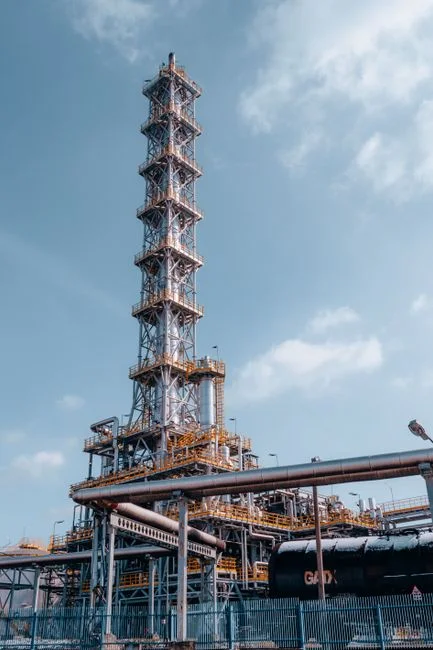
The polishing step decides whether the plant pays water-cess and discharge fees or recycles permeate back to the dye house. A multimedia sand filter followed by an activated-carbon adsorber takes MBR effluent from 1–2 NTU turbidity and 30–50 ADMI color down to <1 NTU and <5 ADMI, removing trace refractory color and any heavy metals (Cu, Cr) used in mordant and metal-complex dyes. The Jan 2023 ResearchGate review of activated-carbon adsorption confirms carbon remains the workhorse polishing step for refractory color and trace contaminants in dye effluent. For more on water-reuse economics, the water reuse market drivers 2026 article documents the freshwater-cost trend.
An RO system for dye house water reuse configured as two-pass at 65–75% recovery sends 60–80% of MBR permeate back to the dye house. For a 1,000 m³/day plant, that is up to 2.5 million L/day of freshwater avoided. Brine at 8–12% TDS goes to a multi-effect evaporator (MEE) or mechanical vapor recompression (MVR) crystallizer to achieve ZLD when mandated by India CPCB cluster rules. The multimedia filter skid and a high-efficiency sedimentation tank for brine pre-concentration round out the polishing train.
| Standard | Discharge point | COD limit (mg/L) | Color limit | TDS / salinity | Notes |
|---|---|---|---|---|---|
| India CPCB textile clusters (2026) | Surface water / ZLD | <50 | <1 ADMI | ZLD mandated in Gujarat, TN | Cluster CETPs must meet this or ZLD |
| China GB 4287-2012 (updated annex) | Surface water | 80 | 40× dilution (≈40 ADMI) | No specific TDS cap | Effective 2024-09, enforced 2026 |
| EU textile BREF BAT-AEL | Municipal sewer | 125 | Low visible discoloration | No specific TDS cap | Indirect discharge to biological WWTP |
CAPEX, OPEX and ROI for a 500 m³/day Dye Plant
For a 500 m³/day full train (equalization + Fenton + DAF + MBR + RO), 2026 China-export CAPEX sits at $1.4M–$2.1M equipment-only, plus 18% for installation, freight, and commissioning — call it $1.65M–$2.50M total. OPEX runs $1.80–$2.60 per m³ treated, dominated by H₂O₂ (35% solution) at $0.40/m³, FeSO₄·7H₂O at $0.18/m³, RO membrane replacement at $0.06/m³, and power at $0.30–$0.50/m³ (HydropureWater 2026 cost basis).
Adding ZLD (MEE + crystallizer) adds $280–$450 per m³/day of incremental CAPEX and lifts OPEX to $4.50–$6.20/m³, but eliminates water-cess of $0.10–$0.30/m³ and saves $0.55–$0.75/m³ of freshwater — net OPEX delta is roughly +$3.20/m³, recovered over 2.5–4 years at current Indian and Southeast Asian dye market water tariffs.
| Cost line | 500 m³/day base train | 500 m³/day with ZLD |
|---|---|---|
| Equipment CAPEX | $1.4M–$2.1M | $1.95M–$2.85M |
| Installation + commissioning (+18%) | $0.25M–$0.38M | $0.35M–$0.51M |
| OPEX ($/m³ treated) | $1.80–$2.60 | $4.50–$6.20 |
| Reagent H₂O₂ + FeSO₄ ($/m³) | $0.58 | $0.58 |
| Power ($/m³) | $0.30–$0.50 | $0.80–$1.20 |
| RO membrane replacement ($/m³) | $0.06 | $0.06 |
| Water-cess avoided ($/m³) | $0 | −$0.10 to −$0.30 |
| Freshwater saved ($/m³) | $0 | −$0.55 to −$0.75 |
| Payback | 2.5–4 yr (vs freshwater purchase) | 2.5–4 yr (vs cess + freshwater) |
Equipment Selection Decision Matrix
Use this matrix as a one-page spec aid when you sit down with procurement. The default flow sheet for a plant under 300 m³/day is equalize + Fenton + DAF + SBR; for 300–1,500 m³/day add MBR + RO; for ZLD-mandated clusters add MEE + crystallizer after RO brine concentration.
| Stage | Small (<300 m³/d) | Mid (300–1,500 m³/d) | ZLD-mandated |
|---|---|---|---|
| Equalization | 12 h HRT, 1 basin | 18 h HRT, 2 basins | 24 h HRT, 2 basins + cooling |
| Physico-chemical | Fenton or electrocoagulation | Fenton + DAF | Fenton + DAF |
| Biological | SBR | MBR (PVDF) | MBR (PVDF) |
| Polishing | Sand + carbon | Sand + carbon + RO | Sand + carbon + 2-pass RO + MEE |
| Sludge | Belt press | Plate-and-frame press | Plate-and-frame press + dryer |
Two hard rules override the matrix: if feed chloride exceeds 8% NaCl, prefer electrocoagulation over Fenton to avoid Cl₂ generation and anode passivation; if the buyer wants RO permeate back to dyeing, recovery must target 65–75% to keep permeate conductivity below 200 µS/cm (suitable for reactive and disperse dyebath makeup).
Frequently Asked Questions
Q1. Fenton vs electrocoagulation — which gives better COD/color removal on dye effluent?
On optimized acid dye effluent, Fenton delivers 70–85% color and 50–65% COD removal with 0.4–0.6 kg sludge per kg COD; electrocoagulation delivers 65–80% color and 40–60% COD with 60–80% less sludge but 10× the power draw. Fenton wins on OPEX for plants above 500 m³/day; electrocoagulation wins for small plants or where Fe sludge disposal is constrained.
Q2. Can an MBR alone hit the 2026 discharge limits?
No for color — MBR typically leaves 30–50 ADMI residual color, well above the <1 ADMI India CPCB bar. Yes for COD — MBR delivers <100 mg/L COD from a 2,000–5,000 mg/L feed, which passes the 80 mg/L China and 125 mg/L EU limits but not the 50 mg/L India limit without downstream activated-carbon polish or RO.
Q3. Is ZLD economic for small dye units under 200 m³/day?
MEE CAPEX below $300K becomes uneconomic per m³/day because the evaporator surface area is fixed. For plants under 200 m³/day, the cheaper ZLD path is a brine concentrator (reverse osmosis at 50% recovery) plus forced-decrystallization solar pond, not MEE. Above 500 m³/day, MEE and MVR both deliver payback inside 4 years.
Q4. Can I discharge to municipal sewer instead of meeting surface-water color limits?
Yes — India CPCB and EU BREF both allow higher COD and color when discharging to a municipal biological WWTP (typically 250 mg/L COD, 100–200 ADMI color). China GB 4287-2012 does not have a separate sewer-discharge category, so the surface-water limits apply even to indirect discharge.
Q5. How long do RO membranes last in dye effluent?
With proper pretreatment (MBR + activated carbon, SDI <3) and CIP every 4–6 weeks, RO membranes in dye service last 18–36 months at 65% recovery. Without carbon polish, membrane life drops to 9–14 months because residual color fouls the polyamide layer.