What Makes Soft Drink Wastewater a Centrifuge Job
A decanter centrifuge for soft drink wastewater design handles sugar- and syrup-rich effluent (BOD typically 1,500–6,000 mg/L, TSS 500–4,000 mg/L) by accelerating 1,500–4,000g in a horizontal bowl running 2,500–4,000 rpm. For 2026 bottling plants, a 3-phase decanter with L/D ratio 3:1 to 4:1 and polymer dose 0.5–8 kg per ton dry solids is the standard specification, with CAPEX ranging $25K–$220K by capacity.
The influent picture is dominated by sucrose, fructose, and caramel-color organics that arrive in surges. The 2007 Malaysian Journal of Science batch anaerobic study (26(1):23-34) on combined soft-drink effluent reported composite feed of COD 2,500–9,000 mg/L, BOD 1,500–6,000 mg/L, TSS 500–4,000 mg/L, pH 3.5–6.5, and temperature 25–40°C — a stream that is acidic, hot, and carbohydrate-dense. A DAF unit alone can strip floatables but leaves a sugary biological sludge that bulks in the clarifier; a recessed-chamber filter press handles the volume but fouls within weeks as residual sugar polymerizes on the cloth. The decanter's high-G scroll discharge handles the density gradient and the abrasive, gritty carbonation residue that neither a DAF nor a filter press tolerates well.
Inside a typical bottling or CSD concentrate plant, three streams blend before the centrifuge sees them: the bottle-washer overflow (warm, caustic, ~500–1,200 mg/L TSS), the CIP rinse (high-pH, low-COD), and the syrup-room spill (peak loads up to 25,000 mg/L COD when a batch valve fails). Equalization downstream of the syrup room is what makes the centrifuge duty stable. Without it, the bowl torque loop chases syrup spikes and the centrate TSS climbs above 1,000 mg/L within minutes.
Pre-Treatment Train: Screening, pH Correction, and DAF
The centrifuge's pre-treatment train is short but non-negotiable: rotary bar screen, pH correction, DAF, and an equalization basin. A 2–5 mm rotary bar screen for headworks protection catches bottle caps, label fragments, and broken glass before they reach the scroll flights — a 5 mm shard that bypasses screening will chip a scroll leading edge in under 200 hours.
pH correction to 6.5–7.5 with caustic (NaOH) or hydrated lime precedes polymer conditioning. Sugar-rich streams outside this band consume 3–4× more flocculant because the anionic sugar fragments compete with suspended solids for cationic polymer sites. The 2007 Malaysian Journal data put raw soft-drink pH at 3.5–6.5, so most plants dose 50–120 mg/L NaOH equivalent per liter of feed.
DAF follows for oil/grease and floatable sugar: 4–15 minute hydraulic retention, 0.3–0.5 m³/m² surface overflow rate, and a 6–8 bar saturator recycle of 20–30% of forward flow. A properly sized DAF pre-treatment unit for soft-drink wastewater drops free oil to under 50 mg/L and floatable TSS by 60–80% before the feed enters the equalization basin. Skipping DAF on a stream with 200–800 mg/L free oil from label-adhesive breakdown pushes that oil load into the decanter, where it coats the bowl wall and drops G-force output by 15–25%.
The equalization basin sized for 8–24 hours of residence flattens syrup-batch BOD peaks and gives the polymer make-down line a steady composite to dose against. Without EQ, the centrifuge torque controller cannot hold cake dryness, and centrate TSS oscillates between 300 and 1,200 mg/L over a single shift.
Decanter Centrifuge Design Parameters for Soft Drink Effluent
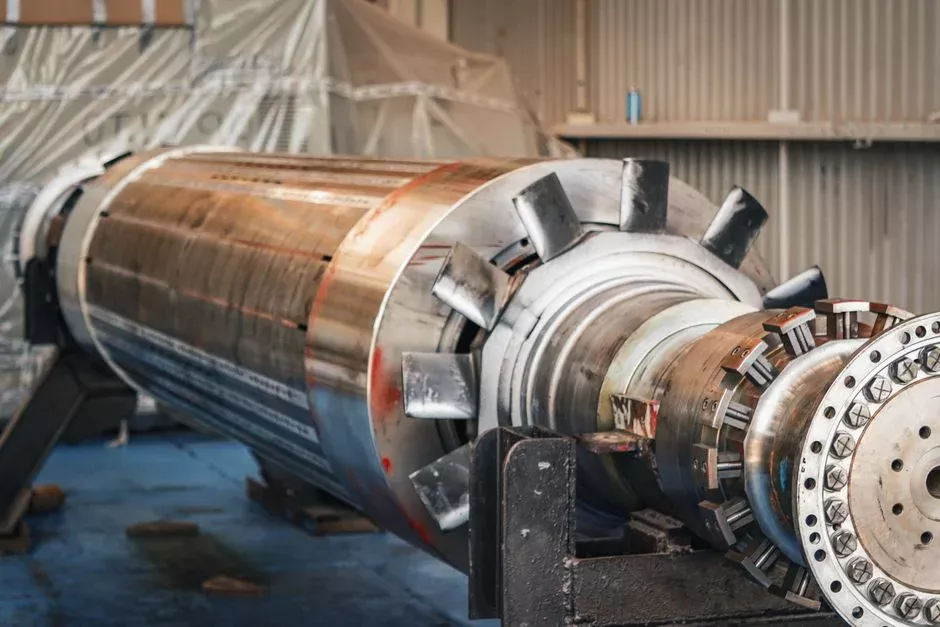
Sugar-bound biological sludge needs the high end of the standard decanter parameter envelope. The design window for a 2026 bottling plant sits at 1,500–4,000g, bowl speed 2,500–4,000 rpm, L/D ratio 3:1 to 4:1, beach angle 6–12°, differential speed 5–40 rpm, and 3–8 m³/h hydraulic capacity per 100 kg DS/h feed. The table below is the spec sheet a project engineer can paste into a P&ID review.
| Parameter | Design Range (soft-drink biosolids) | Engineering Note |
|---|---|---|
| Bowl speed | 2,500–4,000 rpm | Upper half for syrup-bound sludge |
| G-force | 1,500–4,000g | Higher G cuts cake moisture by 3–5 points |
| Bowl L/D ratio | 3:1 to 4:1 | Longer L/D for biological sludge; 4:1 for cake dryness >26% DS |
| Beach angle (2-phase) | 6–10° | Shallow beach = drier cake, lower solids throughput |
| Beach angle (3-phase) | 8–12° | Steeper beach improves oil-phase separation |
| Scroll differential speed | 5–40 rpm | Biological sludge needs 25–40 rpm; hold torque <60–80% nameplate |
| Hydraulic capacity | 3–8 m³/h per 100 kg DS/h | Use 5 m³/h as midpoint for sizing |
| Main drive power | 22–75 kW (5–50 m³/h units) | ABB/Siemens VFD recommended for torque control |
| Materials (wetted) | 2205 duplex SS or higher | Resists chloride pitting from CIP carryover |
| Scroll wear protection | Tungsten carbide or SiC flight tips | 3–5× life vs hard-faced mild steel on abrasive grit |
The longer L/D is a deliberate trade: a 4:1 bowl at 3,200 rpm delivers 25–30% DS cake on biological soft-drink sludge where a stock 2.5:1 bowl stalls at 20–22% DS. The downstream MBR or RO polish step becomes cheaper because centrate TSS drops from ~700 mg/L to under 400 mg/L. CIP carryover chloride is the silent killer of scroll flights in this duty — a 2205 duplex stainless scroll with tungsten-carbide tips is the minimum spec for a syrup line; 904L is justified only where chloride exceeds 500 mg/L in the feed.
2-Phase vs 3-Phase Decanter: Which Fits a Beverage Plant
Configuration choice comes down to free-oil content. A 2-phase decanter (solids + clarified water) is the default for CIP and rinse streams with negligible free oil, and CAPEX lands in the $25K–$120K band. A 3-phase decanter (solids + oil phase + water phase) is required where bottle-washer effluent carries 200–800 mg/L free oil from label-adhesive breakdown and lubricant carryover.
| Criterion | 2-Phase Decanter | 3-Phase Decanter |
|---|---|---|
| Phases separated | Solids + clarified water | Solids + oil + water |
| Free-oil tolerance | <50 mg/L feed | 200–800 mg/L feed |
| CAPEX range (2026) | $25K–$120K | $80K–$220K |
| CAPEX premium vs 2-phase | Baseline | +25–45% |
| OPEX premium | Baseline | +10–20% (more power, more wear parts) |
| Eliminates downstream equipment | No | Yes — replaces oil-water separator (~$15K–$40K) |
| Net footprint impact | Compact | Smaller overall plant when OWS eliminated |
| Typical 2026 applications | CIP, syrup-spill, rinse streams | Bottle-washer overflow with oil, CSD concentrate lines |
Competitive reference points in the buyer's specification include the Kosun D Series food-industry decanter and the ZK 2-phase/3-phase product family, both of which publish 1,500–4,000g G-force ratings and 2205 SS scroll options. The 3-phase premium pays back quickly on any line carrying more than ~150 mg/L free oil, because the downstream oil-water separator, sludge pit, and associated civil work drop out of the layout.
Polymer Dosing and Cake Dryness Targets
Polymer is the single largest variable operating cost on a decanter. Cationic polyacrylamide (CPAM) at 50–80% charge density is the standard flocculant for biological soft-drink sludge, with a make-down concentration of 0.1–0.3% and a maturation time of 30–60 minutes before dosing. The dose scales with feed TSS, not flow.
| Feed TSS (mg/L) | Polymer Dose (kg/t DS) | Expected Cake Dryness (2-phase) | Expected Cake Dryness (3-phase) |
|---|---|---|---|
| 1,000–2,000 | 0.5–1.5 | 22–25% DS | 25–28% DS |
| 2,000–4,000 | 2–4 | 20–23% DS | 23–26% DS |
| >4,000 | 4–8 | 18–22% DS | 22–25% DS |
Target centrate quality is <500 mg/L TSS to feed a downstream MBR or RO without excessive backwash load. A centrate consistently above 800 mg/L TSS means the polymer dose is under-tuned or the make-down is not maturing; a centrate below 200 mg/L usually means the dose is overdosed and the operator is paying 30–50% more for flocculant than the process needs. A polymer dosing skid for the centrifuge with flow-paced control and in-line zeta-potential feedback will hold centrate inside the 300–500 mg/L band automatically. Cake dryness target is 22–28% DS on a 2-phase unit and 25–30% DS on a 3-phase unit running biological sludge — outside those ranges, hauling cost or incineration yield will penalize the plant.
CAPEX, OPEX, and 2026 Payback
CAPEX bands for 2026 are capacity-driven and have hardened roughly 4–7% over 2024 quotes on stainless and drive electronics. A 5 m³/h pilot unit lands at $25K–$45K; a 20 m³/h production unit at $80K–$130K; a 50 m³/h full-line unit at $180K–$220K. Those numbers exclude civil work, polymer skid, and interconnecting piping, which typically add 30–55% to a turnkey install.
OPEX per cubic meter of feed breaks down as: $0.04–$0.12 in polymer (the dominant line item at 50–60% of OPEX), $0.015–$0.035 in power at 40–65 kWh/h installed for a 20–30 m³/h unit, and $0.01–$0.03 in wear parts (scroll flight replacement every 8,000–14,000 hours, bearings at 30,000–50,000 hours). Water-recycle savings of $1.5–$3.5 per cubic meter in regions with scarcity pricing — the Middle East, North China Plain, southern Spain — push simple payback to 14–22 months for a typical 30 m³/h bottling line.
A plate-and-frame filter press as a cost comparator runs 30–40% lower on CAPEX for the same dry-solids throughput, but 2–3× higher on OPEX from filter-cloth replacement every 1,500–3,000 cycles and 3–6 m³/h of wash water per cycle. For plants below 10 m³/h and intermittent duty, the filter press often wins; above 15 m³/h continuous, the decanter wins on 5-year lifecycle. The crossover point is detailed in our filter press vs centrifuge comparison.
Compliance and Discharge Targets for Beverage Effluent
Discharge rules for beverage effluent are stricter than for general industrial wastewater because residual sugar drives receiving-water BOD. The post-secondary-treatment ceilings that the centrifuge must support — not meet on its own — are: China GB 19821-style food-sector limits at COD ≤100 mg/L, BOD ≤30 mg/L, SS ≤70 mg/L; EU Urban Waste Water Directive 91/271/EEC food-industry parameters at COD ≤125 mg/L, BOD ≤25 mg/L; US EPA beverage bottling guidelines under 40 CFR Part 407 at BOD5 ≤20 mg/L daily max for direct discharge. The centrifuge only delivers the stream to the secondary clarifier threshold; an MBR polishing stage after the decanter is the standard route to hit any of those ceilings.
Where discharge rules allow, routing the centrate stream back to the CIP loop (a closed-loop recycle) drops operating cost by 35–50% on a bottling line because it displaces both the polymer bill and the metered-water bill simultaneously. The 2007 Malaysian Journal study also documented that anaerobic treatment of soft-drink wastewater at 35°C achieves 75–85% COD removal, which is the route plants take when sewer discharge fees exceed ~$1.20 per m³.
Selecting the Right OEM in 2026
The procurement decision comes down to five non-negotiables: material of construction (2205 duplex stainless or higher on all syrup-contact surfaces), full stainless scroll (not hard-faced mild steel), ABB or Siemens VFD on the main and back drives, automatic torque control with scroll-torque feedback, and on-site pilot availability. Vendors that fail any one of those five will cost the plant 6–12 months of commissioning pain and 15–25% higher OPEX over a 10-year horizon.
Competitive designs worth benchmarking in the 2026 buyer's specification include the Kosun D Series food-industry decanter, the ZK Separation 2-phase/3-phase product family, and Centrisys/CNP biosolids decanters — all of which publish 1,500–4,000g ratings and full SS scroll options. Insist on a 7–14 day on-site pilot with polymer optimization before PO; the $8K–$15K pilot cost typically saves 1–3 months of commissioning and identifies the right CPAM charge density before the order is locked. The food-industry polymer dosing guide and the 3-phase decanter duty on oily streams reference cover the make-down and oil-phase selection logic in more depth.
Frequently Asked Questions
What G-force does a decanter centrifuge need for soft-drink wastewater?
A 3-phase decanter for sugar-bound soft-drink biosolids runs 1,500–4,000g at 2,500–4,000 rpm, with the upper half of that range used when feed TSS exceeds 4,000 mg/L or cake dryness above 26% DS is required.
How much polymer does a decanter centrifuge consume on beverage biosolids?
CPAM dose at 50–80% charge density runs 0.5–1.5 kg/t DS at 1,000–2,000 mg/L feed TSS, 2–4 kg/t DS at 2,000–4,000 mg/L, and 4–8 kg/t DS above 4,000 mg/L — translating to $0.04–$0.12 per m³ of feed in 2026 polymer cost.
What CAPEX should a 20 m³/h bottling plant budget for a decanter centrifuge in 2026?
A 20 m³/h production-unit decanter with 2205 duplex scroll and VFD lands at $80K–$130K equipment-only, or $110K–$190K turnkey with polymer skid, DAF tie-in, and interconnecting piping for a typical 30 m³/h plant line.
What discharge limits apply to beverage bottling wastewater in China, the EU, and the US?
China GB 19821 food-sector ceilings are COD ≤100 mg/L, BOD ≤30 mg/L, SS ≤70 mg/L; EU 91/271/EEC food-industry parameters are COD ≤125 mg/L, BOD ≤25 mg/L; US 40 CFR Part 407 sets BOD5 ≤20 mg/L daily max for direct discharge — all requiring MBR or RO polish after the centrifuge.
When should a beverage plant choose a 3-phase decanter over a 2-phase unit?
A 3-phase decanter is justified when bottle-washer or concentrate-line feed carries more than 150–200 mg/L free oil, because it replaces a downstream oil-water separator and the 25–45% CAPEX premium pays back inside 18 months on eliminated civil and OWS maintenance.