Why Poultry Processing Wastewater Breaks a DAF-Only System
A decanter centrifuge for poultry processing wastewater handles what a DAF clarifier alone cannot: blood, feather solids, paunch manure, and emulsified FOG that routinely push DAF effluent past 350 mg/L TSS and turn DAF underflow into a 4% slurry no hauler wants. A well-run DAF unit for poultry effluent pre-treatment removes 85–90% of suspended solids and 70–80% of FOG, but the underflow it generates is the bottleneck — at 3–6% DS, a 100 m³/day plant produces 12–20 wet tonnes/day of sludge that costs $40–$60/wet ton to haul in most US regions (2026).
Typical poultry slaughterhouse effluent runs hot and strong: TSS 1,500–6,000 mg/L, BOD 800–3,500 mg/L, FOG 200–900 mg/L, and paunch-manure solids up to 8% TS (per USPOULTRY 2024 processing data and GAA 2024 industry benchmarks). Blood alone contributes 150,000–200,000 mg/L TSS at the kill floor drain. DAF underflow at 4% DS is uneconomical to haul or land-apply, and any plant above 80 m³/day typically needs a downstream dewatering step to keep disposal costs in check.
The decanter's job is two-fold: polish DAF clarifier overflow during shock loads, and dewater DAF underflow into a stackable 22–28% DS cake. Two-phase LW-series units are standard for solid-liquid only (the typical chicken/blood/feather/DAF-underflow duty). Three-phase units add a concentric centripetal pump that discharges a separate light-phase stream — useful when renderers want simultaneous oil recovery from blood water or feather hydrolysis liquor above 60 °C. Below that temperature and for plants that don't render on-site, two-phase is the right spec.
Decanter Centrifuge Specifications That Matter for Poultry Sludge
G-force is the single most important number on a decanter data sheet. The relationship is G = (π·n/60)²·r, where n is bowl speed in rpm and r is bowl radius. For poultry duty the practical range is 2,500–3,000 G: high enough to push cake dryness into the 22–28% DS band, low enough that bearing life stays above 30,000 hours. Pushing past 3,500 G buys 1–2 percentage points of cake dryness but roughly halves bearing life and adds 6–10 dB(A) of noise — usually a bad trade inside a food plant.
Bowl diameter drives capacity almost linearly. The 250–550 mm bowl range covers 2–25 m³/h of feed at 4% DS, which is the poultry sweet spot. Differential speed — the rpm difference between bowl and scroll — is set by a planetary gearbox or hydraulic back-drive; the operating window is 5–35 rpm, and 15–25 rpm is where poultry solids dewater cleanly without losing too much fine solids to the centrate.
Materials matter more than vendors admit. Wetted parts should be 2205 duplex or 316L stainless to survive chlorides from CIP (clean-in-place) and pH swings between 4.5 (pickling drains) and 10.5 (caustic wash water). Main drive is 11–55 kW on a VFD; back-drive is 5.5–15 kW. Sound level runs 78–85 dB(A) at 1 m, which forces acoustic enclosure pricing on indoor European and Latin American plants.
The 2026 trend worth specifying is PLC-integrated scroll torque monitoring. A torque spike on the scroll correlates directly with rising cake solids — for example, a blood discharge event after evisceration. The PLC auto-adjusts differential speed in 1–2 rpm increments to hold cake dryness on target without operator intervention (HydropureWater field data, 2026).
| Parameter | Poultry duty range (2026) | Notes |
|---|---|---|
| G-force | 2,500–3,000 G | 2,000–3,500 G available; >3,500 G shortens bearing life |
| Bowl diameter | 250–550 mm | Maps to 2–25 m³/h at 4% DS |
| Differential speed | 15–25 rpm | 5–35 rpm full range; 15–25 rpm is poultry sweet spot |
| Wetted parts material | 2205 duplex or 316L SS | Required for CIP chlorides and pH 4.5–10.5 |
| Main drive | 11–55 kW VFD | Back-drive 5.5–15 kW |
| Noise at 1 m | 78–85 dB(A) | Acoustic enclosure recommended indoors |
| Feed solids | 2–6% DS | DAF underflow typically 3–6% DS |
| Cake dryness target | 22–28% DS | Stackable; haulable without seepage |
2026 Decanter Centrifuge Price by Capacity
The two SERP price points worth calibrating against are US$12,500 (budget Chinese OEM, 1-piece MOQ) and US$60,000 (Made-in-China municipal-duty unit). Neither is directly comparable to a poultry-duty machine: the $12,500 SKU is typically a 250 mm bowl, carbon-steel scroll, no VFD, no duplex wetted parts, no PLC — fine for mud dewatering, wrong for blood and CIP. The $60,000 unit is closer to a real spec but is built for municipal biosolids at 2–3% DS, not 4% poultry underflow with feathers and FOG. Both prices also exclude skids, polymer make-up, and cake conveyor.
The table below shows 2026 FOB China equipment prices for a properly specified poultry-duty LW-series decanter. Add 18–25% for Western-engineered brands (Alfa Laval, ANDRITZ, GEA, Flottweg equivalents), and another 20–30% for a full skid, automatic polymer make-up unit, and inclined cake conveyor. Ocean freight in 2026 runs $4,000–$9,000 per unit; customs duty is 0–8% by destination. A 316L wetted-parts build, full stainless cabinet, and integrated VFD panel add 12–18% over the standard carbon-steel configuration.
| Model | Feed capacity | Typical poultry duty | FOB China 2026 |
|---|---|---|---|
| LW250 | 2 m³/h | Plants 20–40 m³/day | $18,000–$28,000 |
| LW350 | 5 m³/h | Plants 50–80 m³/day | $32,000–$48,000 |
| LW450 | 12 m³/h | Plants 100–180 m³/day | $52,000–$72,000 |
| LW550 | 25 m³/h | Plants 200–400 m³/day | $78,000–$95,000 |
Annual OPEX Breakdown: Polymer, Power, Wear, Labor
Sticker price is the wrong number to defend to finance. The right number is five-year TCO, and on a poultry plant, polymer is the largest single OPEX line. Anionic polyacrylamide (APAM) at 12–18 million molecular weight is the industry standard; dose runs 3–8 kg per dry ton of feed solids, which at 2026 spot pricing of $2.20–$3.50/kg works out to $0.008–$0.020 per kg DS.
Power is the second lever. A decanter on 4% DS feed draws 15–30 kW·h per dry ton. At a US industrial rate of $0.08/kWh that is $0.012–$0.025 per kg DS. European plants at €0.18–0.24/kWh roughly double that line. Wear parts follow a predictable cycle: scroll flights get rebabbited every 12,000–18,000 hours at $3,500–$6,500 per event; main bearings last 25,000–40,000 hours and run $7,000–$12,000 per replacement. Labor is 0.25–0.5 FTE per shift for surveillance, CIP, and automatic polymer make-up skid top-off.
Net OPEX lands at $0.018–$0.045 per kg of dry solids. For a 100 m³/day plant handling 6 tDS/day, that is $39,000–$99,000 per year in 2026 dollars. Polymer typically accounts for 45–55% of that, power 25–35%, wear parts 10–15%, labor 5–10%. The actionable lever is polymer: cut the dose by 1 kg/dry ton and the plant saves $15,000–$20,000/year without touching the equipment.
| OPEX line | Unit consumption | 2026 unit cost | Share of OPEX |
|---|---|---|---|
| Polymer (APAM) | 3–8 kg per dry ton | $0.008–$0.020 per kg DS | 45–55% |
| Power | 15–30 kW·h per dry ton | $0.012–$0.025 per kg DS | 25–35% |
| Scroll rebabbit | Every 12,000–18,000 h | $3,500–$6,500 | 5–8% |
| Bearing replacement | Every 25,000–40,000 h | $7,000–$12,000 | 8–12% |
| Labor | 0.25–0.5 FTE/shift | — | 5–10% |
| Total | — | $0.018–$0.045 per kg DS | 100% |
Decanter vs DAF + Belt Press for Poultry Sludge: A 2026 Comparison
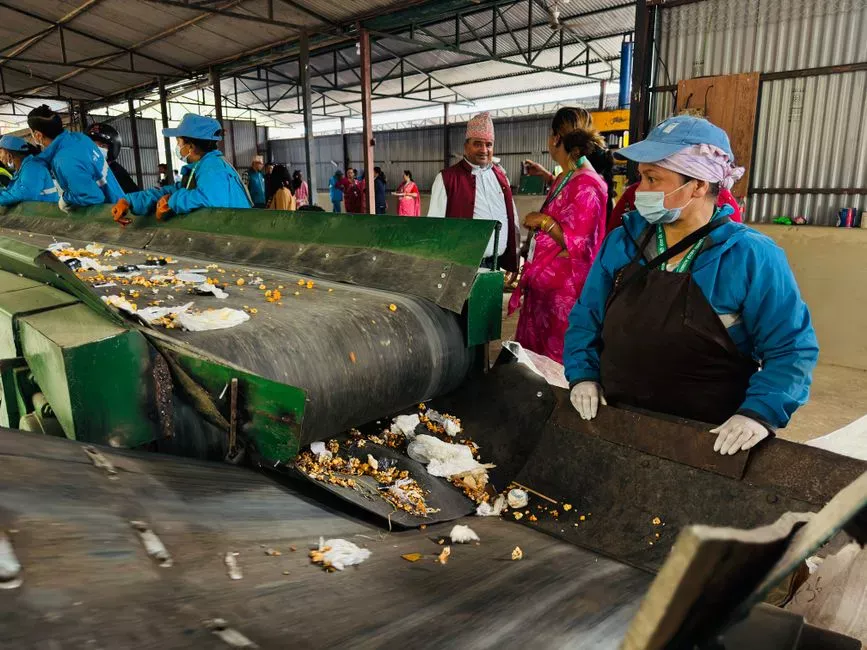
The honest answer is that the decanter is not always the right tool. A 30 m³/day turkey processor with a $35,000 capex ceiling and a part-time operator does not need a $70,000 turnkey centrifuge. But for a chicken plant at 100 m³/day and above, the math flips. The table below compares the three configurations a procurement manager is most likely weighing — DAF-only (baseline), DAF + belt press, and DAF + decanter — on the parameters that actually matter in a poultry setting: cake dryness, footprint, odor, and pathogen containment.
The decanter's structural advantages are enclosure, footprint, and cake dryness. A fully sealed decanter cabinet produces no aerosolized pathogens, requires no floor drainage, and captures 95–98% of feed solids versus 88–92% for a well-run belt press. Cake at 22–28% DS is stackable, haulable in enclosed tipper trucks, and accepted by most Class A biosolids end-users. Cake at 18–22% DS off a belt press seeps, draws flies, and frequently triggers odor complaints from neighbors.
The belt press still wins on three parameters: CAPEX (60–70% lower than a decanter for sub-50 m³/day plants), operator skill floor (a press runs fine on a trained slaughterhouse worker, a decanter wants a millwright or instrument tech), and weekend idling — a press can sit loaded with water for 60 hours and restart without a cleanout. A decanter left idle that long typically needs a 90-minute CIP pass before next batch. Roughly 70% of new US poultry plants above 80 m³/day choose DAF + decanter; smaller operations still run DAF + screw press or belt press.
| Parameter | DAF only | DAF + belt press | DAF + decanter |
|---|---|---|---|
| Cake dryness | 3–6% DS | 18–22% DS | 22–28% DS |
| Footprint | 8–12 m² | 25–40 m² | 6–10 m² |
| Solids capture | 85–90% | 88–92% | 95–98% |
| Odor | Medium | High (open belt) | Low (sealed) |
| Pathogen aerosol risk | Medium | High (open belt) | Low (enclosed) |
| Operator skill | Low | Low–medium | Medium–high |
| Weekend idle tolerance | High | High | Low (CIP needed) |
| Indicative CAPEX (50 m³/day) | $25,000–$45,000 | $55,000–$80,000 | $90,000–$130,000 |
For a plant already running a DAF and weighing a press, the comparison lands at a filter press-style polymer-conditioned mechanical dewatering step versus a centrifuge; the centrifuge wins on footprint and odor, the press wins on capex and operator simplicity.
Sizing a Centrifuge to Your Plant: A 5-Step Method
- Measure DAF underflow flow and %DS over 7 days. Use a magnetic flow meter on the underflow line and a grab-sample %DS test (drying oven, 105 °C, 24 h) once per shift. Multiply the average hourly flow by 16 operating hours to get design feed — never use peak instantaneous flow.
- Convert wet tonnage to dry solids. For 4% DS at 5 m³/h, that is 5,000 L × 1.02 kg/L × 0.04 = 204 kg DS/h. Round to 200 kg DS/h for design margin.
- Divide by 100–150 kg DS/h per unit G-force. An LW350 at 2,800 G handles ~120 kg DS/h. For 200 kg DS/h, that is two units — one duty, one standby (n+1 redundancy is standard for poultry because a single centrifuge failure halts the kill floor).
- Add 20% for blood spill events and CIP peaks. USPOULTRY plant design notes (2024) document that blood discharge spikes can drive instantaneous DAF underflow %DS from 4% to 6% for 15–30 minutes during evisceration peaks.
- Validate bowl diameter ≥350 mm if feed contains feathers >5 mm. Add a rotary bar screen for feather capture upstream of the centrifuge to protect the scroll and prevent matting on the beach.
Payback and ROI: When a Centrifuge Pays for Itself
The payback math is driven by hauling-cost displacement. A turnkey LW450 installation in 2026 lands at roughly $52,000 equipment + $14,000 install + $6,000 commissioning = $70,000 total. The annual savings versus hauling 4% DAF underflow: at 6 tDS/day and a 2026 US average hauling rate of $45/wet ton, the plant hauls ~33 wet tons/day at 4% DS, or ~$540,000/year. Dewatering to 25% DS cuts wet tonnage to ~5.3 tons/day, hauling to ~$87,000/year. Net hauling savings: $453,000/year. Subtract $60,000–$90,000 annual OPEX (polymer, power, wear, labor) and net annual savings land at $360,000–$390,000.
Net payback is 14–28 months against a baseline of hauling 4% underflow. Sensitivity is dominated by three variables: hauling distance (every additional 50 km adds ~$8–$12/wet ton in 2026 fuel-adjusted rates), polymer price (a $1/kg APAM swing moves annual OPEX by $7,000–$15,000), and electricity rate (each $0.05/kWh swing moves power OPEX by ~30%).
Compliance co-benefits often tip the scale when finance is on the fence. A sealed centrifuge helps meet EU Regulation 853/2004 rendering traceability, US EPA CAFO land-application restrictions, China GB 13457 meat-processing discharge limits, and the 2025 USDA FSIS notices on wastewater aerosol control in processing areas. None of these are revenue lines, but each one converts a future capex risk into a present-day avoided cost. For a fuller TCO framework, see the Sludge Thickening Cost Reduction: 2026 Engineering Guide to Cut OPEX and the Zero Liquid Discharge Adoption Forecast to 2030: Market Data & Industrial Roadmap.
Frequently Asked Questions
How much does a decanter centrifuge for poultry processing wastewater cost in 2026? Equipment-only CAPEX runs $18,000–$95,000 FOB China depending on capacity (LW250 at 2 m³/h to LW550 at 25 m³/h). Turnkey installed, including skid, polymer make-up, cake conveyor, freight, and commissioning, lands at $35,000–$140,000.
Can a decanter handle chicken blood and feather wastewater? Yes. A two-phase LW-series decanter is the standard configuration for DAF underflow containing blood and feather solids in chicken and turkey plants. A three-phase unit adds simultaneous fat/oil recovery and is used when the plant renders on-site or wants to recover blood-water fat for sale.
What is the OPEX of running a centrifuge on poultry sludge? $0.018–$0.045 per kg of dry solids in 2026, dominated by polymer (45–55% of OPEX) and power (25–35%). For a 100 m³/day plant at 6 tDS/day, total annual OPEX is $39,000–$99,000.
Is a decanter better than a belt press for a chicken plant? Above 80 m³/day, the centrifuge wins on footprint (6–10 m² vs 25–40 m²), odor (sealed vs open belt), cake dryness (22–28% vs 18–22% DS), and solids capture (95–98% vs 88–92%). Below 50 m³/day, a belt press remains 60–70% cheaper on CAPEX and easier to operate.
How long does it take to install a centrifuge at an existing poultry plant? 6–10 weeks for skid delivery from order to site arrival, plus 1–2 weeks on-site commissioning including CIP tie-in, polymer line, and cake conveyor integration. Plan for a 2-week parallel-run period where the existing DAF underflow handling stays online.