Why Industrial Wastewater Treatment in Myanmar Demands a Country-Specific Design in 2026
The binding baseline for industrial wastewater treatment in Myanmar in 2026 is the 2015 National Environmental Quality (Emission) Guidelines (NEQG) plus ECD consent, and a DAF plus MBR train delivers COD removal of 85-95% with BOD at or below 30 mg/L.
Generic ASEAN or South Asian treatment templates fail here for a specific reason: Myanmar layers three binding requirements on one discharge permit. NEQG effluent limits come first. Project-specific EIA consent from the Environmental Conservation Department (ECD) comes second. For any ADB-, JICA-, or World Bank-financed facility, IFC Performance Standards apply on top of NEQG.
Japan's WEPA institutional database lists the Environmental Conservation Department under the Ministry of Natural Resources and Environmental Conservation as the body formulating national environmental quality standards, water quality monitoring, and enforcement. It also records the Directorate of Industrial Supervision and Inspection as the regulator of industrial water use and wastewater discharge. In practice, Thilawa SEZ, Hlaing Tharyar, and Mandalay industrial estates routinely require all three compliance layers at once.
The operational risk is concrete. A Yangon garment exporter reported in regional press in 2024 had a buyer-compliance audit suspended after a single BOD exceedance against the 50 mg/L NEQG textile limit, with shipment rejection following within two weeks.
NEQG sets industry-specific ceilings: BOD 50 mg/L and COD 250 mg/L for textile effluents, TSS 50 mg/L for food processing, and TDS 2,000 mg/L for discharges to surface water (per Myanmar 2015 NEQG). Donor-funded projects layer further constraints. IFC PS 3 typically pushes effluent to <10 mg/L BOD for reuse or sensitive receiving waters, and the 2024 ADB Safeguard Policy Statement update tightened monitoring frequency to monthly for textile and food sub-sectors.
The September 2025 iScience special issue on wastewater harvesting and reuse signals the directional pressure on Myanmar's ECD. Consent letters for 2026 increasingly request a reuse target, not just discharge compliance, with 30-50% internal recycle now a typical ask in draft EIA scopes for Thilawa Zone A lots. IFC states on its Performance Standards page that it is updating its Sustainability Framework to better align it with today's global environment, which reinforces the same trajectory. Failing to engineer for reuse up front costs the owner a retrofit six to twelve months after commissioning. This is the level of industrial wastewater treatment Myanmar 2026 spec sheets, EIA scopes, and buyer audits all price against.
What Does Myanmar NEQG Effluent Compliance for Textile Factories Require?
Myanmar NEQG effluent compliance for textile factories caps effluent at BOD 50 mg/L and COD 250 mg/L, with color and pH as the two parameters audits actually fail on. Textile effluent from Yangon and Mandalay garment-and-dyeing houses carries 200-1,500 Pt-Co color units and surfactant loads that defoam conventional biology. pH neutralization to 6.5-7.5 plus a DAF stage ahead of MBR is the standard fix. Buyer audits follow the numbers, not the narrative.
Sector-by-Sector Influent Characteristics for Myanmar's Main Industries
Myanmar's industrial influent profiles split into five high-volume sectors, each with a different pre-treatment priority upstream of the biological stage. Matching the right pre-treatment to the wastewater fingerprint is the single biggest determinant of whether downstream MBR or SBR biology holds its design removal rates during the 8-12 month monsoon season.
| Sector | COD (mg/L) | BOD (mg/L) | TSS (mg/L) | Temperature / pH | Key pre-treatment priority |
|---|---|---|---|---|---|
| Textile (garment + dyeing) | 800-3,000 | 200-800 | 200-1,000 | 40-60 °C; pH 9-12 | pH neutralization, color/azo-dye removal |
| Food processing (rice, oil, dairy) | 2,000-10,000 | 1,000-6,000 | 1,000-5,000 | 25-45 °C; pH 4-9 | FOG and TSS removal via DAF |
| Oil & gas (Yetagun/Yadana produced water) | 500-5,000 | — | 100-500 | 40-70 °C; pH 6-8 | Three-phase separation, H₂S stripping |
| Cement & ceramics (Mandalay cluster) | <500 | — | 2,000-5,000 | pH 11-13 | pH neutralization, sedimentation only |
| Pulp & paper / tanneries | 3,000-15,000 | 1,000-4,000 | 1,000-3,000 | pH 4-10 | Sulfide / chromium precipitation, equalization |
Food processing streams from Bago and Ayeyarwady have a BOD/COD ratio of 0.5-0.7, meaning they biodegrade readily if FOG and TSS are stripped first. DAF with 30-50 mg/L polyaluminum chloride and 1-3 mg/L anionic polyacrylamide routinely achieves 60-90% TSS removal on those feeds.
Produced water from Yetagun and Yadana offshore plus Magway onshore fields shows TDS of 5,000-200,000 mg/L and oil & grease at 50-500 mg/L with trace H₂S. Three-phase separation and a corrugated plate interceptor must precede any biological stage. The high TDS effectively rules out a conventional MBR above 30,000 mg/L without a sidestream RO.
The Mandalay cement and ceramics cluster is the outlier: low organics, TSS of 2,000-5,000 mg/L, pH 11-13, treated by neutralization and lamella settling rather than biology. For a deeper petrochemical parameter set, see the petrochemical discharge standard reference.
The 2026 Treatment Train: From Screening to RO Reuse
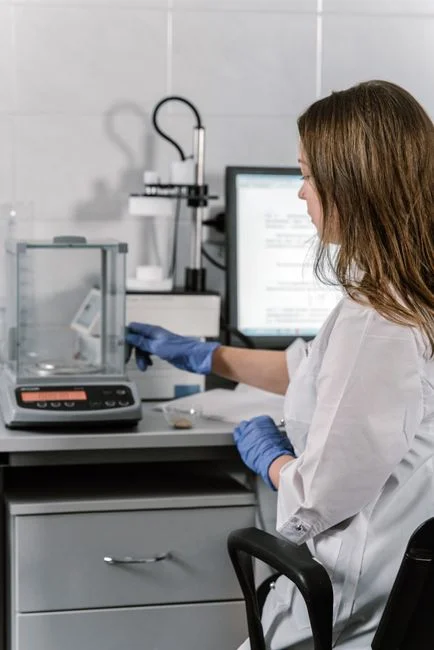
A defensible 2026 treatment train for a Myanmar industrial ETP runs in six stages, each sized to a specific load and each with a measurable design parameter. The block layout below is the same one HydropureWater has supplied to Thilawa textile and Mandalay food projects in 2024-2025, and it maps directly to the NEQG limits and typical donor (ADB/JICA) reuse targets.
| Stage | Equipment | Key design parameter | Typical removal / target |
|---|---|---|---|
| 1. Headworks | Rotary mechanical bar screen (5-10 mm aperture) | Flow 50-500 m³/h | Rags, plastics, grit removal |
| 2. Equalization | Aerated EQ tank | HRT 8-24 h | pH 6.5-7.5, load dampening |
| 3. DAF pre-treatment | Dissolved air flotation unit | 4-300 m³/h, PAC 30-50 mg/L + anionic PAM 1-3 mg/L | TSS 60-90%, FOG >90%, COD 30-40% |
| 4. Biological | Submerged PVDF MBR (0.1-0.4 µm) or SBR | F/M 0.05-0.15 kg COD/kg MLVSS·d; HRT 6-12 h | COD 85-95%, BOD ≤30 mg/L |
| 5. Disinfection | Chlorine dioxide generator (50-20,000 g/h) | ClO₂ dose 1-3 mg/L, contact 30 min | Fecal coliform <1,000 CFU/100 mL |
| 6. RO reuse (optional) | Brackish-water RO system | 60-70% recovery | TDS <500 mg/L for boiler / process rinse |
Stage 1 uses a rotary mechanical bar screen with 5-10 mm aperture to protect downstream pumps. That is a routine point of failure in monsoon-fed Yangon plants, where rag and plastic load triples between June and September. Stage 2 equalization with 8-24 hour HRT is non-negotiable in Myanmar: grid voltage dips cause batch discharges and pH excursions that would otherwise shock the biology.
Stage 3 deploys a DAF pre-treatment system to strip TSS, FOG, and colloidal load before biology. That stage is the difference between an MBR running at design flux (15-25 LMH) and one fouling inside six months. For sizing against textile and food streams specifically, the DAF system sizing and cost for South Asian textile and food wastewater piece gives a useful cross-check.
Stage 4 is either a MBR biological treatment system with submerged PVDF hollow-fiber membranes at 0.1-0.4 µm, or an SBR for plants with intermittent flow. Both target F/M 0.05-0.15 and HRT 6-12 h to deliver 85-95% COD removal. Stage 5 uses a chlorine dioxide disinfection unit sized 50-20,000 g/h to hit NEQG fecal coliform <1,000 CFU/100 mL while avoiding the THM formation risk of liquid chlorine on hot textile effluent.
Stage 6 is an industrial RO polishing system at 60-70% recovery for plants targeting boiler feed or process rinse reuse, cutting freshwater draw by roughly two-thirds. That is a sharp economic case in Yangon industrial zones, where municipal water tariffs have risen 18-25% over 2024-2025. For the broader reuse-technology picture, the 2026 water reuse technology outlook is a solid reference.
Cost Benchmarks and Vendor Selection for Myanmar Projects in 2026
Budgeting an industrial wastewater treatment plant in Myanmar in 2026 requires three separate numbers: equipment CAPEX, civil works markup for logistics, and a five-year OPEX that donor lenders will scrutinize. The numbers below are 2026 Q1 indications for a 50-500 m³/day skid-mounted DAF + MBR + ClO₂ package. They exclude land, civil foundations, and grid power upgrades — the latter often 10-20% of project cost in Mandalay and the delta regions.
| Cost line | 2026 range (USD) | Driver / assumption |
|---|---|---|
| Skid equipment CAPEX (DAF + MBR + ClO₂) | 150-400 per m³/day | 50-500 m³/day; membrane content drives upper end |
| Civil works (Yangon / Mandalay) | +30-50% on equipment CAPEX | Import duties, aggregate transport, monsoon-season delays |
| Electrical OPEX (MBR aeration) | 0.6-1.2 kWh/m³ | Grid + diesel backup; aeration blower dominant |
| Chemical OPEX (PAC, PAM, nutrients, ClO₂) | USD 0.03-0.08 per m³ | Dose-dependent on influent |
| Total OPEX | USD 0.10-0.25 per m³ treated | Excludes sludge hauling and membrane replacement |
| Containerized skid premium (savings) | 40-60% civil work reduction; 2-3 months faster commissioning | Factory-installed, shipped to site |
Myanmar Industrial Wastewater Reuse RO System Cost: The 2026 Numbers
Myanmar industrial wastewater reuse RO system cost sits at the top of the skid CAPEX band because RO polishing adds the membrane content that drives the upper end of USD 150-400 per m³/day. The payback lever is water price rather than membranes. At 60-70% recovery with TDS <500 mg/L permeate, the train cuts freshwater draw by roughly two-thirds against tariffs that rose 18-25% over 2024-2025.
ADB and JICA tenders in 2025-2026 require a five-year lifecycle cost model and a monitoring plan consistent with IFC Performance Standard 4 for any discharge to a tidal water body. They also expect a 95% uptime commitment backed by service response within 48 hours. IFC states on its Performance Standards page that it is updating its Sustainability Framework to better align it with today's global environment, so donor scrutiny tightens rather than loosens through the 2026 tender cycle.
Containerized skid systems — built, tested, and shipped with the automatic chemical dosing skid and a plate-frame filter press for sludge dewatering pre-integrated — cut on-site civil work by 40-60% and shorten commissioning by 2-3 months versus stick-built. That edge matters when Myanmar's monsoon season chews 4-5 months out of the construction calendar. For a side-by-side regional cost sense, regional industrial wastewater treatment benchmarks in Selangor show Malaysian turnkey prices running 20-35% higher than Yangon, mainly on labor and grid-stability surcharges.
Vendor pre-qualification should weight five factors, in this order:
- Discharge-only vs. reuse end-use — reuse sets the RO stage and the monitoring plan from day one.
- Influent variability score, meaning the peak-to-average ratio on COD and flow across the monsoon calendar.
- Compliance layer: NEQG-only, NEQG+IFC, or NEQG+IFC+buyer-specific like Inditex or H&M.
- Footprint constraint — Thilawa Zone A lots often allow <400 m² for a 200 m³/day plant.
- Local operator skill level — a high-flux MBR without trained operators is a recipe for membrane replacement at month 18 instead of year 5.
For sites below 50 m³/day or with limited footprint, a packaged alternative such as the JY integrated water purification system is often the more defensible choice over a custom-assembled train. Next step: fix the compliance layer first — NEQG-only or NEQG plus IFC — because it sets the reuse target and the monitoring plan. Then size the train against a measured influent fingerprint, not a sector average, and send flow and load data through the request-a-quote desk for a sized DAF + MBR + ClO₂ configuration and an indicative five-year OPEX model.
Frequently Asked Questions
What is the binding regulatory baseline for industrial wastewater treatment in Myanmar in 2026?
The binding baseline is the 2015 National Environmental Quality (Emission) Guidelines administered by the Environmental Conservation Department (ECD) under MONREC, plus project-specific EIA consent. Donor-financed projects also require IFC Performance Standards on top of NEQG. WEPA's institutional database confirms ECD as the body formulating national environmental quality standards, water quality monitoring, and enforcement.
What influent numbers should I size against for a Yangon textile or Mandalay food plant?
Size textile plants against COD 800-3,000 mg/L, pH 9-12, and color 200-1,500 Pt-Co. Size food plants against COD 2,000-10,000 mg/L, BOD/COD 0.5-0.7, and high TSS and FOG. Both need DAF pre-treatment before MBR or SBR biology, or the biological stage will not hold its design removal rates through the monsoon.
What is the 2026 CAPEX and OPEX for a DAF + MBR + ClO₂ system in Myanmar?
Skid equipment CAPEX runs USD 150-400 per m³/day at 50-500 m³/day scale. Civil works add 30-50% in Yangon or Mandalay. OPEX is USD 0.10-0.25 per m³ treated, dominated by 0.6-1.2 kWh/m³ aeration energy. Chemical OPEX adds USD 0.03-0.08 per m³ on PAC, PAM, nutrients, and ClO₂.
Why specify a containerized skid instead of stick-built for a Myanmar site?
Containerized skids cut on-site civil work by 40-60% and reduce commissioning time by 2-3 months. That margin is critical when the June-September monsoon compresses the buildable window. Import-duty exposure also rises with construction duration, so the shorter build costs less on two fronts at once.
Can the MBR effluent be reused, and at what recovery rate?
Yes. An MBR delivering BOD ≤30 mg/L and TSS ≤5 mg/L can feed a brackish-water RO at 60-70% recovery. Permeate comes out at TDS <500 mg/L, suitable for boiler feed or process rinse, cutting freshwater draw by roughly two-thirds.
What are the ADB JICA wastewater treatment plant requirements Myanmar tenders impose?
ADB and JICA wastewater treatment plant requirements Myanmar tenders impose center on lifecycle and response, not just commissioning. Expect a five-year lifecycle cost model, a 95% uptime commitment backed by 48-hour service response, and monitoring plans consistent with IFC Performance Standards. Textile and food sub-sectors face monthly monitoring frequency under the 2024 ADB Safeguard Policy Statement update.
How does a Thilawa SEZ effluent discharge permit 2026 application work?
A Thilawa SEZ effluent discharge permit 2026 application runs through the SEZ management committee alongside ECD consent, and tenants face all three compliance layers at once: NEQG limits, ECD consent conditions, and buyer-specific audits. Draft EIA scopes for Zone A lots now typically ask for 30-50% internal recycle. Zone A lots often allow <400 m² for a 200 m³/day plant, so footprint is a design constraint from day one.