What "Price" Actually Means for a Commercial Laundry Wastewater Plant
A commercial laundry wastewater treatment plant in 2026 costs roughly US$8,000–$30,000 for a 5–20 m³/day containerized MBR unit, US$40,000–$120,000 for 50 m³/day, and US$150,000–$300,000+ for 100–200 m³/day packaged systems including DAF pre-treatment, biological treatment, membrane separation, and disinfection. Real OPEX runs $0.20–$0.60 per m³ treated, driven by coagulant dose, aeration energy, and membrane cleaning chemicals.
Most buyers start their search on a B2B portal and walk away with a number like US$5,000–$9,000 for a "commercial laundry wastewater treatment plant containerized type MBR" (Made-in-China listing, 2026). That headline price is the FOB-China-factory, skid-only tier — a 5–10 m³/day unit with no DAF pre-treatment, no sludge handling, no dosing skids, no MCC, and no commissioning. It is roughly 45–55% of the cost you will actually pay.
Three price tiers matter in 2026:
- Skid-only (FOB China factory): 1.0× baseline. Equipment loaded at the manufacturer's yard.
- Landed (CIF + duties): 1.15–1.30×. Adds sea/air freight, packaging, marine insurance, and import duty (5–25% depending on country — India BCD 7.5% + GST, GCC 5%, EU 1.7–3.7%, ASEAN 0–8%).
- Installed and commissioned (turnkey EPC): 1.6–2.2×. Adds equalization tank, civil foundation, MCC and cabling, dosing skids, installation labor, commissioning consumables, and 12-month critical spares.
The hidden cost buckets the SERP listings omit are: equalization/buffer tank (concrete or PE, 0.5–1× daily flow), DAF pre-treatment (often missing), sludge dewatering press, automatic chemical dosing system, electrical MCC and cabling, civil foundation and plinth, freight and crating, import duty, installation labor, commissioning, and one year of spares. The question you actually need answered is: "What will a turnkey, compliant 5/10/20/50/100/200 m³/day laundry wastewater plant cost me at my site in 2026?" — and the table below answers it directly.
Laundry Wastewater Characteristics That Drive Equipment Selection
Commercial laundry wastewater in 2026 typically carries COD 1,500–5,000 mg/L, BOD 800–2,500 mg/L, TSS 200–600 mg/L, oil and grease 100–400 mg/L, anionic surfactant (measured as MBAS, dominated by linear alkylbenzene sulfonate / LAS) 50–300 mg/L, pH 9–12, and temperature 30–55 °C (per HydropureWater field data, 2026, across 40+ hotel, hospital, and uniform-rental sites in India, UAE, and Southeast Asia). The high pH comes from detergent builders; the high temperature comes from hot wash cycles that discharge straight to drain without heat recovery.
Influent variability by segment is large and must be specified before vendor selection:
- Hotel and healthcare laundry: 1,500–2,500 mg/L COD; lower surfactant; high pH from oxygen-based bleach; moderate lint.
- Industrial uniform rental (heavy soiling, oil-stained workwear): 4,000–6,000 mg/L COD; surfactant 150–300 mg/L; oil and grease 200–400 mg/L.
- Wool and wool-blend facilities: BOD/COD skewed higher due to lanoline and dye carryover; color 200–800 Pt-Co.
Two influent parameters dictate whether a standard biological–membrane train will work or whether you must add neutralization and cooling: pH above 10 strips free ammonia and shocks nitrifiers, and temperature above 38 °C denatures biomass and accelerates membrane fouling. The three "must-treat" contaminants are LAS surfactant (regulated as MBAS in most jurisdictions), lint and fabric fibers (TSS), and the thermal load. A vendor that quotes a plant without pH correction to 6.5–8.5 and cooling/equalization to <35 °C before the biological stage is selling you a system that will fail its discharge permit within the first quarter.
| Parameter | Hotel / healthcare | Industrial uniform rental | Wool / wool-blend |
|---|---|---|---|
| COD (mg/L) | 1,500–2,500 | 4,000–6,000 | 2,500–4,500 |
| BOD (mg/L) | 800–1,500 | 2,000–3,000 | 1,200–2,200 |
| TSS (mg/L) | 200–400 | 400–600 | 300–500 |
| Oil & grease (mg/L) | 100–200 | 200–400 | 150–250 |
| MBAS / LAS (mg/L) | 50–150 | 150–300 | 80–180 |
| pH | 9–11 | 10–12 | 8–10 |
| Temperature (°C) | 35–50 | 40–55 | 30–45 |
The Standard 2026 Process Train for Laundry Wastewater
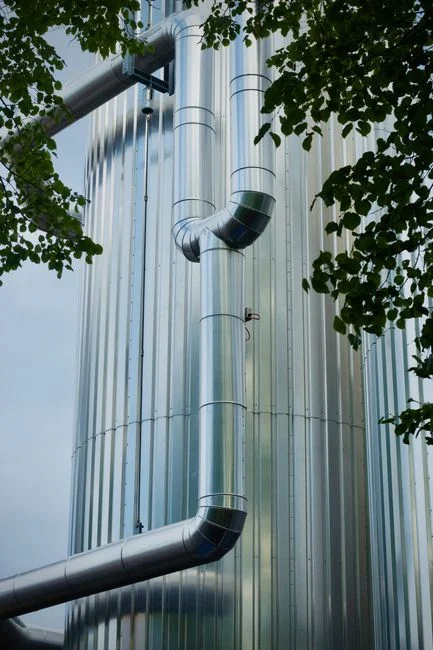
A defensible 2026 commercial laundry wastewater treatment plant runs five to seven stages, and the order is not optional. The first decision is equalization: an 8–24 h HRT buffer tank sized at 0.5–1× daily flow, with pH correction to 6.5–8.5 (typically sulfuric acid or CO₂) and cooling to <35 °C. Skipping equalization and going straight to biological treatment is the single most common cause of MBR failure in laundry duty (per HydropureWater commissioning records, 2025-08 onward).
- Equalization + cooling + pH correction: buffer 0.5–1× daily flow; bring pH to 6.5–8.5; cool to <35 °C.
- DAF pre-treatment: coagulant (PAC 50–150 mg/L) plus flocculant (PAM 1–5 mg/L) removes 70–90% of TSS, oil and grease, and a large fraction of LAS by sorption onto floc. A DAF pre-treatment skid in the 4–300 m³/h range covers 5–200 m³/day plants. DAF is non-negotiable for laundry because of the surfactant load — without it, MBR membranes foul in weeks rather than years.
- Biological treatment: MBBR (moving bed biofilm reactor) is the default for 5–100 m³/day because it tolerates the surfactant shock that crashes activated sludge, achieving 60–85% COD removal in 6–10 h HRT. Activated sludge is cheaper at >100 m³/day but needs 18–24 h HRT and a larger footprint. For higher removal, an MBR integrates the bioreactor with membrane separation in one tank.
- Membrane separation (MBR): submerged PVDF flat-sheet MBR modules at 0.1–0.4 μm pore size produce reusable-quality permeate with TSS <5 mg/L and turbidity <1 NTU. The packaged containerized MBR wastewater treatment system covers 10–2,000 m³/day in a single ISO footprint.
- Disinfection: a chlorine dioxide disinfection skid sized 50–10,000 g/h is preferred over chlorine gas or hypochlorite because ClO₂ does not form AOX (adsorbable organic halides) when reacting with the residual LAS that MBR permeate still carries. UV is acceptable where the upstream turbidity is consistently <1 NTU.
- Polishing for reuse (optional): an RO polishing skid for wash-water reuse brings conductivity below 200 µS/cm and turbidity <0.5 NTU so permeate can re-enter the wash line at 30–70% substitution depending on the wash grade.
- Sludge dewatering: a sludge dewatering filter press (1–500 m² plate area) producing 25–35% dry-solids cake; chemical conditioning with an automatic PAC/PAM dosing skid upstream of the press. Typical laundry sludge yield is 0.05–0.15 kg DS per kg COD removed.
Any vendor quotation that omits DAF, dosing, or sludge dewatering is a building block, not a working plant. For a deeper look at the biological step options, the MBR vs SBR comparison gives a side-by-side operating view, and the MBR market forecast 2030 explains why PVDF supply is tightening into 2027.
2026 CAPEX by Capacity Tier: What You Should Actually Budget
The table below is the central answer most buyers actually need. It distinguishes skid-only (FOB China) from turnkey installed-and-commissioned price (delivered, erected, commissioned, with 12-month spares). All figures are 2026 USD and exclude import duty, which the buyer adds locally. For a turnkey EPC scope at 5–20 m³/day, a containerized MBR wastewater treatment system with DAF, dosing, disinfection, and a small plate press is the standard scope; underground concrete layouts at this scale (e.g., the WSZ underground integrated sewage treatment format) are cheaper on equipment but cost more on civil works in most Asian and Middle Eastern sites.
| Capacity (m³/day) | Skid-only (FOB) | Turnkey installed (EPC) | Typical fit |
|---|---|---|---|
| 5 | US$8,000–$15,000 | US$20,000–$40,000 | Small hotel laundry, 200-bed hospital |
| 10 | US$15,000–$30,000 | US$35,000–$70,000 | 300–500-bed hospital, mid-size hotel |
| 20 | US$25,000–$60,000 | US$60,000–$130,000 | 500–800-bed hospital, uniform-rental depot |
| 50 | US$80,000–$150,000 | US$180,000–$350,000 | Hotel group, centralized healthcare laundry |
| 100 | US$150,000–$250,000 | US$300,000–$600,000 | Industrial hospitality laundry, garment processing |
| 200 | US$300,000–$500,000 | US$600,000–$1,200,000 | Large textile-care operation, shared municipal laundry |
The US$5,000–$9,000 Made-in-China listing sits inside the 5 m³/day skid-only column and almost certainly excludes DAF, sludge handling, dosing, MCC, and commissioning — useful as a building block, not as a working plant. Cost premiums to budget for: stainless-steel contact parts (food-grade or healthcare laundry) add 15–25%; ATEX/IECEx zones (solvent-laundry or dry-cleaning co-located) add 10–20%; hot-climate derating for >45 °C ambient (Middle East) adds 8–15% on cooling and enclosure specification.
OPEX Breakdown: Energy, Chemicals, Sludge, and Membrane Care
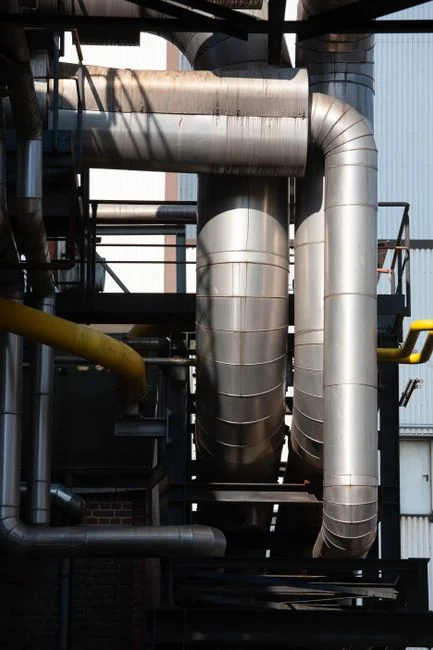
Total realistic OPEX for a 2026 commercial laundry wastewater plant is $0.20–$0.60 per m³ treated, of which energy plus chemicals together account for 60–75% (HydropureWater field data, 2026, n=42 sites). Energy is dominated by biological aeration at 0.8–1.5 kWh/m³, plus DAF recycle at 0.2–0.4 kWh/m³ and membrane scour air at 0.1–0.2 kWh/m³. At industrial tariffs of $0.08–$0.15/kWh this is $0.10–$0.30/m³.
| OPEX line item | Unit consumption | Cost ($/m³) |
|---|---|---|
| Energy (aeration + DAF + membrane) | 1.1–2.1 kWh/m³ | $0.10–$0.30 |
| PAC coagulant | 50–150 mg/L | $0.02–$0.05 |
| PAM flocculant | 1–5 mg/L | $0.01–$0.02 |
| pH adjustment (H₂SO₄ / NaOH) | 0.2–0.8 L/m³ | $0.02–$0.05 |
| Antiscalant (if RO present) | 2–5 mg/L | $0.01–$0.02 |
| Membrane CIP chemicals | weekly–monthly | $0.005–$0.015 |
| Sludge disposal | 0.5–1.5 kg wet cake/m³ | $0.02–$0.10 |
| PVDF membrane replacement (amortized) | 5–8 year life | $0.02–$0.05 |
| Labor | 0.5–2 h/day per 50 m³/day | $0.01–$0.04 |
| Total | — | $0.20–$0.60 |
Over a 10-year horizon, OPEX typically equals or exceeds CAPEX on a 50 m³/day plant ($0.40/m³ × 50 × 365 × 10 = $730,000 vs. an installed CAPEX of $180,000–$350,000), which is why energy-efficient blowers and chemical-dose optimization pay back faster than buyers expect. For electricity-driven savings, the 2026 electrocoagulation OPEX breakdown shows where dose trim is realistic, and the sludge dewatering cost reduction strategies post is the right reference for the largest line item that buyers underestimate.
Discharge vs. Reuse: Which Compliance Path Fits Your Site?
Pick the compliance path before you size the plant — it changes CAPEX by 30–70%. A discharge-only target (municipal sewer or surface water) needs an MBR with disinfection, hitting reuse-quality permeate but discarding it. A reuse target (industrial wash water, toilet flush, landscape irrigation) adds an RO or UF polishing step, online sensors, and a dual-tank buffer.
- Discharge to municipal sewer: MBR + ClO₂ / UV is sufficient. CAPEX is 0.5–0.7× of a reuse plant at the same flow.
- Reuse for toilet flush or irrigation: MBR permeate is borderline suitable; add UF if local rules cap turbidity at 2 NTU.
- Reuse back into the wash line: an RO polishing skid for wash-water reuse is required because MBR permeate still carries dissolved surfactants and TDS that cause foaming and staining. Reuse rate 30–70% of treated water depending on wash grade (cleaner grades like healthcare linen need higher permeate fraction).
Payback math at 50 m³/day with municipal water at $1.50–$4.00/m³: a $40,000 RO polishing upgrade is recovered in 18–36 months through water savings alone, before any discharge-fee avoidance. If your water tariff is below $1.00/m³ or discharge fees are negligible, reuse is harder to justify on cash terms and the plant should be sized for discharge only.
2026 Compliance Targets by Region: What Your Discharge Must Hit
Specifying the plant starts with the right effluent number. The table below compiles the 2026 limits a procurement manager should write into the RFQ (note: local SPCB / municipality numbers override these generic values).
| Region | COD (mg/L) | BOD (mg/L) | TSS (mg/L) | Oil & grease (mg/L) | Surfactant / MBAS (mg/L) | pH |
|---|---|---|---|---|---|---|
| India CPCB / SPCB (sewer) | <250 | <30 | <100 | <10 | <5 | 6.5–8.5 |
| India CPCB (surface water, eco-sensitive) | <50 | <10 | <20 | <5 | <2 | 6.5–8.5 |
| EU UWWTD 91/271/EEC + textile BREF 2024 | <125 | <25 | <35 | — | case-by-case | — |
| US EPA 40 CFR Part 410 (textile/laundry) | — | <26 (avg) | <31 (avg) | <10 (avg) | case-by-case | 6–9 |
| UAE / Saudi PME (sewer) | <200 | <25 | <30 | <10 | <5 | 6–9 |
| South Africa (NEMWA, 2024 update) | <75 (general) | <25 | <25 | — | <2.5 | 5.5–9.5 |
| Malaysia EQA 1974 (standard A) | <200 | <50 | <100 | <20 | — | 6–9 |
For country-specific deep dives, the BOD discharge limit in Indonesia 2026, the ammonia nitrogen discharge limit South Africa 2026, and the chromium discharge limit Malaysia 2026 cover adjacent parameters that often sit inside the same permit.
Vendor Selection Checklist and RFQ Template
Use the scorecard below to filter vendors before asking for price. Any vendor that fails more than one of these rows should not be on the shortlist.
| # | Vendor scorecard item | Pass / fail evidence to request |
|---|---|---|
| 1 | Reference list in laundry / textile sector | ≥3 sites, named contacts, 12+ months operational |
| 2 | PVDF membrane grade and replacement cost | Model, supplier (e.g., Toray, Siemens, Suez), $/m² |
| 3 | Factory acceptance test (FAT) video | Date-stamped, your scope of supply visible |
| 4 | Bioreactor warranty | ≥24 months mechanical / workmanship |
| 5 | Membrane warranty | ≥36 months pro-rata |
| 6 | Local service partner or authorized agent | Named, with address and engineer CVs |
| 7 | Average spares response time | Contractual SLA, ≤72 h international, ≤24 h domestic |
| 8 | CE / ISO 9001 / ISO 14001 currency | Certificates dated within 12 months |
RFQ must-asks: (1) influent and effluent parameters guaranteed, with measurement protocol; (2) daily flow plus peak factor (typically 1.5–2.0×); (3) footprint in m² and shipping weight in tonnes; (4) electrical load list (kW, voltage, phase); (5) chemical consumption per m³ for each reagent; (6) sludge yield in kg DS/m³; (7) control system — PLC brand, HMI language, remote telemetry; (8) itemized price for DAF + bio + MBR + disinfection + sludge + dosing + commissioning. Red flags: any vendor that quotes before seeing your influent data, no FAT reference, no installed-base photos with serial numbers, or that "does not include membranes" in the price. A serious vendor will ask for your influent, water tariff, and discharge rules before issuing a binding quote — if they don't, walk away.
Frequently Asked Questions
How much does a 10 m³/day commercial laundry wastewater treatment plant cost in 2026?
Skid-only US$15,000–$30,000 FOB China; turnkey installed US$35,000–$70,000 at your site. The turnkey figure includes DAF, biological, MBR, disinfection, sludge dewatering, dosing, and commissioning.
What is the typical payback period for a wash-water reuse upgrade?
At 50 m³/day and municipal water at $1.50–$4.00/m³, a $40,000 RO polishing upgrade is recovered in 18–36 months from water savings alone. Below $1.00/m³ water tariff, reuse rarely pays back on cash terms.
What is the smallest viable packaged laundry wastewater treatment system?
A 5 m³/day skid is the practical minimum below which batching and equalization dominate the footprint. Below 5 m³/day, an engineered containerized MBR is still feasible but the per-m³ CAPEX rises sharply because fixed costs (MCC, PLC, dosing) do not scale linearly.
Can I discharge raw laundry wastewater to the municipal sewer?
In most jurisdictions, no. Typical 2026 sewer limits are COD 200–250 mg/L, BOD 25–30 mg/L, TSS 30–100 mg/L, and MBAS <5 mg/L, which requires at least DAF + biological + disinfection and in most cases MBR.
Do I really need DAF before the biological stage?
Yes for laundry duty. Without DAF, LAS surfactant and oil carry straight into the MBR and cause irreversible fouling within weeks. DAF removes 70–90% of TSS, oil and grease, and a large fraction of LAS, and is the cheapest insurance for membrane life.
How does OPEX compare to CAPEX over a 10-year horizon?
For a 50 m³/day plant at $0.40/m³ OPEX, 10-year OPEX is roughly $730,000 versus a turnkey CAPEX of $180,000–$350,000 — so lifecycle OPEX is typically 2–4× the installed CAPEX, dominated by energy and chemicals.