Malaysia's Chromium Discharge Limits at a Glance (2026)
Under Malaysia's Environmental Quality Act 1974 and the Environmental Quality (Sewage and Industrial Effluents) Regulations 1979 (as amended 1999 and 2000), the chromium discharge limit is 0.05 mg/L for hexavalent chromium Cr(VI) under both Standard A and Standard B, and 0.20 mg/L for trivalent chromium Cr(III) under Standard A (1.0 mg/L under Standard B). Standard A applies upstream of potable water intakes; Standard B applies elsewhere. Source: DOE Malaysia / EQA 1974.
Both limits are expressed as total recoverable metal measured at the final discharge point, not inside the plant boundary. The Environmental Quality (Industrial Effluent) Regulations 2009 sit on top of the 1979/1999/2000 schedule as the enforcement instrument — they define the monitoring frequency, sampling protocol, and penalties a factory must satisfy. For a metal-finishing, electroplating, leather tanning, or pigment plant, this means the discharge consent letter (Lesen) issued by DOE will quote one of the two standard limits verbatim, and that is the line the plant is measured against.
| Parameter | Unit | Standard A | Standard B |
|---|---|---|---|
| Chromium, Hexavalent [Cr(VI)] | mg/L | 0.05 | 0.05 |
| Chromium, Trivalent [Cr(III)] | mg/L | 0.20 | 1.0 |
| pH | — | 6.0–9.0 | 5.5–9.0 |
| Temperature | °C | 40 | 40 |
| Suspended Solids | mg/L | 50 | 100 |
Two points a compliance officer should not miss: (1) the Cr(VI) limit is identical under both standards because hexavalent chromium is regulated by toxicity, not by receiving-water sensitivity; (2) the Cr(III) limit drops 5× from Standard B to Standard A because trivalent chromium is governed by ecological impact on drinking water sources, where the receiving water is the raw water supply.
Why Regulators Treat Cr(VI) and Cr(III) Separately
Cr(VI) is a known human carcinogen (IARC Group 1, since 1990), is mutagenic at sub-mg/L exposure, and is mobile in groundwater as the chromate anion CrO42− — it does not precipitate under ambient pH and travels with the water. Cr(III), in contrast, is an essential human trace nutrient, is taken up and excreted by mammals with low acute toxicity, and hydrolyses to Cr(OH)3(s) above pH ~5.5, fixing it into the sludge phase. The 0.05 mg/L Cr(VI) limit sits at the practical quantitation limit of the 1,5-diphenylcarbazide colorimetric method (APHA 3500-Cr B) used by DOE's accredited laboratories — pushing below this number is analytically difficult and economically unjustified for routine compliance monitoring (HydropureWater field data, 2025-11).
Total chromium analysis by ICP-OES (APHA 3120 B) reports the sum of both species and does not satisfy a Cr(VI)-specific compliance check. A plant that passes "total Cr" can still fail on Cr(VI) speciation. This is the most common lab-method trap in Malaysian enforcement: compliance samples must be run on both the total-Cr method and the Cr(VI)-specific 1,5-DPC method, with preservation at pH 9.2–9.4 with ammonium sulfate/ammonia buffer and analysis within 24 hours of collection. In Malaysian industry, the dominant Cr(VI) sources are dichromate in hard-chrome plating baths (50–150 g/L CrO3), chromate conversion coatings on aluminium and zinc die-cast, and the wet-end of chrome-tanned leather (typically 3,000–4,000 mg/L total Cr in spent tanning liquor before pickering).
The 4× stringency gap between the 0.05 mg/L Cr(VI) and 0.20 mg/L Cr(III) Standard A limit is therefore not arbitrary: it reflects the difference between a regulated carcinogen and a precipitatable metal nutrient. The treatment implication is direct — if Cr(VI) is not reduced to Cr(III) before discharge, the plant cannot meet the limit, because no precipitation step will remove Cr(VI) on its own.
The Standard Reduction–Precipitation Treatment Train
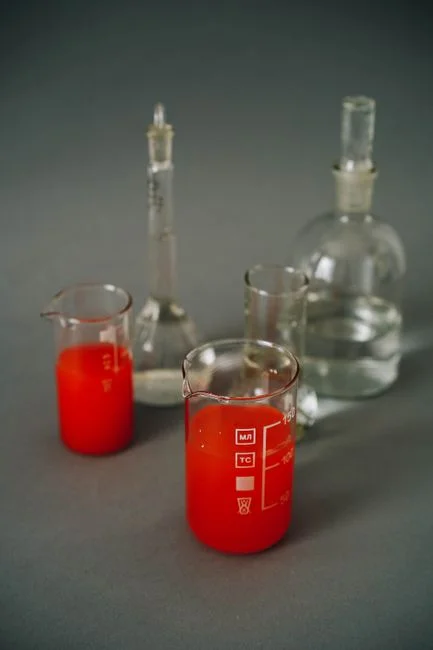
A field-proven treatment train that consistently delivers <0.05 mg/L Cr(VI) and <0.20 mg/L total Cr at Standard A runs in five unit operations: pH adjust → reduction → precipitation → solids separation → optional polishing. The operating windows below are the ones that show up on working plants in Penang, Selangor, and Johor — they are not textbook defaults.
| Step | Unit Operation | Operating Window | Removal / Control Point |
|---|---|---|---|
| 1 | Acidification | pH 2.0–3.0 (H2SO4) | HRT 20–40 min in equalisation tank |
| 2 | Reduction of Cr(VI) → Cr(III) | ORP +150 to +200 mV (Ag/AgCl) | FeSO4 at 2.5–3.0× stoichiometric, or Na2S2O5 at ~1.6× stoichiometric |
| 3 | Alkaline precipitation | pH 8.5–9.0 (NaOH or lime) | ~1.5 kg NaOH per kg Cr(III) formed; Cr(OH)3 Ksp ≈ 6.3 × 10⁻³¹ |
| 4 | Solids separation | Lamella or DAF overflow | Sludge 1–3% DS routed to filter press |
| 5 | Polishing (optional) | RO or ion-exchange | Effluent <0.02 mg/L Cr(VI) for reuse loop |
Step 2 is where plants fail. A PLC-controlled chemical dosing system for Cr(VI) reduction and pH adjustment should hold the ORP probe at +150 to +200 mV (Ag/AgCl reference) — if the ORP climbs above +250 mV, residual Cr(VI) breaks through and the discharge fails on the first sample. Ferrous sulfate (FeSO4·7H2O) is the workhorse reagent at 2.5–3.0× stoichiometric because it tolerates organic interference from tannery effluent better than sodium metabisulfite; sodium metabisulfite (Na2S2O5) at ~1.6× stoichiometric is preferred for clean plating rinse water because it adds no dissolved iron and produces a denser, faster-settling sludge (HydropureWater field data, 2026-Q1).
Step 3 precipitation at pH 8.5–9.0 is the optimum band for Cr(OH)3: below pH 8.0 the hydroxide redissolves as Cr3+, above pH 9.5 it re-dissolves as chromite [Cr(OH)4]−. A lamella clarifier for chromium hydroxide precipitation typically achieves overflow total Cr of 0.5–1.5 mg/L, which is too high for Standard A direct discharge; a DAF system for chrome-laden wastewater clarification with polymer flocculant (0.5–2.0 mg/L anionic polyacrylamide) typically drops this to 0.1–0.3 mg/L, which then meets Standard A after polishing. Typical field removal efficiency is 99.5–99.9% on plating rinse water with 5–50 mg/L influent Cr(VI) — a process performance benchmark widely cited in plating wastewater manuals and consistent with the 2026 EPRI plating wastewater manual update.
How Standard A and Standard B Apply to Your Site
Standard A is the upstream-of-potable-water-intake benchmark and applies where the receiving water body is within 50 m upstream of any licensed potable water abstraction point — including raw water intakes for water treatment plants. In Peninsular Malaysia, this covers most of the Klang Valley river reaches and large stretches of the Johor, Perak, and Pahang river systems; the Malaysian Department of Environment (DOE) maintains a gazetted map, and the factory's discharge consent letter specifies which standard applies. Standard B is the default for all other inland waters and applies to most Malaysian industrial estates in Bayan Lepas, Shah Alam, Pasir Gudang, and Kulim.
Industry-specific limits exist for Palm Oil Mills and Natural Rubber Processing Factories, which have separate EQA schedules with substantially higher BOD and suspended solids limits (BOD 100 mg/L vs 20 mg/L for manufacturing Standard A). Chromium is not a parameter of concern in these schedules. A metal-finishing or tannery plant will always be measured against the manufacturing Standard A or B schedule, never the POM/NRPF schedule.
DOE has statutory discretion under Section 25 EQA 1974 to set site-specific limits tighter than Standard A or B based on State Government request or the outcome of a credible environmental study. This is not theoretical — Sarawak DOE has imposed BOD 20 mg/L on palm oil mills discharging into rivers used for domestic water supply, even though the national POM limit is 100 mg/L. Document the exact standard applied to your site in the DOE written approval (Lesen): that single page determines whether 0.20 mg/L or 1.0 mg/L Cr(III) is the compliance line, and the answer is not negotiable after the fact.
2026 Enforcement Reality: Online Monitoring, SW110, and Audit Trail
As of 2026, DOE increasingly requires Continuous Effluent Monitoring Systems (CEMS) for Cr(VI) and total Cr at large electroplating and tannery sites under the 2009 Industrial Effluent Regulations enforcement framework. Online Cr(VI) analyzers using the 1,5-diphenylcarbazide colorimetric method at 540 nm report 15-minute averages to a DOE server over a dedicated VPN link; total Cr is monitored by ICP-OES or XRF online. Plants without online instrumentation are moving to it — the procurement lead time on a compliant Cr(VI) analyzer is 12–16 weeks as of early 2026, and site retrofit requires a dedicated sample conditioning panel (pH adjust, filtration, reagent reservoir).
Chromium-bearing sludge from the precipitation step is Scheduled Waste SW110 under the Environmental Quality (Scheduled Wastes) Regulations 2005. It cannot be landfilled with general industrial waste; it must be consigned to a DOE-licensed recoverer, typically at MYR 800–1,500 per dry tonne inclusive of transport, with the consignment note filed in the DOE e-SWIS system within 30 days. A mid-sized electroplating plant discharging 50 m3/day at 30 mg/L influent Cr(VI) generates roughly 8–12 dry tonnes of SW110 sludge per year — a recurring compliance OPEX line item that procurement must include when comparing treatment trains.
Non-compliance fines under EQA 1974 Section 25A: up to MYR 100,000 and/or 5 years imprisonment for a first conviction, and up to MYR 500,000 for a continuing offence. Daily discharge volume above a DOE-set threshold triggers Toxic Effluent Confirmation sampling — independent DOE-lab verification at the owner's cost, typically MYR 1,200–2,500 per round. A filter press for SW110 chromium sludge dewatering that brings the sludge cake to 30–40% DS is the standard step that minimises the tonnage billed by the licensed recoverer.
Regional Benchmark: How Malaysia's Chromium Limits Compare
For multi-site manufacturers running facilities across ASEAN, the Malaysian 0.05 mg/L Cr(VI) limit is at the lower (more stringent) end of the regional range. The table below lets a regional compliance officer spec one treatment train that survives the strictest neighbouring regime.
| Jurisdiction | Instrument | Cr(VI) Limit (mg/L) | Total Cr Limit (mg/L) |
|---|---|---|---|
| Malaysia (Standard A) | EQA 1974 / 1979 Regs (amended 1999, 2000) | 0.05 | 0.20 (Cr(III) speciated) |
| Malaysia (Standard B) | EQA 1974 / 1979 Regs (amended 1999, 2000) | 0.05 | 1.0 (Cr(III) speciated) |
| Singapore | Trade Effluent Regs (NEA) | 0.05 | 1.0 (total) |
| Indonesia | PP No. 22 Tahun 2021 | 0.10 | 0.5 (total) |
| Vietnam | QCVN 40:2011/BTNMT | 0.05 | 0.5–1.0 (total, sector-dependent) |
| Thailand | Notification of MoNRE No. 4 (2019) | 0.25 | 1.0 (total) |
Design implication: a plant built to 0.05 mg/L Cr(VI) and 0.20 mg/L total Cr will satisfy every jurisdiction above, including Indonesia's tighter total Cr and Vietnam's sector-strict regime. Designing to Indonesia's looser 0.10 mg/L Cr(VI) would fail in Malaysia, Singapore, and Vietnam simultaneously — it is the wrong side of the regional envelope to optimise against.
Frequently Asked Questions
What is the exact Cr(VI) discharge limit in Malaysia?
0.05 mg/L under both Standard A and Standard B, set by the Environmental Quality (Sewage and Industrial Effluents) Regulations 1979 (amended 1999 and 2000) under EQA 1974. The limit applies to total recoverable Cr(VI) measured at the final discharge point.
What is the Cr(III) discharge limit in Malaysia?
0.20 mg/L under Standard A and 1.0 mg/L under Standard B, as a speciated parameter — not as total chromium. A separate total-Cr ICP method does not substitute for the Cr(III) compliance measurement.
Is chromium sludge a scheduled waste in Malaysia?
Yes — chromium-bearing sludge is Scheduled Waste SW110 under the Environmental Quality (Scheduled Wastes) Regulations 2005, and must be consigned to a DOE-licensed recoverer via the e-SWIS consignment note system. Typical disposal cost is MYR 800–1,500 per dry tonne.
Which Malaysian Standard covers chromium in industrial effluent?
There is no Malaysian Standard (MS) for the discharge limit itself — the limit is set by the 1979 Regulations as amended. Compliance testing follows APHA Standard Methods (1,5-DPC colorimetric for Cr(VI), ICP-OES for total Cr) as referenced by DOE's accredited laboratory network.
What is the penalty for exceeding the chromium discharge limit in Malaysia?
Under EQA 1974 Section 25A, fines up to MYR 100,000 and/or 5 years imprisonment apply to a first conviction, and up to MYR 500,000 for a continuing offence, plus the cost of any DOE-mandated Toxic Effluent Confirmation sampling at the owner's expense.