The 2026 South Africa Ammonia-Nitrogen Discharge Limit at a Glance
South Africa caps total ammonia-nitrogen (the combined free NH3 and ionised NH4+ pool) at 6 mg/L NH3-N for discharges to inland watercourses under Government Notice 991 of 2014 (DWS, "Waste Discharge Standards"), with a 10 mg/L ceiling for marine outfalls and a 50 mg/L ceiling for irrigation reuse — all in the same regulation. Catchment-specific Waste Discharge Permits (WDPs) routinely impose stricter 1.0–2.0 mg/L targets on sensitive receiving waters, particularly where Rand Water or Magalies Water abstractions sit downstream (per DWS regional office authorisations, 2024 revision). NEMWA (National Environmental Management: Waste Act, Act 59 of 2008) Section 39 is the criminal-enforcement instrument: a non-compliant monthly composite can attract a fine or a Section 31A directive without prior warning. SANS 241-1:2015 sets a drinking-water target of ≤1.5 mg/L NH3-N at the point of potable supply, which is why most municipal bylaws push industrial trade-effluent users toward ≤2 mg/L in their discharge contracts.
| Discharge Route | Regulatory Instrument | 2026 NH3-N Limit | Enforcement |
|---|---|---|---|
| Inland watercourse | GN 991 of 2014, Section 3(a) | 6 mg/L | DWS regional office / NEMWA S.39 |
| Marine outfall | GN 991 of 2014, Section 3(b) | 10 mg/L | DWS regional office / NEMWA S.39 |
| Irrigation reuse | GN 991 of 2014, Section 3(c) | 50 mg/L | DWS regional office |
| Municipal sewer (trade effluent) | Metro by-law (e.g. Johannesburg Water) | ≤10 mg/L, often ≤2 mg/L | Municipality / Water Care Act |
| Drinking water (treated) | SANS 241-1:2015, Table 2 | ≤1.5 mg/L | Water Safety Plan |
| Site-specific WDP (sensitive catchment) | DWS authorisation letter | 1.0–2.0 mg/L | WDP conditions / NEMWA S.39 |
For context on how the ammonia ceiling sits inside the broader South African metals envelope, see the South African zinc discharge limit guide — zinc is the metal most often co-discharged with high-NH3 streams from tanneries and metal-finishing lines.
Which Regulation Applies to Your Discharge Route
Three instruments overlap, and citing the wrong one in a monthly compliance report is a recurring audit finding. The hierarchy runs NEMWA Section 39 (criminal liability) → GN 991 of 2014 (numeric limit) → site-specific Waste Discharge Permit issued by the regional DWS office (catchment-specific tightening). A plant discharging to the municipal sewer sits under a different layer: each metro maintains its own trade-effluent by-law. Johannesburg Water's by-law caps NH3-N at 10 mg/L with a 2 mg/L target in the Sandspruit catchment; eThekwini's by-law applies a similar 2 mg/L ceiling near the uMgeni abstraction; Cape Town's by-law defaults to the GN 991 6 mg/L but tightens to 2 mg/L where the discharge enters the Faure treatment-works catchment (per municipal by-law gazettes, 2024). SANS 241-1:2015 does not bind the industrial discharger directly — it governs the downstream drinking-water treatment works, but it drives upstream limits indirectly through the Water Safety Plan framework, which forces Rand Water and Magalies Water to push their industrial customers toward ≤2 mg/L to keep the combined works influent below the 1.5 mg/L SANS target.
The 2024 DWS General Authorisation review changed two practical things for industrial users. First, any site discharging >2,000 m³/day must now hold a full Waste Discharge Permit rather than operating under GA registration alone. Second, NH3-N is a mandatory self-monitoring parameter on a 24-hour flow-weighted monthly composite — grab samples are no longer accepted for compliance demonstration. Failure to monitor at the prescribed frequency is itself a Section 39A offence, separate from the exceedance of the 6 mg/L number.
Free Ammonia vs Ionised Ammonium: Why pH and Temperature Matter
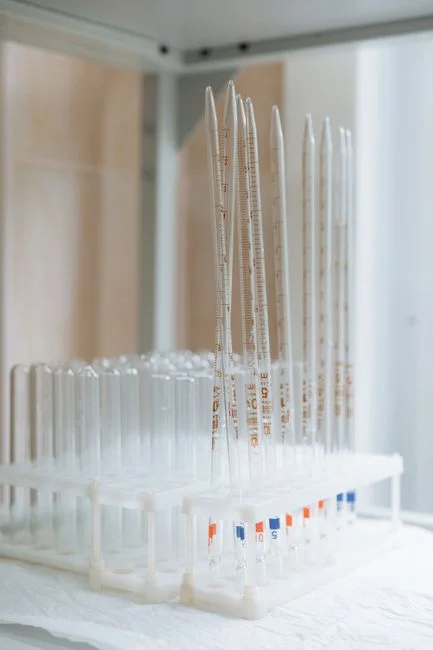
The 6 mg/L figure in GN 991 is total NH3-N (free + ionised), but the toxicant the receiving environment actually experiences is the free NH3 fraction, not the total. Speciation is governed by the pKa ≈ 9.25 at 25 °C — at higher pH and temperature, a larger share of the total pool converts to free NH3, which is the un-ionised, membrane-permeable, toxic form. At pH 7.0 and 20 °C only 0.4% of total NH3-N is free NH3; at pH 8.0 and 25 °C the fraction rises to ~4.0%; at pH 8.5 and 30 °C it reaches ~18% (Emerson et al., 1975, as cited in WRC Report TT 690/16). The practical consequence: a nitrification plant holding 5 mg/L total NH3-N at pH 8.5 summer discharge holds ~0.9 mg/L free NH3 — and the DWS ecotoxicology screening benchmark for freshwater fish (NOEC) is 0.02 mg/L free NH3. The lab certificate can read "compliant at 5 mg/L" while the receiving water fails.
| pH | 10 °C | 15 °C | 20 °C | 25 °C | 30 °C |
|---|---|---|---|---|---|
| 7.0 | 0.12% | 0.16% | 0.27% | 0.40% | 0.60% |
| 7.5 | 0.39% | 0.55% | 0.88% | 1.30% | 1.90% |
| 8.0 | 1.23% | 1.72% | 2.74% | 4.00% | 5.80% |
| 8.5 | 3.78% | 5.25% | 8.25% | 11.8% | 16.7% |
| 9.0 | 10.8% | 14.7% | 21.5% | 28.5% | 37.7% |
Design implication: nitrification effluent must be pH-controlled (typically pH 7.0–7.2) before the compliance point, not just ammonia-controlled. Operators relying on a single total-NH3-N reading without a pH and temperature log risk a Section 39A charge that the lab data alone will not defend.
Treatment Technologies That Reliably Hit ≤2 mg/L NH3-N in South Africa
Four technology trains cover the South African industrial envelope. A/O (anoxic + aerobic) MBBR is the lowest-cost option for sites where the GN 991 6 mg/L ceiling is the binding constraint and winter temperatures stay above 12 °C; it delivers ≤5 mg/L NH3-N at 15–25 °C with CAPEX of R 8,000–15,000 per m³/d and OPEX of R 0.45–0.80/m³ (WRC TT 690/16, 2016, indexed to 2026 ZAR). For sites bound by ≤2 mg/L, the workhorse is a pre-anoxic A/O coupled with an MBR + A/O nitrification system — the MBR's high MLSS (8,000–12,000 mg/L) and complete solids retention decouple nitrification from biomass washout, so the train holds ≤2 mg/L NH3-N across 12–28 °C. Expect CAPEX of R 12,000–22,000 per m³/d and OPEX of R 0.70–1.10/m³, with a 30–40% footprint saving versus conventional activated sludge. For warm (>20 °C), high-strength streams above 500 mg/L NH3-N — landfill leachate, anaerobic digester centrate, aquaculture RAS backwash — partial nitritation + anammox (PN/A) cuts aeration energy by 60% and lands at CAPEX R 25,000–40,000 per m³/d with OPEX falling to R 0.40–0.60/m³ once the biofilm is established; the trade-off is a 3–6 month start-up window and tight DO control at 0.3–0.5 mg/L. Breakpoint chlorination is a polishing tool only, not a primary process — stoichiometry demands 7.6 mg Cl2 per mg NH3-N oxidised, OPEX lands at R 1.50–2.50/m³, and the trihalomethane formation risk makes it incompatible with downstream potable reuse. For an at-a-glance technology comparison, see the MBR vs CAS comparison data published on the HydropureWater site.
| Process | Effluent NH3-N | Operating Temp. | CAPEX (R/m³/d) | OPEX (R/m³) | Best-fit Stream |
|---|---|---|---|---|---|
| A/O MBBR | ≤5 mg/L | 15–25 °C | 8,000–15,000 | 0.45–0.80 | Food, dairy (<12 °C winter risk) |
| Pre-anoxic A/O + MBR | ≤2 mg/L | 12–28 °C | 12,000–22,000 | 0.70–1.10 | Dairy, food, landfill leachate |
| Partial nitritation / anammox (PN/A) | ≤2 mg/L | 20–35 °C | 25,000–40,000 | 0.40–0.60 | Leachate, AD centrate, aquaculture |
| Breakpoint chlorination | ≤1 mg/L (polish) | Any | 1,500–3,000 | 1.50–2.50 | Emergency polish only |
For operating cost benchmarking on the MBR option specifically, the MBR membrane replacement cost guide gives a 2026 pricing breakdown of the largest ongoing OPEX line item.
Designing for the 2024–2026 Catchment-Specific Tightening Trend
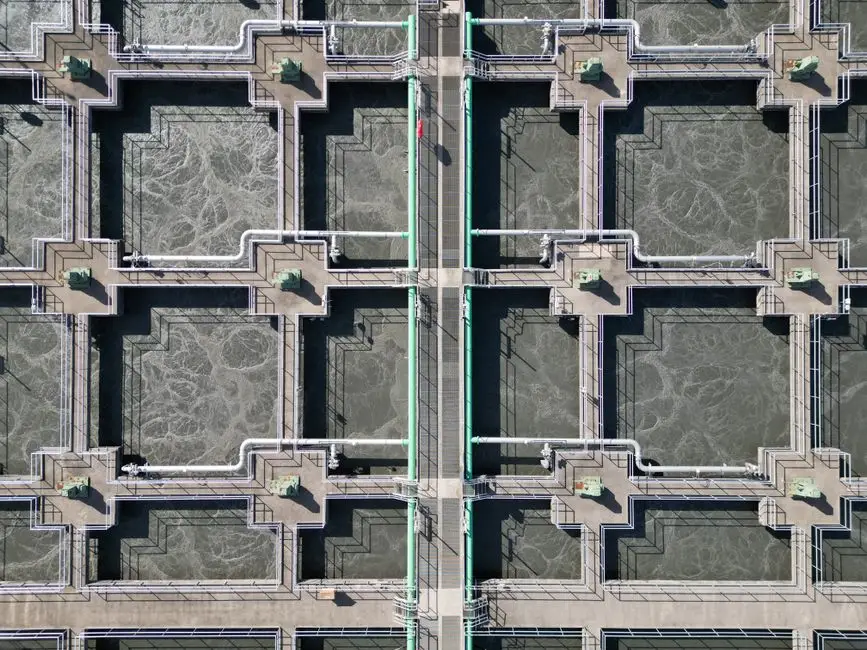
The 6 mg/L GN 991 limit is a national floor, not a ceiling. Two catchment blocks have moved materially in the 2024 DWS authorisation round. The Vaal Dam and Crocodile-West/Marico Water Management Areas, which feed Rand Water's Zuikerbosch and Magalies Water's Klipdrift plants, are now issuing WDPs with NH3-N conditions of ≤2 mg/L at the discharge point — the rationale is straightforward: the combined-works influent must stay below SANS 241-1's 1.5 mg/L to avoid a treatment-stage over-ride at the potable works. The Olifants-Inkomati and Breede-Gouritz WMAs have tightened to ≤3 mg/L to protect estuarine biodiversity in the iSimangaliso and Langebaan lagoon systems. Plants currently operating at 5–6 mg/L and treating the 6 mg/L line as the binding number are exposed to permit renegotiation in the 2026–2028 review window. The cost-effective hedge is to over-engineer the nitrification stage to ≤1.5 mg/L NH3-N today — typically by adding 30–50% aerobic volume or stepping up to an MBR-rated MLSS — and to instrument the compliance point with continuous pH and temperature transmitters so the free-NH3 calculation is auditable, not inferred. Monthly monitoring under GN 991 Section 6 must be a 24-hour flow-weighted composite; grab samples are no longer accepted for NH3-N compliance from 2024 onward.
Frequently Asked Questions
What is the exact 2026 ammonia-nitrogen discharge limit for inland water in South Africa? 6 mg/L total NH3-N under Government Notice 991 of 2014, enforced criminally by NEMWA Section 39.
Does the 6 mg/L number apply to all South African discharges? No. Marine outfalls allow 10 mg/L, irrigation reuse allows 50 mg/L, and many municipal by-laws and site-specific WDPs impose 1.0–2.0 mg/L for sensitive catchments.
Why does my plant pass the 6 mg/L lab test but still trigger a fish-kill downstream? The toxicant is free NH3, not total NH3-N. At pH 8.5 and 30 °C, ~18% of the total pool is free NH3; a 5 mg/L total reading can carry 0.9 mg/L free NH3, against a 0.02 mg/L NOEC for freshwater fish.
Which treatment technology reliably hits ≤2 mg/L NH3-N in South Africa? A pre-anoxic A/O train coupled with an MBR is the established workhorse for dairy, food, and landfill-leachate streams in the 12–28 °C range; partial nitritation/anammox is the lower-OPEX option for warm, high-strength streams above 500 mg/L NH3-N.
How often must I sample NH3-N to stay compliant? A 24-hour flow-weighted monthly composite, per GN 991 Section 6; grab samples are no longer accepted for NH3-N compliance demonstration under the 2024 DWS revision.