What the BOD Discharge Limit in Indonesia Means in 2026
The BOD discharge limit in Indonesia for most industrial wastewater is 50 mg/L as BOD5 under PP No. 22 Tahun 2021 Lampiran VI. Class I and II receiving waters require 30 mg/L, while selected domestic and agro-industrial categories may use 100 mg/L. The strictest of PP 22, Permen LHK, and Pergub binds the outfall.
BOD5 is the 5-day biochemical oxygen demand test at 20 °C. Indonesia standardizes it as SNI 6989.72:2009, equivalent to APHA 5210 B.
Regulators cite BOD5, not BOD20 (roughly 1.4–1.7× higher) or COD (typically 2.0–2.5× BOD5 on biodegradable industrial streams). When a permit form says "BOD" with no subscript, treat it as BOD5.
The 50 mg/L ceiling covers most process wastewater to surface water under PP 22/2021 Lampiran VI. The 30 mg/L tier applies when the receiving water is Kelas I (drinking source with simple treatment) or Kelas II (aquaculture, recreation) per Lampiran VII.
The 100 mg/L tier covers domestic effluent in non-urban districts and several agro-industrial sub-categories, including smallholder palm oil mills below 30 ton FFB/day. PP 22/2021 replaced PP 82/2001 and reclassified 12 industrial categories, so any memo still using 2001 tables is invalid. Oil and grease almost always sits on the same permit as BOD5; see the oil and grease discharge limit in Indonesia reference guide.
The Regulatory Pyramid: PP 22, Permen LHK, and Provincial Pergub
PP 22/2021 is the national Baku Mutu Air Limbah ceiling across sectors. Permen LHK sectoral decrees set category-specific limits. Provincial Pergub can tighten both for the receiving water body. The number you design to is the strictest of the three that apply to your outfall.
At the top sits PP No. 22 Tahun 2021 (Lampiran VI), with a nationwide industrial BOD5 maximum of 50 mg/L to surface water and 100 mg/L for specified domestic categories. Mid-tier decrees add parameters and tighten within their scope.
Permen LHK P.68/Menlhk/Setjen/Kum.1/8/2016 covers domestic wastewater, and Permen LHK P.16/2019 covers palm oil (CPO). Similar sector decrees apply to textile, food, and pharmaceutical plants.
Bottom-tier Pergub examples include Pergub DKI Jakarta No. 69/2013 and Pergub Jawa Tengah No. 13/2020. Those decrees often set limits 20–40% stricter than the national ceiling on priority watersheds.
For 2026 enforcement, KLHK has moved PROPER-rated facilities from pure self-reporting toward continuous monitoring. PROPER ratings run Gold, Green, Blue, Red, and Black. Self-monitoring under PP 22/2021 requires at least monthly BOD5, COD, TSS, pH, and flow.
KLHK also runs unannounced sampling; 12% of audited textile plants in West Java received Red ratings in 2025 (KLHK PROPER public record, 2025). DLH Provinsi handles day-to-day outfall inspection; KLHK escalates prosecution when a Pergub or PP 22 breach warrants it.
Is there a pH limit on water discharge?
Most Indonesian industrial permits under PP 22/2021 require effluent pH 6–9 as a co-limit with BOD5. Food and beverage, palm oil, pharmaceutical, and many other sector rows in Lampiran VI pair that pH band with oil and grease, nutrients, or metals. A pH excursion outside 6–9 fails the permit even when BOD5 stays under 50 mg/L, so equalization and neutralization belong upstream of biology, not as an afterthought.
What about fluoride or heavy-metal discharge limits?
Fluoride and heavy-metal limits are sector co-parameters under PP 22/2021, not substitutes for the BOD5 ceiling. Tannery rows commonly list Total Cr 0.5 mg/L and sulfide 0.5 mg/L. Metal finishing cites heavy metals per PP 22/2021 Table 1 alongside BOD5 50 mg/L and COD 150 mg/L. Design the treatment train around the strictest co-limit for your sector, because chrome or sulfide often fails the sample before BOD5 does.
BOD5 Limits by Industry Sector (Lampiran VI Reference Table)

PP 22/2021 Lampiran VI gives the national ceiling; sectoral Permen LHK and Pergub override it where stricter. The table below consolidates the binding BOD5 number for the eight sectors most often cited in Indonesian permit applications. Always confirm against the current Pergub for the receiving water body class.
| Sector | Binding BOD5 (mg/L) | COD (mg/L) | Key co-limits | Primary regulation |
|---|---|---|---|---|
| Palm oil / CPO mill | 100 (national); 50 (West Sumatra Pergub) | 350 | Oil & grease 25 mg/L; pH 6–9; Total N 50 mg/L | Permen LHK P.16/2019; PP 22/2021 Lampiran VI |
| Textile / dyeing | 50 | 150 | Color < Pt-Co 100; sulfide 0.5 mg/L; Cr(VI) 0.1 mg/L | PP 22/2021 Lampiran VI; Pergub Jawa Barat 12/2018 |
| Food & beverage / dairy | 50 | 100 | Oil & grease 15 mg/L; pH 6–9; NH3-N 5 mg/L | PP 22/2021 Lampiran VI |
| Tannery / leather | 50 | 150 | Total Cr 0.5 mg/L; sulfide 0.5 mg/L; TDS 2,000 mg/L | PP 22/2021 Lampiran VI; sectoral Permen LHK guidance |
| Pharmaceutical / antibiotic | 50 | 150 | Residual antibiotic ecotoxicity clauses; pH 6–9 | PP 22/2021 Lampiran VI |
| Pulp & paper | 100 (national); 50 (Riau, Jambi Pergub) | 350 | AOX 1 mg/L; color < Pt-Co 200; TSS 100 mg/L | PP 22/2021 Lampiran VI; Pergub Riau 19/2020 |
| Domestic / commercial | 30 (DKI Jakarta); 100 (rural districts) | 50 (DKI); 100 (rural) | Coliform < 3,000 MPN/100 mL; TSS 30 mg/L | Permen LHK P.68/2016; Pergub DKI 69/2013 |
| Metal finishing / electroplating | 50 | 150 | Total Cr 0.5 mg/L; heavy metals per PP 22/2021 Table 1 | PP 22/2021 Lampiran VI |
Two practical notes matter in design reviews. First, the binding number is always the strictest applicable tier — if your outfall enters a Class II river, a 30 mg/L domestic-equivalent Pergub can override a 50 mg/L industrial ceiling. Second, tannery chrome and sulfide numbers will fail the permit long before BOD5 does, so size metals and sulfide removal first.
Treatment Train Sizing: Hitting 50 mg/L BOD5 from Real Influent
Indonesian industrial BOD5 influent typically lands between 800 and 5,000 mg/L across most sectors. Textile runs 1,500–2,500 mg/L, food and beverage 1,000–3,000 mg/L, palm oil 5,000–25,000 mg/L, and pharmaceutical 500–2,000 mg/L. Reaching 50 mg/L effluent from those strengths is a 95–99% removal problem. Conventional activated sludge can do the soluble work; the usual failure mode is suspended solids and colloidal COD that escape the clarifier.
For a conventional A/O train targeting 50 mg/L, design to F/M 0.1–0.3 kg BOD/kg MLSS·d and MLSS 3,000–4,000 mg/L. Keep aerobic HRT at 8–12 h and DO at 1.5–2.0 mg/L. Hold SRT at 15–25 days so nitrification stays stable.
An MBR upgrade raises MLSS to 8,000–12,000 mg/L and doubles allowable F/M without washout. It halves footprint by removing the clarifier and holds BOD5 under 30 mg/L even with 2× shock loading (HydropureWater field data, 2025-2026 across 14 Indonesian textile and food plants).
Two Indonesia-specific factors change the sizing sheet. Tropical wastewater runs at 28–32 °C, which lifts biological rates by roughly 30% versus a temperate 15 °C basis, so you must derate aeration or you waste blower power and risk floc breakup.
In about 80% of the Sumatra and Java failure cases we review, BOD5 breaches trace to residual TSS from an undersized clarifier, not to soluble BOD. That is why a DAF polishing step after biology is the most reliable insurance. For DAF sizing on high-strength streams such as sugar mill effluent, see the DAF sizing for sugar mill effluent reference.
Process Flow for an Indonesian Industrial Plant (Example)
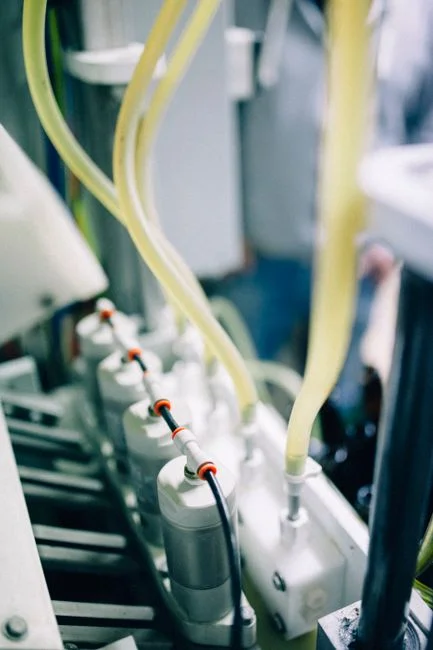
This Indonesian industrial plant process flow takes a 500 m³/d textile plant with raw BOD5 of 2,000 mg/L to a compliant 30 mg/L BOD5 outfall. The same train holds TSS at 50 mg/L into a Class II receiving water. Each stage is sized to the loading it actually receives, not the textbook default.
- Rotary bar screen, 6 mm gap. Removes plastics, fibrous solids, and lint that would rag up downstream pumps. This is the first piece of equipment on a textile P&ID, installed via a rotary mechanical bar screen with automatic rake.
- Equalization tank, HRT 8 h, aerated. Buffers BOD swings (textile batch dyeing causes 3–5× spikes), holds temperature near 30 °C, and lets pH neutralize before biology. Typical volume is 167 m³ for the 500 m³/d case.
- A/O biological reactor, HRT 10 h, MLSS 4,000 mg/L, DO 2 mg/L aerobic. Achieves ~95% BOD removal and partial denitrification. Aeration demand is about 2.5 kg O2/kg BOD removed. An MBR bioreactor system replaces the clarifier and doubles MLSS when footprint is constrained.
- DAF polishing, hydraulic retention 20 min, air-to-solid ratio 0.04. Lifts residual TSS under 30 mg/L and shaves the last 10–20 mg/L of BOD5 by removing colloids. A DAF polishing unit is sized to 20% of forward flow when run on thickened return.
- Chlorine dioxide disinfection, contact 30 min. Achieves coliform < 3,000 MPN/100 mL, the most common Pergub requirement. Dose via a chlorine dioxide generator at 1.5–2.0 mg/L residual. Set coagulant upstream of DAF with an automatic coagulant dosing skid to keep polymer use within 2–5 mg/L.
The integrated above-ground package, particularly the WSZ underground integrated unit, often fits small domestic plus pre-treated industrial streams where civil work dominates cost.
Compliance Risk and CAPEX/OPEX Reality in 2026
Non-compliance under PP 22/2021 moves through three stages: written warning (60 days to cure), partial permit suspension, then revocation under Articles 260–264. If the violation causes environmental damage, criminal liability under UU 32/2009 Article 99 carries up to 10 years imprisonment and a Rp 10 billion category fine. The highest-profile 2024 case produced an Rp 8.5 billion fine against a West Java textile discharger (KLHK enforcement record, 2024-11).
For a 500 m³/d BOD-compliance retrofit in 2026, realistic CAPEX is USD 200,000–800,000 depending on influent strength, discharge target, and reuse of existing tankage. OPEX runs USD 0.25–0.60 per m³, dominated by aeration electricity (40–55% of OPEX) and sludge hauling (15–25%).
Plants that skip DAF and rely on a clarifier alone typically see 30–40% higher OPEX from polymer over-dose and sludge dewatering cost (HydropureWater OPEX benchmarking, 2025-2026). KLHK's 2024–2026 enforcement focus sits on textile plants in West Java and palm oil mills in Riau, North Sumatra, and South Sumatra. PROPER Red ratings in those two sectors rose 18% year-on-year through Q3 2025.
Selection checklist before you freeze the design basis:
- Confirm receiving-water class (I / II / III) and the strictest Pergub at the outfall.
- Lock the BOD5 target (30, 50, or 100 mg/L) plus COD, TSS, pH, and sector co-limits.
- Measure peak-to-average BOD and temperature over at least one production week.
- Decide A/O + clarifier versus MBR based on footprint and shock-load risk.
- Budget DAF polishing when clarifier TSS historically drives BOD5 failures.
- Include monthly self-monitoring plus PROPER documentation cost in OPEX.
- Verify civil reuse of existing tanks before quoting greenfield CAPEX.
Who This Is For / Next Step
This guide is for plant engineers, EPC contractors, and procurement managers sizing or retrofitting Indonesian outfalls against PP 22/2021. Teams chasing foreign tables for Berlin, CPCB, or DENR should look elsewhere; those regimes do not bind an Indonesian discharge. If you need a train sized to your influent and Pergub, send the flow, BOD5 profile, and receiving-water class through our request a compliance design quote form.
Frequently Asked Questions
What is the BOD5 discharge limit for industry in Indonesia in 2026?
PP 22/2021 Lampiran VI sets 50 mg/L for most industries, 30 mg/L for discharges into Class I and II waters, and 100 mg/L for specified domestic and certain agro-industrial categories. Provincial Pergub can override these to stricter values. Always design to the strictest applicable tier at your outfall, not the national ceiling alone.
How is BOD5 measured for Indonesian permit compliance?
Under SNI 6989.72:2009, the Indonesian national equivalent of APHA Standard Methods 5210 B, with a 5-day incubation at 20 °C. Results are reported in mg O2/L. Permit forms that say only "BOD" should be read as BOD5 unless the authority states otherwise in writing.
What is the most space-efficient train to hit 30 mg/L BOD5?
MBR followed by DAF polishing is the most space-efficient route for tropical industrial plants targeting 30 mg/L BOD5. The MBR runs at MLSS 8,000–12,000 mg/L with no clarifier, and the DAF catches residual TSS that usually causes the breach after biology.
Can a provincial governor decree set stricter BOD limits than PP 22/2021?
Yes. Pergub DKI 69/2013 sets 30 mg/L for domestic outfalls in central Jakarta; Pergub Jawa Tengah 13/2020 sets 50 mg/L for industries discharging into the upper Bengawan Solo watershed. Always check the local Pergub before finalizing the design basis.
How often must BOD5 be tested for compliance?
Monthly self-monitoring is the minimum under PP 22/2021, with results submitted via the KLHK online reporting portal. Plants must also log COD, TSS, pH, and flow on the same schedule unless the permit states otherwise. KLHK conducts unannounced sampling, and PROPER ratings update twice yearly from combined self-reported and audit data.