What DAO 2016-08 Actually Requires for Quezon City Factories
Industrial wastewater treatment in Quezon City in 2026 is governed primarily by DENR-DAO 2016-08, which sets effluent limits of BOD ≤ 30 mg/L, COD ≤ 100 mg/L, TSS ≤ 50 mg/L, and pH 6.0–9.0 for most Class C inland waters. A typical 50–500 m³/day factory plant uses a DAF pretreatment + MBR biological stage, achieving >95% COD removal and <1 μm effluent solids, with packaged CAPEX of roughly USD 250–900 per m³/day before civil works.
The table below is the operating ceiling for any Quezon City plant discharging to a Class C inland water body or to a public sewer that ultimately drains to one. These values are the legal floor — your design has to clear them on every parameter, every shift, every quarter.
| Parameter | DAO 2016-08 Limit (Class C inland) | Typical Quezon City raw influent | Treatment stage that controls it |
|---|---|---|---|
| BOD₅ | 30 mg/L | 800–2,500 mg/L (food/ textile) | Biological (A/O or MBR) |
| COD | 100 mg/L | 1,500–5,000 mg/L | Biological + tertiary |
| TSS | 50 mg/L | 200–600 mg/L | DAF + MBR membrane |
| Oil & Grease | 5 mg/L | 50–400 mg/L (FOG from food plants) | DAF pretreatment |
| Color | 100 Pt-Co | 200–1,500 Pt-Co (textile) | Coagulation + ClO₂ polish |
| pH | 6.0–9.0 | 4.5–11 (metal finishing/ textile) | Equalization + pH correction |
| Total Chromium | 0.05 mg/L | 0.5–10 mg/L (plating) | Chemical precipitation |
| Cadmium | 0.01 mg/L | 0.1–2 mg/L | Precipitation + ion exchange |
| Lead | 0.1 mg/L | 0.5–5 mg/L | Precipitation |
| Mercury | 0.002 mg/L | Trace–0.05 mg/L | Sulfide precipitation |
| Copper | 0.5 mg/L | 1–20 mg/L (see the engineering guide to How to Remove Copper from Wastewater: 2026 Engineering Methods & Compliance Guide) | Precipitation + ion exchange |
| Zinc | 2.0 mg/L | 2–30 mg/L | Precipitation |
| Ammonia-N | 10 mg/L (proposed tighter in 2026 review) | 20–80 mg/L | Nitrification in MBR |
Three regulators can touch your file. The DENR-EMB National Capital Region office in Quezon City issues the Discharge Permit and runs the twice-yearly self-monitoring requirement — every sample must hit a DENR-EMB-accredited lab, and the result is filed in the Online Compliance Monitoring System (OCMS) within 30 days. If your outfall drains toward the Marikina River, the San Juan River system, or ultimately Manila Bay, the Laguna Lake Development Authority (LLDA) also has jurisdiction and will require a separate clearance for any flow above 30 m³/day, even though the project sits inside NCR. The Quezon City Engineering Office still controls the physical sewer-connection permit, and most industrial parks (PEZA zones) layer a fourth approval on top.
On the ECC/CNC split, the line is hard: a project that disturbs 2,000 m² or more of land or generates 500 m³/day or more of wastewater needs a full Environmental Compliance Certificate, including an Environmental Impact Statement reviewed by the EMB Central Office. Anything smaller — a 200 m³/day food line, a 50 m³/day garment dye-house — files a Certificate of Non-Coverage instead, which the regional office can issue in 30–45 days if your self-monitoring plan is solid. The 2026 monitoring cadence remains twice-yearly self-monitoring through an accredited lab, plus unannounced quarterly walk-throughs by the EMB regional office; the lab results feed the OCMS, and any exceedance triggers a Corrective Action Order within 15 days.
Matching a Treatment Train to Your Wastewater Type
A Quezon City factory rarely produces a single, clean wastewater. Most plants run two or three product lines, and the mix changes between shifts, so the treatment train has to be selected by worst-case contaminant rather than average influent. The table below maps the four most common Quezon City industrial profiles to a defensible process flow.
| Industry profile | Dominant contaminants | Recommended train | Design loading |
|---|---|---|---|
| Food & beverage (sauce, dairy, meat, brewery) | High BOD/COD, FOG, ammonia, TSS | Bar screen → equalization → industrial DAF system for FOG and TSS removal → A/O or modular MBR wastewater treatment system → UV | 0.4–0.6 kg BOD/m³·day at 28–32°C |
| Garment / textile / dyeing | Color (200–1,500 Pt-Co), high COD, low BOD/COD ratio (<0.2), surfactants | Screening → coagulation/dosing → biological contact oxidation → PLC-controlled chemical dosing skid for color → MBR → ClO₂ polish | 0.05–0.15 kg BOD/m³·day; 98% NH₃-N removal benchmark |
| Electronics / metal finishing / electroplating | Heavy metals (Cu, Ni, Cr, Zn), low flow, cyanide, fluoride | Cyanide destruction (alkaline chlorination) → pH adjust → metal precipitation → sand/anthracite filter → ion exchange → common biological polishing | Reagent stoichiometry +20% safety; metal recovery when influent TDS >3,000 mg/L |
| Shared service / mixed industrial park | Mixed organic + surfactant load, variable pH | Equalization (24 h) → DAF → MBR → UV/ClO₂ | Composite sampling over 24 h, not grab |
For food and beverage plants, the FOG load is what kills biological reactors first. An industrial DAF system for FOG and TSS removal sized at 4–300 m³/h (the 13 standard models cover that entire range) will typically pull 70–85% of the FOG and 60–75% of the TSS before the water hits the aeration basin, which lets the downstream biology run at 0.4–0.6 kg BOD/m³·day in tropical 28–32°C ambient air without bulking. For textile and dye-house effluent, the contact-oxidation reactor that precedes the MBR routinely hits 98% ammonia removal at 6–8 hour HRT, and the residual color drops below 100 Pt-Co after a chlorine dioxide polish step — on-site generation with a on-site chlorine dioxide generator is the standard practice because ClO₂ demand scales with the dye chemistry rather than the flow. For metal finishing, the heavy-metal train runs as a sidestream with pH adjustment and chemical precipitation feeding ion exchange; once influent TDS climbs above 3,000 mg/L, the economic case for zero liquid discharge (ZLD) with a brine concentrator and crystallization stage starts to close, particularly when the local water utility tariff runs above PHP 60/m³.
Quezon City-Specific Engineering Constraints
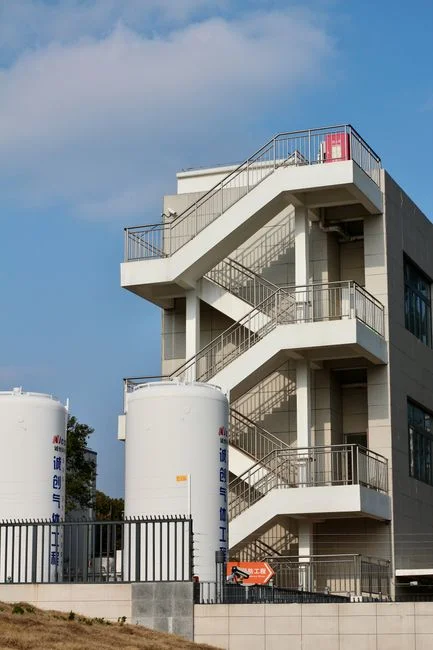
A specification that works in Düsseldorf or Dalian will underperform in Quezon City for three reasons — climate, typhoon exposure, and grid reliability. Each one changes the equipment spec in a way a temperate-climate vendor's default quote will not catch.
At a sustained 30°C ambient, nitrification rates in a well-seeded MBR roughly double compared to a 20°C design (per Metcalf & Eddy standardized rate coefficients), but oxygen transfer efficiency in hot, humid air drops by 15–25% because the saturation concentration of dissolved oxygen falls. The practical fix is fine-bubble membrane diffusers rated above 2.5 kg O₂/kWh standard oxygen transfer efficiency, with a redundant blower that can each carry 100% of design airflow — that is non-negotiable for an MBR over 100 m³/day. The DF series PVDF MBR membrane module runs at 0.05–0.2 MPa TMP with a 0.1 μm nominal pore, which keeps the effluent TSS below 1 mg/L and protects downstream disinfection.
Quezon City sits inside the western Pacific typhoon belt, with 4–6 typhoon crossings per year on the PAGASA 2024 track map. A packaged plant must be anchored to a 60 kph wind load and sited with at least 1.0 m freeboard above the 100-year flood line from the MMDA/PAGASA flood atlas; the 2024 Typhoon Carina flooding reached 1.5 m in low-lying NCR industrial corridors, which is the realistic reference. Electrical cabinets need NEMA 4X or IP65 enclosures, and any outdoor control panel should be on a raised platform with cable entries sealed against 100 mm/hr rainfall. Finally, the Quezon City grid drops out often enough that any biological stage over 200 m³/day should specify a generator-backed blower with 8 hours of runtime, sized at 1.5× the running kW to recover an aerobic digester after a power loss without losing the biomass. The land-cost argument pushes the same direction: Quezon City industrial land runs 4–8× the price of Laguna or Batangas, and the MBR footprint is about 60% smaller than a conventional activated-sludge basin of equivalent capacity, which is the difference between fitting the plant inside an existing factory compound and buying an adjacent lot.
CAPEX and OPEX Comparison: Modular vs. Concrete-Built Plants
The numbers below are equipment-only CAPEX in USD-equivalent at a fixed 100 m³/day reference capacity, 2-shift operation, influent BOD 1,200 mg/L and TSS 400 mg/L, targeting DAO 2016-08 effluent of BOD 30 mg/L and TSS 50 mg/L. Civil works, taxes, and freight are quoted separately because they swing the final figure more than the equipment choice.
| Configuration | Equipment CAPEX (USD-eq.) | Footprint | Civil multiplier | 5-year OPEX drivers |
|---|---|---|---|---|
| Modular MBR package plant (skid-mounted, factory-built) | 25,000–90,000 | ~60% of conventional | 20–40% of equipment CAPEX | Electricity 0.6–1.2 kWh/m³ at PHP 9–12/kWh; chemical spend 8–18 USD/day |
| Concrete-built SBR (sequential batch reactor) | 120,000–220,000 | 100% baseline | 60–110% of equipment CAPEX | Electricity 0.8–1.4 kWh/m³; decanter maintenance reserve |
| Extended-aeration concrete activated sludge | 150,000–280,000 | ~150% of MBR | 80–120% of equipment CAPEX | Electricity 1.0–1.8 kWh/m³; higher sludge hauling |
Sludge is the line item that quietly consumes the OPEX budget. A 100 m³/day plant running at the design loading above will generate 8–14 m³/day of thickened sludge at 2–4% dry solids, and the dewatering step with a plate-and-frame filter press brings that to 70% moisture cake at roughly 1.5–2.5 kg DS/m²·h. Hauling the cake in NCR runs PHP 1,500–3,500 per cubic meter, depending on the transporter and the receiving TSD facility, so any gain above 25% dryness on the press pays back inside 18 months. The related Resource Recovery from Wastewater 2026 Outlook: 8 Industrial Technologies & ROI review covers struvite precipitation and biogas recovery for plants over 500 m³/day where the OPEX math flips.
Choosing an Equipment Supplier and Running a 90-Day Compliance Roadmap
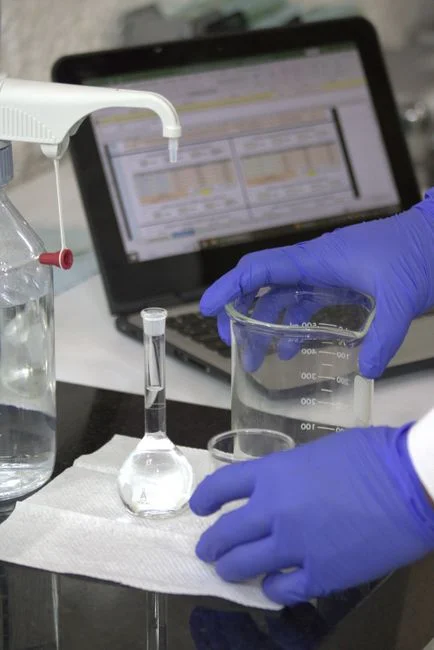
Five criteria sort the credible suppliers from the catalog traders when the project is in Quezon City. First, a local service partner or a Filipino-speaking commissioning engineer — language coverage during the EMB inspection is not optional. Second, factory acceptance test (FAT) video capability, so the plant owner can witness the run before the unit ships. Third, 12-month warranty with regional spare-parts stock in Manila or Cebu, not air-freight from Shenzhen every time a sensor fails. Fourth, ISO 9001 and CE documentation bundled with the shipment, which the DENR-EMB reviewer will ask for at the pre-application meeting. Fifth, at least one installed reference in the Philippines or Southeast Asia that you can visit, with a working discharge permit. The equipment shortlist that typically clears all five includes bar screens (a rotary mechanical bar screen for flow above 50 m³/h), the DAF, the MBR module, the chemical dosing skid, the filter press, and an on-site chlorine dioxide generator for color or microbial polishing. A useful pre-selection benchmark for the energy line is the operating-cost breakdown in Electrocoagulation System Operating Cost in 2026: OPEX Breakdown & Savings, which applies the same PHP-per-kWh framework.
The 90-day roadmap is tight but realistic. Weeks 1–2 cover influent sampling — three days of 24-hour composite samples, one weekday grab, one weekend grab — run through a DENR-EMB-accredited lab so the numbers are usable in the Discharge Permit application. Weeks 3–6 are process design and the pre-application meeting with DENR-EMB NCR; the PFD, the mass balance, and the effluent projection table should all be in the meeting packet. Weeks 7–10 cover fabrication, factory acceptance test, and site civil works, ideally running in parallel. Weeks 11–12 are installation, commissioning, and Discharge Permit filing through OCMS. The supplier should also deliver the OCMS reporting template and train two of your operators on the routine tasks (DAF sludge blowdown, MBR transmembrane pressure checks, ClO₂ residual, jar testing) so the plant can self-monitor and clear the twice-yearly accredited-lab requirement without bringing in outside help. A regional benchmark for the cost ceiling is the South African ammonia review at Ammonia Nitrogen Discharge Limit South Africa 2026: NEMWA & SANS Standards, which frames how jurisdictions elsewhere are tightening nitrogen limits in parallel with the 2026 DAO review.
Frequently Asked Questions
What is the controlling effluent standard for a Quezon City factory in 2026?
DENR-DAO 2016-08, with BOD ≤ 30 mg/L, COD ≤ 100 mg/L, TSS ≤ 50 mg/L, oil & grease ≤ 5 mg/L, color ≤ 100 Pt-Co, and pH 6.0–9.0 for Class C inland waters, plus the heavy-metal triggers listed above (per DAO 2016-08 Section 3).
Do I need both an ECC and a Discharge Permit?
If the project disturbs 2,000 m² or more of land or generates 500 m³/day or more of wastewater, you need a full Environmental Compliance Certificate; smaller projects file a Certificate of Non-Coverage. Every discharging facility still needs a Discharge Permit from DENR-EMB NCR on top.
When does LLDA jurisdiction kick in for a Quezon City plant?
Whenever the outfall drains toward the Marikina–Laguna Lake watershed or Manila Bay, even inside NCR. The LLDA clearance is a separate application and runs in parallel with the DENR Discharge Permit.
What is a realistic CAPEX envelope for a 100 m³/day packaged plant?
Equipment-only CAPEX of USD 25,000–90,000 for a modular MBR package, USD 120,000–220,000 for a concrete SBR, or USD 150,000–280,000 for extended-aeration concrete, before Philippine civil works at a 20–110% multiplier depending on configuration.
How long does the permit and commissioning process take?
A 90-day roadmap is realistic: 2 weeks sampling, 4 weeks design + EMB pre-application, 4 weeks fabrication + civil, 2 weeks installation and commissioning, with the Discharge Permit filed through OCMS at the end of week 12.
What monitoring cadence does DENR-EMB require after commissioning?
Twice-yearly self-monitoring through a DENR-EMB-accredited laboratory, results filed in OCMS within 30 days, plus unannounced quarterly walk-throughs by the EMB regional office.