Why Sourcing a Wastewater Treatment Plant Supplier in Egypt Is Different in 2026
An Egyptian procurement manager comparing suppliers in 2026 is not buying a generic "wastewater plant" — they are buying a compliance certificate, a logistics window, and a process train that can survive Egyptian influent. Egypt's top wastewater treatment plant suppliers in 2026 serve municipal and industrial buyers with MBR, SBR, and DAF-MBR-RO hybrid systems, and the lowest CAPEX bid is rarely the winning one. Compliance with EEAA Law 4/1994 and Ministerial Decree 44/2000 is mandatory; textile and food-plant buyers should expect 85–95% COD removal targets enforced at the discharge point, not the design stage.
Three structural factors make Egypt unlike the Gulf, Morocco, or Pakistan. First, freight: a 40HQ container leaves Shanghai, transits the Suez Canal, and clears Damietta or Alexandria in 8–14 days at a landed cost of USD 2,800–4,200 in canal and inland fees alone — that transit time sets the RFQ delivery commitment, not the factory's production schedule. Second, influent: Egypt's industrial base — textiles in Mahalla El-Kubra, fertilizers in Suez, food processing in 10th of Ramadan — produces high-COD, high-TDS, high-temperature wastewater (30–38°C) that constrains biological kinetics and membrane flux. Third, regulation: EEAA tightened industrial discharge enforcement between 2023 and 2025, and the 2026 baseline is that any plant discharging to sewer or agricultural drain must hold an Environmental Register entry before commissioning. The 2026 Hurghada wastewater treatment plant cost benchmark is the cleanest comparable CAPEX reference point on the SERP, with the EGP 5M+ bracket translating to roughly USD 100K–160K for a 200–500 m³/day packaged plant delivered to a Red Sea governorate.
Egypt's Compliance Floor: EEAA Law 4/1994, Law 48/1982 and Decree 44/2000
Law 4/1994 is the Egyptian Environmental Affairs Agency's founding statute and remains the umbrella framework that every industrial WWTP permit hangs on. Law 48/1982 (Nile protection) is the second pillar — it bites any project that discharges to the Nile, irrigation canals, or agricultural drains, which covers most of the Delta and Valley sites. Ministerial Decree 44/2000 sets the actual numbers: BOD ≤ 60 mg/L and COD ≤ 120 mg/L for treated effluent discharged to municipal sewer, with stricter BOD ≤ 40 mg/L and COD ≤ 80 mg/L for direct discharge to water bodies, plus TSS ≤ 50 mg/L and pH 6.5–9.0 across both routes (per EEAA Decree 44/2000 schedules).
Law 9/2009 raised the penalty ceiling — non-compliance fines can reach EGP 500,000 plus administrative plant closure, and EEAA's 2023–2025 enforcement wave means fines are now routinely applied rather than held in reserve. A second procedural gate is the EEAA Environmental Register: every WWTP must be registered with EEAA's Industrial Wastewater Department before commissioning, and that registration is a precondition for the operating license from the relevant governorate. From an RFQ standpoint, the practical implication is hard: a supplier that cannot produce an EEAA registration number from a previous Egyptian installation has not actually commissioned a compliant plant in Egypt, and that fact should reject the bid on technical grounds before CAPEX is even discussed. The buyer should request copies of EEAA inspection reports, not just CE or ISO 9001 certificates.
Matching Process to Egyptian Influent: MBR, SBR, DAF and Hybrid Designs
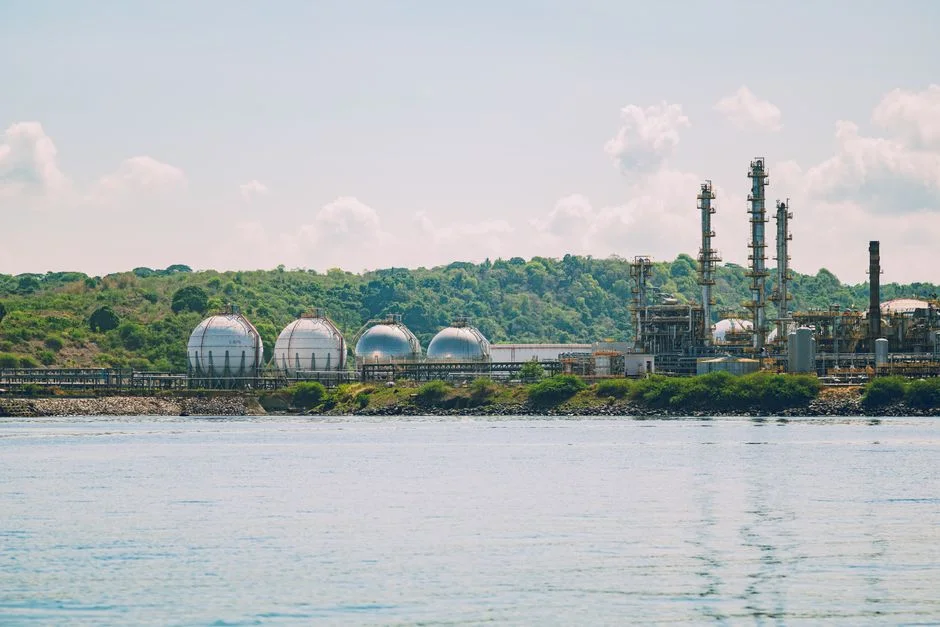
Process selection in Egypt is driven by three influent parameters before it is driven by price: influent COD (typically 800–4,000 mg/L for textile and food clusters), TDS (often 2,000–8,000 mg/L where groundwater intrusion or process salts push conductivity up), and temperature (30–38°C year-round, which accelerates biological kinetics but hurts membrane fouling if hydraulic residence time is mis-set). The table below maps the four trains a 2026 Egyptian buyer will most often see on a shortlist.
| Process train | Influent tolerance (COD/TDS/T) | Effluent quality (BOD / TSS / reuse fit) | Footprint vs CAS | Best-fit application in Egypt |
|---|---|---|---|---|
| A/O + MBR | COD ≤ 3,000 mg/L; TDS ≤ 5,000 mg/L; 25–40°C | BOD ≤ 5 mg/L; TSS < 1 μm; direct irrigation reuse | ~60% smaller than CAS | Textile & food plants in 10th of Ramadan / 6th of October — use an integrated MBR membrane bioreactor system |
| SBR (batch) | COD ≤ 1,500 mg/L; low TDS; 20–35°C | BOD ≤ 20 mg/L; TSS ≤ 30 mg/L; no direct reuse | ~30% smaller than CAS | Low-strength municipal work, small food processors, remote compounds |
| DAF + biological | FOG ≤ 200 mg/L; TSS ≤ 800 mg/L; high-T tolerant | BOD ≤ 30 mg/L after bio; no reuse without polishing | Comparable to CAS | Food & oil processing where FOG and floatables dominate; uses a DAF pre-treatment system ahead of the biological stage |
| DAF + MBR + RO | COD ≤ 5,000 mg/L; TDS ≤ 8,000 mg/L; FOG ≤ 200 mg/L | Reuse-grade permeate; >95% recovery; zero-liquid-discharge capable | Larger but integrated | Water-stressed inland sites, fertilizer plants, ISO 14001 reuse targets |
For small-flow sites — hotels, hospitals, compounds in Upper Egypt — a WSZ underground A/O package plant rated 1–80 m³/h is often the right answer: no surface footprint, no dedicated operator, and burial below the frost line (which is irrelevant in Egypt but useful for shade and odour control). For textile and food plants in 10th of Ramadan where effluent oil/grease routinely exceeds 50 mg/L, the DAF pre-treatment is non-negotiable — running that FOG load directly into MBR will foul membranes in weeks, not months, and the supplier's O&M guarantee becomes void.
2026 CAPEX and OPEX Benchmarks for Egyptian Industrial Projects
CAPEX for industrial WWTPs delivered to Egypt in 2026 scales with process complexity, not with country of origin. The table below aggregates ranges from active 2025–2026 tenders in the Delta, Suez, and Upper Egypt, cross-checked against current HydropureWater shipment logs to Alexandria and Damietta.
| Process train | CAPEX (USD per m³/day, skid-mounted) | Energy OPEX (USD/m³) | Membrane OPEX (USD/m³) | Chemical OPEX (USD/m³) | Labor OPEX (USD/m³) |
|---|---|---|---|---|---|
| Package MBR (10–500 m³/day) | 280–600 | 0.08–0.18 | 0.05–0.12 | 0.05–0.12 | 0.03–0.06 |
| SBR (50–1,000 m³/day) | 220–450 | 0.06–0.14 | n/a | 0.04–0.10 | 0.03–0.08 |
| DAF + MBR hybrid | 450–850 | 0.10–0.20 | 0.05–0.12 | 0.06–0.14 | 0.03–0.06 |
| DAF + MBR + RO reuse train | 800–1,200 | 0.14–0.22 | 0.06–0.14 | 0.08–0.18 | 0.04–0.08 |
Two landed-cost line items are Egypt-specific and routinely omitted from non-Egyptian supplier quotations. First, customs: Egypt applies 5–32% duty on WWTP equipment depending on HS code 8421.21, and membrane modules under 8421.99 sometimes attract a different band — confirm with the buyer's customs broker before issuing the PO. Second, inland logistics: skid dimensions must fit a 40HQ container (12.03 × 2.35 × 2.69 m internal) and the standard Egyptian road-trailer weight limit of 40 tonnes; oversize skids trigger escort-vehicle fees of EGP 18,000–35,000 per move. The buyer's purification polishing stages — typically an integrated JY water purification unit ahead of an industrial RO polishing system — should be specified and costed as separate line items so OPEX can be modelled per stage. For government-tendered projects, Egypt's Industrial Trade Authority may require 30–40% local content, which structurally favors joint ventures over pure import.
A 5-Step Supplier Scoring Framework for the Egyptian Market
This framework turns the previous sections into a procurement checklist an engineer can paste directly into an RFQ scoring sheet.
Step 1 — Compliance evidence, not certificates. Ask for EEAA registration numbers of two or more past Egyptian projects, plus the inspection report and effluent test data from EEAA's last visit. A supplier that offers only CE or ISO 14001 has never been legally signed off in Egypt; reject the bid on this point alone.
Step 2 — Process guarantee tied to a performance bond. Require written COD, BOD, and TSS effluent numbers at the discharge sampling point (not at the membrane outlet) backed by a 10–15% performance bond for 12 months. Vague claims of "meets local standards" without numbers and without a bond are non-biddable.
Step 3 — Local service presence. Confirm a Cairo or Alexandria service engineer on payroll, not a regional agent. Vendors without MENA presence typically quote 6–10 week response times for spares; with on-shore service, 48–72 hours is the realistic baseline.
Step 4 — Containerization and inland logistics. Confirm skid dimensions fit a 40HQ container and that each skid is below 40 tonnes to stay inside Egyptian road weight limits. Ask for a packing list per 40HQ — oversize skids add EGP 18,000–35,000 per escort move. Automatic chemical dosing skids are typically the last items to be value-engineered; lock their sizing early.
Step 5 — Lifecycle cost transparency. Request a 5-year membrane and consumable replacement schedule with fixed pricing, including part numbers. Without this, OPEX in year 3 becomes a renegotiation. See the 2026 MBR market growth analysis for benchmark membrane-price trajectories, and cross-reference any Casablanca or Algerian deal as a North African sanity check — for example, the Casablanca wastewater treatment plant manufacturer comparison and the North African hospital wastewater engineering guide both show the same membrane-pricing plateau.
Frequently Asked Questions
What is the typical cost and lead time for a 50–500 m³/day industrial MBR plant from China to Egypt in 2026? A skid-mounted MBR in that capacity band lands in Egypt at USD 35,000–250,000 depending on effluent reuse targets, with 12–16 weeks of production plus 8–14 days of Suez Canal transit; total door-to-door is typically 16–20 weeks for the first unit, 12–14 weeks for repeat orders.
SBR vs MBR for an Egyptian industrial buyer — which fits where? SBR suits low-strength municipal work and small food processors with influent BOD below 200 mg/L; MBR is preferred for industrial reuse because it delivers effluent under 50 mg/L COD and under 1 μm TSS, which is the threshold Egyptian regulators apply when reuse for irrigation is on the table.
Does an EEAA Environmental Impact Assessment apply to my project? Yes — EEAA requires a full EIA for any WWTP above 50 m³/day or for any plant discharging to Nile tributaries, irrigation canals, or agricultural drains; projects below 50 m³/day with sewer discharge still need a registration form, but a full EIA is not required.
How often do membranes need replacement, and what is the OPEX reserve? MBR membranes typically need replacement every 5–7 years under Egyptian influent conditions, with chemical cleaning every 3–6 months; budget USD 0.05–0.12 per m³ treated as the OPEX reserve for membrane replacement and cleaning chemistry combined.
Can polishing stages (chlorine dioxide, lamella clarifier) be added downstream of any biological train? Yes — a chlorine dioxide generator for disinfection and a high-efficiency lamella clarifier for TSS polishing can be added downstream of any biological stage, and a rotary mechanical bar screen is the standard coarse pre-treatment upstream, while a plate-frame filter press is the standard sludge dewatering unit on the back end.