Why Coal Chemical Sludge Is Harder Than Municipal Sludge
Coal chemical sludge is not a variant of municipal biosolids; it is a different material with a different mass balance. The liquor side of a coal-to-chemicals, coke, or coal-gasification plant carries gasification wash water, liquefaction process water, and ammonia/phenol/cyanide-bearing streams that the upstream biological stage strips out of the water column and concentrates into the waste activated sludge. Per Zhao (2017), biochemical methods dominate the liquor side with good removal of phenols and benzene compounds, but they generate an excess activated sludge that is refractory, high in bound water, and loaded with recalcitrant organics that mechanical dewatering alone cannot stabilise. Wang et al. (2023, MDPI Catalysts) confirmed the gap: the volatile suspended solids and COD carried in this sludge require catalytic wet oxidation (CWO) to break down, not just a press.
Three engineering consequences follow for any 2026 design. First, volatile suspended solids regularly exceed 70% of total solids, which raises bound-water content and pushes cake dryness 5–10 percentage points below municipal benchmarks. Second, the solids carry residual phenols, cyanides, and thiocyanate at concentrations that inhibit downstream biosolids handling, so most provinces in China classify the cake as HW07 hazardous waste and route it to a licensed kiln or hazardous-waste incinerator rather than a municipal digester. Third, the dewatering centrate is ammonia-rich — typically 800–1,800 mg/L NH₃-N — and closing that recycle loop back to the bio-stage is the real design constraint, not the cake dryness number on a vendor cut-sheet.
The 2026 Standard Process Train: From Pre-Thickening to Final Disposal
The 2026 reference train for a coal chemical sludge line is five stages: pre-thickening to 2–4% DS, chemical conditioning with cationic polyacrylamide, mechanical dewatering to 20–35% DS, optional catalytic wet oxidation or low-temperature drying, and final disposal by cement kiln co-processing, dedicated hazardous-waste incineration, or Class-I industrial landfill. Pre-thickening is sized for a gravity thickener at 25–35 kg/m²·d solids flux, or a dissolved air flotation system when the feed carries oil and grease from upstream gasification. Conditioning targets 3–8 kg polyacrylamide per ton dry solids (DS), and the operation is gated on a capillary suction time (CST) of 15 seconds or less before sludge is released to the press. Mechanical dewatering hits 28–35% DS on a filter press, 20–25% DS on a screw press, and 18–22% DS on a decanter centrifuge. Final disposal is dominated by cement kiln co-processing in regulated Chinese provinces because the sludge is HW07-classified and landfill surcharges in 2026 run $80–$180 per ton.
| Stage | Unit Operation | Target Output | Key 2026 Parameter |
|---|---|---|---|
| 1 | Gravity thickener or DAF | 2–4% DS | 25–35 kg/m²·d flux; HRT 18–24 h |
| 2 | Polymer conditioning | CST ≤15 s | Cationic CPAM 3–8 kg/t DS |
| 3 | Filter / screw press / centrifuge | 18–35% DS | Equipment-dependent; see matrix below |
| 4 | CWO (optional) or dryer | 93.2% VSS, 78.3% COD removal | 260 °C, 60 min, 1.0 MPa O₂ (Wang 2023) |
| 5 | Cement kiln / hazardous incinerator / Class-I landfill | Volume reduction + compliant disposal | HW07 routing in CN; IED 2010/75/EU in EU |
Stage 1 and 2: Pre-Thickening and Chemical Conditioning Parameters
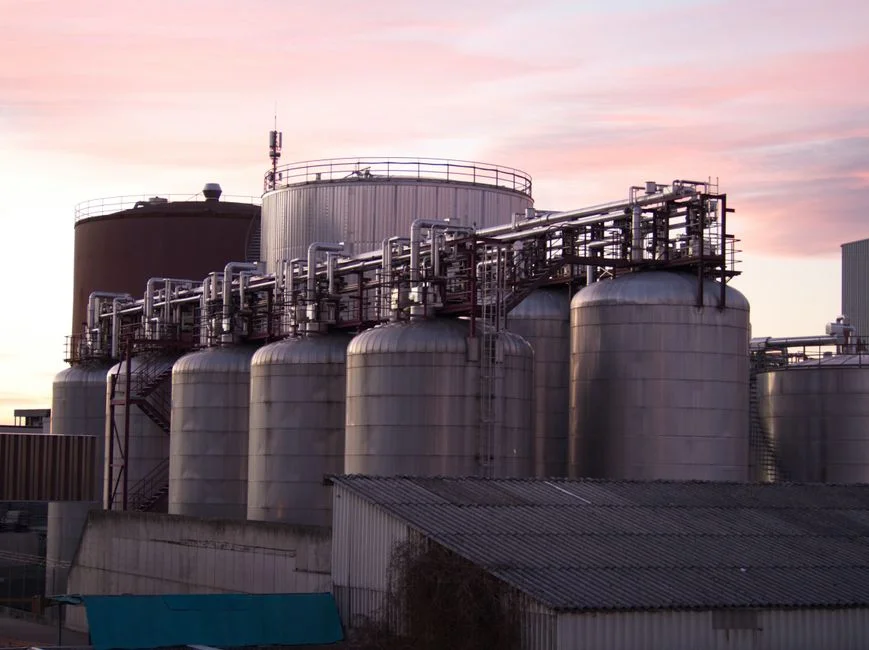
Size the gravity thickener at 25–35 kg/m²·d for waste activated sludge with a hydraulic residence time capped at 18–24 hours. Longer retention releases ammonia and sulfide from the sludge blanket, which strips CO₂ in the supernatant, raises pH, and inhibits the downstream cationic polymer. When the upstream feed carries oil/grease from gasification, switch to a dissolved air flotation system rated at 20–40 m³/m²·h hydraulic loading with 4–6 kg/t DS cationic polymer injected in the flocculation tube; DAF reliably hits 3–5% DS on oily sludge where a gravity thickener stalls at 1.5–2% DS.
Conditioner selection follows a two-gate rule. For high-SVI sludge (SVI >150 mL/g) use cationic CPAM at 5–10 kg/t DS charged through an automatic polymer dosing skid with maturity control of 30–60 minutes; for poor-floc sludge dose FeCl₃ at 8–15% w/w first, then a low-charge anionic CPAM at 2–4 kg/t DS as a floc-building aid. The operational gate to proceed is CST ≤15 s measured on the thickened feed; if CST remains above 20 s after the polymer dose has been increased 20% above the design setpoint, switch polymer grade before pushing more sludge to the press. Dewaterability is consistently good when the bound-water fraction of the thickened sludge falls below 3.5 g water per g DS, a figure that aligns with the Wang et al. (2023) characterisation of coal-chemical WAS.
| Parameter | Gravity Thickener | DAF | Conditioning Target |
|---|---|---|---|
| Solids loading / flux | 25–35 kg/m²·d | 20–40 m³/m²·h hydraulic | — |
| HRT / contact time | 18–24 h | 3–5 min | Polymer maturity 30–60 min |
| Output DS | 2–4% | 3–5% | CST ≤15 s |
| Polymer dose | None typical | 4–6 kg/t DS (cationic) | 3–8 kg/t DS (CPAM) |
| Best fit | Aerobic WAS without oil | Gasification oily sludge | Both, before press |
Stage 3: Mechanical Dewatering Equipment Selection Matrix
The dewatering choice for a coal chemical train in 2026 should be made on three coal-specific variables: VSS fraction, oil/grease loading on the feed, and the downstream thermal route. A plate and frame filter press delivers 28–35% DS in batch operation and is the right answer when the cake is HW07 and going to a cement kiln, because the cake wash step on a filter press strips chlorides below the kiln's 1% feed limit. Filter presses need more floor area and run on a 2–4 hour cycle, so they fit plants up to about 50 m³/day of sludge per line. A screw press is continuous, hits 20–25% DS, and uses only 2–4 kg/t DS of polymer, but it struggles once VSS exceeds 75% or feed oil exceeds 500 mg/L because the augur compacts the cake against an open screen and oily sludge squeezes through.
A decanter centrifuge is the highest-throughput option per unit footprint and reaches 18–22% DS, but polymer demand jumps to 6–12 kg/t DS and the centrate carries 1.5–2× the suspended solids of a press centrate. For coal chemical work that is a problem: the centrate is the design bottleneck, and a centrifuge centrate makes the recycle loop noticeably worse. The decision rule for 2026 is filter press for the hazardous stream feeding a kiln, screw press for the landfill-eligible stream, and centrifuge only when footprint is the binding constraint and the centrate goes to a dedicated ammonia-stripping tower. A side-by-side comparison of plate and frame filter press options against the screw press and centrifuge is in our sludge press equipment comparison guide.
| Criterion | Plate & Frame Filter Press | Screw Press | Decanter Centrifuge |
|---|---|---|---|
| Cake dryness | 28–35% DS | 20–25% DS | 18–22% DS |
| Polymer demand | 3–6 kg/t DS | 2–4 kg/t DS | 6–12 kg/t DS |
| Operation mode | Batch, 2–4 h cycle | Continuous | Continuous |
| VSS tolerance | Up to 85% | ≤75% | Up to 80% |
| Oil/grease limit | Up to 1,000 mg/L | ≤500 mg/L | Up to 800 mg/L |
| Centrate quality (TSS) | 200–500 mg/L | 300–700 mg/L | 600–1,200 mg/L |
| 2026 best fit | HW07 → cement kiln | Landfill-eligible stream | Footprint-constrained sites |
Stage 4: Catalytic Wet Oxidation for Refractory Sludge Reduction
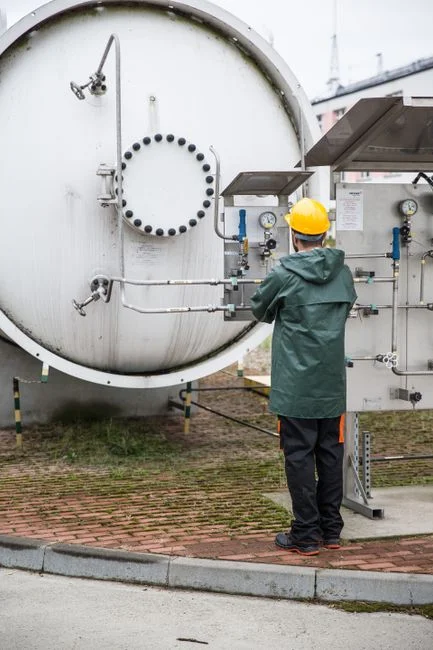
CWO is the 2026 baseline for the volatile suspended solids and residual COD that a press cannot touch. Wang et al. (2023) report the operating window: 260 °C, 60 minutes residence, 7.0 g·L⁻¹ Cu-Ce/γ-Al₂O₃ catalyst loading, and 1.0 MPa initial oxygen pressure delivered 93.2% VSS removal and 78.3% COD removal on coal chemical excess activated sludge. The wet-phase chemistry keeps the reactor below the ash-melting point of dry solids, suppresses NOx relative to a high-temperature incinerator, and produces a gas-cleaning train that is materially smaller than a hazardous-waste kiln off-gas system. Energy demand sits at 1.2–1.8 kWh per kg DS destroyed, and a reactor-effluent heat exchanger that pre-heats the feed from about 30 °C up to 180–200 °C recovers 40–55% of the input duty.
Catalyst selection in 2026 is dominated by Cu-Ce on γ-Al₂O₃ for the baseline, with Ru-Ce and Mn-Ce formulations in pilot work where the centrate carries higher NH₃-N and the catalyst has to tolerate ammonia inhibition across thousands of hours. Specify a reactor in 316L with a titanium liner for the headspace, and size the high-pressure letdown to handle the full sludge flow plus 8–12% recycle from the CWO effluent back to the bio-stage. For a 50 m³/day sludge line, a single 25 m³ CWO reactor with two heat-recovery stages is the typical 2026 configuration.
Closing the Loop: Handling the Dewatering Centrate
The dewatering centrate is the real point source on a coal chemical plant and the topic most top-ranking pages leave out. Press and centrifuge centrate from this sludge typically carries COD 6,000–12,000 mg/L, NH₃-N 800–1,800 mg/L, total phenols 50–300 mg/L, and SCN⁻ 30–120 mg/L — frequently hotter than the original wastewater influent. Direct discharge of that centrate to a municipal sewer violates the 2026 GB 31573 hazardous-waste standard in China and the BAT-AEL envelope under the EU Industrial Emissions Directive 2010/75/EU, and it will fail any internal mass balance on a coal-gasification plant because the centrate simply re-loads the upstream bio-stage with nitrogen the plant has already paid to remove.
The 2026 close-loop path is to send the centrate back to the upstream A/O or A²/O biological tank, then route the nitrified-rich side-stream to an ammonia stripping tower operated at pH 10.5–11 and 50–60 °C with a packed height of 4–6 m. The stripped ammonia is captured in a sulfuric acid scrubber and sold as ammonium sulfate at 8–12% N, recovering roughly 60–75 kg NH₃-N per ton of dry solids pressed. Returning 20% of the centrate nitrogen to the bio-stage raises net nitrogen removal 6–9 percentage points without any extra carbon source, which is why the centrate recycle is now a design gate rather than a downstream polishing problem.
2026 Cost Benchmarks: CAPEX, OPEX, and Polymer Dosing
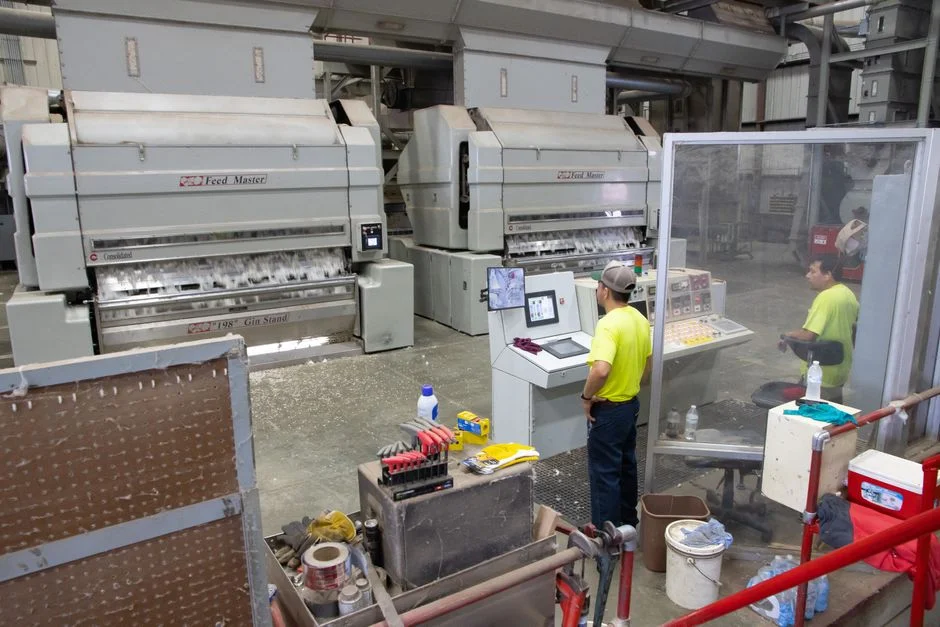
For 2026 CAPEX, a 50 m³/day coal chemical sludge train without CWO lands in the USD $1.8M–$2.6M band; the same train with a CWO reactor sized for 25 m³ working volume and full heat recovery reaches $3.8M–$4.5M. A 200 m³/day plant scales to $6.5M–$9.0M without thermal treatment, and $11M–$14M with CWO and a cement-kiln feed prep section. OPEX is dominated by polymer and thermal energy: polymer is 35–45% of OPEX, thermal energy 20–30%, labour 10–15%, and maintenance 8–12%. Cationic CPAM is $4–$9 per kg in 2026 and at a 5–8 kg/t DS dose that translates to $25–$72 per ton of dry solids conditioned. Adding CWO raises OPEX by $180–$260 per ton DS but eliminates landfill surcharges of $80–$180 per ton in regulated provinces, so the net OPEX delta narrows to roughly $100–$180 per ton DS in most operating cases. A full OPEX breakdown against SBR or MBR duty is in our SBR plant operating cost breakdown.
| Cost Line | 50 m³/day (no CWO) | 50 m³/day (with CWO) | 200 m³/day (no CWO) | 200 m³/day (with CWO) |
|---|---|---|---|---|
| CAPEX (USD, 2026) | $1.8M–$2.6M | $3.8M–$4.5M | $6.5M–$9.0M | $11M–$14M |
| Polymer OPEX | 35–45% of OPEX | 20–25% of OPEX | 35–45% of OPEX | 20–25% of OPEX |
| Thermal energy OPEX | 5–10% | 30–40% | 5–10% | 30–40% |
| Polymer $/t DS conditioned | $25–$72 | $25–$60 | $25–$72 | $25–$60 |
| OPEX delta vs. landfill-only | Baseline | +$100–$180/t DS | Baseline | +$90–$170/t DS |
Frequently Asked Questions
Q1: What removal efficiencies can catalytic wet oxidation deliver on coal chemical sludge?
Wang et al. (2023) report 93.2% VSS removal and 78.3% COD removal at 260 °C, 60 min, 7.0 g·L⁻¹ Cu-Ce/γ-Al₂O₃, and 1.0 MPa O₂ on coal chemical excess activated sludge. That is the operating window most EPCs have anchored their 2026 reactor designs to.
Q2: How do filter press, screw press, and centrifuge differ on coal chemical sludge?
A filter press hits 28–35% DS with 3–6 kg/t DS polymer and is the right choice for HW07 cake going to a cement kiln. A screw press delivers 20–25% DS at 2–4 kg/t DS polymer and is best for landfill-eligible streams with VSS below 75%. A decanter centrifuge reaches 18–22% DS at 6–12 kg/t DS polymer and is reserved for footprint-constrained sites where the centrate goes to a dedicated ammonia-stripping tower. A more detailed comparison is in our sludge press equipment comparison guide.
Q3: What is the 2026 CAPEX range for a coal chemical sludge train?
A 50 m³/day train runs $1.8M–$2.6M without thermal treatment and $3.8M–$4.5M with CWO. A 200 m³/day train runs $6.5M–$9.0M without CWO and $11M–$14M with CWO and kiln feed prep. Always qualify whether CWO is included when you compare vendor quotes, because it shifts the upper bound by a factor of two.
Q4: How is the dewatering centrate treated?
Send the centrate to the upstream A/O or A²/O biological stage, then route the nitrogen-rich side-stream to an ammonia stripping tower at pH 10.5–11 and 50–60 °C. Capture the stripped ammonia in a sulfuric acid scrubber to make ammonium sulfate byproduct at 8–12% N. Returning 20% of centrate N to the bio-stage lifts net nitrogen removal 6–9 percentage points without extra carbon.
Q5: Is coal chemical sludge classified as hazardous waste?
In most Chinese provinces the sludge is classified as HW07 hazardous waste, which mandates cement kiln co-processing, dedicated hazardous-waste incineration, or a Class-I industrial landfill. That classification — distinct from general industrial sludge — drives both the dewatering target and the OPEX surcharges in any 2026 cost estimate. For related process context on coke plant wastewater, see our 2026 coal chemical sludge handling guide and the 2026 sludge dewatering equipment selection guide.
Related Equipment
- MBR membrane bioreactor — specifications, capacity range, and technical data