Sludge Dewatering Equipment in India 2025: Engineering Specs, Costs & Supplier Decision Guide
India’s sludge dewatering equipment market offers three primary technologies—screw presses (₹8–15 lakh for 50–1000 KLD), filter presses (₹12–25 lakh for 1–500 m² filtration area), and decanters (₹20–40 lakh for 500–2000 kg/hr dry solids)—each suited to specific sludge characteristics. For municipal sludge (TSS 1–3%), screw presses achieve 20–25% dry solids at 0.3–0.5 kWh/kg DS, while industrial sludge (TSS 5–10%) requires filter presses or decanters for 30–40% dry solids. Compliance with CPCB 2022 standards (≤40% moisture for landfill disposal) and operational costs (₹1,200–₹3,500/ton DS) are critical decision factors. Furthermore, the 2025 landscape emphasizes the integration of IoT-enabled sensors for real-time monitoring of cake moisture, allowing operators to adjust chemical dosing dynamically and minimize waste in a circular economy framework.
Why Sludge Dewatering Equipment is Critical for Indian Wastewater Plants in 2025
India generates approximately 38,254 MLD of sewage according to CPCB 2022 data, which translates to roughly 1.5 million tons of dry sludge per year at initial concentrations of 2–3% solids. For every 1 MLD of sewage treated, a plant typically produces 10–15 tons of wet sludge daily; without efficient dewatering, the logistics of transporting this high-volume waste are financially unsustainable. Landfill disposal costs in India have escalated to ₹2,500–₹5,000 per ton of wet sludge as of 2025 estimates, driven by a 12% annual increase in tipping fees and stricter enforcement of moisture limits.
The Central Pollution Control Board (CPCB) 2022 guidelines now mandate that sludge destined for landfilling must maintain ≤40% moisture content. This regulatory shift has forced a transition from traditional drying beds to mechanical dewatering. For example, a 500 KLD textile plant in Tirupur recently reduced its annual disposal expenditure from ₹4.2 lakh to ₹1.35 lakh—a 68% reduction—by replacing aging beds with a multi-disc screw press. Beyond disposal, the "Zero Liquid Discharge" (ZLD) push and the rising cost of flocculants (currently ₹350–₹500/kg) make the selection of sludge dewatering equipment in india a matter of operational survival rather than just compliance. Urban centers like Bengaluru and Hyderabad are leading this transition, where limited land availability makes traditional sludge lagoons impossible. This shift toward mechanical dewatering is also driven by the urgent need to protect groundwater from leachate contamination in densely populated industrial zones.
- Volume Reduction: Mechanical dewatering reduces sludge volume by 75–85% compared to secondary clarifier underflow.
- Regulatory Compliance: Meets CPCB 2022 landfill moisture requirements (≤40% moisture).
- Resource Recovery: High-solids cake is required for co-processing in cement kilns or composting.
Sludge Dewatering Equipment Types: How They Work and When to Use Each
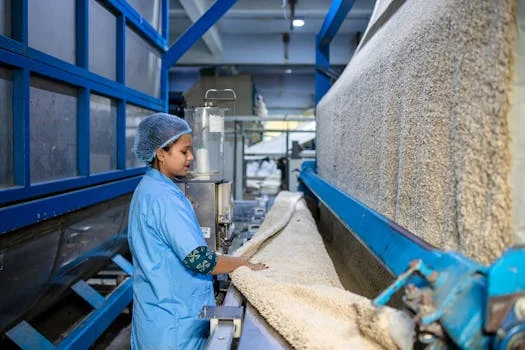
The choice between a screw press, filter press, or decanter depends on the specific gravity of the solids and the required cake dryness. A screw press utilizes a multi-disc mechanism where fixed and moving rings filter the liquid while a central screw conveys and compresses the solids. It requires an automated polymer dosing system for sludge conditioning, typically at a dosage of 0.3–0.7% of dry solids. This technology is preferred for municipal STPs due to its low energy consumption (0.3–0.5 kWh/kg DS) and small footprint. The self-cleaning nature of the moving discs in a screw press is particularly advantageous for oily sludge, which typically blinds the filter cloths of a standard press, ensuring consistent throughput without the frequent downtime associated with manual washing.
Filter presses, including the high-efficiency plate and frame filter press for industrial sludge dewatering, operate on a batch cycle (2–4 hours). They use high pressure to force filtrate through cloth media, leaving a cake with 30–40% dry solids. While labor-intensive unless fully automated, they provide the highest solids capture rate for inorganic industrial sludge. Decanter centrifuges, conversely, use G-forces (2000–4000 G) to separate solids from liquids continuously. They handle high throughputs (500–2000 kg/hr) but consume significantly more energy (0.8–1.2 kWh/kg DS) and are best suited for large-scale mixed sludge applications where space is at a premium and continuous operation is a non-negotiable requirement for the facility's process flow.
| Technology | Primary Mechanism | Best Use Case (India) | Typical Dry Solids (%) |
|---|---|---|---|
| Screw Press | Moving Ring/Screw Compression | Municipal STPs (Biological Sludge) | 20–25% |
| Filter Press | High-Pressure Recessed Plates | Chemical/Textile ETPs (Inorganic) | 30–40% |
| Decanter | Centrifugal G-Force | Large Municipal/Refinery Sludge | 25–35% |
Sludge Dewatering Equipment Specifications for Indian Applications
Engineering parameters must align with Indian sludge characteristics, where Total Suspended Solids (TSS) often range from 1% in municipal primary sludge to 10% in thickened industrial waste. Viscosity typically fluctuates between 50–500 cP, requiring specific polymer selection—usually anionic for municipal waste and cationic for industrial applications to ensure effective flocculation. Maintenance cycles in the Indian climate are accelerated; screw presses require weekly cleaning to prevent grease buildup, while filter presses need monthly plate inspections to maintain seal integrity. Advanced specifications for 2025 models often include PLC-based control panels with HMI interfaces. These systems allow for precise control over the screw speed and pump flow rates, optimizing the "floc-formation" time which is critical for achieving maximum dryness across varying influent conditions.
| Equipment Type | Capacity (KLD) | Polymer (kg/ton DS) | Energy (kWh/kg DS) | Capital Cost (₹ Lakh) | OpEx (₹/ton DS) |
|---|---|---|---|---|---|
| Screw Press | 50–1000 | 3–6 | 0.3–0.5 | 8–15 | 1,200–1,800 |
| Filter Press | 1–500 m² | 5–12 | 0.6–0.9 | 12–25 | 2,500–3,500 |
| Decanter | 1000+ | 4–8 | 0.8–1.2 | 20–40 | 2,800–4,000 |
For plants processing high-TSS industrial waste, the durability of the filtration media is paramount. Stainless steel 304 or 316 construction is standard for screw press discs in India to resist corrosion from volatile organic compounds. When evaluating technical specs, engineers should also reference detailed sludge dewatering machine specifications and selection criteria to ensure the equipment can handle peak load variations during monsoon seasons when influent grit concentrations rise and hydraulic loading increases significantly.
Cost Comparison: Screw Press vs. Filter Press vs. Decanter for Indian Projects
The Total Cost of Ownership (TCO) for sludge dewatering equipment in india is heavily influenced by polymer consumption and labor costs. While a screw press has a higher initial capital cost than a basic manual filter press, its ROI is typically achieved within 2.1 years for a 500 KLD municipal STP due to 80% lower energy costs and minimal labor requirements. In contrast, decanters involve higher maintenance costs (10–15% of capital cost annually) for bearing replacements and bowl balancing, which can extend the ROI to nearly 5 years. Regional variations in electricity tariffs, which can range from ₹6 to ₹10 per unit for industrial users in different Indian states, further tip the scale in favor of energy-efficient technologies like screw presses for long-term municipal contracts.
| Cost Component | Screw Press | Filter Press (Auto) | Decanter Centrifuge |
|---|---|---|---|
| Capital Cost (₹) | 8–15 Lakh | 12–25 Lakh | 20–40 Lakh |
| Polymer Cost (₹/ton DS) | 1,050–2,100 | 1,750–4,200 | 1,400–2,800 |
| Energy Cost (₹/ton DS) | 150–250 | 400–600 | 800–1,200 |
| Maintenance (Annual) | ₹40,000 | ₹75,000 | ₹2,50,000 |
| Estimated ROI | 2.1 Years | 3.4 Years | 4.8 Years |
Hidden costs often overlooked by procurement managers include the disposal of reject water (filtrate), which can cost ₹500–₹1,200/ton if high TDS levels require further treatment. Additionally, polymer storage and preparation areas require 20–50 m² of space, which must be factored into the plant layout. For comparative insights on regional pricing, engineers may review sludge dewatering equipment trends in Southeast Asia to benchmark Indian market rates against international standards and evaluate the cost-effectiveness of localized manufacturing versus imported components.
How to Select a Sludge Dewatering Equipment Supplier in India: 7-Point Checklist
Selecting a supplier requires more than a price comparison; it demands a verification of technical capability and long-term support within the Indian regulatory framework.
- GST Verification: Always verify the supplier’s GST number on the official GST portal. This confirms the business is active and compliant, reducing the risk of procurement from "fly-by-night" operators who cannot provide tax invoices for input credits.
- Export Experience: Prefer manufacturers with 10+ years of export experience. Suppliers with international reach (e.g., ISO 9001, CE certification) typically maintain higher quality control for the Indian market.
- Customization Capability: Ensure the vendor can adjust the screw pitch or plate volume to handle specific sludge viscosities (50–500 cP) common in Indian textile or tannery ETPs.
- After-Sales Support: Verify the presence of local service centers in hubs like Delhi, Mumbai, or Chennai. A response time of ≤48 hours is critical for preventing plant shutdowns.
- Warranty Terms: Look for a minimum 12–24 month comprehensive warranty. Top-tier suppliers often offer 24-month warranties on screw press assemblies.
- Project References: Request 3–5 case studies from similar Indian projects (e.g., a municipal STP in Maharashtra or a pharmaceutical ETP in Gujarat) to validate performance claims. Ensure the supplier allows for a witnessed Factory Acceptance Test (FAT) to verify mechanical integrity before dispatch.
- CPCB 2022 Compliance: The supplier must provide a performance guarantee that the equipment will achieve <40% moisture content for the specific sludge type at your facility.
Frequently Asked Questions
What is the price of sludge dewatering equipment in India?
Prices vary by technology and capacity. A 50 KLD screw press starts at approximately ₹8 lakh, while large-scale decanter centrifuges (2000 kg/hr) can cost up to ₹40 lakh. Industrial filter presses typically range between ₹12 lakh and ₹25 lakh depending on the degree of automation and the quality of the filter cloth used.
Which sludge dewatering equipment is best for municipal STPs in India?
Screw presses are currently the industry standard for municipal STPs. They offer the lowest energy consumption (0.3–0.5 kWh/kg DS), operate quietly (<75 dB), and produce 20–25% dry solids, which is sufficient for most municipal composting or disposal requirements, making them ideal for residential neighborhood installations.
How much polymer is required for sludge dewatering in India?
Dosage depends on sludge type. Municipal sludge typically requires 0.3–0.7% polymer by weight of dry solids. Industrial sludge, especially from chemical or textile sectors, may require 0.5–1.2%. At 2025 prices, this costs between ₹350 and ₹500 per kg of polymer, which can be a major portion of the operational budget.
What are the maintenance requirements for sludge dewatering equipment?
Screw presses require weekly cleaning and a disc/screw inspection every 5 years. Filter presses need monthly cloth washing and hydraulic oil checks. Decanters require the most intensive maintenance, including quarterly bearing lubrication and bowl re-balancing every 24 months to prevent vibration-related damage. Specialized vibration sensors are now standard in modern decanters to provide early warning of potential failures.
Can sludge dewatering equipment handle high-TDS sludge from textile ETPs?
Yes, but the equipment must be built with corrosion-resistant materials like SS316. High-TDS sludge (TDS > 5000 mg/L) often requires specialized cationic polymers at higher dosages (0.8–1.5%) to achieve effective flocculation and prevent equipment scaling, which can otherwise reduce the lifespan of the filtration media.