Industrial Wastewater Treatment System Cost Nha Trang
The industrial wastewater treatment system cost Nha Trang buyers should carry is 150 to 400 million VND for DAF at 10–50 m³/h. An MBR line at 10–100 m³/day runs 500 to 1,200 million VND, with OPEX of 3,000 – 6,000 VND/m³ on DAF and 8,000 – 15,000 VND/m³ on MBR.
Discharge design still starts from QCVN 40:2011/BTNMT Class B when the permit says so: COD (≤ 150 mg/L), BOD (≤ 50 mg/L), TSS (≤ 100 mg/L), and pH (5.5–9.0). The 15,000 m³/day North Nha Trang plant uses deep oxidation ditches sized for domestic sewage. Food and textile lines do not fit that ditch.
A DAF step is the usual pretreatment, at 92–97% TSS removal and up to 80% COD reduction on greasy food waste. An MBR step reaches 99% pathogen removal where reuse or a tight yard forces a small footprint.
Why Nha Trang Plants Still Treat On Site
Nha Trang plants still treat on site because the 15,000 m³/day North Nha Trang works is a domestic ditch, not an industrial plant. Violations of industrial wastewater discharge standards in Khanh Hoa Province carry severe administrative penalties, including fines up to 1 billion VND or mandatory facility shutdowns under Decree 155/2016/ND-CP. Decree 45/2022/ND-CP, effective 25 August 2022, sets the maximum at 1,000,000,000 VND for an individual and 2,000,000,000 VND for an organization.
While municipal infrastructure has expanded, such as the 15,000 m³/day capacity North Nha Trang plant (per Baokhanhhoa.vn), these facilities are primarily designed for domestic sewage and lack the capacity to process high-strength industrial influent. Manufacturing facilities in the Suoi Dau Industrial Zone still keep an on-site train.
Typical influent characteristics for Nha Trang’s core industries far exceed municipal limits. Food processing facilities, particularly seafood and fish sauce production, generate wastewater with COD levels between 1,000 and 5,000 mg/L and TSS ranging from 500 to 2,000 mg/L. Textile operations face different challenges, with color concentrations reaching 500–1,500 Pt-Co and high chemical oxygen demand.
A rice vermicelli line rehabilitated in Nha Trang needed biogas plus an AO (Anoxic-Oxic) train. Influent COD of 3,000 mg/L had to reach a compliant outlet (HydropureWater field data, 2025). Most plants we size for that duty run the biological stage easier once FOG is off the raw waste.
| Parameter | QCVN 40:2011 (Class B) | Food Processing Influent | Textile Influent |
|---|---|---|---|
| COD (mg/L) | ≤ 150 | 1,000 – 5,000 | 800 – 3,000 |
| BOD5 (mg/L) | ≤ 50 | 600 – 3,000 | 300 – 800 |
| TSS (mg/L) | ≤ 100 | 500 – 2,000 | 200 – 600 |
| Color (Pt-Co) | ≤ 150 | N/A | 500 – 1,500 |
| pH | 5.5 – 9.0 | 4.5 – 6.5 | 9.0 – 11.0 |
Earlier guidance used the Class B column above. Circular 06/2025/TT-BTNMT put QCVN 40:2025/BTNMT into force on 1 September 2025 and replaced QCVN 40:2011/BTNMT for plants outside the transition. For column B at a flow of 2,000 m³/day or less, BOD5 at 20 degC is ≤ 60 mg/L. COD is ≤ 90 mg/L and TSS is ≤ 80 mg/L in that same table of the circular.
Above 2,000 m³/day the same column tightens to BOD5 ≤ 50 mg/L, COD ≤ 70 mg/L, and TSS ≤ 60 mg/L. Plants already operating, or projects with an approved EIA or a complete license file received before 1 September 2025, may keep the older standard through 31 December 2031.
QCVN 40:2011/BTNMT Compliance Checklist for Nha Trang Industrial Facilities
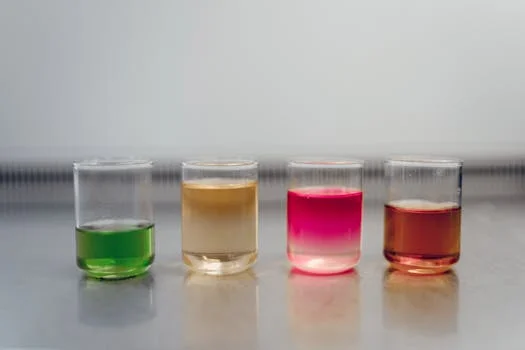
The QCVN 40:2011/BTNMT compliance checklist for Nha Trang industrial facilities is a permit path plus a fixed sampling calendar. The Khanh Hoa Department of Natural Resources and Environment (DONRE) has intensified inspections in 2024, focusing specifically on nutrient loading and heavy metal traces in the Cai River and Nha Trang Bay watersheds.
To maintain a valid discharge permit, facilities must complete a multi-stage Environmental Impact Assessment (EIA) or an Environmental Protection Plan, depending on the scale of operations. The submission-to-approval timeline typically spans 30 to 60 days, requiring detailed engineering drawings and a proven treatment methodology.
Common compliance pitfalls for Nha Trang industries include pH fluctuations in textile dyeing and high Fats, Oils, and Grease (FOG) in seafood processing. QCVN 40:2011 specifically limits Chromium VI to ≤ 0.1 mg/L and total Nitrogen to ≤ 40 mg/L for Class B discharge. Monitoring requirements are also becoming more stringent; most facilities are now required to conduct monthly sampling for COD, BOD, and TSS, with quarterly reports for heavy metals and specialized toxins. Failure to report accurate data can result in immediate suspension of the discharge license.
| Compliance Step | Requirement | Timeline/Frequency |
|---|---|---|
| Permitting | EIA or Environmental Protection Plan submission to DONRE | 30 – 60 days |
| Standard Monitoring | Sampling for COD, BOD, TSS, pH, and Temperature | Monthly |
| Heavy Metal Testing | Analysis for Cr, Cu, Zn, Ni, and Pb (per QCVN 40) | Quarterly |
| Online Monitoring | Automatic sensors for flow, pH, and COD (for large emitters) | Real-time |
| Reporting | Submission of environmental monitoring reports to Khanh Hoa DONRE | Bi-annually |
EIA Submission Timeline Khanh Hoa DONRE
The EIA submission timeline Khanh Hoa DONRE follows is the national appraisal clock, not a local shortcut. According to the Environmental Law Alliance Worldwide matrix of the Law on Environmental Protection 2020, the authority must decide within 30-45 days depending on project type, plus 20 days if the report is revised. The older 30 to 60 days band still covers one revision on the short clock, and it can run past 60 days when the type takes 45 days plus a resubmittal. An environmental license then lasts 7 years for a Group I project and 10 years for other groups.
How long does Khanh Hoa EIA appraisal take?
Khanh Hoa EIA appraisal takes 30-45 days for the first decision, then up to 20 days after a revised report. A complete file with drawings and a named treatment train is what starts that clock. Most files we see slip when the receiving-water column is left blank.
Engineering Specs for Industrial Wastewater Treatment Systems in Nha Trang
Engineering specs for industrial wastewater treatment systems in Nha Trang start from footprint and from the removal the permit demands. For seafood and food processing, a high-efficiency DAF system for TSS and FOG removal is often the first line of defense, achieving 92–97% TSS removal and up to 80% COD reduction in the primary stage. An AO process usually follows that skid and takes the nutrients. For a tight site, an MBR system for near-reuse-quality effluent gives 99% pathogen and suspended solid removal in a smaller yard.
Engineering parameters must be precisely calibrated to the tropical climate of Nha Trang. Biological systems like the AO process typically require a Hydraulic Retention Time (HRT) of 6–12 hours with an Organic Loading Rate (OLR) of 0.2–0.6 kg BOD/m³/day. MBR systems can operate at higher OLRs (0.5–1.5 kg COD/m³/day) with shorter HRTs of 4–8 hours. DAF systems consume 0.2–0.5 kWh/m³, while MBR systems range from 0.8–1.5 kWh/m³ because membrane scouring needs air.
For further technical depth, engineers should consult a detailed DAF clarifier engineering specs and selection criteria to ensure proper sizing. Most plants we size for Nha Trang run the AO tank at the lower end of 6–12 hours when the water stays warm.
| Technology | Removal Efficiency (COD/TSS) | HRT (Hours) | Energy (kWh/m³) | Sludge Yield |
|---|---|---|---|---|
| DAF (Physico-chemical) | 60% / 95% | 0.5 – 1.0 | 0.2 – 0.5 | High (Chemical) |
| AO (Biological) | 85% / 90% | 6 – 12 | 0.3 – 0.6 | 0.4 kg/kg BOD |
| MBR (Membrane) | 95% / 99% | 4 – 8 | 0.8 – 1.5 | 0.2 kg/kg COD |
| Oxidation Ditch | 80% / 85% | 18 – 24 | 0.4 – 0.7 | Moderate |
The deep oxidation ditch at the North Nha Trang plant suits municipal sewage at a 24-hour HRT. That ditch is a poor fit for high-strength industrial wastewater because the land take is large. A chemical spike also passes a ditch mixed for domestic sewage, not for an industrial shock.
DAF System Price for Food Processing Vietnam
The DAF system price for food processing Vietnam buyers should carry for a 10–50 m³/h skid is 150 to 400 million VND, civil works excluded. Most seafood skids we size in Khanh Hoa land in the lower half when polymer make-down shares an existing tank. Greasy food waste on that skid shows up to 80% COD reduction and 92–97% TSS removal.
What does a food-plant DAF cost in Vietnam?
A food-plant DAF in Vietnam at 10–50 m³/h costs 150 to 400 million VND before concrete and cables. The OPEX cell that matches this skid is 3,000 – 6,000 VND/m³. Chemical sludge, not the steel price, is the line that moves after year one.
MBR System ROI Seafood Processing Khanh Hoa
The MBR system ROI seafood processing Khanh Hoa owners should model is a 3–6 year payback, against a 2–4 year payback for DAF. Power at 0.8–1.5 kWh/m³ is why the payback runs longer than a DAF at 0.2–0.5 kWh/m³. Most seafood plants we size recover the extra years only when reuse cuts a water bill the factory already pays.
How fast does a seafood MBR pay back?
A seafood MBR in Khanh Hoa pays back in 3–6 years on the band in the cost table. The short end needs non-potable reuse. The long end is a tight lot where land use of 0.1 – 0.3 m²/m³/day is the reason to pay for membranes.
Industrial Wastewater CAPEX OPEX Vietnam 2025
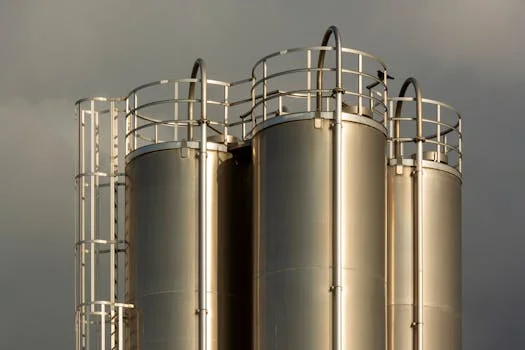
Industrial wastewater CAPEX OPEX Vietnam 2025 for a package DAF line is 150 to 400 million VND at 10–50 m³/h, and the matching OPEX is 3,000 – 6,000 VND/m³. Budgeting for industrial wastewater treatment in Khanh Hoa requires a balance between initial Capital Expenditure (CAPEX) and long-term Operational Expenditure (OPEX). More advanced MBR systems for capacities of 10–100 m³/day can range from 500 to 1,200 million VND. These costs fluctuate based on the automation level, such as the inclusion of a PLC-controlled chemical dosing for pH adjustment and coagulation, which reduces labor costs and chemical waste.
OPEX is dominated by energy (30–50%) and chemical costs (20–30%). Sludge management is a rising cost factor in Nha Trang, with disposal fees currently ranging from 500,000 to 1,500,000 VND per ton. Utilizing a sludge dewatering filter press for industrial applications can reduce sludge volume by up to 75%, significantly lowering disposal logistics costs.
When evaluating ROI, DAF systems generally offer a 2–4 year payback period through avoided fines, while MBR systems may take 3–6 years but provide higher value through potential water reuse and smaller land footprints. For a comprehensive financial model, refer to Vietnam-specific wastewater treatment cost data and ROI framework.
| System Type | CAPEX (Million VND) | OPEX (VND/m³) | Land Use (m²/m³/day) | ROI (Years) |
|---|---|---|---|---|
| DAF System | 150 – 400 | 3,000 – 6,000 | 0.2 – 0.4 | 2 – 4 |
| MBR System | 500 – 1,200 | 8,000 – 15,000 | 0.1 – 0.3 | 3 – 6 |
| AO Process | 200 – 600 | 4,000 – 7,000 | 0.5 – 1.0 | 3 – 5 |
Freeze the bid in this order: influent COD and FOG, the permit column and whether flow sits above 2,000 m³/day, then power at 0.2–0.5 kWh/m³ or 0.8–1.5 kWh/m³. Sludge disposal at 500,000 to 1,500,000 VND per ton is the swing item, and a press can cut volume by up to 75%. Spare-part delay matters next: 24-hour local support versus a lead time above 14 days.
Supplier Comparison: Top 5 Industrial Wastewater Treatment Providers in Nha Trang
Supplier comparison for Nha Trang industrial plants turns on response time, not on a logo. Local support response time is the primary differentiator for 24/7 industrial operations in Nha Trang. A provider inside the province, or one with a service hub in Central Vietnam, can offer 24-hour response times for critical equipment failures.
International-only suppliers may have lead times for spare parts exceeding 14 days. Technical teams should prioritize EIA support and direct communication with Khanh Hoa DONRE over a printed ranking of five brands.
Who This Cost Band Fits
Food, seafood, and textile plants in Nha Trang or the Suoi Dau Industrial Zone that must own a treatment train are the right users of this cost band. A municipal user of the 15,000 m³/day North Nha Trang ditch should not copy the industrial CAPEX table. A buyer pricing one seafood brand should use waste water treament system in sakura food nha trang for that plant, not this page.
Canteen and toilet flow can go to an Underground Package Sewage Treatment Plant (WSZ Series) buried on a tight lot. Keep that sanitary stream off the industrial DAF. High-COD seafood waste will overload a domestic package plant.
Next, send daily flow, influent COD, and the permit column with a sized CAPEX and OPEX request. A quote that skips the column is not a design.
Frequently Asked Questions
What DAF budget should a Nha Trang food plant use?
A standard DAF system at 10–50 m³/h is usually budgeted at 150 to 400 million VND before civil works. Most plants we size for seafood or fish sauce in Khanh Hoa land in the lower half when the skid is pretreatment only. Polymer dosing, a sludge pump, and a cover push the price up the band. Power on that duty is 0.2–0.5 kWh/m³.
How many years does a seafood MBR take to pay back?
An MBR system in this Khanh Hoa cost band shows a 3–6 year payback, against 2–4 years for DAF. The extra years come from power at 0.8–1.5 kWh/m³ and from membrane scour air. Payback moves toward the short end only when non-potable reuse replaces water the plant already buys. Most seafood lines we review use that permeate on wash-down, not on a product line.
Which standard applies to an existing Nha Trang factory?
An existing Nha Trang factory that was already operating before 1 September 2025 may keep QCVN 40:2011/BTNMT through 31 December 2031. The same transition covers a project whose EIA was approved, or whose complete license file was received, before that date. Class B values quoted on those older permits are COD ≤ 150 mg/L, BOD ≤ 50 mg/L, TSS ≤ 100 mg/L, and pH 5.5–9.0.
What is the maximum fine for one environmental violation?
The maximum fine for one environmental violation is 1,000,000,000 VND for an individual and 2,000,000,000 VND for an organization under Decree 45/2022/ND-CP. Earlier guidance cited fines up to 1 billion VND under Decree 155/2016/ND-CP. The 2022 decree also allows the license to be suspended for 1 to 24 months. A modest exceedance is not that ceiling, because the fine still follows flow, the parameter, and the size of the breach.