
What Makes Activated Carbon Effective for High-Color Wastewater
An activated carbon filter removes true color (ADMI, Pt-Co/APHA per Standard Methods 2120) from textile, dye, pulp & paper, and food-coloring wastewater. GAC adsorbs aromatic dyes and lignin fragments in the 600–1,500 g/mol range, often reaching up to 99.9% removal when pores and contact time match. Coal- and coconut-based grades at 900–1,500 m²/g are typical starting media.
True color is dissolved chromophore load and is distinct from apparent color confounded by turbidity. GAC is a porous adsorption media made from bituminous coal, lignite, coconut shell, or wood through thermal or chemical activation (per US EPA, "Overview of Drinking Water Treatment Technologies"). High-molecular-weight organics adsorb onto that pore structure. That is why plants default to GAC when the target chromophores are large aromatic organics.
Adsorption is dominated by hydrophobic partitioning and π-π stacking between graphitic basal planes and aromatic rings of reactive, direct, and disperse dyes. Lignin-derived fragments from pulp & paper bleaching follow the same path. Coal- and coconut-based GAC balance micropores (0.5–2 nm) and mesopores (2–50 nm). Surface area typically runs 900–1,200 m²/g for coal-based grades and 1,100–1,500 m²/g for coconut-shell grades.
Small, highly water-soluble acid dyes and certain reactive dyes (vinyl sulfone classes) carry sulfonate groups that resist hydrophobic adsorption. Those streams may need PAC plus coagulant, or oxidative pre-treatment with ozone or Fenton, to push below 50 ADMI. A mature GAC bed partially overcomes this because biofilm colonizes the carbon surface. Enteric and autochthonous bacteria maintain 10⁵–10⁷ CFU/g on sterile GAC. Counts decline at 0.08–0.14 log/day when competing microflora arrive (per "Growth and persistence of pathogens on granular activated carbon filters," Applied and Environmental Microbiology, 1985). In practice, a bed that has run for 4–8 weeks combines adsorption with biological decolorization. That extends service life on biodegradable color bodies by 20–40%. Most plants we size for textile color polish run coal-based media first, then switch to coconut-shell only when the permit tightens below ~30 ADMI.
PAC vs GAC: Choosing the Right Carbon Format for Color
Powdered activated carbon (PAC) is dosed at 5–200 mg/L with 15–60 minutes of contact time for batch or polish duty. It deploys fast and handles shock color loads, but it generates color-laden sludge that downstream dewatering must handle. GAC operates as a continuous fixed bed. Empty bed contact time (EBCT) is typically 10–30 minutes for color removal. GAC produces no sludge and is regenerated or replaced when capacity is exhausted (per US EPA, treatment capacity varies with influent properties and design assumptions). Format choice follows the facility's spike pattern, sludge handling, and discharge limit.
| Parameter | PAC | GAC |
|---|---|---|
| Typical dose / EBCT | 5–200 mg/L; 15–60 min contact | EBCT 10–30 min for color |
| Best-fit color scenario | Intermittent spikes, batch dyers, polish | Sustained >100 ADMI, continuous discharge <50 ADMI Pt-Co |
| Sludge production | Yes — color-laden, requires dewatering | None; media regenerated or replaced |
| Capital cost pattern | Low CAPEX, ongoing OPEX for carbon | Higher CAPEX (vessel + media), lower ongoing OPEX if thermally regenerated |
| Footprint / deployment | Inline dosing skid, hours to install | Vessel + civil work, weeks to install |
| Capacity benchmark | Project-specific; 50–500 g dye/kg PAC typical for reactive dyes | High organic loading demonstrated at 0.51 g GAC/g VS on analogous strong-strength wastewater (per Carleton University, 2021 acidogenic fermentation study) |
| End-of-life | Captured in sludge; landfill or incinerate | Thermal regeneration at 800–900 °C restores 90–95% capacity; on-site regeneration economic above ~2,000 kg carbon/yr |
If your stream shows color spikes below roughly 50 ADMI that you need to polish for a few hours a week, PAC plus existing mixing capacity is the faster answer. If you must continuously hold a discharge limit below 50 ADMI Pt-Co, or your influent runs sustained color above 100 ADMI, you are sizing a GAC column with upstream pre-treatment. For broader process context on media beds outside color-only duty, see our guide to an activated carbon filter for wastewater treatment.
Activated Carbon Filter Design Calculations for Color Duty
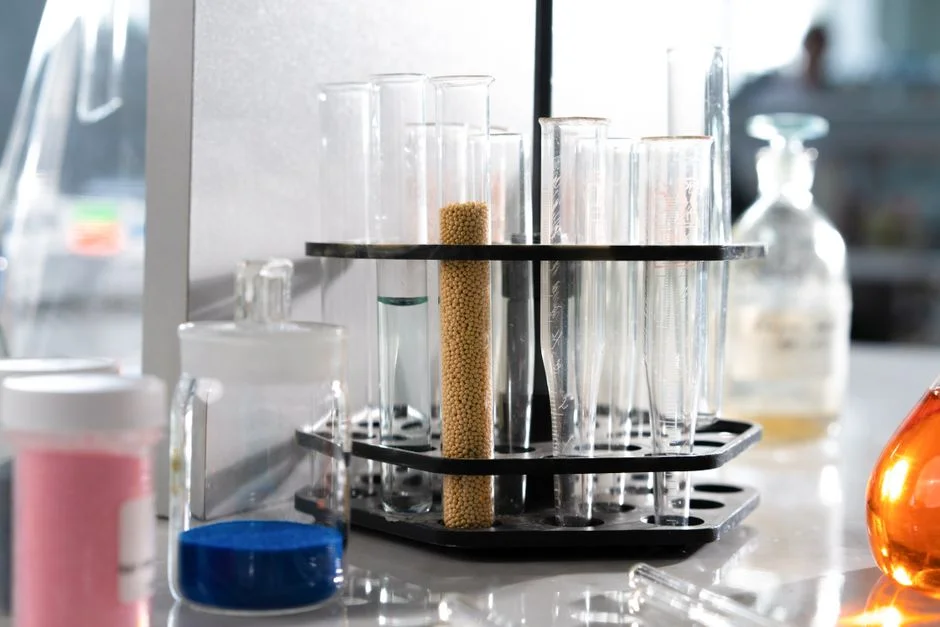
Color-duty vessel sizing starts from EBCT, bed volume, and hydraulic loading, then locks mesh size and media grade against a bench isotherm. Targets depend on the influent. Per US EPA, target-contaminant capacity depends on influent properties and design assumptions. Use the table as a starting envelope and validate with a column test on your dye or lignin chromophore mix.
| Parameter | Typical range for color duty | Notes |
|---|---|---|
| EBCT | 10–30 min (15–25 min for <50 ADMI polish) | Higher EBCT for high-MW reactive dyes |
| Bed depth | 1.5–3.0 m | Deeper bed → longer breakthrough window |
| Hydraulic loading rate | 5–15 m³/m²·h | Lower rate favors adsorption; upper bound is backwash-limited |
| Backwash expansion | 20–30% | Daily to weekly depending on TSS loading |
| Particle size (mesh) | 8×30 or 12×40 | 12×40 gives lower ΔP, slightly longer EBCT at same depth |
| Target effluent color | <50 ADMI Pt-Co (typical discharge) | Lower is feasible with coconut-shell media |
| Influent pH | 6–8 optimal | Outside this range, color removal can drop 20–40% for ionizable dyes |
| Operating temperature | 10–35 °C (capacity mildly exothermic) | <10 °C lowers capacity 5–10% but slows biofouling |
| Carbon type | Coal-based (general color), coconut-shell (polish to low ADMI), lignite (PAC bulk dose) | Coconut: 1,100–1,500 m²/g, high microporosity |
Worked sizing logic most EPCs actually use is simple. Bed volume (m³) equals design flow (m³/min) times EBCT (min). Cross-sectional area equals bed volume divided by bed depth. Then check that hydraulic loading lands inside 5–15 m³/m²·h. If loading exceeds about 15 m³/m²·h at a 2 m depth, deepen the bed or split into parallel vessels rather than starve EBCT. Specs that matter most on color duty are surface-area class, mesh (8×30 vs 12×40), ash, and molasses number for larger dye molecules. Coconut-shell grades with 1,100–1,500 m²/g win when the polish target sits near 20–30 ADMI.
Pre-treatment is non-negotiable on a real stream to protect the media from premature fouling. Coagulation with FeCl₃ or polyaluminum chloride is handled by an automatic chemical dosing for coagulation pre-treatment. A multi-media filter ahead of the carbon bed then strips colloids and suspended color bodies that would otherwise blind the carbon. Without it, head loss can double inside 2–3 weeks. Effective EBCT can drop by 30–50% on a textile dyebath effluent. Dual-media or multi-sand filters (often compared with DMF packages) remove turbidity. They do not replace adsorption when the residual is dissolved true color.
What Are Alternatives to Activated Carbon?
Alternatives to activated carbon for high-color wastewater include coagulation-clarification alone, ozone or Fenton oxidation, chlorine dioxide polish, and membrane steps when dissolved salts or COD also drive the permit. Coagulation with FeCl₃ at 50–200 mg/L or PACl at 20–80 mg/L removes suspended and colloidal color. It still leaves soluble dye fractions that need adsorption or oxidation. Ozone and Fenton attack chromophores chemically and suit vinyl-sulfone reactive dyes that resist hydrophobic uptake. They raise OPEX and need off-gas or iron-sludge handling. Chlorine dioxide is a final polish and disinfectant when a few ADMI points remain after the carbon bed. Membranes can reject color bodies but shift the problem into concentrate management. Keep carbon in the train when you need continuous discharge below 50 ADMI Pt-Co without continuous oxidant dose.
Typical Treatment Train for High-Color Industrial Effluent
A GAC adsorber is rarely a standalone solution in textile, dye, or pulp & paper service. The configurations below are the standards plants run when they need to hold ADMI below 50 Pt-Co at the discharge weir. Compact sites sometimes package coagulation, clarification, and filtration inside an Integrated Water Purification System (JY Series) before the dedicated carbon vessel.
Standard train (most textile dyebath and dye-manufacturing effluents):
- pH adjustment and coagulation — FeCl₃ at 50–200 mg/L or polyaluminum chloride (PACl) at 20–80 mg/L to precipitate suspended and colloidal color bodies.
- Clarification — a DAF system for color-bearing floc removal for light, buoyant floc, or a high-efficiency sedimentation tank for heavier, higher-TSS streams. The DAF O&M runbook covers the day-2 operating reality of this stage.
- Multimedia filtration — anthracite/sand/garnet bed to <5 NTU; protects GAC from blinding. Relative to a basic DMF skid, a graded multi-sand or multimedia bed gives finer turbidity polish before carbon.
- GAC adsorber — EBCT 15–25 min, polish to <50 ADMI Pt-Co.
- Final oxidation — a chlorine dioxide generator for final color polishing and disinfection when recalcitrant reactive-dye chromophores remain; ozone is the alternative for plants with the capital and off-gas handling.
Pulp & paper variant (bleach-plant effluent): the train is similar, but the leading step is often a primary clarifier for fiber, followed by coagulation with high-cationic polymer. The GAC bed runs longer EBCT (20–30 min) because lignin chromophores compete with bulk COD for adsorption sites. Biological activity on the carbon becomes a significant part of removal after 2–4 weeks of operation.
Sludge handling: Stages 1–2 produce a color-laden sludge that requires dewatering before disposal. A filter press for color-laden sludge is the workhorse. It delivers 22–28% dry solids on coagulated dye-house sludge versus 4–8% straight from the clarifier.
Operating, Monitoring, and Media-Replacement Economics
Plan the day-2 cost before you commit to a vessel. Monitor color breakthrough on the bed effluent weekly (ADMI or Pt-Co). Carbon is typically considered exhausted when effluent color reaches 80% of the discharge limit, not when it crosses the limit. Breakthrough steepens once it starts, and you want lead time to swap vessels or schedule regeneration. Backwash on a daily-to-weekly cadence depending on TSS loading. Expect backwash water of 10–20% of throughput. Recycle it to head-of-plant to avoid wasting chemical energy already invested in pH adjustment.
Media life is short on strong streams and long on weak ones. Six to 24 months is realistic for textile dyebath effluents. Pulp & paper color streams routinely run 1–3 years on the same bed because the chromophore load is lower and more biodegradable. Thermal regeneration at 800–900 °C restores 90–95% of original capacity. Per US EPA, regenerative carbon beds allow for easy recovery of the adsorption media. The practical threshold for on-site regeneration is around 2,000 kg carbon/yr of spent media to justify a regeneration furnace. Below that, send out for off-site regen or replace. Spent-carbon disposal can trigger a special hazardous waste handling permit in some cases (per US EPA, "in some cases, disposal of the media may require a special hazardous waste handling permit"). That risk is higher on reactive-dye baths where heavy metals may co-adsorb. Flag it at the design stage, not at end-of-life.
Who This Is For and Next Step
This guide is for plant engineers and EPC teams sizing color polish on textile, dye, pulp & paper, or food-coloring effluent that must hold continuous discharge below 50 ADMI Pt-Co. Look elsewhere if your only issue is apparent color from turbidity — fix clarification and multimedia filtration first. Selection checklist before you freeze steel: (1) true-color method and limit, (2) sustained vs spike load, (3) PAC vs GAC, (4) EBCT and bed depth, (5) multimedia pre-treatment to <5 NTU, (6) regen vs replace economics, (7) spent-carbon disposal pathway. If you already have flow, influent ADMI, and a draft discharge limit, share those figures through our request-quote form and we can sanity-check EBCT, media grade, and pre-treatment before you freeze the vessel drawing.
Frequently Asked Questions
How is wastewater color measured and what unit should I target?
Industrial wastewater color is measured as true color (filtered sample) per Standard Methods 2120, in ADMI, Pt-Co, or APHA/Hazen units. For most regulatory discharge permits, the typical target is below 50 ADMI or Pt-Co at the outfall, with some jurisdictions tightening toward 20 ADMI for sensitive receiving waters. Apparent color includes turbidity and is not a reliable compliance metric. Always specify true-color method and sample filtration in the permit language.
What EBCT should I size a GAC vessel for in a textile dye wastewater application?
For reactive and direct dye polishing to below 50 ADMI Pt-Co, EBCT of 15–25 minutes is the standard envelope, with 1.5–3 m bed depth and 8×30 or 12×40 mesh carbon. Slower-reacting chromophores and high-strength dyebath effluents push EBCT toward 30 minutes and benefit from coconut-shell GAC for its higher microporosity. Validate the envelope with a pilot column before locking steel.
Can PAC replace a GAC column for continuous high-color discharge?
PAC handles shock loads and polish duty well but becomes uneconomical for continuous discharge that must stay below 50 ADMI Pt-Co when influent color is sustained above 100 ADMI. Continuous PAC dosing at the upper end of 5–200 mg/L creates color-laden sludge and ongoing carbon OPEX that usually exceed a fixed GAC bed with periodic regeneration or change-out. Use PAC for intermittent spikes; use GAC for continuous limit compliance.
Which activated carbon specs matter most for color filters?
Mesh size (8×30 or 12×40), surface area class (about 900–1,500 m²/g), and pore-size balance between micropores and mesopores control color uptake. Coconut-shell grades at 1,100–1,500 m²/g favor low-ADMI polish; coal-based grades suit general color and higher molasses-number dyes. Match pH to 6–8 and keep TSS out with multimedia pre-filtration so specs on paper translate to bed life.
How do carbon and multi-sand filters compare to a DMF package?
A multi-sand or multimedia filter (and many DMF packages) removes turbidity and protects downstream media; it does not adsorb dissolved chromophores. Carbon is required when true color remains after clarification and filtration to <5 NTU. Most color trains we commission run multimedia to protect GAC, not as a substitute for the adsorber.