Match the Treatment Plant to the Wastewater
An effluent treatment plant in Punta Cana should be selected around the wastewater source, peak flow, required discharge route and reuse target—not a generic package size. DAF, WSZ and MBR have different process roles: DAF removes FOG and suspended solids before biological treatment; WSZ integrates A/O biological treatment, sedimentation and disinfection; MBR combines activated sludge with submerged PVDF membrane filtration. Define average and peak flow, BOD, COD, FOG, TSS, salinity, temperature, reuse application and applicable permit limits before requesting proposals.
The integrated WSZ sewage treatment package is listed at 1–80 m³/h and can be installed below grade, making it relevant where surface area is constrained. The submerged PVDF MBR system is listed for 10–2,000 m³/day, with the 2026 Punta Cana guide stating a 60% smaller footprint than conventional systems. A dissolved air flotation unit is listed at 4–300 m³/h and should be treated as pretreatment when FOG, oil, grease, suspended solids or colloidal matter could overload downstream equipment.
Advanced polishing is a separate decision. University of Twente research on direct nanofiltration examined its potential to polish WWTP effluent for agricultural or potable-use applications, while Wageningen University’s 2022 thesis investigated constructed wetlands for micropollutant removal. Neither treatment is automatically part of a base biological package.
| Option | Primary role | Selection trigger | Published scope |
|---|---|---|---|
| WSZ | Integrated biological treatment, sedimentation and disinfection | Compact below-grade installation and standard biological treatment | 1–80 m³/h, according to the 2026 product catalogue |
| MBR | Activated sludge with submerged PVDF membrane separation | Compact biological treatment, solids separation and water-reuse applications | 10–2,000 m³/day; 60% smaller footprint stated in the 2026 guide |
| DAF | FOG, oil, grease and solids removal | High-FOG influent or protection of biological and membrane stages | 4–300 m³/h, according to the 2026 product catalogue |
Size for Punta Cana Peaks, Not Just Daily Averages
Design capacity must reflect synchronized occupancy, catering, laundry and service flows rather than daily averages alone. HydropureWater’s 2026 Punta Cana guide uses a 200-key resort at 200 L/bed-day as an order-of-magnitude example: average flow is 40 m³/day, but a checkout and breakfast peak creates a factor of 2.5–3.0 and requires 9–12 m³/h in the lift station and DAF. These are sizing examples from the 2026 guide, not substitutes for metered flow data or a project-specific waste audit.
The same guide gives hotel and resort design influent of 250–500 mg/L BOD and 50–150 mg/L FOG. For rum, dairy and seafood processing, it identifies source design ranges of 1,500–3,000 mg/L BOD and 200–800 mg/L FOG. Industrial buyers should test each discharge stream across production, cleaning and shutdown cycles because a blended daily average can conceal a short, high-strength slug.
| Sizing input | 2026 Punta Cana guide | Procurement action |
|---|---|---|
| 200-key hotel example | 40 m³/day average; 9–12 m³/h peak | Request occupancy, irrigation, laundry and kitchen flow schedules |
| Hotel/resort influent | 250–500 mg/L BOD; 50–150 mg/L FOG | Require seasonal sampling and a catering-period waste audit |
| Food-processing source ranges | 1,500–3,000 mg/L BOD; 200–800 mg/L FOG | Sample separately by production line and include cleaning waste |
| Tropical collection conditions | 26–32 °C influent; sulfide risk at 25–32 °C | Evaluate sealed wet wells, ventilation and odour control |
HydropureWater’s 2026 field data states that tropical influent at 26–32 °C accelerates biological kinetics, while 25–32 °C conditions can increase sulfide generation in the collection system. Equalization, bypass protection, standby power and sampling provisions should be confirmed by the local engineer after seasonal flow analysis. Chemical feed should be tied to measured flow and load; the supplier’s automatic dosing-system proposal should state its control basis rather than provide an unverified dose rate.
Build the Correct Treatment Sequence
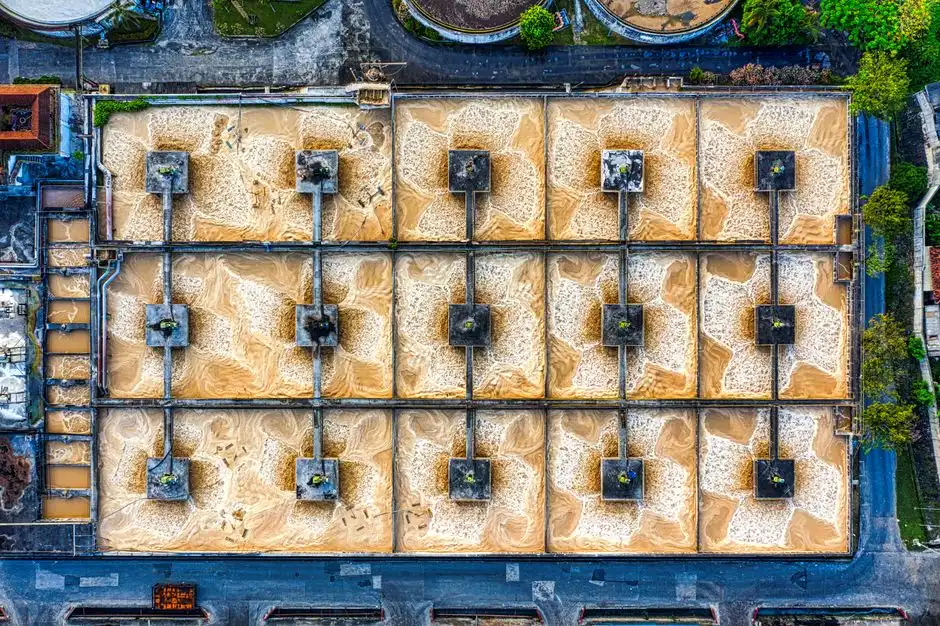
A defensible treatment train is collection and screening → equalization and FOG removal where needed → biological treatment → solids separation or membrane filtration → disinfection → reuse polishing when required → controlled discharge. Each stage protects the next; deleting pretreatment merely transfers the fouling problem downstream.
For food-processing cases, the 2026 Punta Cana guide warns that influent FOG of 800 mg/L can destroy MBR membranes within six months if it is not floated first. A DAF selection guide for FOG and TSS is therefore relevant to the pretreatment decision, but DAF does not replace biological treatment. In hotel and resort applications, the sequence can be DAF followed by WSZ or MBR when FOG, oil and solids justify pretreatment.
HydropureWater’s 2026 guide states that MBR permeate below 5 mg/L TSS and below 50 mg/L BOD meets Decreto 265-2024 in the stated case. It treats RO as a reuse-economics decision rather than a compliance requirement for that case. For reuse, the same source distinguishes UV at 30–40 mJ/cm², which leaves no residual, from chlorine dioxide, which is selected for long reuse mains, dead ends or irrigation networks requiring residual control. The relevant equipment may include a UV disinfection unit, a chlorine dioxide system or a multi-media polishing filter.
The documented Punta Cana precedent is an SBR/MBR biological train feeding a 345,600 GPD RO unit for golf-course irrigation. That capacity is a project precedent, not a universal flow requirement for other resorts. Reuse design also requires soil, salinity, irrigation-water quality and end-user exposure data; discharge compliance and potable reuse are different acceptance tests.
Plan for Permits, Commissioning and Local Execution
HydropureWater’s 2026 Punta Cana guide identifies Decreto 265-2024 as the governing discharge regime and the Licencia Ambiental as the binding instrument for discharge and reuse authorization. The buyer should confirm current project-specific conditions with the Ministerio de Medio Ambiente y Recursos Naturales and a local engineer. The cited 2026 compliance guidance also states that the Ministerio may sample outside the quarterly sampling routine and that Norma Ambiental NA-AA-001 applies to chain-of-custody rules.
- Define the regulated endpoint. Record the receiving route, reuse application, sampling points, applicable limits and operating records required by the permit.
- Resolve design acceptance. Specify guaranteed peak flow, pollutant loads, effluent quality and the conditions under which guarantees apply.
- Complete the FAT before shipment. HydropureWater’s 2026 source says FAT is required by most Dominican engineering firms and is effectively mandatory above 100 m³/day when the operator wants commissioning sign-off to proceed smoothly.
- Lock the technical submittals before deposit clearance. Request a Spanish-language O&M manual, electrical drawings stamped by a Dominican-registered CODIA engineer, and a two-year spare-parts kit sized for the design load.
- Prepare import documentation. The 2025-08 Caribbean logistics review says the environmental documentation and Licencia Ambiental reference should be in place before shipment.
HydropureWater’s 2026 logistics data reports 35–55 days by sea, 4–6 days for DGA clearance and 3–4 hours for inland transport from Santo Domingo to Punta Cana. The 2025-08 review reports demurrage above USD 200/day when required documentation is missing. These are logistics inputs, not a guaranteed delivery date: fabrication, document approval and clearance delays remain outside the quoted transport periods. Membrane consumables and chemical-spares planning should also be coordinated with the selected RO and UF membrane-element package.
Compare Equipment Cost with the Full Project Economics
The 2026-01 equipment benchmark in HydropureWater’s Punta Cana guide is USD 280–620 per m³/day ex works for a packaged train comprising a screen, DAF, MBR, disinfection and control panel. The corresponding example for a 200 m³/day hotel plant is USD 56,000–125,000 ex works and USD 64,000–150,000 delivered to Punta Cana after the cited 14–20% freight and inland-haul addition. This is a limited equipment benchmark, not a quotation and not an installed-project price.
| Cost layer | 2026-01 evidence | Buyer action |
|---|---|---|
| Packaged equipment, ex works | USD 280–620 per m³/day; USD 56,000–125,000 for the 200 m³/day example | Confirm every included unit, material, control and freight-exclusion term |
| Delivered equipment to Punta Cana | USD 64,000–150,000 for the same example, including the cited 14–20% addition | Request CIF Santo Domingo, inland haul, customs and insurance pricing separately |
| Installed civil project | Not included in the packaged-equipment benchmark | Price excavation, concrete, foundations, electrical service, local engineering, permits, commissioning, taxes, duty and site-specific works |
| Containerized configuration | 18–25% CAPEX addition, with civil work reduced to a foundation slab, according to 2026 field data | Compare access, soil, lifting and schedule constraints before accepting the premium |
The installed case described in HydropureWater’s 2026 cost guide is much higher than the delivered-equipment figure because it includes underground installation, A/O biological treatment and disinfection. That difference explains why ex-works package pricing and installed project pricing should not appear in the same comparison without scope labels.
Reuse creates a separate economic case. The 2026 source calculates that a 200 m³/day reuse loop avoids approximately 73,000 m³ of municipal water annually at DOP 65/m³, or roughly USD 100,000/year in displaced cost. This is a scenario based on the cited 2025-11 tariff and full annual operation, not guaranteed savings. The documented 345,600 GPD RO golf-course precedent reports a 40–60% reduction in municipal-water demand. A buyer should price RO polishing and any sludge dewatering equipment against the reuse application, not treat them as automatic components of the compliance plant.
Build a Supplier Request for Proposal
A comparable RFP starts with one process basis, not a request for a generic “package price.” Issue average flow, peak flow, flow-duration data, BOD, COD, FOG, TSS, temperature, salinity, discharge route, reuse target and applicable permit limits. Include sampling results and seasonal operating assumptions. If any input is unavailable, require the bidder to identify it as an exclusion or assumption rather than silently price it.
Require each supplier to identify every unit in the treatment train, process design basis, materials, duty and standby strategy, controls, local electrical requirements, installation boundary, commissioning scope and exclusions. The technical bid should include:
- P&ID and general arrangement drawings;
- hydraulic calculations and equipment duty schedules;
- control narrative, alarm strategy and sampling provisions;
- Spanish-language O&M manual and electrical drawings;
- FAT protocol and acceptance criteria;
- recommended spares and membrane-replacement plan; and
- a compliance matrix mapping each treatment step to the applicable permit requirement.
Compare bids by delivered scope and verified local requirements, not by headline package price. For an MBR proposal, confirm membrane type, expected replacement interval, critical spares, factory-test scope, shipping documentation and commissioning responsibility. HydropureWater’s 2026 tropical-design guidance states a membrane replacement interval of 5–7 years. Any associated membrane-element package should therefore state the same assumed loading, cleaning regime and service conditions.
Frequently Asked Questions
How much does an effluent treatment plant cost in Punta Cana?
HydropureWater’s 2026-01 benchmark places a packaged screen, DAF, MBR, disinfection and control-panel train at USD 280–620 per m³/day ex works. Its 200 m³/day hotel example is USD 56,000–125,000 ex works and USD 64,000–150,000 delivered to Punta Cana after the cited 14–20% freight and inland-haul addition. Request a separate installed-project quote covering excavation, concrete, foundations, electrical service, local engineering, permits, commissioning, taxes, duty and site-specific civil works.
Should I choose WSZ, MBR or DAF for a Punta Cana project?
DAF is generally pretreatment for FOG and solids; WSZ is an integrated biological treatment package; MBR is a compact membrane biological option. The correct choice depends on measured load, hydraulic peaks, available footprint, reuse requirements and permit limits. Use the DAF equipment, WSZ package and MBR system as components of a process role comparison, not as interchangeable price options.
What size does a hotel wastewater treatment plant need?
The cited 200-key example produces 40 m³/day at 200 L/bed-day, but its checkout and breakfast peak requires 9–12 m³/h in the lift station and DAF. Actual wastewater treatment plant sizing requires a project-specific flow study, seasonal occupancy data, kitchen and laundry profiles, equalization review and measured influent characteristics.
How long does equipment delivery to Punta Cana take?
HydropureWater’s 2026 logistics data gives 35–55 days by sea, 4–6 days for DGA customs clearance and 3–4 hours for inland haul from Santo Domingo to Punta Cana. Those periods exclude fabrication, document approval and delays caused by incomplete documentation, so the supplier’s delivery schedule should state those exclusions and milestone dates.
Do I need an environmental permit for an effluent treatment plant in Punta Cana?
Yes. The cited 2026 guidance identifies Decreto 265-2024 and the Licencia Ambiental as central to discharge and reuse, with discharge and reuse authorizations linked to the license. Confirm current project-specific conditions, sampling and discharge requirements with the Ministerio and a CODIA-registered engineer before treating any equipment bid as compliant.