Why Punta Cana Needs Industrial-Grade Wastewater Treatment in 2026
The Punta Cana–Bávaro–Cap Cana corridor logged roughly 9 million visitor-nights in 2025, and each occupied room generates a hydraulic and organic load closer to a small factory than a household: 150–250 L/bed-day of mixed black-water, kitchen FOG, laundry surfactant, and pool backwash. A 600-key all-inclusive resort discharges the equivalent COD loading of a 15,000-person Dominican suburb on a footprint of 6–8 hectares, with FOG peaks above 150 mg/L during banquet service. Treating that stream as domestic sewage is the single most common permit failure I have seen in Caribbean project files.
Compliance sits inside Decreto 265-2024, enforced by the Ministerio de Medio Ambiente y Recursos Naturales, with fines that scale from DOP 5 million to DOP 10 million per infraction and the practical risk of a plant shutdown order (Decreto 265-2024, Art. 41). The same regime applies to flagship resort projects: PROAMSA's installed base at Grupo Punta Cana (extended-aeration oxidation with Rotostrainer screening) and at Cap Cana (SBR with AquaDisk tertiary filtration, Trojan 3000 UV, and a 345,600 GPD RO polishing train) are the documented precedents (PROAMSA installed-base, 2024). The Licencia Ambiental is the binding instrument; the discharge permit and the reuse authorization ride on top of it.
There is a second, non-permit liability. The Bávaro fringing reef and the Higüey mangrove estuary sit downstream of every resort outfall, and the Ministerio can add a third-party damages claim on top of the administrative fine. Tropical hydraulic design, Decree 265-2024 compliance, and reef-side liability are the three reasons a packaged industrial train — not a septic tank — is the baseline for any new build or expansion in this corridor in 2026.
Dominican Decree 265-2024 Discharge Limits You Must Hit
Decreto 265-2024 sets the numeric discharge ceiling for industrial and commercial wastewater discharged to surface water, marine outfall, or municipal sewer in the Dominican Republic. The parameters below are the design targets; any process train that cannot meet them under peak load is non-compliant from day one.
| Parameter | Discharge limit (Decreto 265-2024) | Unrestricted irrigation reuse (WHO 2006 + Ministerio guidance) |
|---|---|---|
| BOD₅ | ≤ 50 mg/L | ≤ 10 mg/L |
| COD | ≤ 150 mg/L | ≤ 50 mg/L |
| TSS | ≤ 50 mg/L | ≤ 10 mg/L |
| FOG (oil & grease) | ≤ 20 mg/L | ≤ 5 mg/L |
| Total nitrogen | ≤ 40 mg/L | ≤ 15 mg/L |
| Total phosphorus | ≤ 10 mg/L | ≤ 5 mg/L |
| pH | 6.0 – 9.0 | 6.5 – 8.5 |
| Total coliforms | < 1,000 NMP/100 mL | < 200 CFU/100 mL (fecal) |
| Turbidity | — | ≤ 2 NTU |
Two operational points decide whether your project keeps its Licencia Ambiental. First, the Ministerio can sample at any time, not only on the quarterly cadence most operators plan around, and the chain-of-custody rules in Norma Ambiental NA-AA-001 apply. Second, non-compliance blocks license renewal, and the operator and the property owner carry joint liability for damages (Decreto 265-2024, Art. 38). In practice that means BOD and FOG removal must be designed with a safety factor of 1.3–1.5 over the limit, not at the limit, because catering peaks and laundry cycles in a resort are not normally distributed — they are step functions.
For a reuse loop feeding golf-course or landscape irrigation, the tighter WHO/irrigation column applies on top of the discharge limits, which is why most Punta Cana reuse projects add RO or multi-media filtration downstream of biological treatment rather than sending MBR permeate directly to the sprinklers.
Process Train Selection: Screening → DAF → MBR → Disinfection
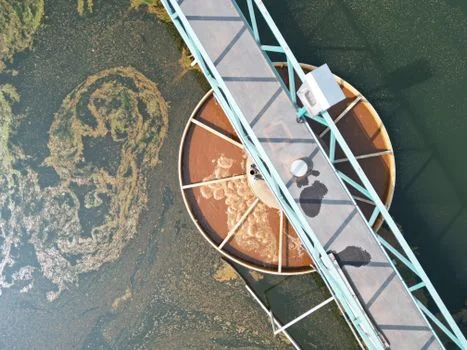
The unit-operation stack that consistently delivers Decreto 265-2024 compliance at Punta Cana influent strengths is a four- or five-step train. The order matters: each step protects the next, and reordering them is the most common cause of fouled membranes and missed FOG limits I see in commissioning reports.
- Rotary mechanical bar screen (3–5 mm aperture). A rotary bar screen running continuous duty with stainless rake teeth removes rags, plastic, food solids, and pool hair before the lift station. This is non-negotiable in a resort catchment: a single wedding can push 10 kg of organics past an unbarred wet well.
- Dissolved air flotation (DAF). A DAF flotation system sized at 4–25 m³/h with 20–30 min hydraulic retention removes 80–95% of FOG, TSS, and colloidal matter ahead of the biological stage. Skipping DAF is the most expensive economy in a hotel WWTP — the FOG that reaches the MBR coats membranes and cuts flux by 30–60%.
- MBR membrane bioreactor. A MBR membrane bioreactor with PVDF hollow-fiber membranes at 0.1 μm pore combines activated sludge (MLSS 6,000–10,000 mg/L) with submerged solid–liquid separation. Aeration is set to dissolved oxygen 1.5–2.5 mg/L in the nitrification zone, HRT 6–10 h. Effluent is typically COD < 50 mg/L, TSS < 5 mg/L, with no separate clarifier.
- Disinfection. UV at 30–40 mJ/cm² dose handles the coliform target, and a ClO₂ disinfection generator is added where a residual is required (long reuse pipelines, irrigation headers). The Cap Cana installation uses Trojan 3000 UV; ClO₂ is the better answer for any line that dead-ends in 24 h.
- Optional RO polish. A industrial RO polishing system at 70–95% recovery is added only when the reuse stream feeds cooling towers, laundry make-up, or chloride-sensitive irrigation. RO permeate typically lands at TDS < 50 mg/L, which is what cooling tower chemistry actually wants.
| Stage | Influent to stage | Effluent target | Typical removal |
|---|---|---|---|
| Bar screen (3–5 mm) | Raw hotel/process waste | < 5 mm solids | Solids capture > 90% |
| DAF flotation | Screened waste | FOG ≤ 20 mg/L, TSS ≤ 80 mg/L | 85–95% FOG, 70–80% TSS |
| MBR (PVDF 0.1 μm) | DAF effluent | COD < 50, TSS < 5 mg/L | 95% COD, 99.9% TSS |
| UV / ClO₂ | MBR permeate | Coliforms < 1,000 NMP/100 mL | 3–4 log |
| RO (optional) | Disinfected permeate | TDS < 50 mg/L | 95–99% salts |
Operationally, the bioreactor volume can be 20–30% smaller than a temperate design because influent arrives at 26–32 °C and biological kinetics accelerate, but the trade-off is higher sulfide and odor load on the headworks — cover the DAF and vent to a carbon scrubber when the plant sits within 200 m of guest areas.
Punta Cana Influent Characteristics and Sizing Rules
The numbers below are the sizing envelope I quote against for hotel and food-processing clients in the La Altagracia corridor. Anything outside these ranges is a project-specific pilot, not a packaged quote.
| Source | Flow (L/unit-day) | BOD (mg/L) | COD (mg/L) | TSS (mg/L) | FOG (mg/L) |
|---|---|---|---|---|---|
| Hotel/resort (domestic-industrial mix) | 150–250 / bed | 250–500 | 500–900 | 200–400 | 50–150 |
| Food processing (rum, dairy, seafood) | Site-specific | 1,500–3,000 | 3,000–6,000 | 800–2,000 | 200–800 |
| Laundry (in-house resort) | 40–60 / bed | 300–600 | 600–1,200 | 100–300 | 20–50 |
Two hydraulic realities drive peak sizing. First, a 200-key resort at 200 L/bed-day averages 40 m³/day, but a Sunday-morning checkout plus simultaneous breakfast service produces a peak factor of 2.5–3.0, so the lift station and DAF must handle 9–12 m³/h even though the daily average is 1.7 m³/h. Second, groundwater TDS in the Bávaro coastal aquifer runs 1,500–4,000 mg/L; any reuse line feeding cooling towers or laundry must be sized against that baseline, and the salt load from brine streams needs a blowdown plan before the cooling tower chemistry goes out of range (Langelier Saturation Index < +0.5).
For a food-processing client in the rum or dairy category, pre-DAF is not optional — influent FOG of 800 mg/L will destroy MBR membranes inside six months if it is not floated first, regardless of bioreactor sizing. Tropical temperature (25–32 °C) helps biological kinetics, but it also drives sulfide generation in the collection system, so the upstream wet well and the DAF should be sealed and vented.
2026 CAPEX and OPEX for a Packaged Punta Cana WWTP
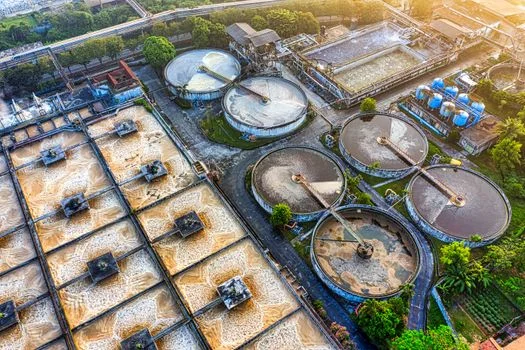
Budget figures below are ex-works China for a full packaged train (screen, DAF, MBR, disinfection, control panel) in 2026. CIF Santo Domingo plus inland haul to Punta Cana adds 14–20% (HydropureWater field data, 2026-01).
| Plant size | CAPEX (USD) | CAPEX (DOP) | OPEX (USD/m³) | OPEX drivers |
|---|---|---|---|---|
| 50 m³/day | 28,000 – 48,000 | 1.6 – 2.7 M | 0.18 – 0.32 | Electricity 35–45%, chemicals 25–35%, labor 20–30% |
| 200 m³/day | 56,000 – 125,000 | 3.2 – 7.1 M | 0.14 – 0.26 | Electricity 40–50%, membranes 15–25%, labor 15–20% |
| 500 m³/day | 140,000 – 310,000 | 8.0 – 17.5 M | 0.11 – 0.22 | Electricity 45–55%, membranes 20–30%, chemicals 10–15% |
| 1,000 m³/day | 280,000 – 620,000 | 15.8 – 35.0 M | 0.09 – 0.18 | Electricity 50–60%, membranes 25–35%, labor 10–15% |
Three OPEX line items dominate and are worth tracking separately during commissioning: electricity (blowers and recirculation pumps typically run 18–24 h/day), membrane replacement (PVDF modules at 5–7 year intervals under tropical design loads), and chemical consumption (CIP cleaners, ClO₂ precursor, coagulant). The WSZ underground integrated unit and the JY integrated purifier are the two compact packaged configurations most often quoted for the 50–200 m³/day band; containerized 20-ft versions of the same train add 18–25% to CAPEX but reduce civil works to a foundation slab, which is attractive on tight resort sites with poor soil access.
Reuse Versus Discharge: When Golf-Course Irrigation Pays Back
An MBR permeate at < 5 mg/L TSS and < 50 mg/L BOD already meets Decreto 265-2024 — adding RO polish is a reuse-economics decision, not a compliance decision. The Punta Cana Resort and Golf Club case (PROAMSA, 2022) shows the working pattern: an SBR/MBR biological train feeds a 345,600 GPD RO unit, and the permeate irrigates the golf course, cutting municipal water demand 40–60% over a dry-season baseline.
| Effluent destination | Treatment required | CAPEX adder (USD) | When it pays back |
|---|---|---|---|
| Surface water / municipal sewer | MBR + disinfection | Baseline | Always compliant if MBR is sized correctly |
| Landscape irrigation (salt-tolerant) | MBR + UV | + 5,000 – 10,000 | Payback 4–6 years vs. DOP 65/m³ potable tariff |
| Golf course / large turf | MBR + RO | + 30,000 – 50,000 (200 m³/day train) | Payback 3.5–5 years at 200 m³/day reuse |
| Cooling tower / laundry make-up | MBR + RO + softener | + 45,000 – 80,000 | Payback 2–3 years for high-tariff resort |
For a 200 m³/day reuse loop, the math is straightforward: 73,000 m³ of municipal water avoided per year at DOP 65/m³ (CORAAAPLATO tariff band, 2025-11) is roughly USD 100,000/year in displaced cost. A USD 35,000 RO polish train pays back inside five years and operates well inside the membrane-replacement window. A high-efficiency sedimentation tank upstream of the RO and a multi-media filter as a polisher are the two units that decide whether the RO membranes last five years or eighteen months. Soil percolation and salinity must still be tested before design: calcareous soils of Bávaro tolerate treated wastewater well, but chloride-sensitive ornamentals and any turf within 50 m of the marine outfall should receive RO permeate only.
Compare this to a Detroit industrial WWTP in a colder climate and you see the tropical deltas clearly: higher temperatures shrink the bioreactor, higher FOG loads force DAF, and the reuse tariff math is the actual project driver, not compliance. The engineering logic for sizing a dairy wastewater treatment solution in a DR rum plant is the same train with a thicker pre-DAF.
Sourcing Equipment from China to Punta Cana: Logistics and Compliance
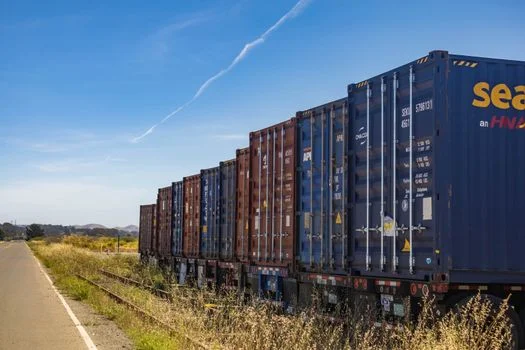
Lead time from a Chinese OEM to the Port of Santo Domingo is 35–55 days by sea, plus 4–6 days for DGA customs clearance. Inland haul to Punta Cana is 3–4 hours on a standard flatbed, and containerized 20-ft units clear easily. The customs documentation that determines whether equipment sits on the dock for a week or a day is the Declaración de Impacto Ambiental and the Licencia Ambiental reference number; without those, the shipment can be held in bonded warehouse at demurrage rates above USD 200/day (HydropureWater Caribbean logistics review, 2025-08).
Three documentation items should be in the contract before the 30% deposit clears. First, a Spanish-language O&M manual, not a translation of an English draft — the Ministerio auditor will read it on site. Second, electrical drawings stamped by a Dominican-registered engineer (CODIA), which the OEM should not try to provide themselves. Third, a 2-year O&M spare parts kit sized to the design load: PVDF membrane modules, DAF pump rebuild kits, UV lamps, ClO₂ precursor, and CIP chemicals. Membrane replacement interval at tropical design loads is 5–7 years, but a stocked kit avoids the 60-day wait for a replacement module that is the most common cause of compliance failure in year two. The plate-frame filter press and automatic chemical dosing system are the two ancillary units most often added at the same time, and they share the same spare-parts channel.
Pre-shipment Factory Acceptance Test (FAT) at the OEM site is required by most DR engineering firms and is effectively mandatory for systems above 100 m³/day if the operator wants the Ministerio's commissioning sign-off to go smoothly.
Frequently Asked Questions
How much does a packaged WWTP cost in Punta Cana in 2026? Ex-works China CAPEX runs USD 280–620 per m³/day of capacity, so a 200 m³/day hotel plant lands at USD 56,000–125,000. CIF Santo Domingo plus inland haul adds 14–20%, putting delivered Punta Cana pricing at USD 64,000–150,000 (HydropureWater field data, 2026-01).
Do I need a Licencia Ambiental for a hotel WWTP in La Altagracia? Yes. Any commercial or industrial discharge to surface water, marine outfall, or municipal sewer in the Dominican Republic requires a Licencia Ambiental from the Ministerio de Medio Ambiente, and Decreto 265-2024 sets the numeric discharge limits the permit is conditioned on.
Can I reuse treated wastewater for golf-course irrigation in Bávaro? Yes, and the Punta Cana Resort case has been doing it since the early 2000s. MBR permeate plus RO polish hits the WHO 2006 unrestricted-irrigation bar (BOD ≤ 10 mg/L, fecal coliforms < 200 CFU/100 mL), and payback at DOP 65/m³ potable tariff runs 3.5–5 years for a 200 m³/day reuse loop.
What influent BOD should I design for in a Punta Cana hotel? Plan on 250–500 mg/L BOD and 50–150 mg/L FOG for a hotel/resort domestic-industrial mix, with peak factors of 2.5–3.0 over daily average flow. Food-processing clients (rum, dairy, seafood) push BOD to 1,500–3,000 mg/L and FOG to 200–800 mg/L.
UV or ClO₂ for disinfection in tropical resort reuse? UV at 30–40 mJ/cm² handles the Decreto 265-2024 coliform target with no residual. ClO₂ is the right answer when the effluent runs more than 200 m through a reuse main, dead-ends, or feeds irrigation laterals where a residual is needed to control biofilm (Cap Cana precedent uses Trojan 3000 UV; ClO₂ is the choice for irrigation networks). A side-by-side spec is in the ozone vs UV disinfection guide.