Why Detroit Industrial Dischargers Face a Tighter Rule Set in 2026
Industrial wastewater treatment in Detroit in 2026 must meet Michigan EGLE Part 22 and Part 31 limits and the federal PFAS NPDWR (4.0 ng/L PFOA, 5.0 ng/L PFOS), and most Significant Industrial Users discharge to GLWA's 9300 W. Jefferson plant — the largest single-site WWTP in the U.S. Typical CAPEX runs $0.8M–$6.5M for 50–500 m³/day, with DAF, MBR, and RO combinations dominating Detroit's metalworking, food, and automotive supply base.
Two EGLE frameworks govern every discharge in metro Detroit. The Part 22 Rules wastewater discharge standards set categorical effluent limits for BOD, TSS, oil & grease, pH, and metals by industry type, while Part 31 Water Quality Standards set the receiving-stream water-quality criteria that drive mixing-zone and anti-degradation calculations. For a plant sending side streams back to headworks, Part 22's local limits are the binding number; for surface-water discharges, Part 31's criteria often are.
The federal layer changed in 2024. The EPA PFAS NPDWR (40 CFR 141.900) finalized MCLs of 4.0 ng/L PFOA, 5.0 ng/L PFOS, 10 ng/L GenX, 10 ng/L PFNA, and a Hazard Index of 1.0 for the PFHxS/HFPO-DA/ PFNA mixture. EGLE is implementing these through revised mixing-zone and antidegradation calculations for industrial permits, which means even plants that historically discharged only to GLWA are now receiving SIU permit language requiring PFAS source control and quarterly monitoring at the IU boundary. The downstream operational risk is concrete: an SIU that records three monitoring exceedances in 2026 faces surcharges, consent-order penalties, or permit revocation — each of which halts production until resolved. Aging systems sized before 2020 rarely meet the new envelope, which is why plants built around 2015–2018 with DAF-only trains are the most exposed cohort today. Where sidestreams contain heavy PFAS loads, operators should evaluate sludge OPEX optimization for Detroit industrial plants early, because reject streams from GAC and RO polishing drive a large share of the new operating cost.
Typical Wastewater Profile for a Detroit Manufacturing Plant
Detroit's industrial influent varies sharply by sector, and the wrong treatment train is almost always a function of a poor influent assumption. The table below summarizes composite-sampling data from Michigan metalworking, automotive-tier-one, and food-processing facilities discharging to the GLWA system in 2025–2026 (HydropureWater field data, 2026).
| Parameter | Metalworking / Auto Parts | Automotive Assembly | Food Processing | GLWA IPP Typical Limit |
|---|---|---|---|---|
| pH | 6.5–9.0 | 6.0–8.5 | 6.0–9.0 | 6.0–10.0 (instantaneous) |
| COD (mg/L) | 1,500–4,500 | 800–2,000 | 2,000–4,200 | Report; surcharge >1,000 |
| BOD₅ (mg/L) | 600–1,800 | 300–900 | 1,000–2,500 | 250 mg/L (local limit) |
| TSS (mg/L) | 400–1,200 | 200–600 | 500–1,100 | 250 mg/L (local limit) |
| Oil & Grease (mg/L) | 200–600 | 50–200 | 100–400 | 100 mg/L (local limit) |
| Zinc (mg/L) | 2–15 | 1–5 | <1 | 2.6 mg/L (monthly avg) |
| Nickel (mg/L) | 0.5–6 | 0.5–3 | <0.5 | 1.0 mg/L (monthly avg) |
| Lead (mg/L) | 0.5–3 | 0.5–2 | <0.5 | 0.6 mg/L (monthly avg) |
| PFOA/PFOS (ng/L) | 5–80 | 2–25 | 3–40 | 4.0 / 5.0 NPDWR |
PFAS shows up in metal-finishing rinsewater (fluorinated surfactants, plating bath additives), paper/packaging converter wastewater, and any process line that uses mist suppressants. At the levels above the NPDWR MCL, biological treatment alone is insufficient — GAC or ion-exchange polishing is required on the polishing slipstream, typically sized at 20–40% of total flow. Plants that do not want to own a polishing train can route PFAS-contaminated waste streams to Clean Earth's Detroit CWT facility, which accepts non-hazardous industrial wastewater and PFAS-contaminated water for off-site treatment. The prerequisite for any equipment decision is a proper 24-hour composite sampling program at the headworks; Michigan samplers such as Arch Environmental (248-426-0165) and several EGLE-certified labs support the method. A DAF system for industrial pre-treatment in Detroit sized against unverified assumptions is the single most common cause of an underperforming 2026 upgrade.
Core Treatment Stages and How They Map to Detroit Permits
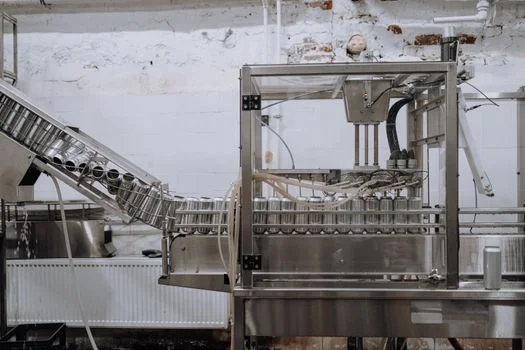
A compliant 2026 train for the GLWA watershed runs in six stages, each of which maps to a specific compliance obligation.
Stage 1 — Screening. A rotary bar screen for headworks protection (GX series, 3–10 mm aperture) removes rags, plastics, and large debris that would otherwise blind downstream pumps and clog MBR modules. Continuous-duty headworks protection is the lowest-cost insurance on the plant.
Stage 2 — Equalization and pH adjustment. A 4–8 hour equalization basin with chemical dosing brings the 6–9 pH window required by the GLWA IPP and smooths diurnal COD swings that would otherwise shock a biological stage.
Stage 3 — DAF pre-treatment. Dissolved air flotation delivers 80–95% TSS removal and 70–90% FOG removal per EPA Emerging Technology benchmarks (EPA, 2024-11). This is the workhorse stage for Detroit metalworking and food plants because it knocks out the bulk of the suspended and free-floating load before the biological stage.
Stage 4 — Biological treatment. An MBR system for Detroit industrial discharge delivers BOD <5 mg/L and TSS <5 mg/L with a footprint roughly 60% smaller than a conventional activated-sludge + clarifier train. For space-constrained Detroit sites — most of them — this is the deciding factor.
Stage 5 — Polishing and disinfection. GAC or RO for PFAS/zinc, followed by a chlorine dioxide generator for effluent bacteria compliance to meet EGLE Part 22 fecal coliform limits.
Stage 6 — Sludge dewatering. A filter press for industrial sludge in Detroit (plate-and-frame, 1–500 m² filtration area) produces a 35–45% dry cake. Sidestreams from the press cannot be recycled to headworks — they must be re-treated through the DAF or biological stage.
DAF vs MBR vs Chemical Precipitation vs RO: 2026 Comparison
No single technology covers the full contaminant envelope a Detroit SIU faces. The table below compares the four workhorse unit processes on the metrics that drive a 2026 procurement decision (HydropureWater field data, 2026).
| Technology | Target Contaminants | Removal Efficiency | CAPEX (per 100 m³/day) | OPEX (USD/yr) | Footprint | Best-Fit Detroit Industry |
|---|---|---|---|---|---|---|
| DAF | TSS, O&G, emulsified oils | 80–95% TSS; 70–90% FOG | $150K–$450K | $25K–$60K | Small (5–15 m²) | Metalworking, food processing |
| MBR | BOD, COD, TSS, NH₃-N | >99% BOD; >99% TSS | $1.2M–$3.5M | $90K–$220K | Medium (40–80 m²) | Mixed manufacturing, auto assembly |
| Chemical precipitation | Heavy metals (Zn, Ni, Pb), F | 85–98% metals at pH 10–11 | $200K–$800K | $40K–$110K (NaOH, polymers) | Small–medium (10–30 m²) | Metal finishing, plating |
| RO | PFAS, TDS, residual metals | >95% PFAS; 75–95% recovery | $400K–$1.2M (polish loop) | $60K–$140K (membrane repl.) | Medium (20–40 m²) | PFAS polishing, water reuse |
The decision rule for 2026, in plain language: metal finishing with PFAS risk → DAF + chemical precipitation + GAC/RO; food processing → DAF + MBR; automotive parts with mixed flow → MBR + chemical precipitation + RO polish. A standalone DAF system for industrial pre-treatment in Detroit covers the front end of every train, an MBR system for Detroit industrial discharge covers the secondary stage, an RO polish for PFAS and reuse in Detroit covers the tertiary stage, and an automatic chemical dosing system is the supporting kit that holds the pH and precipitation chemistry on setpoint across diurnal swings.
What Industrial Wastewater Treatment Costs in Detroit in 2026
Budget figures for a 100 m³/day industrial WWTP in metro Detroit run as follows (HydropureWater field data, 2026; cross-checked against EPA WPCRF cost curves, 2025-09).
| Cost Element | Low | High | Notes |
|---|---|---|---|
| Equipment CAPEX | $0.8M | $1.8M | DAF + MBR + GAC skid, 100 m³/day |
| Installation & instrumentation | 30% adder | 40% adder | Electrical, SCADA, civil |
| Annual chemicals | $35K | $95K | NaOH, polymer, hypochlorite, defoamer |
| Sludge hauling (filter cake) | $80/wet ton | $160/wet ton | $40K–$140K/yr typical |
| Energy | $45K | $110K | MBR aeration dominates |
| Membrane replacement (annualized) | $20K | $60K | 5–7 yr MB |
| Total annual OPEX | $180K | $420K | Excludes labor |
Two surcharges stack on top of the OPEX above. The Detroit WRRF capacity-charge framework applies a per-pound surcharge on BOD and TSS above IPP limits, and GLWA's IPP applies its own surcharges on oil & grease, zinc, and nickel. Plants that can route reject streams to off-site CWT (Clean Earth, Detroit) or into a RO polish for PFAS and reuse in Detroit with reuse to cooling-tower make-up typically see a 3–5 year payback at Detroit water rates of $4.50–$6.20 per 1,000 gallons (GLWA 2026 wholesale rate band). The full lever set for cutting OPEX 30–60% is covered in sludge OPEX optimization for Detroit industrial plants, and the broader demand-side case is in the industrial water reuse outlook to 2030.
6-Step Selection Framework for Detroit Industrial Buyers
This is the procurement-ready sequence a Michigan engineer can execute in one quarter.
- Pull 12 months of GLWA IPP monitoring data. Identify every exceedance and surcharge invoice. The exceedance pattern tells you which unit process is undersized before any sampling.
- Run a 24-hour composite sampling program. Cover COD, TSS, O&G, PFAS (the four EPA NPDWR analytes), and metals. BOD is optional where COD is tracked via a site-specific ratio.
- Map contaminants to EGLE Part 22 limits. Build a mass balance; decide on the treatment train against the binding limit, not the average.
- Shortlist equipment with a 30–40% installation and instrumentation buffer. This is the number that turns into a realistic PO — base skid price alone understates installed cost by 30–40%.
- Confirm 2026 lead times. MBR membrane modules are typically 8–14 weeks from order to FAT. RO membranes run 10–16 weeks. Lock these into the project schedule before signing.
- Negotiate a 5-year service contract. Cover membrane cleaning, chemical dosing calibration, and quarterly PFAS compliance sampling. The plants with the lowest 5-year TCO are the ones that contracted service up front.
For a cross-state benchmark that compares apples-to-apples on installed cost, the Midwest WWTP cost benchmarks report is a useful reference point — Detroit figures run 5–8% above the Illinois median due to higher electrical and prevailing-wage rates.
Frequently Asked Questions

What EGLE permit applies to industrial wastewater discharge in Detroit in 2026? A National Pollutant Discharge Elimination System (NPDES) permit issued by EGLE under Part 31 Water Quality Standards, with categorical effluent limits under Part 22. Plants discharging to GLWA additionally operate under a GLWA Industrial Pretreatment Program permit.
Does my Detroit factory need PFAS treatment in 2026? If your influent PFOA or PFOS exceeds 4.0–5.0 ng/L and you discharge to a surface-water pathway or are in a GLWA catchment segment flagged for PFAS monitoring, yes — quarterly source-control monitoring is now standard in SIU permits.
What is the CAPEX for a 100 m³/day industrial WWTP in Detroit? Equipment CAPEX $0.8M–$1.8M; installed cost with 30–40% adder typically $1.1M–$2.5M depending on train complexity and PFAS polishing.
Can I discharge treated industrial wastewater to the GLWA system at 9300 W. Jefferson? Yes, subject to GLWA IPP local limits on BOD, TSS, O&G, and metals, and a continuing capacity-charge obligation. PFAS-containing streams may be routed to off-site CWT (e.g., Clean Earth Detroit) if local limits cannot be met on-site.
Which treatment technology fits a metal-finishing shop in Detroit? DAF + chemical precipitation (pH 10–11) for metals, followed by MBR and an RO or GAC polish loop for PFAS and zinc residuals. For a compact skid alternative on a tight site, evaluate the integrated water purification skid and the high-efficiency sedimentation tank as pre-treatment options upstream of DAF.