Choose by Wastewater Fraction, Not Equipment Name
For mining and metals wastewater in Natchez, choose a clarifier when dense tailings, silt, clay, or rapidly settling mineral fines dominate; choose dissolved air flotation when conditioned floc, emulsified oil, flotation reagents, colloids, or light precipitates must be removed. A DAF cannot efficiently lift a high load of heavy, non-floating particles, while a clarifier alone may leave buoyant and colloidal fractions in its overflow. For combined streams, clarification followed by DAF polishing is the defensible sequence. Final selection requires current permit review, complete wastewater characterization, and site-specific testing.
The first decision is not whether the project calls itself mining, smelting, or metal finishing. It is which contaminant fraction controls the treatment objective. Mineral process wastewater may combine dense solids from a tailings thickener overflow or mill discharge, colloidal clays, oils and greases, residual flotation reagents, and dissolved metals that have precipitated as hydroxides under a controlled pH.
Gravity sedimentation removes particles with a specific gravity greater than water. In a high-efficiency lamella clarifier, inclined plates increase effective settling area and shorten the required tank footprint, but they do not change the separation mechanism.
Dissolved air flotation attaches micro-bubbles to conditioned solids, lifts the resulting aggregates, and removes them with a skimmer. An industrial DAF system is therefore most applicable where buoyant material, conditioned fines, oils, or reagent-associated solids govern the load. Neither mechanism independently removes dissolved metals.
DAF and Clarifier Selection Criteria
The governing contaminant fraction determines the separator, while the hydraulic design and conditioning system determine whether that separator can perform reliably.
Clearwater Industries reports that DAF microbubbles are 30–50 µm in diameter and can attach to oil droplets, fine precipitates, biological flocs, and polymer-conditioned floc. Its chemical-conditioning method can include coagulant, pH adjustment, and polymer flocculant. The source describes a 15–45 second flash-mix contact before empirical optimization (Clearwater Industries, 2026-04-27). That contact time is not a transferable Natchez design value; dosing and contact time must be established through jar testing.
DAF is documented for oils, oils and greases, flocculated fine solids, and suitable buoyant or colloidal material. Fluence states that DAF is not well suited to high levels of heavier non-floating particles, including silt and clay (Fluence, cited in HydropureWater, 2026). A gravity clarifier can leave emulsified oils, untreated colloids, and low-specific-gravity precipitates in the overflow.
Sludge handling changes the comparison. Properly conditioned DAF can produce thick floated sludge that may require little further dewatering, according to Clearwater Industries (2026-04-27). Clarifier underflow still normally requires a thickening or dewatering arrangement. A plate-and-frame sludge filter press may therefore need to be evaluated for either waste stream, but no source establishes that it will be unnecessary for DAF sludge.
| Design issue | Clarifier | DAF |
|---|---|---|
| Primary mechanism | Gravity sedimentation; lamella plates increase effective settling area | Micro-bubble flotation followed by surface skimming |
| Dominant feed fraction | Dense mineral fines, tailings, and metallurgical solids with specific gravity greater than water | Conditioned fines, oils, flotation-reagent carryover, and suitable buoyant or colloidal solids |
| Chemical conditioning | Coagulant aid may be used; gravity separation remains the governing mechanism | Coagulant, pH adjustment, and polymer flocculant are candidate controls and require testing |
| Sludge pathway | Underflow to thickening or dewatering | Thick floated sludge may still require site-specific dewatering |
| Main design limitation | Does not inherently capture emulsified oils, colloids, or dissolved species | Not well suited to high loads of heavy non-floating silt and clay |
Match Each Natchez Plant Stream to the Right Unit
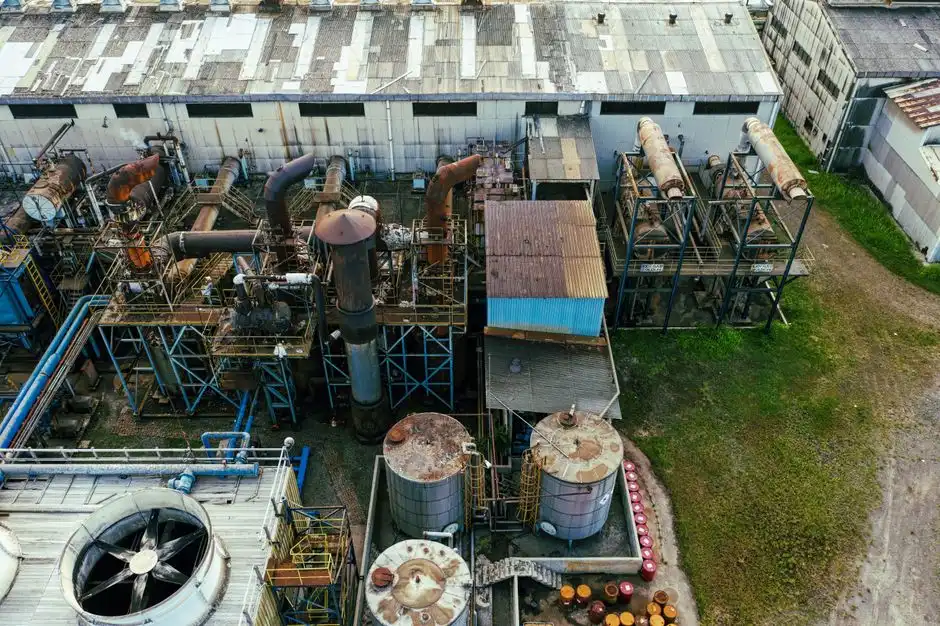
Stream segregation should precede equipment selection because tailings, oily wash water, and metal-bearing contact water impose different solids, chemistry, and collection requirements.
- Route gravity-settling streams to a clarifier. Tailings thickener overflow, mill discharge, and dense metal-bearing solids should normally be evaluated first for a conventional or lamella clarifier when particle settleability supports gravity separation. The relevant vendor data include particle-size distribution, surface overflow rate, underflow solids target, and sludge-withdrawal performance.
- Route buoyant and colloidal fractions to DAF after conditioning. Oil-bearing wash water, reagent-rich streams, colloidal clays, and light metal precipitates are candidates for coagulation and flocculation followed by flotation. The DAF must remove the conditioned fraction rather than compensate for an overloaded clarifier upstream.
- Use clarification before DAF when both fractions are present. The clarifier removes the heavy mineral load; the DAF polisher captures conditioned material that escapes the overflow. This sequence is preferable to forcing either unit to perform tasks outside its documented application boundary.
- Carry dissolved metals into a separate treatment step. Neither gravity separation nor flotation removes dissolved species. Precipitation with pH control may be required before solids separation, while filtration or membrane treatment may be necessary when the final objective is tighter solids control or reuse. The fabricated-metals wastewater pretreatment guide provides a related process reference.
| Plant stream | Dominant fraction to verify | Initial equipment direction | Design data still required |
|---|---|---|---|
| Tailings thickener overflow | Dense mineral fines | Clarifier | Flow, TSS, particle size, settleability, underflow target |
| Mill discharge | Mineral fines plus reagent carryover | Clarifier, with DAF polishing if required | Reagent species, pH, colloid behavior, flow variability |
| Metal-finishing wash water | Oil, grease, suspended metals, and colloids | Conditioning and DAF, with filtration as required | Oil and grease, particle size, metals, pH, emulsions |
| Combined facility wastewater | Potentially mixed fractions | Segregate if practical; otherwise clarify then polish | Stream-by-stream mass balance and compatibility testing |
Build a Natchez-Compliant Treatment Train
Current Mississippi authorization and receiving-water conditions must constrain equipment selection before a vendor sizes a separator.
The EPA’s Abstracts of Industrial NPDES Permits, Second Edition, July 1984, is useful for understanding the permit process but is not current authorization. It covers approximately 270 industrial wastewater discharge permits and cautions that its data and limitations are not directly transferable to similar facilities without case-by-case assessment (U.S. EPA, 1984-07).
The historical inventory identifies an International Paper Co. facility in Natchez. That entry does not establish the obligations of another mining, smelting, or finishing operation. The buyer must obtain the current permit held by the facility, identify the applicable discharge recipient, and review limits, monitoring frequency, pretreatment conditions, and any best-management-practice requirements.
Build the train backward from the authorized discharge objective:
- Record each pollutant limit and averaging or monitoring condition in the current permit.
- Identify the receiving-water requirements and applicable pretreatment obligations.
- Determine which contaminant fractions cause the compliance risk.
- Assign each fraction to the treatment step capable of addressing it.
- Evaluate the complete train, including chemical conditioning, solids separation, sludge handling, and final polishing.
A separator should not be described as automatically compliant because it removes suspended solids. It must demonstrate performance against the site’s wastewater, the permit objective, and the complete downstream train. Where finer solids remain after flotation or clarification, the multi-media filtration equipment page provides one downstream polishing reference, while an ultrafiltration system may be relevant where the site’s final water-quality objective requires it; neither is presumed necessary without characterization.
Pilot and Size the Separator with Site Data
Pilot results, not nominal flow rate or a supplier’s generic removal claim, should determine separator capacity.
Give each vendor the same characterization package: flow records across operating and seasonal conditions; TSS and particle-size distribution; pH and temperature; oil and grease; evidence of flotation-reagent carryover; and dissolved-metals data for relevant species such as copper, lead, and zinc. Include the waste’s variability and any batching or washdown cycles.
Jar testing should establish coagulant type and dose, pH adjustment, polymer dose, mixing sequence, and settling or flotation behavior. The 30 mg/L optimum aluminum-sulfate dose reported in a Logan, Utah study concerned algae and phosphorus removal from lagoon effluent, not mining wastewater (Utah State University, 2011). It should not be transferred to a Natchez metal-bearing stream.
For a clarifier, require the vendor to state its design surface overflow rate, hydraulic feed arrangement, expected underflow characteristics, and sludge-withdrawal method. For DAF, require hydraulic loading, recycle, saturation, and flotation criteria to be included in the vendor’s test plan. Clearwater’s FPAC is described as serving small-to-medium flows with very high contaminant loads; FPBC serves low-to-medium loads; and FPHF serves large flows with medium-to-large loads (Clearwater Industries, 2026-04-27). These are equipment-platform descriptions, not Natchez sizing values.
| Acceptance area | Clarifier pilot or vendor test | DAF pilot or vendor test |
|---|---|---|
| Target fraction | Settleable solids, overflow quality, and underflow withdrawal | Conditioned buoyant and colloidal solids after clarification, where applicable |
| Hydraulic basis | Surface overflow rate and feed configuration | Hydraulic loading, recycle, saturation, and flotation criteria |
| Chemical basis | Any coagulant aid and resulting underflow properties | Coagulant, pH adjustment, and polymer demand established by testing |
| Performance criterion | Site-relevant contaminant removal and sludge recovery | Site-relevant contaminant removal and floated-solids recovery |
| Operating criterion | Steady-state hydraulic and solids handling | Steady-state chemical use and solids handling |
Set acceptance criteria around the permit objective and the fraction being removed, not a universal percentage. Record chemical consumption, recovered-solids characteristics, sludge volume, and stable operation over representative loading. The DAF selection checklist for FOG and TSS provides additional selection questions that can be adapted to mining and metals applications.
Compare Capital, Operating, and Sludge Consequences
The economic comparison must cover the complete treatment train because separator choice changes chemical demand, utilities, sludge handling, and downstream filtration needs.
Ecologix states that clarifiers generally have lower operating costs, while DAF may be more cost-effective for targeted contaminants such as oils (Ecologix, publication date not supplied). That supports a qualitative comparison, not a guaranteed saving. Chemical consumption, compressed-air demand, recycle-pump power, operator attention, sludge volume, and dewatering demand still require site data and vendor pricing.
The commercial mining article cited in the research contains an industrial DAF price range and mining removal percentages, but it does not provide the underlying cost records or case-study evidence needed to verify those figures. Those numbers should not be used for a 2026 budget or guarantee.
Evaluate each alternative on the same basis:
- Capital cost of the separator, chemical-conditioning skid, controls, foundations, utilities, and downstream polishing.
- Operating cost of chemicals, air, recycle power, maintenance, and operator labor.
- Sludge mass, solids recovery, dewatering demand, and disposal route.
- Effect on reuse-water quality and downstream filtration or membrane requirements.
- Operational risk when reagent dose, solids loading, or wastewater composition changes.
Thick DAF sludge is a potential lifecycle advantage only if the pilot confirms it. It is not a basis for removing filter-press or other dewatering scope before the solids have been characterized. Request a plate-and-frame sludge filter press quote as part of the overall train, with underflow and floated sludge assigned to the appropriate dewatering step.
Issue a Vendor RFQ That Prevents Undersizing
A complete RFQ should make the vendor demonstrate the sizing basis, chemistry, materials, controls, and downstream responsibility.
- Request a stream-by-stream mass balance with flow, TSS, particle-size distribution, oil and grease, reagent carryover, pH, temperature, and relevant dissolved metals.
- Require duty points, equipment sizing calculations, chemical demand, hydraulic criteria, construction materials, utilities, controls, and performance guarantees.
- Require pilot data from comparable metal-bearing effluents rather than generic equipment claims.
- Assign responsibility for clarifier underflow, DAF floated sludge, chemical storage, dosing controls, operator training, commissioning, maintenance, and downstream polishing.
Clearwater identifies 304 stainless steel, 316 stainless steel, polypropylene, and other client-specified materials as DAF construction options (Clearwater Industries, 2026-04-27). Require the vendor to justify the selected material against the actual stream chemistry, abrasion, temperature, and cleaning requirements rather than accepting a standard material without review.
For a lamella clarifier, the published surface-loading range is 20–40 m/h as a manufacturer selection reference in the supplied equipment material. Require the bidder to justify its actual hydraulic design against the site’s flow, settleability, solids inventory, and underflow requirements. A published range is not a substitute for site-specific design.
| RFQ package | Required information | Reason to request it |
|---|---|---|
| Wastewater basis | Stream mass balance, variability, analytical results, and particle-size data | Prevents equipment selection from flow rate alone |
| Process design | Mechanism, sizing calculations, chemical dose, loading criteria, and controls | Provides a checkable design basis |
| Evidence | Comparable pilot results and proposed site acceptance test | Separates demonstrated performance from generic claims |
| Materials and construction | Wetted materials, coating basis, structural requirements, and compatibility rationale | Addresses stream chemistry and operating conditions |
| Sludge and utilities | Underflow and float characteristics, dewatering interface, air, water, power, chemicals, and drains | Defines the complete installed system |
| Commercial scope | Exclusions, installation, commissioning, training, maintenance, and schedule | Prevents gaps between separator and treatment-train packages |
An automatic chemical dosing system should be quoted with the separator because DAF performance depends on controlled conditioning. The sludge filter press should remain in scope until pilot solids results justify another arrangement.
Frequently Asked Questions
What does a DAF or clarifier for mining and metals wastewater cost in Natchez in 2026?
The supplied sources do not establish a reliable 2026 unit price for either separator. Request a site-specific quote covering treatment flow, contaminant load, chemical conditioning, tank sizing, controls, sludge handling, downstream polishing, installation, and commissioning. Compare bids on the same train scope; a lower separator price can be offset by chemical consumption, dewatering, filtration, or utilities elsewhere in the system.
Should we size a clarifier or DAF from flow rate alone?
No. Size from the dominant wastewater fraction and site-specific pilot results. Flow establishes hydraulic duty, but particle size, settleability, buoyancy, contaminant chemistry, variability, sludge target, and final treatment objective determine the appropriate capacity and equipment arrangement. This approach also applies to the broader mining wastewater DAF-versus-clarifier comparison.
Will either separator alone satisfy our Natchez discharge permit?
Do not assume so. Review the facility’s current permit, discharge recipient, pollutant limits, monitoring conditions, and any pretreatment or best-management-practice requirements. The EPA’s historical industrial permit abstracts caution that permit data are not directly transferable to similar facilities without case-by-case assessment (U.S. EPA, 1984-07). Verify performance against the site’s current obligation and complete treatment train.
When is a clarifier followed by a DAF the defensible treatment train?
Use clarification followed by DAF polishing when heavy, gravity-settleable solids coexist with buoyant, emulsified, reagent-associated, or colloidal material that can be conditioned and floated. The clarifier reduces the heavy-solids load before flotation; the DAF addresses the fraction that is not reliably removed by gravity separation. Confirm the sequence through stream segregation, jar testing, and pilot results rather than assuming one unit can perform both functions.