Which treatment should a Tuscaloosa factory choose?
For Tuscaloosa mining and metals wastewater, factories should choose clarification for dense, readily settling mineral fines and dissolved air flotation (DAF) for oil, grease, colloids, flotation-reagent carryover or conditioned low-density precipitates. A clarifier–DAF train is often strongest when both heavy solids and buoyant or colloidal fractions are significant. Neither mechanism removes metals that remain dissolved, so precipitation or other chemistry may be required first. Equipment selection in 2026 should follow stream-by-stream characterization, jar or pilot testing, peak hydraulic and solids loading, and the current permit or reuse specification—not catalog capacity alone.
The governing rule is mechanism fit. Clarification is the preliminary choice for a stream dominated by heavy mineral fines that settle readily without elaborate chemical conditioning. DAF is the preliminary choice when the target material can attach to air bubbles: emulsified oil, colloidal material, residual flotation reagents, or conditioned floc with insufficient settling velocity. Neither DAF nor a lamella clarifier removes a contaminant that remains dissolved.
For a mixed stream containing substantial heavy mineral solids and a meaningful buoyant or colloidal fraction, clarifier-first treatment deserves the first technical review. The clarifier removes the dense bulk load that can impair flotation, leaving DAF to capture the residual conditioned fraction. DAF-first treatment remains defensible where free oil or emulsified material could interfere with solids capture, but it requires a technical basis and verified downstream clarification or filtration.
Capacity alone does not decide the selection. The current Tuscaloosa permit, discharge point or reuse specification defines the final objective, and the supplied research establishes no universal technology mandate for mining plants. Use the mining wastewater pretreatment compliance framework to organize permit obligations, and review the Texas wastewater requirements after an industrial acquisition when the operating basis changes.
How DAF and clarification separate different wastewater fractions
Dissolved air flotation separates solids by buoyancy, while clarification separates them by gravity; their applicability therefore depends on the wastewater fraction rather than their product names.
In DAF, air dissolves in pressurized water and forms microbubbles when released into the wastewater. Conditioned particles attach to the bubbles, and the resulting float is skimmed from the surface. Clearwater Industries’ commercial description, cited by HydropureWater’s 2026 mining-wastewater guide, states that its systems produce 30–50 micron microbubbles. That is a vendor-defined operating description, not a universal design specification for every mining wastewater.
A clarifier relies on gravity: dense particles settle to the bottom, sludge is withdrawn, and clarified water overflows. Lamella plates add effective settling area and can reduce the required civil footprint without changing the separation principle. HydropureWater’s 2026 selection article gives 20–40 m/h as a catalog surface-loading benchmark for its lamella clarifiers. The bidder must still demonstrate that the proposed loading is compatible with the actual wastewater’s settleability, hydraulic duty and sludge-withdrawal performance.
| Separation basis | Best-fit material | Principal limitation |
|---|---|---|
| Gravity clarification | Dense mineral fines, tailings solids and metallurgical sludge | Colloids, emulsified oils, buoyant material and dissolved metals are not effectively removed as targeted fractions |
| DAF | Oil, grease, colloids, residual flotation reagents and conditioned low-density floc | Heavy non-floating silt or clay can overload flotation unless a clarifier removes the bulk dense solids first |
Compare an industrial dissolved air flotation system against a lamella clarifier for dense mineral solids by feed fraction and verified performance—not by generic removal claims. The EPA’s February 1983 development document for the organic chemicals, plastics and synthetic fibers sector treats clarification and DAF as established industrial technologies. That document is historical technology precedent; it is neither a current Tuscaloosa permit nor a mining design standard.
Match the treatment train to each mining wastewater stream
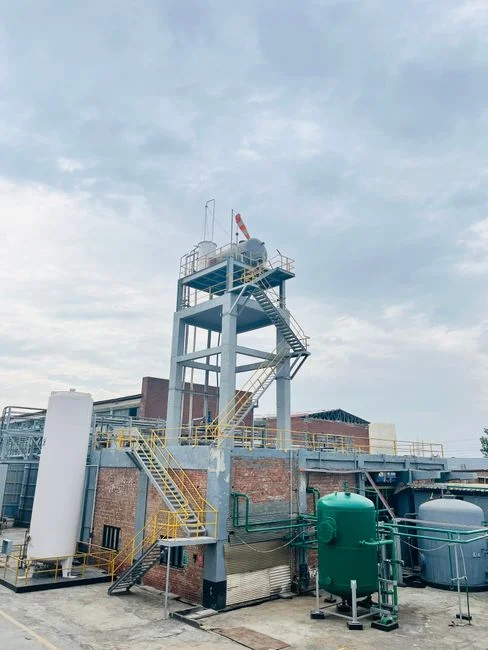
Every distinct mining wastewater stream should be sized independently against average, peak, minimum, startup and seasonal washdown flows; combining all flows into one hydraulic number can conceal the fraction that controls equipment selection.
For dense, settleable fines with negligible oil or buoyant material, standalone clarification is the preliminary configuration. Require settling behavior, hydraulic-loading and sludge-withdrawal evidence. For oil, grease, colloids or conditioned low-density floc, standalone DAF is the preliminary configuration, subject to testing that confirms bubble attachment and acceptable solids loading. Where both heavy mineral solids and buoyant or colloidal fractions are significant, the clarifier–DAF train has the stronger process logic: remove the bulk dense load upstream, then float the residual conditioned fraction.
DAF-first treatment should be justified where free or emulsified oil could interfere with capture. The bid must then include verified downstream clarification or filtration needed for the discharge or reuse objective. If target metals remain dissolved, precipitation or another chemical step is required before either separator can remove the resulting solids.
| Observed wastewater fraction | Preliminary configuration | Evidence required before selection |
|---|---|---|
| Dense fines dominate; negligible buoyant material | Clarification | Jar or pilot settleability, hydraulic loading and sludge-withdrawal results |
| Oil, colloids, reagent carryover or conditioned low-density floc dominates | DAF | Bubble attachment, chemical recipe, contact time and solids-loading results |
| Dense solids and buoyant or colloidal fractions are both significant | Clarifier followed by DAF | Integrated solids-loading, hydraulic and residual-solids performance |
| Dissolved target metals remain | Chemistry followed by solids separation | Residual dissolved-metal results across chemical dosing conditions |
The required process sequence is:
- Segregate the wastewater sources.
- Apply equalization and chemistry where the stream data requires them.
- Select clarification, DAF or a combined train.
- Route float and underflow to a defined sludge-handling step.
- Add downstream polishing required by the discharge or reuse specification.
Where reagent control is required, specify an PLC-controlled chemical dosing system within the same performance scope as the separator. Define the sludge filter press and dewatering route from measured float and underflow characteristics rather than assuming that one sludge route fits both separators.
What changes the choice after pilot testing?
Pilot testing can overturn a preliminary equipment recommendation because the decisive variables are the wastewater’s settling or attachment behavior, hydraulic duty and solids loading under the actual chemical recipe.
The minimum wastewater package should include TSS, particle-size distribution, pH, temperature, oil and grease, total and dissolved metals, average and peak flow, production variability, storm and washdown events, the current permit and the reuse target. Analytical methods and sampling frequency should be defined so that pilot, commissioning and acceptance results remain comparable.
DAF evaluation must address chemical demand, recycle flow, saturation performance, bubble attachment and solids loading. HydropureWater’s 2026 Tuscaloosa chemicals guide uses an 80%–110% nominal influent-flow band as a screening reference. It is not a mining standard and does not replace checking peak hydraulic and mass-loading conditions. Chemical demand may include coagulant, pH adjustment and polymer flocculant, but the recipe and contact time must come from testing of the actual wastewater.
Clarifier evaluation must address settleability, surface loading, sludge collection and withdrawal. Generic removal claims should be challenged with comparable metal-bearing effluent data and performance tied to an agreed sampling protocol. A supplier should also justify materials of construction against the actual ore, slurry, temperature, abrasion and reagent chemistry.
Use the mining wastewater DAF versus clarifier guide to frame the pilot questions, then compare them with the mining wastewater DAF or clarifier guide for another factory setting. The transferable element is the test program—not a regional equipment mandate.
Compare capital, operating and ownership risks
A DAF or clarifier quotation is not a treatment-train cost comparison unless the bidders use the same chemical, sludge, civil, utility and ownership scope.
HydropureWater’s 2026 Tuscaloosa chemicals guide gives equipment screening estimates of $80,000–$350,000 for DAF and $50,000–$200,000 for a conventional circular clarifier. These are not Tuscaloosa mining bids. A separate company-published industrial DAF estimate of $150,000 to more than $1.5 million demonstrates how configuration, flow and materials of construction can change project cost; the supplied research provides no universal clarifier price.
The same Tuscaloosa guide reports DAF compressor and recycle-pump energy use of 0.5–1.5 kWh/m³ as a screening assumption. It also reports that modular DAF projects can cost 30%–50% more after civil construction. Therefore, omit nothing from the comparison that transfers cost or risk between scopes.
| Bid component | Clarifier | DAF | Combined train |
|---|---|---|---|
| Core mechanical scope | Tank, plates, sludge collection and withdrawal | Separator, recycle and saturation equipment, air supply and skimming | Clarifier plus DAF systems |
| Chemical scope | Chemical aid only if demonstrated necessary | Coagulant, pH adjustment and flocculant as established by testing | Train-specific conditioning and controls |
| Sludge route | Underflow thickening, filtration and disposal | Float handling and any required dewatering | Separate float and underflow routes |
| Site and lifecycle | Basin footprint, access, drainage, winterization and maintenance | Power, controls, winterization and maintenance | Combined footprint, utilities and operating dependency |
Compare chemical consumption, compressor and recycle-pump power, sludge handling, maintenance, winterization, downtime and clarified-water recovery. Recovered water is not automatically a saving: reuse can alter the hydraulic balance, chemical demand and downstream polishing requirements. Use the fabricated-metals DAF and clarifier comparison for bid-structure review, and check current 2026 mining pretreatment requirements against the plant’s actual discharge route.
Build a comparison-ready RFQ for 2026
A comparable RFQ must ask each bidder to size and price the same complete treatment train against the same wastewater, site and acceptance criteria.
- Define each stream. Require average, peak, minimum, startup and seasonal washdown flows, with recent wastewater characterization and production variability.
- Set the performance basis. Require pilot or jar-test data from comparable metal-bearing effluent, the proposed chemical recipe, contact time, sampling protocol and permit- or reuse-based acceptance criteria.
- Fix the mechanical scope. Include the separator, recycle and saturation equipment where applicable, chemical conditioning, sludge draw-off, controls, instrumentation, foundations, access, utilities, piping, drainage and winterization.
- Price the solids route. List float and underflow removal, thickening, filtration, cake handling and disposal explicitly rather than treating them as optional accessories.
- Define ownership transfer. Require commissioning, training, spares, warranty, materials-of-construction justification and a performance test against agreed criteria.
| RFQ package | Bidder response required |
|---|---|
| Flow and contaminant basis | Separate sizing for each stream, including peak hydraulic duty and solids loading |
| Process selection | Clarifier, DAF or combined train with mechanism-specific pilot justification |
| Mechanical and civil scope | Complete installed scope with foundations, utilities, drainage, access and winterization |
| Chemical and sludge scope | Tested dosing recipe, controls, float and underflow handling, dewatering and disposal |
| Performance and commercial terms | Comparable effluent data, acceptance protocol, commissioning, training, spares and warranty |
Neither DAF nor clarification alone guarantees compliance at every mining operation. Require written evidence for the complete train. The mining and metals sewer-limit framework can organize compliance questions, while the industrial clarifier selection guide published in 2025 provides useful background on specification detail.
The procurement rule is straightforward: compare complete treatment trains and lifecycle assumptions, not separator price or catalog flow capacity.
Frequently Asked Questions
Is DAF cheaper than a clarifier for a Tuscaloosa mining plant?
Not necessarily. HydropureWater’s 2026 Tuscaloosa chemicals guide gives screening values of $80,000–$350,000 for DAF equipment and $50,000–$200,000 for a conventional circular clarifier. These are not Tuscaloosa mining bids, and the guide reports that modular DAF projects can become 30%–50% more expensive after civil construction. Request installed quotations with identical chemical, sludge, controls, utilities and civil scope, then compare power, chemicals, maintenance and disposal costs.
What data does a supplier need before selecting or sizing a DAF or clarifier?
Provide average, peak, minimum, startup and washdown flows; TSS; particle-size distribution; pH; temperature; oil and grease; total and dissolved metals; the current permit; the reuse target; and jar-test or pilot data. Ask the supplier to show which measured variable drives each sizing decision and how the proposed chemical recipe and solids-loading assumptions were verified.
Can one DAF or clarifier handle an entire mining plant?
Do not assume so. Segment the plant’s streams because dense tailings fines, oily runoff, colloidal process water and dissolved-metal-bearing water require different mechanisms. A clarifier–DAF train may be required where substantial heavy solids and buoyant or colloidal fractions occur together, while chemical treatment may be needed before solids separation.
Does DAF or clarification guarantee permit compliance?
No. Neither technology guarantees compliance without site-specific chemistry, pilot evidence and performance against the current permit or reuse specification. Require the supplier to identify the complete treatment train, agree a sampling protocol and demonstrate acceptance criteria for the clarified or polished water. Also require a defined sludge route so that compliance is not created at the expense of an unevaluated disposal problem.