Start with the Debord sewer permit, not a treatment assumption
Mining and metals facilities near Debord must meet the limits written by the receiving publicly owned treatment works (POTW), not a generic industrial treatment target. EPA states that an indirect discharger’s obligations are determined by its industrial-user permit or another equivalent control mechanism, and that the permit or regulation controls when it conflicts with EPA guidance (EPA, 2021). The engineering workflow is therefore: obtain the controlling documents, characterize each discharge, map pollutants to treatment steps, verify performance at the required monitoring point, and retain evidence of continuing compliance.
Begin with the POTW’s industrial-user pretreatment permit or equivalent control mechanism, sewer-use ordinance, applicable state requirements, and the facility’s current permit. EPA’s 2021 Local Limits Development Guidance separates prohibited discharges, categorical pretreatment standards, and locally derived limits. It also explains that pretreatment requirements address pass-through and interference risks: a discharge may cause problems at the POTW even if its own concentration meets a numeric limit.
Do not infer a Debord-area limit from EPA guidance, another facility’s permit, or a treatment vendor’s typical performance. Request the governing pollutant list, concentration or mass limits, sampling point, monitoring frequency, analytical methods, averaging and compliance conventions, compliance schedule, and enforcement provisions in writing. This approach also differs from designing around an NPDES end-of-pipe permit, as discussed in how petroleum plants near San Antonio meet sewer limits.
| Document or requirement | What it controls | Evidence needed before equipment selection |
|---|---|---|
| Industrial-user permit or equivalent control mechanism | Site-specific discharge conditions, monitoring, and compliance duties | Current signed instrument and all incorporated attachments |
| Prohibited discharges | Discharges that may not enter the sewer | Written prohibitions and applicable dilution or bypass provisions |
| Categorical pretreatment standards | Federal requirements applicable to an industrial category | Applicability determination and applicable subcategory |
| POTW local limits | Locally established concentration or loading limits | Effective local-limit table and calculation basis |
| Maximum allowable headworks loading and maximum allowable industrial loading | POTW capacity and allocation concepts | Potentially relevant allocation or loading information from the POTW |
Characterize the mining or metals wastewater before choosing equipment
The controlling treatment problem cannot be selected from the facility name; it must come from representative wastewater at the proposed pretreatment discharge point. EPA’s 2021 guidance addresses industrial-user sampling, analytical methods, flow data, and information maintenance because those records support both local-limit development and ongoing evaluation. For a mine or metals plant, the characterization program should separate streams rather than blend them blindly.
- Identify contact, process, washdown, cooling, stormwater, and other candidate streams. Record each stream’s source, discharge route, normal and peak flow, seasonal behavior, and whether operations are batch, continuous, or intermittent.
- Sample at the proposed final discharge point for pH, suspended solids, oil and grease where applicable, metals, metalloids, organics, and salinity.
- Measure flow across production, shutdown, washdown, and stormwater conditions. A concentration result without corresponding flow cannot support a defensible mass-loading assessment.
- Test for batch dumps and variable-quality stormwater because their inclusion can change both treatment demand and the appropriate operating strategy.
Genesis Water Technologies identifies suspended solids, acidity, metals, metalloids including iron, arsenic, and manganese, organic compounds, and brackish conditions as recurring mining-wastewater concerns. Those categories are screening priorities, not proof that every parameter is present at every facility. The baseline should instead establish which conditions actually control: pH, suspended solids, particular metals, variable flow, or combinations of them.
| Characterization input | Why it changes the engineering decision | Record needed for design and proof |
|---|---|---|
| Stream inventory and flow | Determines hydraulic demand and whether streams can be equalized or treated separately | Continuous flow records plus operating and production logs |
| pH and alkalinity | Identifies chemical demand and the potential for dissolved-metal precipitation | Representative pH, alkalinity, and temporal variability |
| Suspended solids and settleability | Distinguishes clarification needs from dissolved-metal treatment needs | Solids concentrations, particle characterization, and settling observations |
| Metals and metalloids | Defines precipitation, adsorption, solids-removal, and monitoring requirements | Species-appropriate laboratory data at the compliance point |
| Organics, oil and grease, and salinity | May require different pretreatment, polishing, or discharge controls | Results from representative operating periods |
Build a treatment train that maps each pollutant to a unit operation
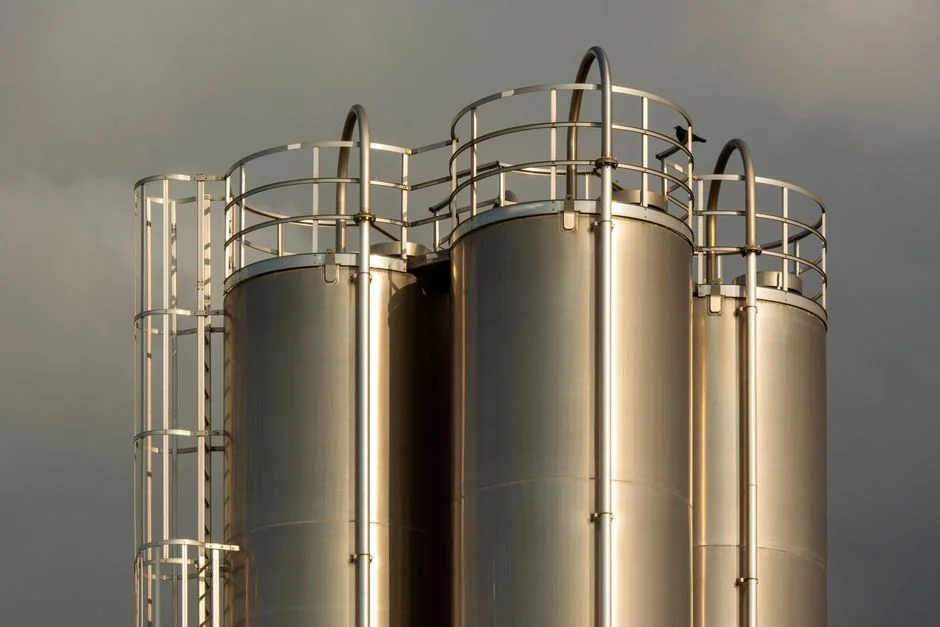
Each treatment step should solve a defined compliance problem: pH control, dissolved-metal removal, suspended-solids separation, or polishing. Genesis Water Technologies describes pH adjustment as the first chemical-control step because it restores chemical balance and can promote dissolved metals to precipitate. Coagulation and flocculation then aggregate suspended solids and small metal particles into larger flocs, which are removed by clarification and post-filtration. That sequence removes metals only when the relevant treatment chemistry, solids separation, and residual capture are all verified.
Automatic chemical dosing should be evaluated where wastewater chemistry changes enough to require different feed rates. An automatic chemical dosing system should therefore be evaluated against tank capacity, agitation, chemical properties, metering requirements, interlocks, and the operator information needed to verify actual consumption.
Clarification and flotation are not interchangeable by default. Consider a DAF system for industrial wastewater pretreatment when suspended solids, colloids, oil and grease, or FOG are important targets. The referenced DAF system has a stated capacity range of 4–300 m³/h, but that range does not establish suitability; final sizing requires representative wastewater testing and the POTW limits. Where a compact clarification step is justified, a lamella clarifier has stated surface-loading rates of 20–40 m/h and claimed chemical-consumption reduction of up to 30%. Those are equipment attributes, not demonstrated site performance.
Ultrafiltration should be used only when its treatment objective is necessary and justified. The referenced system uses 0.03-micron PVDF membranes and accepts turbidity up to 300 ppm, but neither figure substitutes for site testing, pretreatment, or confirmation that filtration is the best polishing step. For a broader comparison, see DAF versus clarifier for metals wastewater.
| Compliance problem | Potential treatment step | Design and verification evidence |
|---|---|---|
| Acidic or alkaline wastewater; unfavorable precipitation chemistry | pH adjustment | Dose-response testing, alkalinity demand, and final pH control |
| Dissolved metals | Metals precipitation, followed by solids separation | Specified pH and residual metal results across representative conditions |
| Suspended solids and colloids | Coagulation, flocculation, and clarification or flotation | Jar tests, solids capture, sludge yield, and hydraulic performance |
| Residual suspended material | Filtration | Filtrate results and demonstrated response to incoming variability |
| Changing chemical demand | Automatic chemical dosing | Calibration, feed logs, interlocks, and chemical inventory controls |
| Residual solids requiring disposal | Sludge dewatering, characterization, and approved disposal | Solids generation, hazardous-waste assessment, and destination documentation |
Chemical use, sludge generation, hazardous-waste characteristics, and residual disposal belong in the design basis. Selecting a nominal treatment claim without evaluating those burdens creates a permit and operating risk.
Decide between independent pretreatment and municipal co-treatment
Co-treatment is only a compliance strategy if the POTW has a legally available acceptance path and the combined discharge can be demonstrated to meet permit, plant-performance, and sludge requirements. It is not automatically the lower-risk or lower-cost option for an industrial user.
The OSMRE final report issued June 30, 2023, provides useful but bounded evidence. Bench-scale batch testing mixed mine drainage with municipal wastewater at 10% and 40% ratios. After two hours, mixed-water pH ranged from 7.44–8.27 at 10% and 6.66–7.36 at 40%. Continuous sequencing-batch reactor testing reported more than 90% phosphate removal, while reactors experiencing sweep coagulation showed up to 40% reduction in ultimate BOD.
The same report identified potential adverse effects: increased effluent iron loading, an approximately 0.5 pH-unit decrease in effluent pH, and sludge approximately 25% less volatile. These results came from research systems and source waters, not a Debord-area industrial permit. They support feasibility testing, not permission to discharge. Full-scale validation, POTW operating limits, influent variability, industrial-user limits, and sludge-disposal requirements remain controlling.
| Decision point | Independent pretreatment | Municipal co-treatment |
|---|---|---|
| Legal availability | Industrial user must hold the applicable permit and meet its discharge conditions | POTW must have an authorized acceptance path and applicable operating conditions |
| Control of performance | Plant controls treatment, monitoring, and corrective action before discharge | Performance depends on the industrial stream and municipal process operating together |
| Infrastructure | Requires treatment equipment, utilities, controls, and operating staff | May reduce industrial treatment infrastructure but creates acceptance and process-coupling risk |
| Evidence required | Site testing, startup results, compliance monitoring, and operating records | POTW acceptance, combined-stream validation, and confirmation of pass-through and interference controls |
| Research limitation | Removal claims remain application-specific | OSMRE’s 2023 report used research systems and should not be treated as a universal design guarantee |
Turn sampling into defensible pretreatment compliance
Compliance begins at the sampling and monitoring point specified by the permit, not at the outlet of a treatment tank. EPA’s 2021 guidance identifies analytical methods, sampling frequencies, flow data, and ongoing evaluation as core information for evaluating industrial-user compliance. Equipment operation therefore has to produce both a compliant discharge and a reconstructable record showing why the result was achieved.
Operate continuous flow measurement and key water-quality instrumentation where practical, then reconcile meter readings against production, batch, bypass, and discharge records. Use the permit’s analytical methods and sampling frequency; do not substitute an internal trending result for a required laboratory sample. Preserve laboratory reports, chain-of-custody information where applicable, calibration and maintenance records, chemical-dosing logs, operating trends, bypass records, and corrective-action documentation.
Compare each result with the applicable concentration or mass limit using the permit’s stated averaging and compliance conventions. Where both concentration and loading limits apply, preserve the flow data needed to evaluate loading. Also document limitations associated with maximum allowable headworks loading and maximum allowable industrial loading rather than treating them as interchangeable concentration limits.
| Compliance evidence | Minimum operating record | Use during review or investigation |
|---|---|---|
| Representative discharge quality | Laboratory result tied to sample date, time, location, flow, and operating condition | Compare with the permit’s concentration or mass requirement |
| Hydraulic accountability | Flow-meter readings, calibration records, and production reconciliation | Calculate loading and identify unexplained discharges |
| Treatment control | Chemical inventory, dose settings, trends, and equipment status | Link an excursion to operating conditions |
| Exceptions | Bypass, upset, diversion, retreatment, and discharge-hold records | Demonstrate the response and corrective action |
| Ongoing evaluation | Trend reports and permit-compliance review | Identify deterioration before it becomes a violation |
Investigate excursions before noncompliant wastewater reaches the sewer. Record whether the response involved stopping discharge, diversion, retreatment, or another permit-authorized measure. For broader workflow context, see 2026 pretreatment limits before sewer discharge.
Choose equipment and suppliers for a measurable compliance outcome
A supplier should size equipment from site wastewater, not from a catalog flow rating. Give the bidder representative characterization results, discharge-flow variation, treatment objectives, governing POTW limits, monitoring requirements, and known batch or stormwater conditions. Then require the offer to identify which design assumptions produce the proposed capacity.
Ask for hydraulic calculations, process guarantees, chemical-consumption assumptions, solids yield, redundancy, automatic controls, commissioning tests, operator training, and a clear description of sludge handling. A treatment claim is not a permit-compliance guarantee. EPA’s 2021 guidance states that its guidance is not a regulation and does not impose legally binding requirements; site-specific testing and the controlling permit must establish compliance.
Compare lifecycle burden rather than purchase price alone: chemical supply, energy, maintenance, spare parts, monitoring, sludge handling, operator attention, and support. For solids separation, request application-specific evidence and site testing before accepting a high-efficiency sedimentation tank as the selected solution. Also compare the process against the wider question of how metal plants meet sewer limits.
| Procurement item | Specific evidence to request | Decision enabled |
|---|---|---|
| Design basis | Characterization, flow variation, treatment objectives, and governing limits | Confirms that the offer addresses the actual wastewater |
| Performance | Proposed guarantee, test method, and conditions | Defines an enforceable technical acceptance basis |
| Equipment and controls | Hydraulic calculations, materials, redundancy, interlocks, and control narrative | Tests resilience and operability |
| Chemicals and residuals | Consumption assumptions, solids yield, sludge characteristics, and disposal route | Exposes operating and environmental burdens |
| Commissioning and support | Acceptance tests, training scope, maintenance plan, spares, and response obligations | Establishes implementation responsibility |
| Compliance limitation | Written statement that performance depends on site conditions and applicable permit terms | Prevents a product claim from being mistaken for permit approval |
Frequently Asked Questions
What information is needed for a defensible pretreatment-system cost?
Request a site-specific cost based on representative wastewater characterization, required discharge performance, measured flow and hydraulic peaks, chemical demand, solids yield, sludge handling, utilities, controls, monitoring, installation, commissioning, and maintenance. Without those inputs, no reliable price or price range can be stated. A low equipment quotation that omits chemical consumption, residuals, or compliance testing may not be comparable.
How should treatment capacity be sized when flow and water quality vary?
Distinguish treatment capacity from the hydraulic peak. Size the process for representative flow conditions, then evaluate equalization and peak-control requirements separately. Water-quality variability also matters: a system adequate for average flow may still fail during batch dumps, high-solids periods, or mine drainage changes if chemical demand, settling, filtration, or sludge handling is undersized.
What should a pretreatment-equipment supplier demonstrate?
Ask for comparable application evidence, a design basis tied to your wastewater, proposed performance guarantees and test methods, hydraulic calculations, automatic controls, chemical-use assumptions, solids and sludge handling, commissioning tests, operator training, maintenance documentation, and lifecycle support. Require the supplier to explain which claims remain subject to site testing and permit compliance.
What creates the greatest pretreatment compliance risk?
The greatest risk is designing to a generic limit or guidance rather than the controlling industrial-user permit or equivalent POTW control mechanism. Sample at the required point, use the specified methods and frequency, preserve flow and laboratory records, and document operating controls and excursions. A treatment train is compliant only when the authorized discharge remains within the applicable concentration or mass requirements without causing pass-through or interference.