Why Sheridan-Area Mills Are Indirect Dischargers Under 40 CFR Part 430
A Sheridan-area pulp, paper, or paperboard mill that sends its effluent to a municipal sewer is an "indirect discharger" under the U.S. Clean Water Act, which is EPA's term for "a facility that discharges pollutants to a publicly owned treatment works (municipal sewage treatment plant)" (EPA, "Pulp, Paper and Paperboard Effluent Guidelines," epa.gov/eg/pulp-paper-and-paperboard-effluent-guidelines). That classification pulls the mill into a two-tier compliance regime: the federal categorical standards in 40 CFR Part 430, and the local limits set by the receiving POTW's pretreatment program.
EPA promulgated the initial effluent guidelines for the Pulp, Paper and Paperboard category in 1974 and 1977, amended them in 1982 and 1986, and added a major toxic-pollutant amendment in 1998 (EPA, "Pulp, Paper and Paperboard Effluent Guidelines"). The rule covers 14 subcategories, and the regulated pollutants vary by subcategory — bleached kraft and soda, unbleached kraft, sulfite, groundwood, deink, and secondary fiber, among others. For a Sheridan-area mill, the first compliance step is matching its own process to the correct subcategory, because the pollutant list — and therefore the analytical schedule — falls out of that match (EPA).
Beyond the federal layer, the receiving POTW runs an approved pretreatment program. POTW local limits can be equal to or stricter than the federal categorical values, and the local program — not EPA directly — enforces them against indirect dischargers (EPA, "Pulp, Paper and Paperboard Effluent Guidelines"). For a full overview of the 2026 effluent rules and compliance checkpoints, see the industrial effluent discharge guidelines 2026.
Pollutants a Mill Has to Remove Before the Sewer
Pulp and paper effluents carry a defined group of pollutants that drive the design of the pretreatment train: BOD, COD, total suspended solids, color, toxicity, and adsorbable organic halides (AOX), with AOX proportional to chlorine consumption in bleaching (Hubbe et al., "Wastewater Treatment and Reclamation: A Review of Pulp and Paper Industry Practices and Opportunities," BioResources, NCSU, bioresources.cnr.ncsu.edu). Since 1990, AOX emissions from P&P mills have been cut by more than 80%, driven largely by bleach-plant changes and the U.S. "cluster rules" (Hubbe et al., BioResources).
The biodegradable share of that load is captured by the BOD:COD ratio, which "represents the fraction of organic compounds in the effluent that are easy to degrade" (Hubbe et al., BioResources). Chemical pulping generates "more than 40% of poorly biodegradable organics within the total organic matter of the effluent," and a single aerobic stage is usually not enough to reach a low residual COD against that background (Hubbe et al., BioResources).
Volume is the other half of the problem. A typical P&P mill generates up to 70 m³ of wastewater per metric ton of paper, and about 70% of the plant's total water intake is used as process water, which is why internal water reduction is the first compliance lever (Hubbe et al., BioResources). Untreated discharge causes dissolved-oxygen depletion, fish toxicity, and visible color/turbidity changes in the receiving water, and those effects are the environmental justification the POTW uses when it sets local limits (Hubbe et al., BioResources).
Engineers account for these parameters by sizing equipment to address BOD, COD, TSS, AOX/color, and toxicity, using the BOD:COD ratio to determine if a single biological stage suffices or if a secondary stage (anaerobic, MBR, or advanced oxidation) is required.
The Layered Pretreatment Train Used at Modern Mills
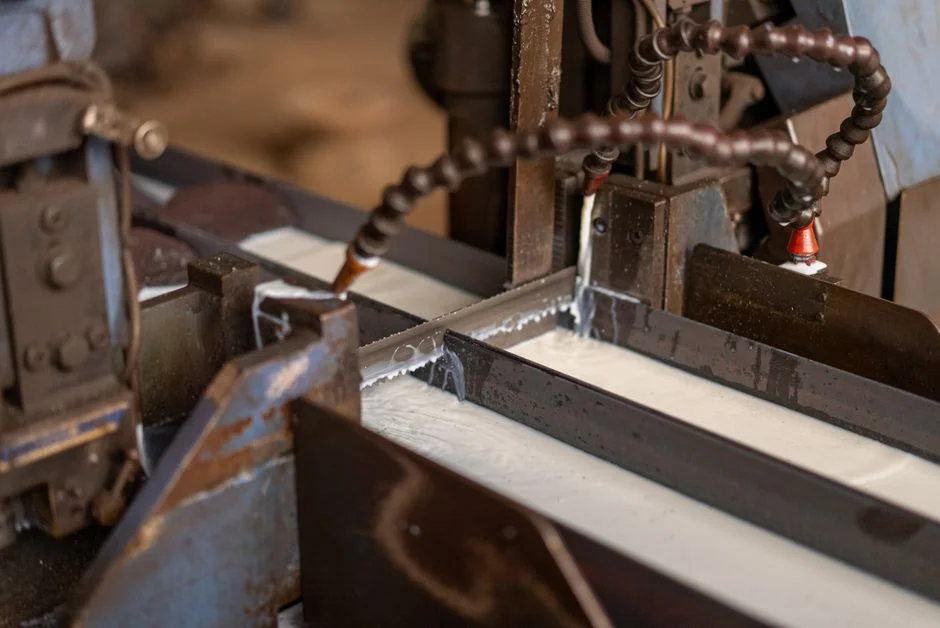
Modern P&P pretreatment is a layered train, not a single unit. Each layer has a defined job, and the design rule is to push as much load as possible upstream so downstream units stay inside their design envelope.
- Source reduction and recirculation. DAF save-alls, kidney-loop filtration, and process-water recirculation recover fibers and reduce both load and volume to the end-of-pipe plant. The P&P industry has reduced water consumption "over the past 20 years by nearly a half and over the past 30 years by an impressive 95% per tonne of paper," and that reduction is credited largely to these in-process steps (Hubbe et al., BioResources).
- Primary clarification. Conventional primary settling is the default, with DAF preferred where colloids, fibers, or sticky solids dominate, because DAF achieves faster separation and higher solids capture on those feeds (Hubbe et al., BioResources). A DAF unit for pulp and paper primary clarification typically handles the colloidal and fiber load that a gravity clarifier would struggle to settle.
- Biological treatment. Activated sludge is the industry baseline; anaerobic, hybrid, or MBR stages are added when COD/BOD/AOX targets exceed what a single aeration basin can reach (Hubbe et al., BioResources). A MBR system for poorly biodegradable P&P effluent combines activated sludge with submerged membranes to deliver a higher-quality clarified effluent in a smaller footprint.
- Polishing. Advanced oxidation (e.g., Fenton), biological aerobic polishing, or membrane filtration (UF/RO) is used to remove residual color, AOX, and toxicity so the effluent meets local POTW limits (Hubbe et al., BioResources).
- Sludge handling. DAF skimmings and biological waste sludge are dewatered mechanically — typically with a plate-and-frame press — before disposal. A sludge dewatering filter press for P&P clarifier and biological waste brings the cake to a haulable solids content.
Process stability across all four layers depends on online measurement: COD, TSS, pH, and toxicity sensors, plus controlled coagulant and flocculant dosing, are repeatedly cited in the literature as the difference between a compliant plant and a non-compliant one (Hubbe et al., BioResources).
Choosing the Right Biological Stage for a P&P Effluent
The biological stage is where most of the design choice happens, because it determines whether the mill can meet its residual COD, AOX, and toxicity targets with one basin or needs two. Conventional activated sludge "became common by 1996 following the establishment of current regulatory limits" in Canada and analogous limits elsewhere, and it remains the global P&P baseline (Hubbe et al., BioResources). It handles the typical secondary range of BOD and TSS at a familiar operating cost.
Where the feed carries a high fraction of poorly biodegradable organics — chemical pulping is the textbook case, with "more than 40% of poorly biodegradable organics within the total organic matter of the effluent" — an anaerobic stage ahead of the aeration basin, or an anaerobic + aerobic train, is the standard answer (Hubbe et al., BioResources). MBR (activated sludge coupled with submerged 0.1–0.4 µm membranes) is the third option: smaller footprint, near-reuse-quality effluent, and well suited to retrofits where the existing aeration basin can be retained and the membrane cassette dropped in (Hubbe et al., BioResources). A MBR system for poorly biodegradable P&P effluent pairs a biological reactor with a membrane cassette for that footprint-and-quality combination.
Across all three configurations, online sensors and controlled chemical addition maintain biological stability. An automatic coagulant and flocculant dosing skid tied to flow and TSS signals is a routine part of the biological-stage instrument scope (Hubbe et al., BioResources).
| Configuration | Best-fit influent profile | Footprint | Effluent quality | Key design flag |
|---|---|---|---|---|
| Conventional activated sludge | Standard secondary BOD/TSS load, low refractory fraction | Large aeration basin + clarifier | Meets typical secondary BOD/TSS limits | Global P&P baseline since the 1990s (Hubbe et al., BioResources) |
| Anaerobic + aerobic | Chemical pulping effluent with >40% poorly biodegradable organics | Anaerobic reactor + aerobic basin + clarifier | Lower residual COD; biogas side benefit | Triggered by high refractory fraction (Hubbe et al., BioResources) |
| MBR (activated sludge + 0.1–0.4 µm membranes) | Retrofit sites; tight effluent targets for reuse or local limits | Compact — replaces clarifier with membrane cassette | Near-reuse quality; low TSS, low turbidity | Smaller footprint; higher membrane OPEX (Hubbe et al., BioResources) |
Sheridan-Specific Compliance and Permitting Steps

The federal framework becomes actionable once it is mapped onto the local POTW. A Sheridan-area mill discharging to a municipal sewer should work through four steps in order.
- Confirm indirect-discharger status under the receiving POTW's pretreatment program. This determines whether 40 CFR Part 430 categorical standards are applied through the local limits mechanism, and which federal subcategory's pollutant list becomes the analytical baseline (EPA, "Pulp, Paper and Paperboard Effluent Guidelines").
- Match the mill to one of the 14 subcategories. Bleached kraft, unbleached kraft, sulfite, groundwood, deink, and secondary fiber all carry different regulated pollutant lists, and the list changes the self-monitoring scope (EPA).
- Build a self-monitoring and reporting schedule. It must cover every categorical parameter plus any local-only limits the POTW imposes, including AOX where bleaching is on site, and it must feed the POTW's reporting cadence (EPA; Hubbe et al., BioResources).
- Maintain a baseline process-knowledge file. Capture BOD/COD ratios, AOX generation rate, water use per tonne, and sludge characterization, so the mill can defend permit renewals, support any variance request, and prove that source-reduction steps are doing their job (Hubbe et al., BioResources).
For a peer-plant view of the same workflow in a neighboring Montana community, see Pulp & paper pretreatment limits near Dillon. A cross-sector perspective on DAF vs clarifier selection appears in the DAF vs clarifier factory guide.
Frequently Asked Questions
What does a Sheridan-area pulp & paper mill actually have to meet before sending effluent to the sewer?
Two parallel sets of limits: the federal categorical standards in 40 CFR Part 430 (which cover 14 subcategories and a pollutant list that varies by subcategory), and the local limits set by the receiving POTW's pretreatment program, which can be equal to or stricter than the federal values (EPA, "Pulp, Paper and Paperboard Effluent Guidelines"). Compliance is documented through the POTW's permit, self-monitoring, and sludge-handling records (Hubbe et al., BioResources).
How much does a four-stage P&P pretreatment train cost to build?
Quoted prices depend on flow, influent strength, and the subcategory match. A buyer should request flow-normalized capital cost ($/m³/day) and annual OPEX ($/m³ treated) tied to the mill's specific BOD, COD, TSS, and AOX envelope from each shortlisted supplier, then compare on the same basis.
What should a procurement lead ask a supplier to confirm before awarding the biological stage?
Ask for a reference list of P&P installations on the same subcategory feed, evidence that the proposed MBR or anaerobic + aerobic train can meet the mill's BOD/COD/AOX targets with the actual BOD:COD ratio, online-instrument scope (COD, TSS, pH, toxicity) including an automatic coagulant and flocculant dosing package, and a membrane-replacement interval quoted against the mill's expected TSS load (Hubbe et al., BioResources).