Determine Whether the Plant Is Subject to Part 433
Fabricated metals plants near Stuarts Draft establish sewer compliance by determining whether their operations fall within 40 CFR Part 433, then meeting the stricter applicable requirement in the local POTW permit. A metal-finishing train generally combines equalization, oil and grease removal, cyanide oxidation, hexavalent chromium reduction, pH-controlled metals precipitation, and DAF or lamella clarification before discharge. Unit order matters because residual cyanide interferes with chromium reduction, while untreated Cr(VI) would not precipitate correctly with the other metals.
The scope test is process-based, not company-size-based. Part 433 covers metal-finishing point-source operations, including forming, finishing, forging, foundry, metal spraying, and machining-wash operations co-located with plating or anodizing lines. A stamping operation that ships only dry parts to a separate finisher is generally outside the category; a plant operating its own zinc, nickel, or chromic acid tank is generally inside it (HydropureWater, 2026). See the process-based scope review used for another fabricated metals plant and another pretreatment compliance workflow.
Even a facility outside Part 433 remains subject to the categorical prohibitions in 40 CFR 403.5 concerning pass-through, POTW interference, fire or explosion hazards, and corrosive damage (HydropureWater, 2026). Before ordering equipment, obtain the current discharge permit from the receiving POTW pretreatment coordinator and confirm program coverage. If the POTW lacks an approved pretreatment program, the Control Authority may instead be the Virginia environmental agency under 40 CFR 403.12.
| Site condition | Initial regulatory determination | Required next step |
|---|---|---|
| Stamping only; dry parts sent to an off-site finisher | Generally outside Part 433 | Confirm POTW coverage, local limits, and 40 CFR 403.5 compliance |
| On-site zinc, nickel, chromic acid, anodizing, or plating operation | Generally within Part 433 | Identify PSES or PSNS status and compare every pollutant with local limits |
| Uncertain process boundary | Scope unresolved | Document tanks, rinse operations, batch dumps, and wastewater routing for the Control Authority |
Build the Compliance Envelope from Both Rule Sets
The governing design table must compare each pollutant independently against PSES, PSNS, and current POTW requirements because the applicable limit can differ by parameter. PSES means Pretreatment Standards for Existing Sources; PSNS means Pretreatment Standards for New Sources. Many POTWs use PSNS-equivalent local limits as a conservative baseline, but the plant still must verify the actual permit rather than assume that every local limit equals the federal number (HydropureWater, 2026).
Part 433 addresses cadmium, chromium, copper, lead, nickel, silver, zinc, and Total Toxic Organics. POTW permits may add oil and grease, total suspended solids, and pH limits. The Phillips source reports cadmium at 0.69 mg/L daily maximum under PSES and 0.11 mg/L under PSNS; this is a parameter-specific difference and should not be generalized to the other pollutants (HydropureWater, Phillips source). The same source identifies a Total Toxic Organics daily-maximum ceiling of 2.13 mg/L under the Part 433 TTO provisions (HydropureWater, Phillips source).
| Design input | Regulatory meaning | How it enters the design envelope |
|---|---|---|
| PSES | Federal limits for existing sources | Apply where applicable to the plant |
| PSNS | Federal limits for new sources | Apply where applicable and check any stricter local value |
| POTW local limits | Site-specific requirements administered under 40 CFR 403.5 | Compare separately for every pollutant and narrative condition |
| Part 433 pollutant list | Cadmium, chromium, copper, lead, nickel, silver, zinc, and TTO | Confirm parameters through source characterization and permit review |
The resulting requirement matrix should list each parameter, its applicable federal provision, its current POTW limit, the proposed sampling point, and the treatment control that demonstrates compliance. Selecting one entire table before reviewing the other is a design error.
Characterize Batch Wastewater Before Sizing Equipment

A full-week characterization is needed because a short composite can miss the batch dump that determines equalization volume and chemical demand. HydropureWater’s 2026 field data reports oils of 50–500 mg/L, total dissolved metals of 5–200 mg/L, TSS of 100–1,000 mg/L, and pH ranging from 2 to 12 across batch dumps. These are characterization observations, not permit limits or universal design ranges (HydropureWater, 2026).
The contaminant sources must be separated before selecting equipment. Stamping, machining, and drawing compounds produce free and emulsified oils. Plating rinsewater and acid pickling introduce dissolved metals. Chromic acid anodizing, hard chrome, and conversion coating create the Cr(VI) risk. Grinding swarf, casting sand, and hydroxide floc contribute TSS. Alkaline cyanide plating adds cyanide that must be destroyed before metals precipitation (HydropureWater, 2026).
| Wastewater source | Primary contaminant | Required evidence | Equipment implication |
|---|---|---|---|
| Stamping and machining | Free or emulsified oil, TSS | Oil content and solids profile | Screen, equalization, and oil removal |
| Plating rinsewater | Dissolved metals | Metals analysis | Equalization and precipitation |
| Acid pickling | Metals and acidic pH | pH range and constituent analysis | Equalization and controlled pH adjustment |
| Chromic acid operations | Cr(VI) | Chromium speciation | Reduction before precipitation |
| Alkaline cyanide plating | Cyanide | Total and free cyanide analysis | Oxidation before metals precipitation |
Request flow characterization, batch-dump schedules, pH range, constituent concentrations, oil content, cyanide presence, chromium speciation, the complete metals profile, and the POTW’s current limits before final sizing. The hydraulics must include batch volume, dump duration, equalization working volume, return-pumping capacity, and the plant’s downstream flow constraints. A plating shop generally discharges batches rather than a steady stream, so the equalization-basin sizing workflow must reflect actual production rather than an average daily flow.
Treat Contaminants in a Controlled Sequence
The unit operations must follow contaminant-specific failure modes rather than be grouped into a generic reaction tank. Start with a rotary mechanical bar screen to remove rags, wipes, parts, and tramp metal before they reach the equalization basin or sludge dewatering equipment (HydropureWater, 2026). Then equalize the flow so batch pH and concentration shocks do not overwhelm chemical feed pumps or the clarifier.
Remove oil before the principal precipitation stage. Free oil can be skimmed, while emulsified oil may require chemical break; neither should be left for the metal-hydroxide stage. If cyanide is present, destroy it before precipitation. Alkaline chlorination requires pH above 11 with ORP control, while peroxide and ozone are alternative oxidation approaches (HydropureWater, Phillips source).
Reduce Cr(VI) to Cr(III) after cyanide oxidation and before raising pH. Sodium metabisulfite or ferrous sulfate can be used at pH 2–3, with the supplied control target of roughly 250–300 mV ORP (HydropureWater, 2026). Then raise the mixed-metal stream into the pH 8.5–9.5 precipitation window and separate metal-hydroxide floc in DAF or a lamella clarifier.
| Sequence | Contaminant addressed | Operating control | Failure if misplaced or omitted |
|---|---|---|---|
| Bar screen | Rags, parts, tramp metal | Screen service and differential inspection | Debris reaches the EQ basin and sludge train |
| Equalization | Batch pH and concentration shocks | Level, transfer pumping, and return capacity | Under-controlled dosing and excessive basin demand |
| Oil removal | Free and emulsified oil | Oil concentration and skimming performance | Oil interferes with floc separation |
| Cyanide oxidation | Cyanide | pH above 11 and ORP for chlorination; alternatives require equivalent control | Residual cyanide consumes reducing chemicals |
| Cr(VI) reduction | Hexavalent chromium | pH 2–3 and approximately 250–300 mV ORP | Cr(VI) remains soluble during later precipitation |
| Metals precipitation | Dissolved metals | pH 8.5–9.5 and polymer dosing | Soluble metals pass to the clarifier |
| DAF or lamella | Metal floc and residual solids | Hydraulic loading, recycle, and sludge removal | Colloidal floc or oil carries through |
This order reflects chemistry, not equipment availability. Residual cyanide can consume reducing chemicals, while untreated Cr(VI) would not be removed correctly by the later hydroxide stage. The PLC-controlled automatic chemical dosing skid must coordinate pH, ORP, and chemical feed rather than leaving those relationships to the operator.
Size DAF and Control the Chemistry
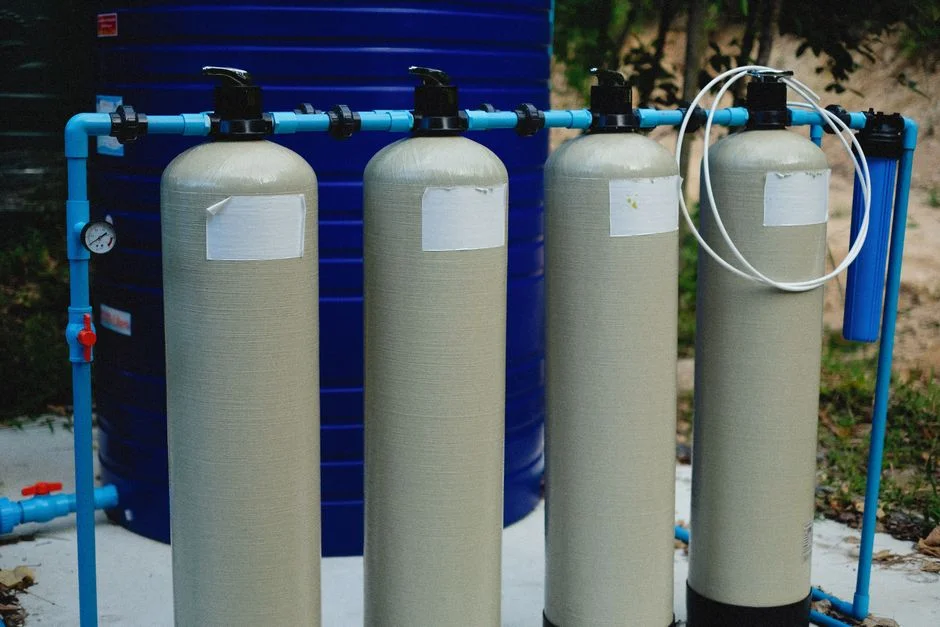
DAF is well suited to metalworking wastewater because it can float colloidal metal-hydroxide floc and remove free or emulsified oil. The comparison of DAF and clarifiers for fabricated metals wastewater should be resolved with actual oil loading, settleability, and floc data from the site—not by comparing nameplates alone.
HydropureWater’s 2026 design data gives DAF hydraulic surface loading of 4–20 m/h depending on model and floc density, an air-to-solids ratio of 0.005–0.060 with 0.02 as a typical design point, and recycle of 10–30% of forward flow. Increasing air-to-solids ratio can produce drier float but raises blower demand and may damage fragile floc. Increasing recycle can improve TSS removal but dilutes chemistry and increases equalization demand (HydropureWater, 2026).
| Design variable | Supplied design range or point | Engineering consequence |
|---|---|---|
| DAF hydraulic surface loading | 4–20 m/h, depending on model and floc density | Requires actual settling and flotation data |
| DAF air-to-solids ratio | 0.005–0.060; 0.02 typical design point | Higher values can dry float but increase blower demand and floc damage |
| DAF recycle rate | 10–30% of forward flow | More recycle can aid TSS removal but dilutes chemistry and raises EQ demand |
| Lamella surface loading | 20–40 m/h | Potential alternative for low-oil streams with suitable floc |
| Lamella chemical demand | Reported about 30% below a conventional clarifier | Must be confirmed against the selected process and reagent program |
Lamella clarification is an alternative in low-oil streams, and the supplied research reports chemical consumption roughly 30% below a conventional clarifier (HydropureWater, Phillips source). Specify either an industrial DAF system for metal-finishing wastewater or high-efficiency lamella clarification equipment only after the site’s oil and solids behavior is established.
Control should combine flow-paced feed with pH and ORP feedback, pump calibration columns, and stroke-count totalizers. Add automatic diversion to the equalization-basin header on pH excursion, ORP outside the required range, or high TSS. A treatment upset must be retained upstream rather than converted directly into a discharge violation.
Handle Sludge and Decide Whether Polishing Is Necessary
Advanced polishing should follow a defined permit or reuse need, while metal-hydroxide sludge requires a disposal plan from the start. HydropureWater’s 2026 data reports floated sludge at 2–5% dry solids and dewatering to 25–35% with a plate-and-frame filter press. A belt press is described as less expensive and continuous, but it caps at about 22% dry solids on metal hydroxide sludge (HydropureWater, 2026).
| Decision or material stream | Supplied basis | Action |
|---|---|---|
| Metal-hydroxide sludge | 2–5% dry solids out of DAF | Define hauling, storage, and dewatering route |
| Plate-and-frame dewatering | Reported 25–35% dry solids | Evaluate with the plate-and-frame filter press |
| Belt-press alternative | Reported cap around 22% dry solids | Compare disposal cost and continuous operation against achievable cake dryness |
| Tighter POTW limit | Identified polishing trigger | Define the required final unit operation |
| Reuse requirement | Identified polishing trigger | Specify water-quality targets before selecting technology |
| Future PFAS rule | Chrome-finishing rulemaking in progress in 2026; no numerical PFAS limit identified in the supplied research | Reserve footprint and utilities for a future anion-exchange or GAC skid |
Technology boundaries should remain explicit. The research describes MBR as providing below 1 μm filtration for BOD/COD tightening and reuse, RO for sub-ppm TDS or very tight dissolved-metal targets, and anion exchange or granular activated carbon as potential PFAS polishing. The MBR treatment option and reverse-osmosis system solve different objectives and should not be substituted for one another.
EPA’s 2026 chrome-finishing PFAS rulemaking was still in progress, and the supplied research identified no current numerical PFAS limit for chrome finishers. Preserve electrical, piping, and floor space rather than installing unsupported polishing capacity. Closed-loop zero liquid discharge was described as rarely economic without a water-scarcity or reuse-economics case; the broader chromium treatment basis is reviewed in chromium wastewater treatment design details.
Turn the Design into a Compliance Program
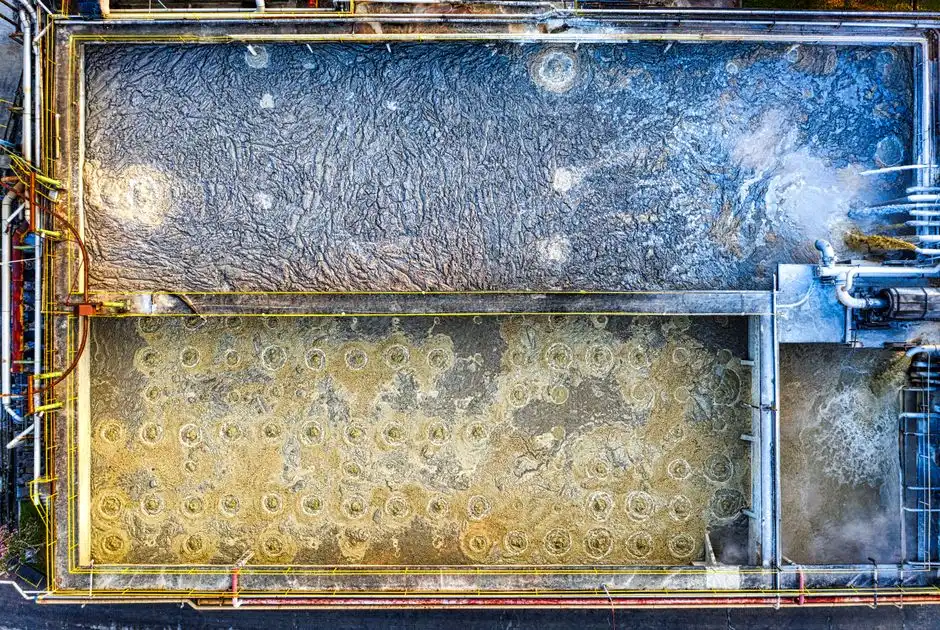
A defensible pretreatment program connects every permit limit to an operating control, analytical method, record, and responsible person. The permit-compliance matrix should include each pollutant, federal requirement, local POTW limit, sampling point, frequency, analytical method, control instrumentation, and operator responsibility. This closes the gap between a process drawing and an enforceable compliance plan.
The Phillips source identifies a Baseline Monitoring Report at least 90 days before first discharge for a new source, an initial compliance report within 90 days of the compliance date, and semiannual compliance reports in June and December (HydropureWater, Phillips source). A new-source BMR requires pollutant results, flow, process description, and analytical methods under the cited 40 CFR 403.12 framework. Confirm the current requirements and submission address directly with the receiving Control Authority.
| Program element | Evidence to maintain | Purpose |
|---|---|---|
| Baseline and compliance reporting | Results, average and maximum daily flows, analytical methods, signed certifications | Establish and demonstrate compliance |
| Operating records | Sampling logs, calibration records, and chain-of-custody documentation | Show that reported results are traceable |
| Record retention | At least three years, per the Phillips source | Meet cited 40 CFR 403.12 recordkeeping requirements |
| Incident notice | Immediate verbal or written notice to the Control Authority for a release that could interfere with the POTW | Address an upset without allowing an unauthorized discharge |
| Pre-order review | Current POTW permit, Part 433 status, week-long characterization, batch-flow study, metals and cyanide analysis, chromium speciation, chemical and utility demand, sludge destination, and polishing footprint | Prevent an undersized or noncompliant procurement |
Before releasing an equipment order, use the pre-order review as a hold point. The compliance matrix and administrative workflow for another fabricated metals plant provides a useful cross-check, but the Stuarts Draft permit and site-specific wastewater data must control the final design.
Frequently Asked Questions
Is a stamping-only plant near Stuarts Draft covered by Part 433?
Generally, no, if it ships only dry parts to a separate finisher and performs no covered on-site finishing operation. A plant with its own zinc, nickel, or chromic acid tank is generally within Part 433. The receiving POTW must still confirm coverage, local limits, and compliance with 40 CFR 403.5.
Should the plant install DAF or lamella clarification?
Choose based on measured oil loading, floc behavior, solids characteristics, and the required surface loading. DAF offers a stronger fit when colloidal floc or free and emulsified oil removal is central. Lamella is an alternative for low-oil streams. Compare the DAF and lamella options using week-long characterization data.
What should a supplier request before pricing?
Request the current POTW permit, Part 433 status, week-long flow characterization, constituent analyses, batch schedule, proposed sludge destination, and expected future reuse. Require a sizing calculation tied to those inputs. No defensible price can be produced from peak flow or equipment names alone because chemical demand, equalization, controls, and sludge handling materially affect scope.
How should a plant manage PFAS uncertainty in 2026?
Track EPA’s chrome-finishing rulemaking and state permitting activity, because the supplied research identifies no current numerical PFAS limit for chrome finishers. Preserve space, utilities, and connection points for a later anion-exchange or GAC skid; do not price advanced PFAS removal as a current compliance requirement without written confirmation that it applies.
What prevents a treatment upset from becoming a sewer violation?
Use equalization, calibrated dosing, pH and ORP interlocks, and automatic diversion to the equalization-basin header on out-of-range conditions or high TSS. Confirm diversion capacity and retain sampling, calibration, and chain-of-custody records. The equipment sequence is only defensible when its failure modes are controlled.