Start With the Wastewater Fraction, Not the Equipment
Mining and metals factories should select a clarifier for streams dominated by dense, rapidly settling mineral fines, and dissolved air flotation (DAF) for oil, grease, colloids, flotation-reagent carryover, or conditioned precipitates that float. A combined clarifier–DAF train is often warranted when both heavy solids and buoyant or colloidal material are significant. Selection should follow stream characterization and jar or pilot testing—not a generic technology preference. HydropureWater lists 13 DAF models from 4–300 m³/h and lamella clarifiers with 20–40 m/h surface loading in its 2026 selection article, but catalog capacity does not replace application-specific testing.
Segment the plant before combining flows. Dense mineral fines, colloidal clays, oils and greases, residual flotation reagents, precipitated metals, and dissolved metals are not interchangeable fractions. Request equipment sizing for each distinct stream rather than relying on one combined wastewater flow. HydropureWater’s 2026 selection article specifically warns that a clarifier handling only the settleable fraction can leave colloidal, buoyant, and dissolved loads behind, while DAF applied to raw tailings can be overwhelmed by non-floating silt and clay.
Apply the mechanism rule stated in HydropureWater’s 2026 article: use clarification as the primary mechanism for dense, rapidly settling fines; use DAF for buoyant material or difficult-to-settle conditioned solids. Lamella plates increase effective settling area, but they do not change gravity separation into flotation.
Dissolved metals require appropriate precipitation or other chemistry before solids separation. Neither settling nor flotation removes a contaminant that remains dissolved. Give the vendor a bounded data package covering average, peak, minimum, startup, and seasonal washdown flows; TSS; particle-size distribution; pH; temperature; oil and grease; target metals; the current permit; the reuse target; and variability during production, storm, and washdown events. If those data are unavailable, treat equipment selection as preliminary. A broader discussion of DAF versus clarifier selection for fabricated-metals wastewater provides a related application framework.
How DAF and Clarification Separate Different Solids
Dissolved air flotation separates conditioned solids by buoyancy rather than by their settling velocity. Clearwater Industries’ commercial description states that pressurized air dissolves in recirculated water and forms 30–50 micron micro-bubbles when depressurized; those bubbles attach to impurities and flocculated particles, which rise to a surface blanket for skimming. A conventional clarifier instead relies on gravity: dense particles settle, bottom sludge is withdrawn, and clarified water overflows. Lamella plates add settling area within a smaller tank footprint, but the separation mechanism remains gravity sedimentation.
The feed distinction determines which mechanism is credible. HydropureWater’s 2026 article cites Fluence’s limit that DAF is not well suited to high levels of heavier, non-floating particles such as silt and clay. The same article identifies emulsified oils, colloids, and low-specific-gravity precipitates as poor candidates for removal by a lamella clarifier alone. Dense tailings and metallurgical sludge with specific gravity greater than water, by contrast, are natural clarification candidates.
Chemical conditioning is commonly part of DAF treatment. Clearwater Industries describes coagulant, pH adjustment, and polymer flocculant, with flash-mixing or longer-contact mix tanks selected according to the chemistry. Jar testing must establish the recipe and contact time for the actual wastewater.
The Logan, Utah study by Elder at Utah State University, published in 2011, found an optimum of 30 mg/L aluminum sulfate for algae and phosphorus removal from that lagoon effluent. It demonstrates that DAF dose optimization is empirical; it is not a mining-water design dose and should not be transferred to a metals application without testing.
| Mechanism | What it does | Preferred feed fraction | Main limitation |
|---|---|---|---|
| Dissolved air flotation | 30–50 micron micro-bubbles attach to conditioned particles, which float and are skimmed | Oil, grease, colloids, reagent carryover, and conditioned low-density floc | High non-floating silt and clay loads can overwhelm flotation |
| Gravity or lamella clarification | Dense particles settle; lamella plates increase effective settling area | Dense mineral fines, tailings, and metallurgical sludge | Colloids, emulsified oils, buoyant material, and dissolved metals are not removed |
Equipment descriptions for an industrial DAF system and a lamella clarifier for dense mineral solids should be evaluated against these feed characteristics, not against generalized removal claims.
Choose a Standalone Unit or a Clarifier–DAF Train
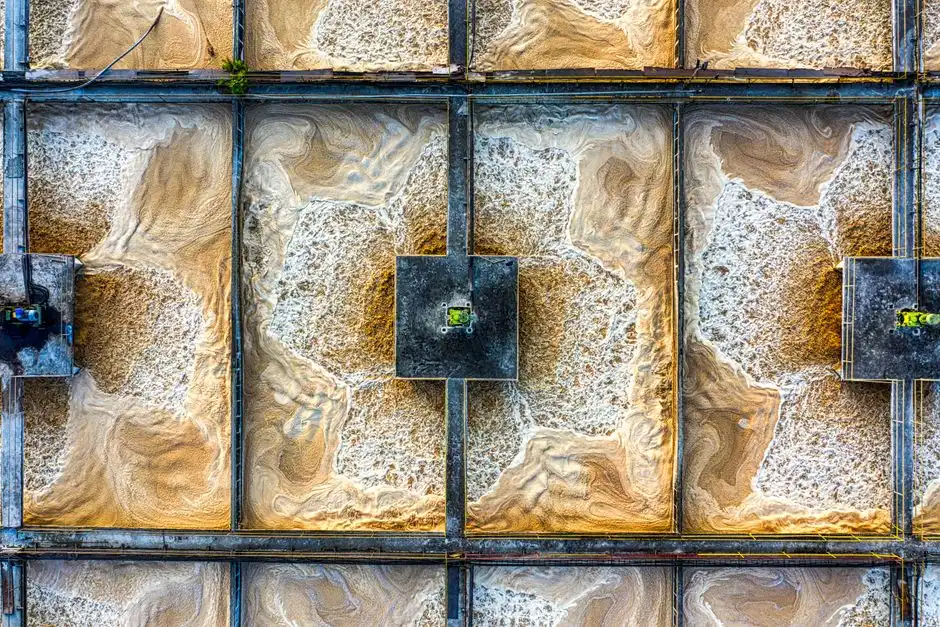
Three qualified configurations cover most mining and metals applications; the dominant wastewater fraction determines which one is defensible. Standalone clarification is appropriate for a stream dominated by dense, settleable fines with negligible oil or buoyant material. Standalone DAF is appropriate when flotation is required for oil, grease, colloids, or conditioned low-density floc, and testing confirms adequate bubble attachment and solids loading. A clarifier–DAF train is the stronger choice when both heavy mineral solids and buoyant or colloidal fractions are significant.
HydropureWater’s 2026 selection article favors clarifier-first treatment for combined mining streams because the clarifier removes the bulk dense load that is poorly suited to flotation. DAF then captures the precipitated, colloidal, and buoyant fraction. This sequence also protects DAF hydraulic and solids-loading performance, although the final arrangement still depends on actual testing.
DAF-first treatment merits consideration where oil or emulsified material could interfere with solids capture. In that case, the downstream clarification or filtration step must polish the residual solids before discharge or reuse. Do not assume that a clarifier downstream of DAF removes every remaining contaminant; filtration or membrane treatment may still be needed for the specified reuse or discharge objective.
A complete train can be specified as a process sequence:
- Equalization and screening.
- Chemical conditioning where required.
- Primary clarification.
- DAF polishing.
- Optional filtration or membrane treatment.
- Sludge withdrawal and dewatering.
Clarifier underflow needs a defined thickening and dewatering route. Clearwater Industries reports that correctly conditioned DAF sludge can be sufficiently thick to require little or no further dewatering; that is a vendor-published operating claim, not a guarantee for a new mining wastewater. The sludge filter press for the treatment train should be sized from measured float and underflow solids characteristics.
| Configuration | Use when | Scope to verify |
|---|---|---|
| Standalone clarifier | Dense settleable fines dominate; oil and buoyant material are negligible | Surface loading, settling velocity, sludge withdrawal, and reduced civil footprint from lamella plates |
| Standalone DAF | Flotation is the required mechanism and test results support bubble attachment | Conditioning, saturation, recycle flow, solids loading, skimming, and float handling |
| Clarifier then DAF | Heavy mineral solids and buoyant or colloidal fractions are both significant | Bulk-solids removal upstream, flotation polishing, chemical control, and combined sludge route |
| DAF then clarification or filtration | Oil or emulsified material could interfere with solids capture | DAF oil recovery and verified downstream polishing before reuse or discharge |
Where controlled reagent addition is required, include a PLC-controlled chemical dosing skid in the same performance and commercial scope as the separator.
Compare the 2026 Equipment Options
DAF and clarification separate different solids, so their equipment scope and operating risks cannot be compared only by tank price or footprint. Clearwater Industries defines DAF as 30–50 micron micro-bubble flotation, while HydropureWater’s 2026 article defines clarification as gravity separation with lamella plates increasing effective settling area. The former suits conditioned buoyant or colloidal material; the latter suits dense settleable solids.
Chemical demand differs. DAF commonly requires coagulant, pH adjustment, and flocculant, with the recipe established by testing. Clarifier performance depends mainly on particle settleability, hydraulic loading, and sludge withdrawal; chemical aid may still be used in some applications, but it is not the defining control variable in the supplied research.
DAF creates a surface float, while a clarifier creates bottom underflow. Either stream becomes a sludge-handling issue unless the vendor demonstrates that the float is already suitable for the selected disposal or dewatering route. Clearwater Industries says conditioned DAF sludge may need little further dewatering; HydropureWater’s 2026 article states that clarifier underflow still needs a defined sludge route.
For buyer screening, HydropureWater’s 2026 article lists 13 DAF models from 4–300 m³/h and lamella clarifiers with 20–40 m/h surface loading. These are catalog benchmarks, not guarantees that a particular model will meet the plant’s wastewater or permit conditions.
| Procurement criterion | DAF | Clarifier or lamella clarifier |
|---|---|---|
| Dominant mechanism | 30–50 micron micro-bubble flotation | Gravity settling |
| Feed fit | Oil, grease, reagents, conditioned colloids, and low-buoyancy floc | Dense tailings, mineral fines, and metallurgical sludge |
| Footprint | Compact treatment option; vendor must demonstrate the proposed layout | Conventional units may require substantial civil space; lamella plates can compress the footprint |
| Chemical control | Coagulant, pH adjustment, and flocculant are commonly required | Performance principally follows settleability, hydraulic loading, and sludge withdrawal |
| Sludge form | Surface float | Bottom underflow |
| Key operating risks | Saturation-system performance, air supply, recycle flow, conditioning control, and bubble attachment | Settling behavior, hydraulic loading, sludge collection, and freeze protection for exposed basins |
Require vendors to demonstrate both layouts against the site’s civil constraints rather than accepting “compact” or “high-rate” as sufficient evidence. For regional context, the regional DAF versus clarifier comparison and additional mining wastewater selection guide apply the same stream-fraction logic to different sites.
Build an RFQ That Producers Can Quote Fairly
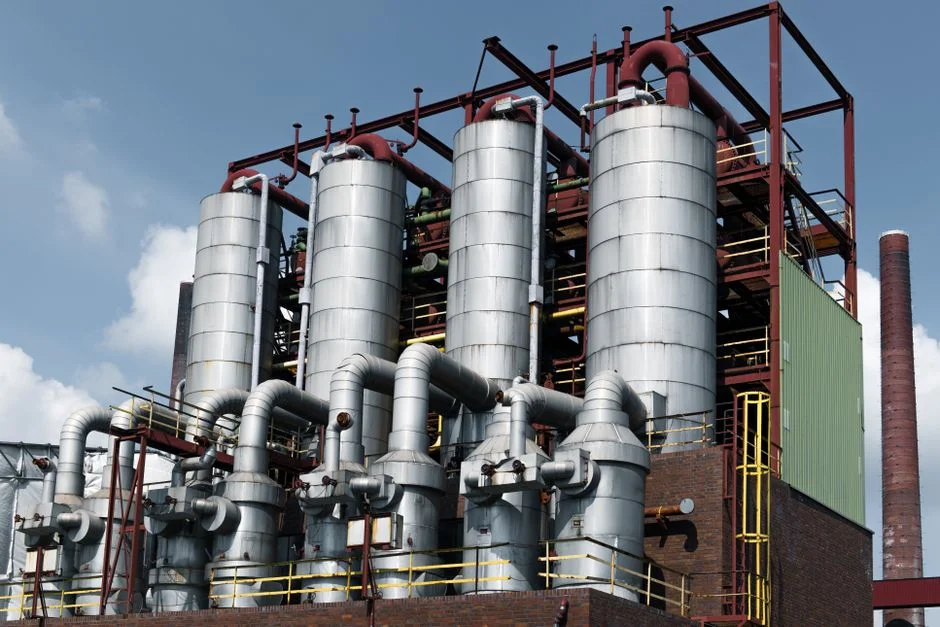
A comparable RFQ begins with bounded flow and wastewater data, then requires treatment evidence and a defined mechanical scope. Quoting only nameplate capacity allows vendors to omit the conditions that drive equipment sizing, chemical demand, civil work, and performance risk.
- Provide average, peak, minimum, startup, and seasonal washdown flows, with production and storm or washdown scenarios clearly separated.
- Submit recent seasonal wastewater data: TSS, particle-size distribution, pH, temperature, oils and greases, relevant dissolved metals, and the analytical methods used.
- Provide jar-test and pilot evidence, including coagulant and polymer type and dose, pH window, contact time, flotation or settling performance, solids loading, and expected float or underflow solids concentration.
- Define the mechanical scope: reactor and separation area, recycle pump, compressor and saturation system, chemical injection points, mixers, skimmer, sludge draw-off, controls, instrumentation, and winterization where relevant.
- State acceptance criteria against the client’s permit or reuse specification, together with the sampling protocol, startup support, training, spare parts, and warranty.
- Require materials-of-construction information tied to the actual ore, slurry, temperature, and reagent chemistry. Corrosion, abrasion, and winter-protection details must follow site data rather than a generic material grade.
Permit requirements are site-specific. The supplied research does not establish a universal technology mandate or a universal 2026 limit for all mining operations. Require the permit and a written performance basis from the bidder, then review the mining and metals pretreatment compliance guide as an organizing reference—not as a substitute for the current permit.
| RFQ package | Required submission | Reason it matters |
|---|---|---|
| Flow basis | Average, peak, minimum, startup, and seasonal washdown flows | Prevents sizing from an incomplete duty cycle |
| Wastewater characterization | TSS, particle size, pH, temperature, oils and greases, dissolved metals, and analytical methods | Defines the contaminant fraction and separation mechanism |
| Trial evidence | Jar-test and pilot results, chemistry, contact time, solids loading, and residual solids | Establishes conditional performance rather than generic capacity |
| Mechanical scope | Separator, recycle, air, chemicals, sludge draw-off, controls, instrumentation, and winterization | Makes quotations comparable and exposes omitted accessories |
| Acceptance | Permit- or reuse-based criteria and agreed sampling protocol | Links payment and performance to the client’s outcome |
| Materials and support | Site-specific corrosion, abrasion, temperature, winter protection, commissioning, training, spares, and warranty | Defines operability and lifecycle obligations |
Price the Full Treatment Train, Not Just the Tank
Equipment price alone will not identify the lower-cost treatment train. HydropureWater’s 2026 article publishes an industrial-grade DAF estimate of $150,000 to more than $1.5 million, driven by flow, configuration, and materials of construction. That is a company-published budgeting signal, not an independent 2026 market survey. The supplied research provides no universal clarifier price.
Request a complete quotation covering the separator, chemical-conditioning skid, recycle and saturation equipment, controls, civil work, installation, sludge dewatering, commissioning, and lifecycle consumables. The PLC-controlled chemical dosing skid and sludge filter press for the treatment train should appear as explicit line items rather than optional accessories.
Then compare operating drivers: chemical consumption, compressor and recycle-pump power, sludge handling, maintenance, winterization, downtime, and the value of clarified-water recovery or process-water reuse. Clarified-water recovery is not automatically a saving: it changes the hydraulic balance, chemical demand, and downstream polishing requirements. Evaluate it against the actual reuse specification.
| Cost category | Buyer should require | Commercial treatment |
|---|---|---|
| Equipment | Separator, recycle, air saturation, chemicals, controls, sludge draw-off, and instrumentation | Compare like-for-like mechanical scope |
| Civil and installation | Foundations, access, utilities, piping, drainage, and winter protection | Keep outside the equipment quote if omitted |
| Sludge handling | Float and underflow route, thickening, filtration, cake handling, and disposal | Price as part of the train |
| Operations | Chemicals, power, maintenance, winterization, and downtime | Compare lifecycle rather than tank capital cost |
| Outcome | Permit compliance, clarified-water recovery, and reuse quality | Separate verified savings from assumptions |
Frequently Asked Questions
How much should a mining wastewater DAF or clarifier cost in 2026?
There is no defensible universal 2026 price for either unit. HydropureWater’s 2026 article gives a company-published industrial DAF range of $150,000 to more than $1.5 million, but no supplied source provides a universal clarifier price. Request a budgetary quote tied to flow, wastewater characterization, configuration, materials of construction, civil work, chemical equipment, controls, and sludge handling. Compare the quote with operating-cost assumptions rather than treating the DAF range as a market index.
How should a factory size DAF or clarification equipment?
Size each distinct stream against its own flow and contaminant fraction. Provide average, peak, minimum, startup, and seasonal washdown flows, then attach recent seasonal data for TSS, particle-size distribution, pH, temperature, oils and greases, and target metals. The decisive sizing check is not catalog capacity: it is whether jar or pilot evidence demonstrates the proposed separation mechanism under the plant’s chemical and solids-loading conditions.
What should a buyer verify when selecting a wastewater equipment supplier?
Require pilot or jar-test data from a comparable metal-bearing effluent, a complete mechanical scope, and acceptance criteria tied to the plant’s permit or reuse specification. Also request materials-of-construction justification for the actual ore, slurry, temperature, and reagent chemistry. A credible proposal should identify recycle, saturation, chemical injection, sludge draw-off, instrumentation, winterization, commissioning, training, spares, and warranty explicitly.
Can either DAF or a clarifier alone guarantee permit compliance?
No. The supplied research supports DAF and clarification as treatment mechanisms, but it does not establish that either equipment type alone guarantees compliance at every mining operation. Permit limits and treatment objectives are site-specific. Dissolved metals may also require precipitation or other chemistry before separation, and reuse or discharge may require downstream polishing. Obtain the current permit, define the final effluent or reuse specification, and require the vendor to demonstrate that complete train against agreed sampling criteria.