Separate the wastewater before selecting equipment
A Kemerovo data center requires separate treatment design bases for each wastewater stream because their chemistry, variability and destinations differ. The four primary streams are evaporative cooling-loop blowdown, closed-loop maintenance discharge, residuals from makeup-water treatment, and domestic or tenant wastewater. Construction fill-and-flush water and commissioning wastewater require an additional documented stream. The DAF system for solids and oil separation can then be screened against confirmed loads rather than included by default.
Do not combine streams merely because they enter the same facility. A closed-loop maintenance discharge may be episodic and chemically different from continuously concentrated evaporative blowdown. Makeup-treatment residuals may contain regenerant or antiscalant, while domestic wastewater follows a different acceptance route. Before requesting proposals, record for each stream: minimum, normal and peak flow; seasonal and operating variability; chemical inventory; sampling points; analysis results; treatment objective; and intended destination.
Construction water should remain separate even when its final volume is small. E&E News reported that utilities in Loudoun County require testing of closed-loop fill-and-flush water because corrosion-control chemicals may be unsuitable for wastewater treatment; in some cases, the utility directed off-site disposal. This U.S. example is not a Kemerovo rule, but it demonstrates why Kemerovo’s receiving route must explicitly address this stream.
| Design stream | Information to establish | Procurement consequence |
|---|---|---|
| Evaporative cooling-loop blowdown | Water balance, cycles of concentration, chemical inventory and continuous variability | Define solids, dissolved-solids, scale and residual-control barriers |
| Closed-loop maintenance discharge | Frequency, retained volume, water chemistry and cleaning chemicals | Define segregation, sampling and receiving-route requirements |
| Makeup-water treatment residuals | Regenerated media, RO reject, antiscalant and operational variability | Determine whether the residual can combine with blowdown |
| Domestic or tenant wastewater | Flow, local requirements and separate collection route | Exclude from the industrial treatment package unless expressly accepted |
| Fill-and-flush and commissioning wastewater | Chemicals used, test method, volume and written acceptance | Provide a documented sampling, approval and disposal plan |
Fix the cooling architecture and water balance first
Cooling-system vendor data, not a generic water-consumption factor, must establish the preliminary treatment flow for a Kemerovo data center. The supplier needs the planned IT load, selected cooling architecture, loop count, design duty, operating schedule, minimum, normal and maximum cases, and the intended cycles of concentration. This information should be converted into a reconciled water balance covering evaporation, drift, blowdown, concentrate, makeup water, treatment chemicals, sludge and final discharge.
UGA Extension reports that 75–90% of data centers globally primarily use water-based cooling and that closed-loop cooling can reduce water consumption by up to 70% compared with traditional open evaporative cooling, as summarized in the comparative data-center cooling-blowdown guide. Those global figures explain why architecture matters; they do not establish a Kemerovo water balance. The supplied 2026 Orenburg guide explicitly cautions against deriving a local blowdown rate from generic water-consumption factors.
The same Orenburg source identifies the relationship blowdown = evaporation ÷ (cycles of concentration − 1). Its illustrative 10 MW load and 4.0-CoC example must not be transferred to Kemerovo. Use the formula only after the vendor has established evaporation and the permitted concentration range. Then test whether treatment capacity changes materially between minimum, normal, peak and seasonal cases.
| Water-balance input | Supplier’s required statement | Reason it affects treatment |
|---|---|---|
| Cooling architecture and loop count | Evaporative, closed-loop or hybrid; number of independently operated loops | Determines which streams exist and whether flows can be segregated |
| Operating basis | Minimum, normal, maximum and seasonal duty | Sets hydraulic capacity, storage and redundancy |
| Concentration control | Cycles of concentration and permissible operating range | Controls salt concentration, scaling and chemical accumulation |
| Loss and recharge balance | Evaporation, drift, blowdown, makeup and concentrate | Prevents treatment units from being sized on an incomplete stream |
| Residual streams | Chemical additions, sludge and final discharge | Defines dosing and solids-handling duties |
Characterize Kemerovo source water and blowdown chemistry
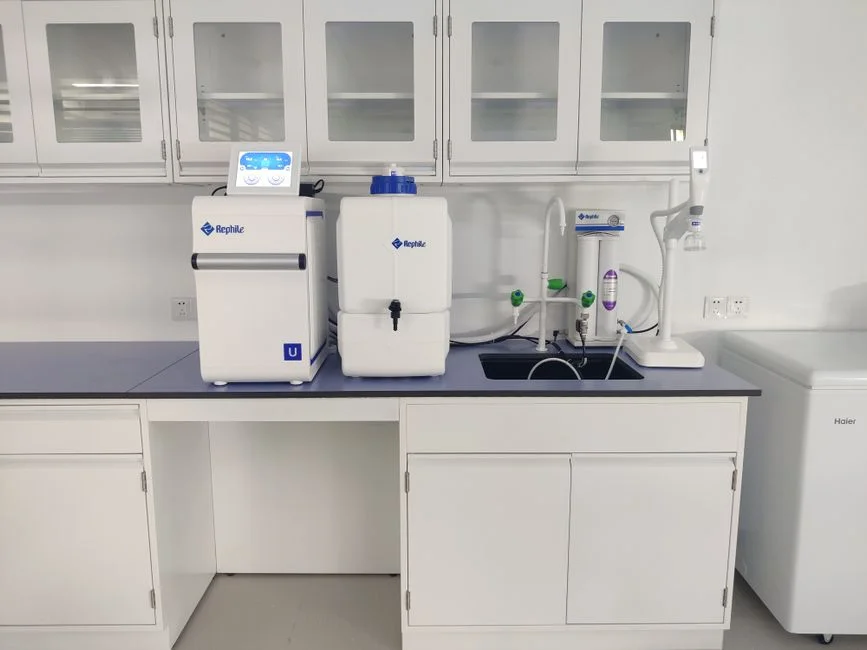
Representative source-water analysis and a current makeup-water analysis are required before a Kemerovo treatment train can be approved. The sample programme should cover hardness, alkalinity, silica, TDS, conductivity, turbidity, suspended solids, iron and relevant metals, with additional parameters determined by the cooling chemicals and intended endpoint. The industrial water-softener system and treatment valves, media and replacement parts can be screened only against those results.
The supplied 2026 Krasnoyarsk guide cites a research-supported preliminary envelope in which blowdown TDS is 4–8 times makeup-water TDS, with typical blowdown TDS of 1,200–6,000 mg/L, based on Genesis Water Tech. This is not a Kemerovo measurement. It provides a temporary screening envelope only; Kemerovo values require representative sampling. The source also identifies calcium, magnesium, silica and alkalinity as potential scaling drivers.
Inventory every cooling and treatment chemical: biocides, corrosion inhibitors, scale inhibitors, dispersants, antiscalants, pH adjusters and cleaning products. Their dose and residual characteristics determine whether softening or chemical precipitation is needed, whether membranes require additional control, and whether the treated water is compatible with reuse or sewer acceptance.
Assign barriers by contaminant and endpoint. If verified hardness or scale formation requires it, evaluate softening, chemical precipitation and industrial UF pretreatment. If dissolved solids govern the endpoint, evaluate industrial reverse osmosis. Neither should be committed before source chemistry, concentration control and recovery targets are known.
| Verification item | Information required | Design decision supported |
|---|---|---|
| Makeup water | Representative analysis for the actual source | Softening, precipitation, RO and concentrate assessment |
| Blowdown chemistry | Analysis at the proposed cycles of concentration | Feed limits, scaling risk and residual controls |
| Chemical programme | Products, doses, application points and expected residuals | Compatibility with sewer discharge or reuse |
| Particulate load | Turbidity, suspended solids and corrosion-product history | Filtration and UF pretreatment |
| Local conditions | Kemerovo source, winter conditions and receiving-route acceptance | Final design approval |
Compare sewer discharge, reuse and zero-liquid discharge
The receiving route determines the required water quality, equipment scope and proof of acceptance. Sewer discharge, on-site reuse and zero-liquid discharge should be compared as three distinct design branches, not as interchangeable options. The industrial reverse osmosis system may appear in more than one branch, but its feed specification, recovery target and residual route still differ.
For sewer discharge, obtain current written conditions from the responsible Kemerovo utility or receiving system. The request should address flow, pH, conductivity, suspended solids, hardness, metals, chemical residuals, monitoring, acceptance rules and any industrial-pretreatment charge. Written acceptance under peak discharge is necessary; dilution capacity or informal practice is not a substitute.
For on-site reuse, identify the receiving cooling or process duty and its water-quality specification. Conductivity and clarity alone cannot prove compatibility. Residual biocide, corrosion inhibitor, scale tendency, biological control and process effects must also meet the receiving system’s requirements.
For zero-liquid discharge, evaluate liquid treatment separately from concentration and crystallization. Scope energy demand, chemical cleaning, scale formation, solids handling, redundancy, operator intervention and the disposal route for solid residue. Saltworks presents modular evaporator-crystallizers with self-diagnosis, self-cleaning and automation, but it provides no Kemerovo-specific energy, cost or crystallized-product data.
The supplied 2026 Krasnoyarsk guide cites RO blowdown recovery of 50–85%, full ZLD recovery of 95–99% and solid waste of 1–3% as research-supported benchmarks. They are screening references, not Kemerovo guarantees. Kemerovo scaling, climate, available waste heat and receiving conditions remain unverified. U.S. Clean Water Act or NPDES rules should not be imported into a Russian permit package; the project design institute must confirm applicable Russian requirements and responsible Kemerovo authorities.
| Receiving route | Mandatory acceptance input | Treatment implications |
|---|---|---|
| Sewer discharge | Current written utility conditions and industrial-pretreatment rules | Solids removal, dissolved-solids control, dosing and residual monitoring |
| On-site reuse | Named duty and explicit water-quality specification | Compatibility with cooling or process equipment, including corrosion and biology |
| Zero-liquid discharge | Liquid-route acceptance, available heat, energy basis and solids route | RO or equivalent, brine concentration, crystallization and residual handling |
Build the preliminary treatment train
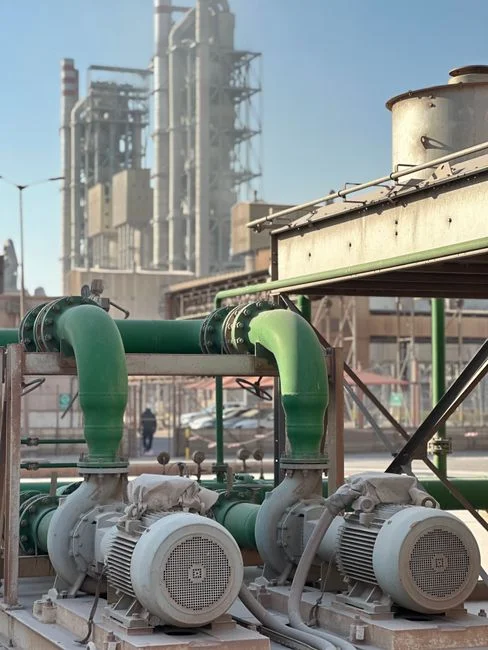
A defensible preliminary train assigns each barrier to a verified contaminant and endpoint. Start with solids control where suspended solids, corrosion products, biofilm fragments or airborne dust could compromise downstream equipment. Use side-stream filtration or an appropriate filter before membranes, and place ultrafiltration where the feed and required solids barrier justify it.
HydropureWater’s 2026 ultrafiltration pretreatment system is specified in the supplied research at 2,000–40,000 L/h, with 0.03-micron PVDF membranes, feed turbidity up to 300 ppm, automatic backwash and air scour. These are catalogued platform values, not a Kemerovo sizing conclusion. The bidder must reconcile them with the actual flow, feed chemistry and downstream design.
Where dissolved solids or scaling species govern the endpoint, evaluate RO after verified pretreatment. The supplied 2026 research describes HydropureWater’s industrial reverse osmosis system as PLC-controlled with recovery rates up to 95%, subject to feed chemistry and the selected recovery target. RO does not remove the need for pretreatment, and recovery must be set by concentration limits, permeate quality and receiving route.
Use the PLC-controlled chemical dosing skid only after the chemical, dose, control point and receiving-route effect are verified. Candidate functions include pH adjustment, antiscalant, coagulant, flocculant and residual control; the same chemical may be inappropriate for discharge and reuse.
The supplied 2026 Orenburg research describes HydropureWater’s DAF platform as 4–300 m³/h across 13 standard models. It can be screened where confirmed suspended solids, colloids, oil or grease justify flotation; the DAF selection guide for FOG and suspended solids explains the contaminant-specific screening. Add a plate-and-frame filter press only where the selected solids-capture process creates a sludge requiring volume reduction or controlled disposal.
Size the package for Kemerovo operating conditions
Each treatment stage must be sized against minimum, normal and peak flows because seasonal blowdown and maintenance events can differ materially from average demand. The cooling vendor’s water balance should establish blowdown and concentrate flows. Generic wastewater factors should not replace project data, and a preliminary screen must remain visibly distinct from the locally approved design.
The Kemerovo winterization module belongs in every outdoor or partially exposed installation: confirm local winter ambient design conditions, equipment enclosures, heat tracing, freeze protection, drain-down provisions, and freeze-safe chemical-dosing lines. Instrument cabinets, sample lines and membrane skids should have explicit environmental ratings rather than an unverified general statement that the plant is winterized.
For every unit, require the bidder to state design flow, operating range, feed-water limits, recovery, product quality, chemical consumption, cleaning frequency and installed redundancy. Recovery should be stated at the proposed Kemerovo feed chemistry and cycles of concentration—not as an isolated maximum. Likewise, an automatic backwash cycle should be linked to the hydraulic and fouling basis.
| Sizing field | Required basis | Acceptable bid evidence |
|---|---|---|
| Hydraulic capacity | Minimum, normal, peak and seasonal cases | Stage-by-stage flow schedule tied to the vendor water balance |
| Feed limitation | Representative Kemerovo analysis and chemical inventory | Acceptance envelope and identified operating restrictions |
| Recovery and product quality | Selected endpoint and operating duty | Guaranteed values under defined feed conditions |
| Winterization | Kemerovo design ambient conditions | Component ratings, enclosure and freeze-protection schedule |
| Redundancy and maintenance | Operating consequences of outage | Installed redundancy, cleaning access and critical spares |
Put measurable guarantees into the bid documents

A comparable bid requires each bidder to state its complete design basis. Include source-water assumptions, cooling configuration, loop count, cycles of concentration, chemical inventory, minimum and maximum flows, discharge route, reuse objective and proposed treatment barriers. A quoted equipment package without these inputs is not a technical offer and cannot be compared reliably.
Separate acquisition price from operating commitments. The commercial schedule should cover startup, operator training, controls integration, alarms, automatic backwash or cleaning, maintenance access, spare parts, chemical consumption, sludge handling and continuing support. The coagulant dosing-system engineering guide provides a useful model for requiring defined process duties, controls and performance evidence.
Compare five-year total cost of ownership using the bidder’s stated energy consumption per cubic metre, chemical use, membrane-replacement frequency, labour and waste-handling assumptions. Any foreign cost figures must be labelled as external benchmarks rather than Kemerovo estimates. No Kemerovo price should be accepted without a quotation based on the agreed flow, chemistry, duty and receiving route.
Set acceptance criteria against the agreed water-quality parameters and operating mode. Include performance at minimum, normal and maximum flow and control of chemical residuals. “Suitable for reuse” is inadequate unless the receiving application and its specification are written into the contract. Require applicable Russian standards, commissioning evidence, named project contacts and winter-operation support in addition to generic case studies.
| Guarantee area | Bid response required |
|---|---|
| Design basis | Named Kemerovo inputs, flow cases, cooling configuration, chemistry and destination |
| Performance | Measured product quality, recovery and operating limits under defined conditions |
| Controls and safety | PLC description, alarms, interlocks, fail-safe responses and access permissions |
| Operations | Startup, training, maintenance, cleaning, spares and support |
| Commercial comparison | Five-year cost basis, energy and consumables, membrane assumptions and exclusions |
| Compliance evidence | Applicable Russian documentation, project contacts and commissioning plan |
Maintain a permit and operating-evidence register
Compliance depends on a live register of approvals, not on a regulatory section copied into a supplier proposal. Assign one accountable owner, document reference, validity condition and deadline to every permit, utility agreement, laboratory result and technical acceptance. Obtain current Kemerovo receiving conditions from the responsible utility and environmental authorities through the project design institute.
The register should distinguish preliminary screening from locally approved design. It must identify unresolved Kemerovo inputs, including source-water analysis, winter design conditions, receiving-route conditions, chemical residuals and cumulative infrastructure load. The Orenburg guide warns that multiple facilities using the same receiving infrastructure can create a cumulative risk; therefore, assess other connected facilities rather than the proposed data center alone.
Specify automatic monitoring according to verified source water, chemical inventory and receiving route. Potential parameters include flow, pH, conductivity, turbidity, suspended solids, hardness and residual biocide, but the final list should be approved by the responsible Kemerovo authorities and design institute.
Maintain operating records for blowdown adjustments, chemical dosing, media or membrane cleaning, sludge removal, bypass events and nonconforming discharges. E&E News reported that Loudoun Water requires testing of construction fill-and-flush water because chemicals may be unsuitable for treatment. That U.S. practice supports the need for Kemerovo-specific acceptance decisions, not an imported legal requirement.
| Register item | Evidence to retain | Control owner |
|---|---|---|
| Source-water analysis | Laboratory report, sampling point, date and chain of custody | Project environmental lead |
| Receiving acceptance | Current written utility or authority conditions | Permitting lead |
| Chemical compatibility | Inventory, dose and residual assessment | Process engineer |
| Winter operation | Design conditions and component verification | Mechanical and controls lead |
| Operating compliance | Monitoring, cleaning, sludge, bypass and exception records | Facility operations manager |
| Cumulative load | Evidence of connected facilities and receiving-system capacity | Project manager |
Frequently Asked Questions
What treatment does a Kemerovo data center need for cooling blowdown?
The treatment train depends on source-water chemistry, cooling configuration, cycles of concentration, chemical inventory and the receiving route. Start by separating evaporative blowdown, closed-loop maintenance discharge, makeup-treatment residuals and domestic wastewater. Then assign solids control, polishing and chemical dosing against the written sewer, reuse or zero-liquid-discharge specification. No Kemerovo flow or quality limit should be assumed before representative analysis and vendor water-balance data are available.
How should treatment suppliers be selected for a Kemerovo project?
Compare bidders on a common written design basis, not only equipment price. Require each bid to identify the cooling architecture, source-water assumptions, flow cases, chemical inventory, receiving route, recovery target, product quality and treatment barriers. Check named projects, applicable Russian documentation, commissioning responsibilities, controls integration, winterization and local service capability. A comparative data-center cooling-blowdown guide can support the technical questions, but local acceptance remains controlling.
What inputs are needed before sizing the equipment?
Request the cooling vendor’s minimum, normal, peak and seasonal water balance, including evaporation, drift, blowdown, makeup, concentrate and sludge streams. Obtain representative makeup-water and blowdown analyses, chemical dosages and residuals, the intended cycles of concentration, and written receiving conditions. Also provide Kemerovo winter ambient design conditions and installation constraints. These inputs allow each stage to be checked for flow, feed limits, recovery and redundancy.
How should cost and pricing risk be managed during procurement?
Request a five-year total-cost comparison with stated assumptions for equipment, installation, energy per cubic metre, chemicals, membrane replacement, labour, sludge and specialist services. Ask each supplier to identify exclusions and the inputs that could change the price. No defensible Kemerovo price can be produced without the approved water balance, chemistry, duty, receiving route and winterization scope; foreign benchmarks must remain labelled as external references rather than local estimates.
Which Russian approvals and commissioning evidence should be obtained?
The project design institute should identify the applicable Russian requirements and responsible Kemerovo authorities, then obtain current written receiving conditions and any required discharge documentation. Retain source and blowdown analyses, chemical-compatibility assessments, control narratives, calibration records, operator training, startup tests and acceptance results. U.S. environmental rules or utility practices should not be copied into the Russian permit package without formal confirmation from the responsible local body.