Define the Effluent Quality Singapore Must Achieve
An industrial effluent treatment plant in Singapore is a site-specific treatment system designed around a manufacturing process stream, its discharge route and its intended reuse. A practical ETP commonly combines primary physical separation, secondary physical and chemical treatment, biological treatment and tertiary polishing. The correct train depends on wastewater characteristics, flow variability, footprint, sludge handling, reuse targets and whole-life operating cost. Advanced treatment should be selected only after the required effluent quality is measurable.
Unlike municipal sewage treatment, an industrial ETP must address contaminants associated with the relevant production process. World Technologies, in its 2026 ETP guidance, identifies suspended solids, oil and grease, organic load, nutrients, metals and site-specific contaminants among the design considerations. The destination then determines the required outcome:
- Permitted discharge: the design must satisfy the consent, permit or discharge conditions issued by the relevant authority.
- Controlled discharge to a receiving sewer or drain: the receiving authority’s connection and pretreatment requirements must be established.
- Reuse within the facility: the treated water must meet the process, product, equipment or water-safety specification where it will be used.
RevenueBase recorded 34 company matches for effluent treatment plant operators associated with Singapore in September 2026, comprising 28 records in Singapore, one in Singapore Jurong East and one in Singapour. This is a market-discovery signal, not proof that every listed company is technically suitable for a particular industrial stream.
The site team should identify the receiving authority, permit or consent conditions, required sampling points, reuse specification and production-continuity requirements before quotations are requested. The supplied research does not state a universal Singapore discharge limit, so procurement teams should not assume one. Separate mandatory effluent-quality parameters from voluntary sustainability objectives; an advanced polishing stage is justified only when it closes a defined compliance or reuse gap. Singapore wastewater recycling developments may provide useful context, but they do not replace project-specific consent conditions.
Characterise the Wastewater Before Choosing Equipment
Reliable wastewater characterisation determines whether the proposed equipment removes the dominant contaminant rather than merely shifting it to another waste stream. The characterisation request should include flow rate and variation, pH, suspended solids, oil and grease, COD, nutrients, metals and industry-specific contaminants, but only where each parameter is relevant to the process and treatment decision.
Representative samples should cover production, cleaning and upset conditions rather than relying on one spot sample. The supplied research provides no Singapore sampling frequency, so the sampling plan must be developed by the project engineer. Where batch discharges occur, the assessment should distinguish routine flow from episodic loads and identify whether equalisation or buffer storage is needed.
The Jetpur textile study in Frontiers in Environmental Science used nine sampling points across industrial sites, an ETP and a common ETP. It found distinct microbial profiles at ETP inlet, ETP outlet and other locations, showing how treatment stages can reshape the microbial community of complex industrial effluent. The study does not establish a Singapore-specific biological design, but it demonstrates why biological treatment must be based on the actual effluent rather than a generic reactor template.
| Design input | Question for the site team | Effect on equipment selection |
|---|---|---|
| Flow | What are the average, peak and minimum flows, including batch discharges? | Sets hydraulic capacity, equalisation and peak-treatment requirements. |
| Organic and solids load | What are COD and suspended-solids concentrations and mass loads? | Determines clarification, biological capacity and sludge generation. |
| Oil, grease and colloids | Is the material free oil, emulsified oil, FOG or colloidal solids? | Influences whether DAF, clarification or chemical conditioning is appropriate. |
| pH and chemicals | What controls pH, and which treatment chemicals are permitted? | Sets dosing, corrosion, safety and downstream biological requirements. |
| Site constraints | What footprint, utilities, sludge route, odour limits and operating skill are available? | Can eliminate otherwise technically suitable configurations. |
Also record the reuse demand, available footprint, utility availability, operator competency, sludge-disposal route and odour constraints. Chemical dosing should be tied to measured operating conditions rather than fixed assumptions; a PLC-controlled chemical dosing system must still be sized from the selected treatment chemistry.
Build the Treatment Train in Four Barriers

World Technologies defines an industrial ETP around four barriers: primary physical removal, secondary physical and chemical treatment, biological treatment, and tertiary advanced treatment. Each barrier should perform a defined function, and a failure in one stage should not be concealed by downstream polishing.
- Primary physical removal: screens and grit or solids separation protect downstream equipment and reduce gross suspended material.
- Secondary physical and chemical treatment: clarification, flotation and coagulation remove suspended solids, emulsified contaminants and pollutants that can be transferred into a floc.
- Biological treatment: microorganisms remove biodegradable dissolved and suspended organics where the stream is biologically amenable and the operating environment supports the required culture.
- Tertiary treatment: filtration, membranes and disinfection polish the water against a defined discharge or reuse specification.
DAF is relevant where floating oil, FOG, suspended solids or colloidal matter require rapid physical separation. HydropureWater’s industrial DAF range covers 4–300 m³/h across 13 standard models and is marketed for food processing, pulp and paper, textile, metalworking, petrochemical and municipal pretreatment duties. An industrial DAF system for oily and colloidal wastewater should therefore be assessed against contaminant behaviour and downstream biological loading, not selected by nominal flow alone.
Biological treatment is not a universal substitute for physical separation. The 2021 Frontiers Jetpur study found different dominant microbial populations at the ETP inlet and outlet, including differences associated with the treatment environment. That evidence supports site- and stage-specific biological assessment, not transfer of a microbial design between industries or countries.
MBR combines biological treatment with membrane solids separation. HydropureWater’s integrated MBR range covers 10–2,000 m³/day, provides filtration below 1 μm and claims a 60% smaller footprint than conventional systems. A supplier’s integrated MBR wastewater treatment system should be evaluated for hydraulic and contaminant loading, membrane cleaning, sludge handling and reuse objectives.
| Barrier | Primary function | Decision trigger | Key design check |
|---|---|---|---|
| Primary | Remove rags, grit and gross solids | Material could damage pumps, valves or biological processes | Screen aperture, peak flow and extracted-material handling |
| DAF or clarification | Remove floatables, oil, solids and coagulated contaminants | Contaminants are physically separable or can be coagulated | Load, rise or settling behaviour, sludge removal and downstream load |
| Biological treatment | Remove biodegradable organics | Effluent is amenable to the proposed biological process | Organic and nutrient balance, sludge age, pH and inhibition |
| MBR | Combine biological treatment with membrane separation | Separated biological solids are needed for the required quality | Membrane flux, cleaning, recovery and replacement provisions |
| Tertiary membranes | Polish against a defined reuse or discharge target | A specific constituent must be removed | Permeate quality, pretreatment, recovery and concentrate disposal |
University of Twente’s 2018 thesis identifies nanofiltration as a method for polishing wastewater-treatment-plant effluent to EU Water Framework Directive standards and supporting agricultural or indirect potable uses. That research supports the technical role of polishing, but it is not a Singapore permit standard or a complete plant design. Select disinfection and sludge management alongside the liquid-process train; neither should be deferred until commissioning.
Match Each Industrial Wastewater to the Right Equipment
Equipment selection should follow the dominant contaminant, required separation and reuse objective. World Technologies lists suspended solids, oil and grease, organic load, nutrients, metals and site-specific contaminants as relevant ETP considerations, but each requires a different treatment response.
| Wastewater or objective | Equipment direction | Comparison required | Do not assume |
|---|---|---|---|
| Oil, grease, FOG or colloidal solids | Compare DAF with clarification, including chemical conditioning where justified | Separation mechanism, oil recovery, downstream biological load and sludge | That equal hydraulic capacity means equal treatment performance |
| Biodegradable process wastewater | Compare conventional biological treatment with integrated MBR | Effluent separation, footprint, reuse potential, sludge and operating requirements | That MBR removes contaminants biological treatment cannot treat |
| Polishing before reuse | Assess UF, reverse osmosis or nanofiltration | Target constituent, permeate quality, recovery and pretreatment | That any membrane can accept the raw industrial effluent |
| High suspended solids | Evaluate rotary screening or another headworks barrier | Protection of downstream pumps, valves and biological processes | That screening substitutes for clarification or biological treatment |
For oil and colloidal contaminants, an industrial DAF system for oily and colloidal wastewater should be compared with clarification using actual contaminant behaviour, downstream load and sludge handling. A ultrafiltration system for effluent polishing and reverse osmosis system for targeted water purification should only enter the comparison after the target constituent and required permeate quality are defined.
For high-suspended-solids pretreatment, a GX rotary wastewater pretreatment screen can protect downstream equipment, but it is a headworks measure rather than a substitute for biological or advanced treatment.
Constructed wetlands should not be presented as a direct substitute for an industrial ETP. Wageningen University’s 2022 thesis investigated constructed wetlands for micropollutant removal from wastewater-treatment-plant effluent, but the supplied research does not establish their suitability for a particular Singapore industrial stream. Any such option would require its own effluent characterisation, footprint, hydraulic and seasonal performance review.
Size the Plant Around Real Operating Conditions
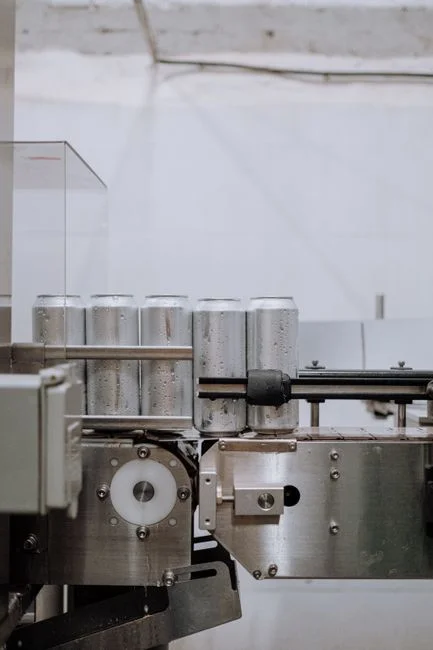
Preliminary sizing must start with the required treatment flow, peak and minimum hydraulic loads, operating hours, batch discharges, retained-sludge inventory and buffer volume. Nominal catalogue capacity is only a boundary: it does not establish contaminant-loading capacity, equalisation adequacy, footprint or operating reliability.
The supplied equipment catalogue gives two useful preliminary boundaries. DAF models span 4–300 m³/h, while integrated MBR models span 10–2,000 m³/day. These ranges help identify whether further engineering and customisation are required; neither replaces hydraulic, pollutant-loading or site-constraint calculations.
| Sizing or layout item | Input required | Engineering check |
|---|---|---|
| Hydraulic capacity | Average, peak and minimum flow; operating hours; batch discharges | Does peak flow require equalisation, redundancy or temporary storage? |
| Contaminant capacity | Concentration and mass load for the dominant pollutants | Is capacity determined by flow alone or by contaminant loading? |
| Headworks | Rags, plastics, fibres and suspended-solids risk | Will screening protect pumps, valves and downstream processes? |
| Clarification | Solids loading, settling or flotation behaviour and sludge rate | Is lamella clarification suitable for the actual separation duty? |
| Sludge handling | Sludge yield, solids content, storage and disposal route | Can residual sludge be dewatered, transported and received? |
| Site and utilities | Footprint, power, compressed air, water, drainage and access | Are maintenance clearance, odour control, noise and expansion possible? |
For high-solids clarification, a compact lamella clarifier can be considered. HydropureWater reports surface-loading rates of 20–40 m/h and up to 30% lower chemical consumption than conventional units, but these are supplier-reported catalogue claims and require project-specific verification against the actual solids and settling characteristics.
The preliminary layout should also cover utilities, maintenance access, odour control, noise-sensitive receptors, controls, fail-safe behaviour and future expansion. Sludge dewatering can be included using an industrial sludge dewatering filter press, selected according to sludge characteristics and the disposal route.
Singapore-specific footprint, delivery lead time and price are not stated in the supplied sources. Buyers should require site-specific layout proposals, utility requirements, lead-time commitments and priced installation scopes; catalogue capacity alone cannot answer those questions.
Compare Equipment and Suppliers Before Awarding the Project
A comparable supplier proposal should demonstrate technical fit through a wastewater basis-of-design report rather than through equipment names or peak catalogue capacity. Require the treatment train, design flow, contaminant-loading basis, equipment sizing, expected functions, controls, utilities, sludge handling and treatment objectives to be stated explicitly.
Compare operating cost by membrane replacement or cleaning, chemicals, aeration, sludge transport, energy, labour and disposal. A lower purchase price can be offset by membrane life, chemical consumption, service frequency, downtime or sludge-disposal requirements. A regional ETP selection guide can support evaluation questions, but it does not establish Singapore prices or site-specific performance.
Assess local service capability, spare-parts availability, remote monitoring, response times, operator training and commissioning support. RevenueBase’s September 2026 list includes Hitachi Aqua-Tech, Hydroleap, Century Water Systems & Technologies, ZA and other companies. List inclusion identifies companies associated with the market; it does not establish their suitability for a particular wastewater stream.
| Supplier check | Evidence to request | Commercial consequence if absent |
|---|---|---|
| Process suitability | Basis of design tied to the site wastewater and required effluent quality | Equipment may be sized for flow but not contaminant load |
| Reference performance | Projects with similar wastewater characteristics and operating conditions | Unverified assumptions remain in the bid |
| Lifecycle cost | Consumables, energy, labour, membrane life, cleaning and sludge costs | Capital-price comparison may be misleading |
| Service capability | Local response time, spares, training and named technical support | Downtime and operating risk remain unallocated |
| Commissioning and guarantees | Acceptance tests, performance guarantees, exclusions and handover records | Performance obligations cannot be objectively verified |
Bidders should also identify which treatment objectives they can substantiate, identify exclusions and propose commissioning acceptance tests. The supplied research contains no Singapore ETP price, installation-cost or payback benchmark. Do not set a budget from generic capacity claims; request a priced scope with site-specific assumptions and clearly stated exclusions.
Plan Commissioning, Monitoring and Long-Term Operation
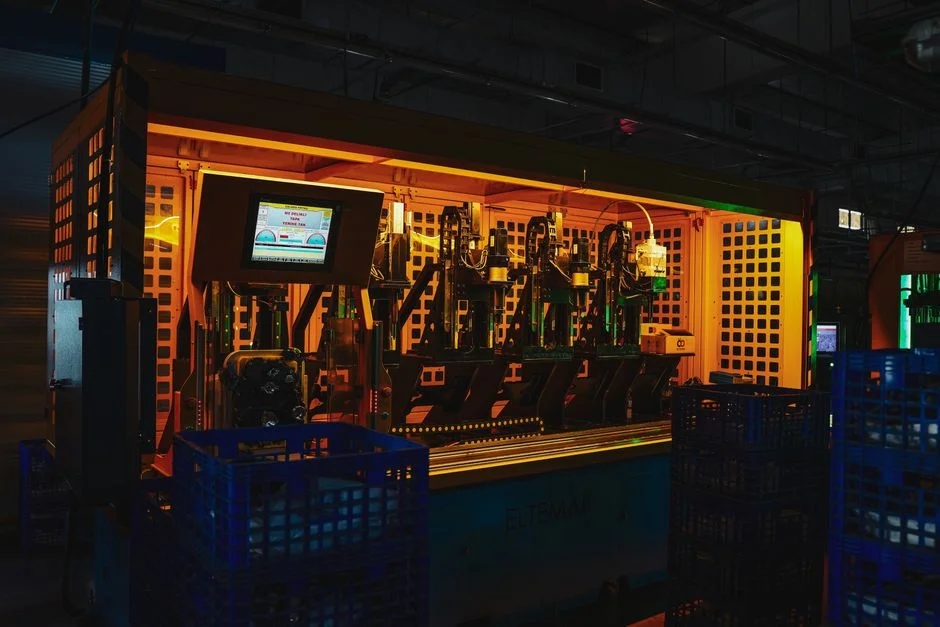
Commissioning should test the complete treatment train under defined incoming-wastewater conditions, not merely demonstrate that individual units start. Establish written acceptance criteria for incoming wastewater, every treatment stage and final discharge or reuse before start-up. The criteria should cover the parameters linked to the permit, reuse specification or operating objective.
Confirm automatic controls, alarms, interlocks, power-failure response, bypass prevention, chemical handling and access to operating data. A PLC-controlled chemical dosing system should be tested against actual control logic, pump behaviour, calibration and chemical inventory records rather than only its local operating mode.
Include sludge sampling, dewatering and disposal in the operating plan. HydropureWater’s plate and frame filter presses cover filtration areas from 1 m² to 500 m² and offer manual, hydraulic or fully automatic PLC-controlled operation. The selected configuration should match the sludge yield, solids characteristics, operating pattern and labour model.
Schedule maintenance from operating evidence: membrane cleaning and replacement, DAF inspection, dosing-system calibration, screen maintenance and rotating-equipment service. Membrane consumables can be reviewed through the supplier’s RO and UF membrane and filter-element range.
| Operating record | Why it matters | Action supported |
|---|---|---|
| Flow and pollutant loads | Detects hydraulic or process changes and verifies treatment performance | Adjust operating envelope or investigate abnormal loads |
| Treated quality | Provides objective evidence for compliance or reuse | Correct downstream treatment or stop reuse if the specification is not met |
| Chemical and energy use | Shows consumption relative to operating activity | Optimise dosing, aeration and equipment operation |
| Sludge yield and moisture | Links liquid treatment performance to downstream handling | Revise sludge treatment or disposal arrangements |
| Downtime and corrective actions | Identifies reliability constraints and recurring failures | Adjust maintenance frequency or supplier support plan |
Track flow, pollutant loads, treated quality, chemical use, energy, sludge yield, downtime and corrective actions throughout the plant life. This operating record is the evidence base for compliance verification, reuse control, maintenance planning and future expansion decisions.
Frequently Asked Questions
What should a Singapore industrial facility request in an ETP quotation?
Request a wastewater basis-of-design report, equipment sizing calculations, treatment objectives, utilities, controls, sludge-handling arrangements, commissioning acceptance tests, performance guarantees and exclusions. Provide the permit or reuse specification, flow data and representative wastewater analyses with the request for quotation.
How much does an industrial effluent treatment plant in Singapore cost?
The supplied research provides no Singapore ETP price, installation-cost or payback benchmark, so a defensible price cannot be stated without site data. Request a priced scope covering treatment equipment, installation, utilities, controls, commissioning, sludge handling and excluded civil works; compare that scope across bidders on the same basis.
Is MBR or DAF better for industrial wastewater?
DAF is primarily a physical separation option for suitable floatables, oil, solids or coagulated contaminants; MBR combines biological treatment with membrane solids separation. The correct comparison depends on biodegradability, contaminant loading, required effluent separation, footprint, sludge handling, reuse objectives and operating costs.
Can a new ETP be designed for water reuse instead of discharge?
Yes, but the reuse specification must define the receiving process and required water quality before polishing is selected. Identify the constituents to remove, then assess whether UF, reverse osmosis, nanofiltration and disinfection are warranted, including pretreatment, recovery and concentrate or reject-water management.
How long does industrial ETP equipment procurement and commissioning take?
The supplied sources do not provide a Singapore delivery or commissioning lead time. Buyers should request a milestone schedule covering drawing approval, manufacturing, FAT, delivery, installation, site testing, operator training and performance demonstration, with dependencies and approval responsibilities stated explicitly.
Related Equipment
- industrial DAF system for oily and colloidal wastewater — specifications, capacity range, and technical data