What is an Effluent Treatment Plant in the Philippines?
An effluent treatment plant in the Philippines is an engineered system that treats industrial wastewater before discharge to a receiving water or municipal sewer, or before reuse. The correct plant depends on flow, wastewater composition, receiving-water class, sector rules and reuse requirements. Under DAO 2016-08, Class B receiving waters allow BOD ≤30 mg/L and COD ≤60 mg/L, while Class C allows BOD ≤50 mg/L and COD ≤100 mg/L. Industrial ETPs may combine pretreatment, biological treatment, clarification, membrane filtration and disinfection. DA addresses FOG and suspended solids, biological systems address organics, and MBR or other membrane stages improve solids separation and effluent quality. The receiving point and permit conditions must be confirmed before equipment is specified.
An industrial effluent treatment plant is the treatment and monitoring arrangement used to reduce regulated pollutants before lawful discharge or reuse. WTE Infra Projects distinguishes an ETP from a sewage treatment plant by its industrial feed: an ETP handles substances associated with industrial processes, including oils, heavy metals and chemicals, whereas an STP handles domestic and municipal sewage.
The plant name does not establish its suitability. A complete train may require screening or equalization, primary separation, biological treatment, clarification, membrane or tertiary treatment, disinfection and sludge handling. An industrial DAF wastewater treatment system can provide primary separation, while an MBR membrane bioreactor for industrial wastewater combines biological treatment with membrane solids separation. Neither should be treated as a complete design until the influent, destination and permit have been established.
The first engineering decision is therefore the receiving point. A direct outfall invokes receiving-water and sector-specific requirements; a municipal sewer invokes pretreatment and sewer-connection requirements; internal reuse requires water-quality criteria matched to the intended use. Confirming that destination prevents a buyer from purchasing a unit that solves only one part of the treatment duty.
Philippine discharge rules determine the treatment target
Republic Act No. 9275, the Philippine Clean Water Act of 2004, is the foundational law regulating wastewater discharge from industrial, domestic and agricultural sources, with DENR acting through the Environmental Management Bureau as the national water-quality authority.
The HydropureWater 2026 compliance guide states that a commercial, industrial or agricultural discharger must secure the applicable wastewater discharge permit and meet the relevant effluent limits before release. The governing values depend on the receiving-water class and any applicable sector rules; the table below organizes the cited general standards.
| DAO 2016-08 parameter or condition | Class B receiving water | Class C receiving water | Design or compliance note |
|---|---|---|---|
| BOD | ≤30 mg/L | ≤50 mg/L | Class-based general effluent limit |
| COD | ≤60 mg/L | ≤100 mg/L | Class-based general effluent limit |
| TSS | ≤85 mg/L | ≤100 mg/L | Class-based general effluent limit |
| Conservative package when receiving-water class is uncertain | BOD ≤30 mg/L; COD ≤100 mg/L; TSS ≤30 mg/L; pH 6.0–9.0; FOG ≤15 mg/L at the outfall | Design targets cited by HydropureWater, not a substitute for determining the binding class | |
| Municipal-sewer pretreatment | Typically BOD ≤100 mg/L | Apply the sewer authority’s connection and pretreatment conditions | |
All values and procedures in the table are reported in the HydropureWater Philippine wastewater compliance guide. The stricter applicable requirement governs: LGUs may impose stricter ordinances, while authorities such as the Laguna Lake Development Authority apply watershed-specific requirements. The buyer must identify which authority controls the outfall rather than assuming that the national class table is sufficient.
The cited guide also requires monthly sampling, analysis through a DENR-accredited laboratory and filing of the Discharge Monitoring Report. Sampling represents only one part of the evidence: the equipment specification, operating controls and records must also allow the facility to demonstrate compliance repeatedly. For a sewer discharge, request the sewer owner’s pretreatment rule and sampling protocol rather than relying only on the general national limits.
Select the treatment train from the wastewater profile
DAF is the screening choice for wastewater carrying FOG, oil, suspended solids or colloidal material, while biological treatment addresses biodegradable organics and membranes provide solids separation or reuse polishing.
Use the wastewater profile to determine each process function. High FOG, free oil, TSS or colloidal contaminants indicate a need for primary separation. Biodegradable organics call for biological treatment. Membrane stages enter where the required effluent quality, reuse specification or solids separation needs them. Treatment technologies and their published screening capacities are summarized below.
| Trigger or objective | Applicable treatment role | Key design inputs | Main compliance risk |
|---|---|---|---|
| High FOG, oil, TSS or colloidal contaminants | DAF pretreatment with automatic skimming | Peak flow, FOG, TSS, oil characteristics, pH and required removal duty | Under-sizing by average flow or failure to remove floating material consistently |
| Biodegradable organics | MBBR, SBR or another biological process | BOD, COD, temperature, pH, nutrients, biodegradability and operating schedule | Treatment instability without suitable influent characterization and controls |
| Biological treatment combined with membrane solids separation | MBR | Organic load, hydraulic flow, membrane area, solids inventory and effluent target | Clarifying a package specification without process design |
| Domestic or mixed wastewater with a compact installed footprint | Buried WSZ A/O package | Flow, BOD, wastewater character, soil/site conditions and installation constraints | Applying a domestic package to a non-domestic industrial stream |
| Solids barrier before RO or reuse polishing | UF | Feed quality, flow, membrane configuration, backwash and downstream requirements | Incorrectly treating UF as dissolved-solids removal |
| Removal of dissolved salts for reuse | RO, with nanofiltration evaluated as a polishing option | Feed chemistry, recovery target, concentrate disposal and reuse water quality | Ignoring concentrate management or selecting an unnecessarily demanding process |
| Microbial control at discharge or reuse | Disinfection as a defined final step | Microbial requirement, residual policy, contact conditions and application | Assuming biological treatment provides complete disinfection |
The published DAF range of 4–300 m³/h across 13 standard models is suitable for initial screening, not automatic sizing. MBBR carrier media provide a surface for microorganisms, but WTE Infra Projects notes that system design and operating conditions must follow the wastewater characteristics and required effluent quality.
The cited MBR range is 10–2,000 m³/day, with submerged PVDF membrane filtration described as less than 1 μm. This is the screening option when biological treatment and high-quality membrane solids separation are required together, not a guarantee of project performance.
The WSZ A/O package handles 1–80 m³/h and integrates anoxic and aerobic treatment, sedimentation and disinfection. It is positioned for domestic or mixed wastewater where a compact buried installation is a priority. The published UF range is 2,000–40,000 L/h, with 0.03-micron PVDF membranes and automatic backwash. UF provides a solids-removal barrier; it does not by itself perform the dissolved-solids removal associated with RO.
The cited industrial RO product reaches recovery rates up to 95%, but recovery must be checked against the feed and concentrate-disposal constraints. University of Twente research identifies nanofiltration as potentially suitable for polishing wastewater-treatment-plant effluent for agricultural or indirect potable use. Add disinfection where the receiving point or reuse application requires microbial control. For micropollutant research, Wageningen University’s thesis published on 23 September 2022 examines constructed wetlands; it is an advanced research option whose site suitability and pollutant behavior require engineering evaluation.
Match common industrial wastewater streams to treatment
Food-processing wastewater provides a clear screening sequence, but textiles, chemicals, pharmaceuticals and metalworking cannot be assigned a standard train from the sector name alone.
For food processing, the HydropureWater sector pattern places DAF ahead of biological polishing because the influent is typically high in FOG, TSS and biodegradable organics. An SBR or MBR can follow DAF where the required design targets include BOD ≤30 mg/L and TSS ≤30 mg/L. These are the guide’s screening and design targets, not a substitute for the binding permit limit.
Textile, chemical, pharmaceutical and metalworking streams require a complete pollutant inventory before equipment selection. Dyes, refractory organics, process chemicals, metals and pH can each change the required pretreatment and control strategy. For metalworking, the cited compliance guide notes that heavy metals are strictly controlled for plating and mining sites, often below 1.0 mg/L per parameter; the applicable permit must establish the actual requirement.
A factory discharging into a municipal sewer should be designed around the sewer’s pretreatment requirement, not around the centralized facility’s final effluent quality. The cited sewer-connection condition is typically BOD ≤100 mg/L, subject to the relevant sewer authority’s rules.
Healthcare wastewater requires pathogen-control provisions and confirmation of applicable DOH guidance. The HydropureWater compliance guide recommends ozone-based advanced oxidation and on-site autoclaving for certain medical liquid wastes. Buyers should review the pharmaceutical wastewater treatment in the Philippines before adapting pharmaceutical process controls to other facilities.
These sector examples are starting points only. The final process train follows the permit, outfall and wastewater analysis; review the medical wastewater treatment system as a healthcare-specific option rather than as a universal industrial ETP.
Build an accurate equipment specification and quotation request
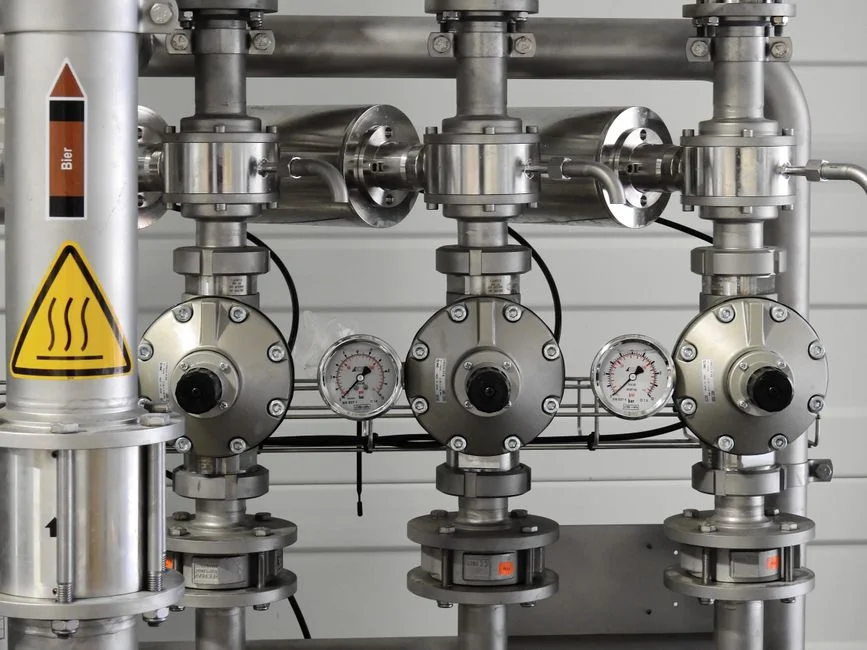
A comparable quotation requires peak and average flow, a representative wastewater analysis and an exact final destination—not a generic capacity statement.
- Define the flow: provide peak and average wastewater flow, operating schedule, catchment boundaries and any expansion allowance. Average flow alone is insufficient for sizing.
- Characterize the influent: submit current analysis covering BOD, COD, TSS, FOG, pH, metals and sector-specific contaminants, with sampling locations and operating conditions identified.
- Identify the destination: state the receiving-water class and outfall, sewer connection point, or reuse application and required water quality.
- Define compliance scope: provide permit conditions, LGU requirements, sector standards, sampling frequency, DMR process and required turnkey scope.
- Separate commercial items: ask bidders to price equipment, civil works, installation, commissioning, training, chemicals, membranes, sludge handling, monitoring instruments and long-term spares separately.
| Equipment | Published screening capacity | Information still required before selection |
|---|---|---|
| DAF | 4–300 m³/h | Peak flow, FOG, TSS, pH and treatment duty |
| WSZ A/O | 1–80 m³/h | Wastewater character, site conditions and effluent target |
| MBR | 10–2,000 m³/day | Organic load, solids inventory, membrane design and discharge condition |
| UF | 2,000–40,000 L/h | Feed quality, backwash method and downstream treatment |
These are initial screening ranges only; final selection requires the supplier’s process design. Chemical dosing and automatic dosing equipment, sludge treatment such as a plate-frame filter press, and consumable RO and UF membrane elements should be included in the commercial scope.
Energy demand is a material commercial risk. A 2016 academic CETP case study states that water and wastewater treatment processes require energy equivalent to around 30–80% of industrial operating costs. Because that source concerns a common effluent treatment plant case rather than a universal Philippine ETP quotation, bidders should provide a project-specific energy and operating-cost estimate.
Plan compliance, commissioning and long-term operation
The compliance sequence in the HydropureWater guide is audit, permit, install and monitor; skipping the audit leaves the treatment train aligned to an assumed rather than established duty.
Before performance testing, require calibrated instruments, sampling access, dosing controls, operating logs and maintenance procedures. The cited guide specifies monthly sampling through a DENR-accredited laboratory and DMR filing with the regional EMB office.
Commercial review should also cover energy use, chemical consumption, membrane cleaning, sludge dewatering and standby requirements. These operating duties need to be assigned rather than left to the contractor’s default scope.
Section 28 of RA 9275 sets administrative fines of not less than ₱10,000 and not more than ₱200,000 per day of violation, according to the HydropureWater 2026 compliance guide. That range makes the compliance case part of the equipment decision: the specification should demonstrate how the train will meet and document the applicable limits, not merely how much treatment equipment it contains. A sludge-dewatering arrangement should therefore be considered alongside the liquid-treatment process.
Frequently Asked Questions
How much does an industrial effluent treatment plant cost in the Philippines?
There is no defensible project price without reviewing the wastewater flow, analysis, treatment duty, receiving point and turnkey scope. Ask each bidder to separate equipment, civil works, installation, commissioning, training, chemicals, membranes, sludge handling, monitoring instruments and long-term spares. Also request estimated energy and consumable costs. The academic CETP case study’s 30–80% energy-cost context supports reviewing operating cost, but it is not an ETP price range.
Which treatment train should be selected for industrial wastewater?
Start with the contaminant profile: use DAF to screen for FOG, oil, TSS and colloids; use biological treatment for biodegradable organics; use MBR when biological treatment and membrane solids separation are required together; and use UF or RO only when the reuse objective calls for additional solids or dissolved-solids removal. Add disinfection when the receiving point or reuse application requires microbial control. The binding permit and final destination determine the completed train.
How should ETP suppliers be compared for size and capacity?
Provide every bidder with the same peak and average flows, operating schedule, wastewater analysis, discharge or reuse target, site constraints and permit conditions. The published ranges—DAF 4–300 m³/h, WSZ 1–80 m³/h, MBR 10–2,000 m³/day and UF 2,000–40,000 L/h—are screening references, not project guarantees. Require each supplier to explain its sizing basis, process calculations, duty assumptions and performance-test criteria.
What compliance evidence should a Philippine ETP supplier provide?
Require a permit and design basis identifying the receiving-water class, outfall, sewer authority or reuse specification, as applicable. The HydropureWater compliance guide identifies Class B limits of BOD ≤30 mg/L and COD ≤60 mg/L, Class C limits of BOD ≤50 mg/L and COD ≤100 mg/L, and a typical sewer-pretreatment condition of BOD ≤100 mg/L. It also requires monthly sampling through a DENR-accredited laboratory and DMR filing. Include these obligations in the supplier scope and commissioning plan.