What Treatment Model Fits a Rural Philippine Site?
Rural sewage treatment in the Philippines generally requires a site-specific comparison between centralized sewer extension and decentralized treatment, not a universal plant selection. A decentralized wastewater treatment system in the Philippines becomes practical when collection infrastructure is impractical, flows and wastewater characteristics are understood, land and utilities can support the proposed installation, and the receiving environment can accept the treated effluent. The Asian Development Bank’s Sewage to Surveillance: Advancing Health Monitoring Through Wastewater-Based Epidemiology in Nepal and the Philippines reports that a Philippine pilot developed wastewater-based epidemiology protocols, built capacity, and conducted pilot surveillance. That supports wastewater-based epidemiology as a complement to conventional public-health monitoring, not as evidence that a particular treatment plant meets its discharge objectives.
The project team should first ask whether a centralized sewer is technically and financially feasible. If it is not, the second question is whether decentralized treatment can reliably handle the community’s wastewater at its verified flow, organic load, and seasonal variation. The third question is whether the receiving environment or public-health program justifies additional sampling and monitoring. These decisions must be separated: a treatment need does not automatically require a monitoring program, and a monitoring use case does not determine the biological process.
Before selecting equipment, document the wastewater sources, expected flow, seasonal variation, receiving water, available land, flood exposure, power availability, and the local authority responsible for approvals. Also identify whether the project serves a rural settlement, resort, hospital, or mixed development, because the source composition changes pretreatment and treatment requirements. A buried WSZ package sewage treatment plant may fit one site profile, but it is not automatically suitable for every rural Philippine application.
For concept design, record who will operate the system, who will receive the effluent, and which discharge or reuse conditions apply. That record becomes the basis for equipment sizing and an approval schedule. It also prevents a project from buying treatment capacity before the receiving environment and legal responsibility have been confirmed.
Characterize the Wastewater Before Sizing the Plant
Reliable sewage treatment plant sizing begins with measured flow and wastewater composition, not with a population estimate alone. Request data that distinguishes average daily flow from peak flow and separates dry-weather from wet-weather periods. Document whether the proposed network will receive domestic sewage, hospitality wastewater, hospital wastewater, or mixed sources, because each source creates different pretreatment and effluent objectives. The same nominal flow can carry very different organic and solids loads.
The 2021 Frontiers in Water study Preliminary Investigation of Microbial Community in Wastewater and Surface Waters in Sri Lanka and the Philippines found that bacterial richness was generally higher in untreated hospital wastewater than in treated hospital wastewater. That finding reinforces the need to evaluate treatment performance for the actual source rather than assume a nominal process is sufficient. The study included Philippine sewage effluents and seawater from a bay receiving those effluents, linking treatment evaluation with the receiving environment.
Define the discharge or reuse destination before specifying disinfection. If effluent will enter a receiving water, its required quality and monitoring regime must be confirmed with the responsible authority. If it will be reused, the intended use and relevant public-health controls must be established. Neither objective should be inferred from the equipment category alone.
| Input to obtain | Why it affects equipment selection | Procurement requirement |
|---|---|---|
| Average and peak flow | Defines the hydraulic capacity screen and treatment-process loading | Separate measured dry-weather and wet-weather records |
| Wastewater source | Domestic, hospitality, hospital, and mixed sources have different contaminant and pretreatment profiles | Source-by-source wastewater characterization |
| Organic load and suspended solids | Determines biological treatment and solids-separation requirements | Representative sampling with laboratory results |
| Nutrients and site-specific contaminants | Supports treatment objectives and discharge or reuse compliance | Define analytes against the intended receiving use |
| Receiving environment or reuse destination | Sets final treatment, disinfection, and monitoring requirements | Written requirements from the responsible authority |
For a rural sanitation package plant, treat this characterization as the project’s design-basis package. If the data is incomplete, obtain it before asking suppliers to make a firm selection or price. Population estimates can support an initial planning study, but they do not replace verified flow and load information.
Compare Buried A/O and MBR Treatment
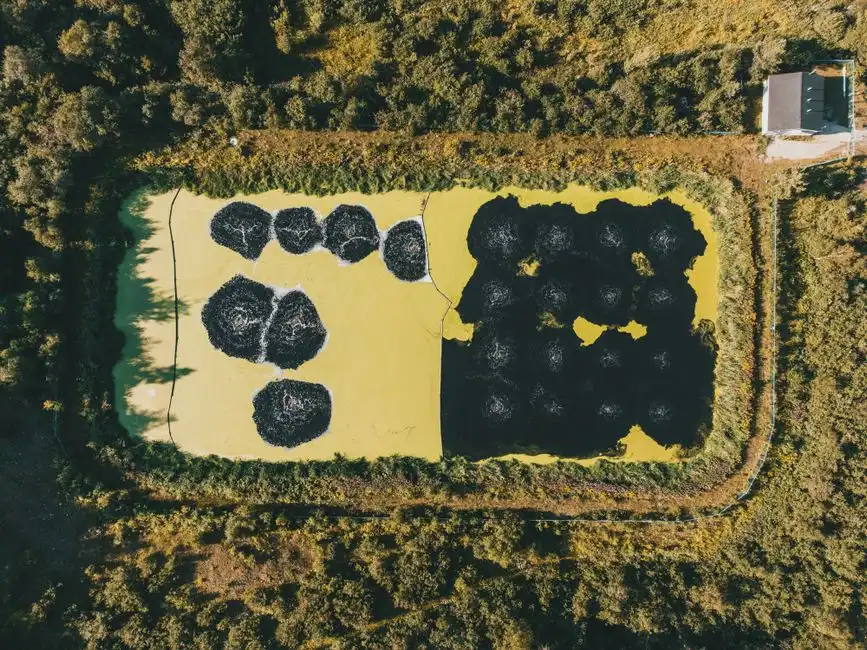
The WSZ Series and the integrated MBR sewage treatment system serve different combinations of hydraulic capacity, installation form, and treatment architecture. The WSZ Series combines anoxic/aerobic biological contact oxidation, sedimentation, and disinfection in a single buried package unit. The buried WSZ package sewage treatment plant handles 1–80 m³/h, is fully automated, and is described as requiring no operator. It can be installed below grade with landscaping above or mounted on a trailer for mobile deployment.
The integrated MBR sewage treatment system provides a 10–2,000 m³/day capacity range and uses submerged PVDF membrane filtration with less than 1 μm filtration. HydropureWater states that the MBR configuration has a 60% smaller footprint than conventional systems. The appropriate choice therefore depends on more than nominal capacity: wastewater characteristics, peak loading, land, installation access, sludge and maintenance obligations, operator capability, power reliability, and effluent objectives all affect the decision.
| Selection factor | WSZ Series | MBR system |
|---|---|---|
| Published capacity | 1–80 m³/h | 10–2,000 m³/day |
| Process architecture | Anoxic/aerobic contact oxidation, sedimentation, and disinfection in one buried unit | Activated-sludge treatment followed by submerged PVDF membrane filtration |
| Installation form | Below grade with landscaping above, or trailer-mounted for mobile deployment | Site arrangement should be confirmed in the supplier’s site design |
| Footprint | Buried package arrangement | HydropureWater states a 60% smaller footprint than conventional systems |
| Primary procurement focus | Hourly flow, burial conditions, excavation, access, landscaping, and local utilities | Daily flow, membrane performance, peak loading, maintenance access, and long-term operating support |
Use WSZ when a compact buried package arrangement and its published hourly-capacity range fit the verified design flow. Consider MBR when the required daily flow falls within its published range and membrane separation or the stated footprint reduction justifies the additional maintenance and operating requirements. Neither selection should be made from the capacity label alone. A comparison of buried A/O, MBR and biofilm package plants provides a useful secondary check, but the supplier must still demonstrate that the proposed configuration matches the Philippine project’s verified inputs.
Build the Treatment Process from Influent to Effluent
A defensible treatment train begins with measurable influent characteristics and ends with an authorized discharge or reuse route. For a typical domestic-sewage assessment, the sequence is influent characterization, flow equalization where needed, preliminary screening, biological treatment, solids separation, disinfection, and authorized discharge or reuse. The sequence is a process framework, not permission to omit a stage without demonstrating that the influent and site conditions make it unnecessary.
In the WSZ architecture, anoxic/aerobic contact oxidation provides biological treatment, sedimentation separates solids, and disinfection provides the final microbial-control stage. In the MBR architecture, the activated-sludge stage precedes submerged PVDF membrane filtration, which provides the less-than-1 μm separation described in the product information. The biological and separation functions must remain clear because pretreatment, biological capacity, and membrane or solids handling respond to different wastewater characteristics.
Add site-specific pretreatment where screenings, grit, oils, solids, or other material could overload the biological or separation stages. A supplier should identify the required upstream works in its proposed process flow rather than assume that the packaged treatment unit will accept every wastewater stream. The GX rotary mechanical bar screen is one available preliminary-screening option, while the UV sterilizer for water treatment is one possible disinfection component; neither should be specified without confirming the wastewater characteristics, flow, and treatment objectives.
- Confirm the wastewater source, flow regime, organic load, solids, contaminants, and discharge or reuse destination.
- Provide equalization and preliminary screening where the confirmed flow and solids require them.
- Apply biological treatment sized for the verified loading and peak conditions.
- Provide solids separation through sedimentation or membrane filtration, according to the selected process.
- Apply the required disinfection stage and confirm its performance with the receiving-water or reuse criteria.
- Route the treated effluent to the authorized discharge or reuse point and address solids through a defined sludge-management route.
Odor control, sludge removal, standby power, remote monitoring, safe access, and maintenance clearances are part of the process scope, not optional additions. Define them during site planning so that the treatment train remains serviceable under the project’s actual operating conditions.
Size Capacity, Land and Installation Requirements
A preliminary capacity screen is useful only when it begins with verified flow data. Establish the average and peak design basis from local conditions, then compare the result with the manufacturer’s published range. The WSZ feasibility screen is whether the required hourly flow falls within 1–80 m³/h for the selected configuration. The MBR feasibility screen is whether the required daily flow falls within 10–2,000 m³/day for the selected configuration. These ranges identify possible equipment classes; they do not establish process adequacy or final sizing.
The site plan must address more than the treatment footprint. For a buried unit, confirm installation depth, excavation access, groundwater conditions, flood level, road loading where relevant, maintenance access, and the available space above the unit. For either configuration, include inlet and outlet works, electrical supply, controls, sludge removal, odor management, and safe working access. A system that fits the published capacity but cannot be excavated, maintained, drained, or supplied reliably is not a feasible selection.
| Submission item | Minimum information required | Buyer check |
|---|---|---|
| Design basis | Verified average flow, peak flow, wastewater characteristics, and treatment objectives | Matches the project’s own characterization |
| Proposed process flow | Every treatment, pretreatment, disinfection, solids, and discharge stage | No essential stage is hidden in an exclusion |
| Equipment schedule | Models, rated capacity, dimensions, materials, and included ancillaries | Capacity is tied to the stated design basis |
| Civil interface list | Inlet, outlet, excavation, access, power, drainage, and installation requirements | Compatible with surveyed site conditions |
| Commissioning plan | Testing, acceptance criteria, training, startup support, and documentation | Responsibilities and acceptance conditions are explicit |
| Operating-support scope | Maintenance, spares, remote support, sludge handling, and warranty | Costs and obligations are assigned clearly |
Request each proposal against the same design basis and scope. Otherwise, capacity labels are not comparable. For a more structured MBR sizing exercise, use the step-by-step MBR treatment-plant sizing guide as a checklist, then require the supplier to adapt it to the Philippine project’s verified flow, installation, and operating requirements.
Plan Monitoring, Permits and Long-Term Operations
Discharge evidence begins before equipment selection because the receiving water and intended effluent use determine the treatment and monitoring obligations. During concept design, identify the receiving water, intended use, and responsible local authority. Obtain written confirmation of applicable discharge, reuse, and project requirements before finalizing equipment or contract award. A generic statement that a package plant produces “treated wastewater” is not a discharge specification.
Define sampling locations and frequencies around process performance and the receiving environment. Commissioning establishes initial operating evidence; it does not replace continuing monitoring. The 2021 Frontiers in Water study examined Philippine sewage effluents and seawater from a bay receiving those effluents. Its scope illustrates why the discharge context and receiving-water assessment should be considered together when the receiving environment is sensitive or the effluent is reused.
Wastewater-based epidemiology can support a defined surveillance use case. The Asian Development Bank’s Sewage to Surveillance: Advancing Health Monitoring Through Wastewater-Based Epidemiology in Nepal and the Philippines describes protocols, capacity building, and pilot surveillance in the Philippines. This evidence demonstrates the monitoring application’s potential, but it does not guarantee pathogen removal, treatment performance, or compliance with a project’s discharge conditions. Conventional monitoring remains necessary.
Assign lifecycle responsibilities before contract award. Name the party responsible for routine inspection, membrane or media maintenance, sludge handling, spare parts, remote monitoring, and corrective response. Confirm whether these services are supplied by the manufacturer, the local operator, or another contractor, and include their scope and cost in the comparison.
For a packaged plant, request the operating philosophy, alarm strategy, maintenance schedule, critical spares list, training requirements, startup attendance, remote-support terms, and warranty exclusions. A buried installation also needs an access and lifting plan for major maintenance, while an MBR installation needs a defined membrane-service arrangement. These are procurement conditions, not details to settle after installation.
Use a Practical Equipment-Selection Decision Framework

A sound equipment decision follows a fixed sequence so that commercial pressure does not replace engineering verification. First, document the wastewater source, average flow, peak flow, treatment objectives, receiving environment, land, power, and approval authority. Second, screen the verified design flow against the WSZ range of 1–80 m³/h and the MBR range of 10–2,000 m³/day. Third, compare the full process scope, footprint, installation method, automation, maintenance, sludge handling, controls, and supplier support.
Fourth, require each bidder to submit the design basis, process diagram, equipment schedule, civil interfaces, commissioning scope, delivery schedule, operating support, and warranty. Fifth, verify discharge and reuse requirements with the responsible authority before contract award.
- Establish the need: compare centralized sewer extension with decentralized treatment using route, collection, land, operating, and approval constraints.
- Characterize the wastewater: obtain measured average and peak flow, source-specific composition, contaminant information, and the intended discharge or reuse route.
- Screen the technologies: use the published WSZ and MBR capacity ranges only as feasibility filters, then examine whether the process suits the confirmed wastewater.
- Develop the site and civil scope: resolve burial or above-ground installation, access, power, drainage, flood exposure, controls, sludge removal, and maintenance requirements.
- Compare installed proposals: evaluate the complete scope and exclusions rather than comparing equipment prices or headline capacities.
- Close the compliance and ownership gaps: obtain written requirements and assign operating, maintenance, monitoring, and corrective responsibilities.
Use total installed scope as the comparison basis. Require each bidder to identify excluded civil works, installation, commissioning, training, consumables, spares, sludge management, monitoring, warranty, and long-term support. This prevents a lower equipment quotation from becoming a more expensive project once missing interfaces and services are priced. For another structured comparison, see the domestic sewage treatment equipment guide and the 2026 buyer’s guide to domestic sewage treatment.
Frequently Asked Questions
What is the cost of decentralized sewage treatment for a rural Philippine community?
No defensible project price can be extracted from the supplied research because the wastewater flow, source composition, installation method, site works, treatment objectives, and supplier scope are unspecified. Request a site-specific quotation stating the design basis, equipment, civil works, commissioning, training, warranty, and exclusions. Compare the total installed scope rather than the package price alone.
How do I choose a supplier for an off-grid sewage treatment system?
Require the supplier to provide its design basis, process flow, equipment schedule, civil interface list, commissioning scope, maintenance support, and warranty. Then verify that the proposed capacity and treatment stages match the verified flow and wastewater characterization. A capacity label alone does not demonstrate process suitability or long-term support.
Should a rural project size treatment capacity from population or measured flow?
Use verified flow data for the preliminary sizing decision, including average flow, peak flow, and dry- and wet-weather variation. Compare that basis with the published WSZ range of 1–80 m³/h or MBR range of 10–2,000 m³/day. Population estimates may support early planning, but they should not replace measured wastewater data.
What should be confirmed before specifying discharge and reuse requirements?
Identify the receiving environment, intended effluent use, and responsible local authority before selecting final discharge parameters. Obtain the applicable discharge and reuse requirements in writing, and align sampling locations, monitoring frequency, treatment stages, and commissioning acceptance criteria with those conditions.