

Sizing a Containerized MBR STP in Denver: The 5-Step Method
Containerized membrane bioreactor (MBR) sewage treatment plants (STPs) are sized in five sequential steps: (1) average daily flow, (2) peak hourly flow, (3) biochemical oxygen demand (BOD) and ammonia-nitrogen (NH₃-N) load, (4) aeration-tank and membrane-tank volume plus container count, and (5) Denver-specific corrections for altitude and cold influent. Step 1 uses a per-capita flow basis: Pure Aqua publishes a "50 gpd per Capita" sizing assumption in its containerized MBR-C specification (Pure Aqua, 2025).
Pure Aqua explicitly states that its BOD/COD values "do not represent guarantees," so the per-capita basis should be treated as a starting point, not a contractual performance number. Step 2 applies a peaking factor to average flow to size the hydraulic handling of the membrane train; small residential and camp systems fall in the conventional 2.5–4× peaking-factor range, but the research does not provide a specific factor, so confirm the value with the local engineer of record before issuing a purchase order. Step 3 calculates organic load in lb/day from per-capita contributions; again, the research does not publish a per-capita BOD figure, so request influent characterization from the operator. Step 4 sizes the aeration tank on the conventional submerged-MBR operating band of MLSS 8,000–12,000 mg/L and HRT of roughly 4–6 hours — both qualitative bands the research aligns with when MENA-Water describes "higher biomass concentration" versus conventional activated sludge. Step 5 applies Denver corrections discussed in the next section. For container count, MENA-Water states that "more than 1,200 m³/day can be filtered in one 40-feet ISO container" (MENA-Water / HUBER, 2025), which sets the upper anchor for a single ISO footprint.
Denver-Specific Sizing Factors: Altitude, Cold, and Reuse Rules
Denver sits at roughly 5,280 ft (1,609 m) elevation, and that altitude affects every catalog MBR rating you receive. Blowers sized at sea-level cfm deliver less mass of oxygen at altitude because air density is lower; the research does not publish a numeric blower derating, so the 17–20% derating commonly applied at 5,000–6,000 ft should be treated as an order-of-magnitude to verify with the blower OEM rather than a catalogue figure. Winter is the second correction. Pure Aqua's published operating temperature range is 20–30°C with a 20°C design point (Pure Aqua, 2025). Denver January influent typically arrives well below 20°C, which raises mixed-liquor viscosity, reduces sustainable membrane flux, and may require a flux-vs-temperature curve from the vendor for credible winter sizing. The third Denver factor is the regulatory framework for subsurface disposal of reclaimed water. The research does not contain the exact regulation identifier or effluent-quality numbers, so verify the current Colorado Department of Public Health and Environment (CDPHE) Regulation 22 cluster rule and any local onsite wastewater treatment system (OWTS) requirements with the engineer of record before sizing the disinfection stage. The fourth correction is pretreatment. Both MENA-Water and Pure Aqua rely on a drum screen ahead of the membranes, with Pure Aqua specifying "1.5 mm perforation" (Pure Aqua, 2025). For a camp with high grit, lint, or food waste, that 1.5 mm screen is a hard sizing input, not a checkbox.
Worked Example: A 200-Person Summer Camp Near Denver
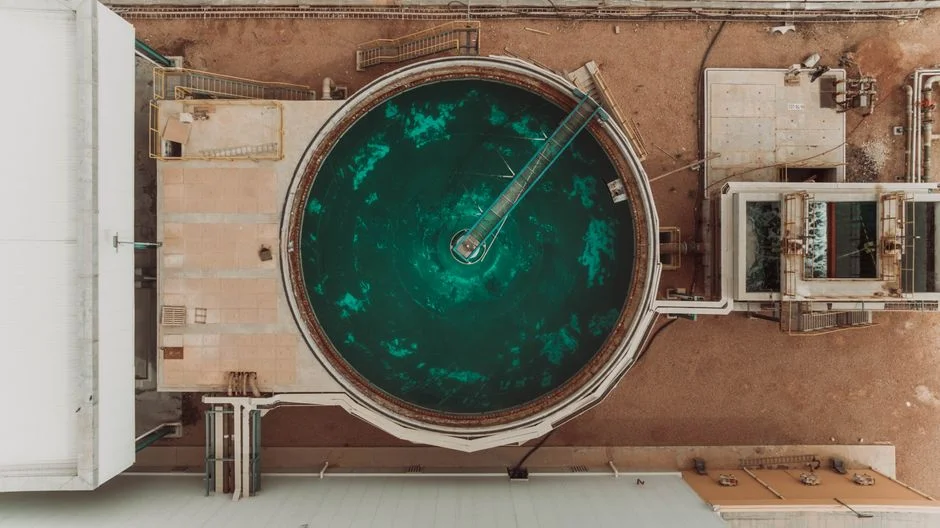
Assume a 200-person seasonal camp in the Front Range, 90-day operating season, no significant industrial waste stream. The objective is to produce a defensible memo, not a guaranteed performance figure, so every value is traced to the research or flagged as a vendor-confirmation item. Step 1, average daily flow: 200 people × 50 gpd per capita (Pure Aqua basis) = 10,000 gpd, which is approximately 38 m³/day. Step 2, peak flow: apply a peaking factor. The research does not supply a specific factor; small camp systems in the conventional range use 2.5–4×, so the average flow of 10,000 gpd should be quoted as a 25,000–40,000 gpd peak-hour hydraulic window to the vendor, with the final value confirmed by the engineer of record. Step 3, BOD and NH₃-N load: the research does not provide a per-capita BOD figure, so request an influent characterization from the operator — camp kitchens, laundry, and shower habits change the value materially compared to a residential cluster. Step 4, reactor volume and container count: design the aeration tank on the conventional submerged-MBR band (MLSS 8,000–12,000 mg/L, HRT roughly 4–6 hours) rather than a vendor-specific number, because no numeric HRT is provided in the research. Step 5, container count: 38 m³/day is roughly two orders of magnitude below MENA-Water's >1,200 m³/day-per-40-ft benchmark, so a single 20-ft HC container (Pure Aqua offers 20' HC and 40' HC options) is the right starting point to quote. Apply the altitude and winter-temperature corrections from the previous section to that single-container envelope before releasing the request for quotation (RFQ). The containerized MBR bioreactor system specification on file should be referenced against each item in the table below.
| Parameter | Value for the 200-person camp | Source / status |
|---|---|---|
| Population | 200 persons | Project input |
| Per-capita flow basis | 50 gpd per capita | Pure Aqua MBR-C spec (Pure Aqua, 2025) — sizing basis, not a guarantee |
| Average daily flow | 10,000 gpd ≈ 38 m³/day | Calculated |
| Peaking factor | 2.5–4× — confirm with engineer of record | Conventional band; not in research |
| Peak hourly flow | 25,000–40,000 gpd range | Calculated envelope |
| Per-capita BOD / NH₃-N | Request from operator | Not in research |
| MLSS design band | 8,000–12,000 mg/L | Conventional submerged-MBR band |
| HRT design band | ~4–6 h | Conventional band; no numeric figure in research |
| Container form factor | Single 20' HC ISO starting point | Pure Aqua 20' HC option (Pure Aqua, 2025) |
| Upper anchor for one 40' container | >1,200 m³/day | MENA-Water (MENA-Water / HUBER, 2025) |
| Membrane specification | Submerged UF, 0.04 µm nominal pore, TIPS PVDF | Pure Aqua (Pure Aqua, 2025) |
| Pretreatment | Drum screen, 1.5 mm perforation | Pure Aqua (Pure Aqua, 2025) |
Containerized MBR Specification Checklist for Denver Projects
Convert the sizing above into a vendor RFQ using the checklist below. The items that decide between two otherwise-equal quotes are form factor, membrane material, aeration arrangement, electrical supply, and a credible cold-weather performance curve. Pure Aqua's published specification list (Pure Aqua, 2025) provides the verbatim text for the "specification" column; everything else is a Denver-specific ask.
| Item | What to confirm in the RFQ | Source / status |
|---|---|---|
| Container form factor | 20' HC or 40' HC ISO; insulated walls, zero water leakage, enhanced structure, seaworthy container | Pure Aqua (Pure Aqua, 2025) |
| Membranes | Submerged hollow-fiber UF, 0.04 µm nominal pore, TIPS PVDF material | Pure Aqua (Pure Aqua, 2025) |
| Pretreatment | Drum screen, 1.5 mm perforation; specify upstream rotary mechanical bar screen for headworks if grit load is high | Pure Aqua (Pure Aqua, 2025) |
| Aeration | Fine-bubble diffusers in aeration tank; coarse-bubble diffusers at the membranes; built-in air-scour system for membrane cleaning | Pure Aqua (Pure Aqua, 2025) |
| Electrical | 460V / 3Ph / 60Hz | Pure Aqua (Pure Aqua, 2025) |
| Control | PLC; remote monitoring if available | MENA-Water and Pure Aqua list remote monitoring |
| Denver cold-weather performance | Flux-vs-temperature curve at 5–10°C; viscosity correction to MLSS design | Vendor-confirmation item — not in research |
| Altitude derating | Blower mass-flow derating at 5,280 ft; request OEM letter | Vendor-confirmation item — not in research |
| Disinfection for reuse | UV or ClO₂ polishing sized for Regulation 22 cluster limits | CDPHE Regulation 22 — not in research; verify with engineer of record |
Operating, Maintenance, and Reuse Considerations
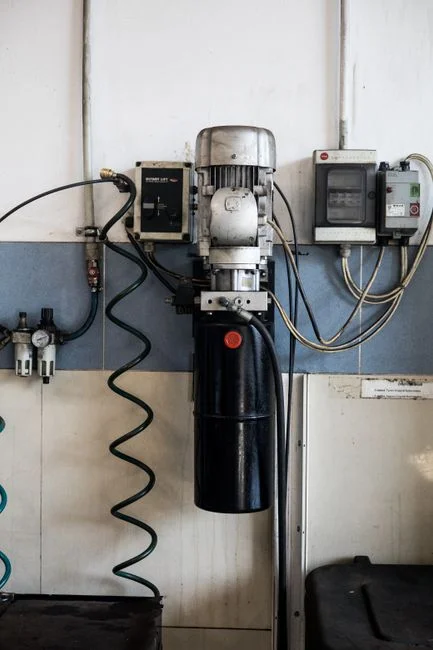
Membrane cleaning is the headline operating-cost line. MENA-Water states that its UF membranes "don't need regular chemical cleaning except one or two maintenance clearings per year" (MENA-Water / HUBER, 2025), which is a credible talking point versus conventional activated sludge — but only if the upstream drum screen is being maintained. Effluent quality is the second decision driver. MENA-Water states the UF stage "reduces virus and bacteria by 99.9999%" (MENA-Water / HUBER, 2025), which is the basis for reusing the effluent for irrigation if your camp is in a jurisdiction that allows it. A UV sterilizer for reuse polishing should be specified if the project targets subsurface irrigation under Regulation 22. For mobility, MENA-Water offers an "I-Version" containerized plant for sites that need to be relocated, which is worth quoting if the camp may move pads; the MENA-Water U-Version, where aeration and buffering happen in underground tanks, is the alternative for fixed installations where the above-grade container is undesirable. Cold-weather shut-down is the open design question. The research does not address freeze protection; for Denver, request a heated enclosure option, heat-traced effluent piping, or a buried-discharge section to keep the plant from freezing during the off-season.
Frequently Asked Questions
What per-capita flow should I use to size a containerized MBR for a Denver camp?
Use Pure Aqua's 50 gpd per capita figure as a starting basis, with the explicit caveat that Pure Aqua states its BOD/COD values "do not represent guarantees" (Pure Aqua, 2025). If the camp has kitchens, laundry, or showers with high consumption, request actual metered flow data from the operator before finalizing the sizing memo.
How many ISO containers do I need for 100 to 500 people?
Anchor the answer to MENA-Water's "more than 1,200 m³/day can be filtered in one 40-feet ISO container" figure (MENA-Water / HUBER, 2025) and Pure Aqua's availability of 20' HC and 40' HC containers (Pure Aqua, 2025). At 50 gpd per capita, 100 people is about 19 m³/day and 500 people is about 95 m³/day — both well within a single 20' or 40' HC container, but the container count must also reflect the chosen HRT, MLSS, and any redundancy requirements you specify.
How do Denver's altitude and cold winters change a catalog MBR rating?
Catalogue ratings assume sea-level air density and a 20°C design point (Pure Aqua, 2025). At Denver's 5,280 ft elevation, blowers deliver less oxygen per cfm, and winter influent below 20°C reduces sustainable membrane flux. Ask the vendor for a blower mass-flow derating at 5,280 ft and a flux-vs-temperature curve for the 5–10°C range; the research does not publish either value, so both must be confirmed in writing before purchase.
Can the effluent be reused for irrigation, and what disinfection do I need?
The UF stage in an MBR is rated to reduce virus and bacteria by 99.9999% (MENA-Water / HUBER, 2025), which supports irrigation reuse. Whether you need a downstream UV or ClO₂ polishing step depends on the Colorado Regulation 22 cluster rule for your specific site; the research does not contain the regulation text, so confirm the current CDPHE effluent-quality targets and any subsurface-disposal requirements with your engineer of record before sizing the disinfection stage.
How do I choose between containerized MBR suppliers, and what is a realistic lead time?
Compare vendors on three items the research actually supports: Pure Aqua's 20'/40' HC container options with 0.04 µm TIPS PVDF hollow-fiber UF (Pure Aqua, 2025); MENA-Water's >1,200 m³/day-per-40-ft container capacity and the "Plug & Play" factory acceptance testing that the manufacturer highlights as relevant to short install windows (MENA-Water / HUBER, 2025); and a written flux-vs-temperature curve for Denver winter. Lead time is not stated in the research, so request a current factory lead time, a site-delivery window, and a container acceptance test plan from each vendor before issuing a purchase order.
Related Equipment
- containerized MBR bioreactor system — specifications, capacity range, and technical data
- submerged MBR flat sheet membrane module — specifications, capacity range, and technical data
- rotary mechanical bar screen for headworks — specifications, capacity range, and technical data
- UV sterilizer for reuse polishing — specifications, capacity range, and technical data