Package wastewater treatment plant costs Rhode Island buyers use in this guide span $120K for a 5 m³/day plant to $1.8M for a 500 m³/day plant. The state's 19 major facilities already process 100 million gallons daily. Decentralized sites still need a compact plant in the 1–500 m³/day range when a sewer tie-in is too slow or too costly. Deployment is often 30–50% faster than a centralized upgrade.
Why Package Plants Still Get Built in Rhode Island
Rhode Island package plants rated 1–500 m³/day cost $120K at 5 m³/day and $1.8M at 500 m³/day in this guide. The 19 major plants already treat about 100 million gallons daily, so a package unit is a schedule choice. Most units we size are commissioned in 6 to 12 months, not the 24–36 months of a centralized upgrade.
Those 19 plants serve about 80% of the population. The other 20%, mostly rural lots and some industrial corridors, has no nearby sewer, and a tie-in is often cost-prohibitive. Quonset's 1.8 MGD plant is a regional anchor, and its expansion took three years to permit. The municipal fleet is a different decision from a package unit, and it is surveyed under rhode island wastewater treatment plants.
DEM's permit backlog still showed 47 pending applications in late 2023. A package plant commissioned in 6 to 12 months can clear a site while a sewer extension waits. Most resorts we size do not sit in that queue if the soil and the flood map allow a pad.
Demand clusters in the state's $2.5 billion food processing sector and in the hospitality markets of Block Island and Newport. Those sites make high-strength wastewater that beats a standard septic tank and still does not justify a multi-million-dollar tie-in. A seafood processor near Narragansett Bay cut Biological Oxygen Demand (BOD) from 1,200 mg/L to under 30 mg/L with a 20 m³/day membrane bioreactor (MBR) package plant. That plant avoided an estimated $500,000 in municipal tie-in fees and surcharges.
Package vs. Centralized Wastewater Treatment: Rhode Island-Specific Trade-offs
A package plant in Rhode Island is usually permitted in 6–12 months, while a centralized upgrade often takes 24–36 months. That gap is the 40% schedule difference buyers feel on coastal jobs. Under 250-RICR-150-10-4 every covered plant still needs a detailed operation and maintenance manual. Against a custom design, pre-engineered MBR package plants for Rhode Island’s nutrient-sensitive zones that carry NSF/ANSI 40 certification shorten the engineering review but do not skip the Order of Approval.
Five-year cost of ownership has to price Rhode Island power. Earlier rows in this guide use $0.22/kWh. According to the U.S. EIA Electric Power Monthly Table 5.6.B, released September 24, 2026, the commercial average was 23.74 cents/kWh year-to-date through July 2026, against 23.67 cents/kWh a year earlier. The industrial average was 21.86 cents/kWh for that 2026 span, near the $0.22/kWh planning rate, and 22.00 cents/kWh year-to-date through July 2025.
Package-plant capital of $120K–$1.8M is still a fraction of the $5M to $50M for a municipal-grade upgrade. A 100 m³/day MBR can sit in one 20-foot container, about 30 m². A conventional activated-sludge plant of that flow needs nearly 2,000 m². Most pads we mark for a 100 m³/day unit still land inside the 50–500 m² band once access, the blower skid, and a sludge hold tank are added.
| Feature | Package Plant (MBR/SBR) | Centralized WWTF Upgrade |
|---|---|---|
| Permitting Timeline | 6–12 Months | 24–36 Months |
| Capital Cost (CapEx) | $120K – $1.8M | $5M – $50M+ |
| Effluent Quality (BOD/TSS) | <10 mg/L (MBR) | <30 mg/L (Secondary) |
| Footprint Requirement | 50 – 500 m² | 1 – 5 Acres |
| Operator Requirement | Class I or II (Part-time) | Class III or IV (Full-time) |
Effluent quality is the hard split. This guide's 2024 coastal planning limits are 8 mg/L total nitrogen and 1 mg/L total phosphorus. Aging secondary plants struggle to hold both. An MBR package plant in the performance column is shown at under 5 mg/L total nitrogen.
According to Rhode Island DEM on November 28, 2017, summer permit limits consistent with RIGL § 46-12-3(25) cover 11 Rhode Island plants from May through October. Six freshwater-river plants had reached 1 mg/L total phosphorus by the mid-2000s and 0.1 mg/L by 2017. State law RIGL § 46-12-2(f), enacted in 2004, set a 50% nitrogen-load cut for waters north of Prudence Island and Greenwich Bay. Keep the 8 mg/L and 1 mg/L figures as planning benchmarks, then match the RIPDES limit on the real outfall.
Rhode Island DEM 250-RICR-150-10-4 Package Plant Compliance
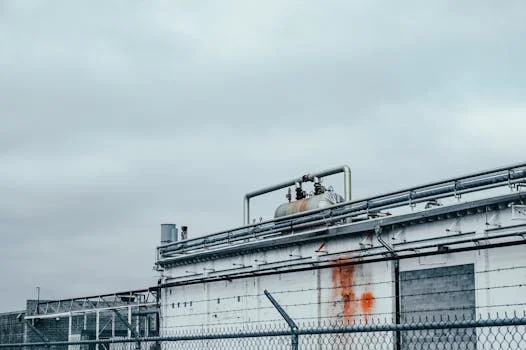
Rhode Island DEM rule 250-RICR-150-10-4, effective as amended on October 16, 2025, requires every covered wastewater treatment facility to hold an approved operation and maintenance plan. The amendment adds cybersecurity and resiliency duties and tracks the federal electronic-reporting rule. The Department issues an Order of Approval for that plan, and the approved copy must stay on site. Earlier buyer notes used a 5,000 GPD trigger, which the 2025 text does not set.
Coverage follows the definition, not a single flow cutoff. An onsite system that discharges only to subsurface waters is outside this part, as is a privately owned gravity sewer averaging under 30,000 gallons per day. A package plant that discharges to surface water under RIPDES is inside the part. Most coastal plants we file treat the 60-day draft-plan date as firm.
What does 250-RICR-150-10-4 require now?
The October 16, 2025 rule requires a risk management plan for substantial cyber incidents and a named risk and resiliency coordinator. A new or upgraded plant must submit the draft plan at least 60 days before startup. If the plan is engineering work, a Rhode Island registered professional engineer must certify it. Verbal notice to DEM is due within 24 hours of discovering a qualifying event, and the written report follows within 5 calendar days.
Each day off the approved plan is a separate violation under R.I. Gen. Laws § 46-12-3. Records stay on file at least 5 years. Plan revisions go to the Director at least 45 days before they are used. Industrial sites often pair the plan with PLC-controlled dosing for Rhode Island’s industrial wastewater compliance so chemical moves are logged for an inspection.
Does the rule cover subsurface package systems?
No, a package unit that discharges only to subsurface waters is excluded from 250-RICR-150-10-4 as an onsite wastewater treatment system. A surface-water discharge is not excluded. Buyers who treated 5,000 GPD as an automatic trigger should re-read the definition before they skip the plan. The staffing section still points to the license grade set by the Rhode Island Board of Certification of Operators of Wastewater Treatment Facilities.
Section 4.5 lists what the plan must contain, and it is longer than a vendor brochure. The list includes process steps, alarm set points, spare parts or an asset-management certificate, and a staffing chart with license grades. Emergency steps cover power loss, a substantial cyber incident, and a sanitary sewer overflow, with verbal notice inside 24 hours. Collection maps are filed in a GIS-compatible format and kept on site.
Owners who already held an approved plan had one calendar year after promulgation to submit the cybersecurity revisions. A written extension request can add one more year, and it must reach DEM at least three months before the due date. Most plants we review name the risk and resiliency coordinator in that revision instead of waiting for the inspection. Odors past the property line remain a violation under the same part.
Sludge sits under 250-RICR-150-10-3, which calls for a DEM-approved plan to haul and dispose of wastewater sludge. Package plants in this guide are credited with 30–50% less sludge than conventional activated sludge because the sludge retention time (SRT) is longer. Fewer loads cut the annual haul bill. Systems under 50,000 GPD often need only a Class I or Class II license, about $3,500 per year with training and fees.
| Parameter | RI DEM Standard (2024) | Package Plant Performance (MBR) |
|---|---|---|
| BOD5 | <30 mg/L | <5 mg/L |
| TSS | <30 mg/L | <3 mg/L |
| Total Nitrogen (TN) | <8 mg/L (Sensitive Zones) | <5 mg/L |
| Total Phosphorus (TP) | <1 mg/L | <0.5 mg/L |
| E. coli | <126 MPN/100mL | <10 MPN/100mL |
Annual visits by the DEM operation and maintenance program are normal. Remote monitoring and SCADA shorten time on site, but they do not erase the sampling duty. Matt Puglia of that program has tied permit standing to logs and a schedule that is actually followed. Many food plants log chemical feed with a PLC-controlled dosing for Rhode Island’s industrial wastewater compliance package so Section 4.10 records are not rebuilt after the fact.
Package Wastewater Treatment Plant Costs Rhode Island: Benchmarks and Five-Year TCO
Capital cost for a Rhode Island package plant in this guide runs from $2,400 to $24,000 per cubic meter of daily capacity. Influent strength and the effluent limit move a quote inside that band. Against national cost benchmarks for package plants, Rhode Island jobs often carry a 10–15% premium for labor and nutrient modules. A 50 m³/day MBR is generally $450,000, and a 200 m³/day SBR can reach $1.2M.
Operating cost tracks the power rate. The annual figures below still use $0.22/kWh, close to the industrial average of 21.86 cents/kWh and under the commercial average of 23.74 cents/kWh. A Class I operator averages $35/hour, and phosphorus or pH chemicals average $0.50 per cubic meter treated. Add DEM application fees of $500–$5,000 and engineering reviews of $10K–$50K when you price wastewater treatment cost per gallon in RI.
| Capacity (m³/day) | Estimated CapEx (USD) | Annual OpEx (USD) | Est. 5-Year TCO |
|---|---|---|---|
| 5 m³ (Small Resort) | $120,000 | $12,000 | $180,000 |
| 50 m³ (Food Processor) | $450,000 | $45,000 | $675,000 |
| 200 m³ (Community) | $1,200,000 | $110,000 | $1,750,000 |
| 500 m³ (Industrial Park) | $1,800,000 | $210,000 | $2,850,000 |
Which line items move the five-year total?
The five-year total is capital plus five years of operating cost. A 5 m³ resort is $120,000 capital, $12,000 a year, and $180,000 at five years. A 50 m³ food plant is $450,000, $45,000 a year, and $675,000. The 200 m³ row reaches $1,200,000 capital and $1,750,000 at five years, and the 500 m³ row reaches $1,800,000 capital and $2,850,000.
Payback often lands in 3 to 5 years when high-strength surcharges disappear. A food processor in the Quonset or Narragansett Bay Commission area can save over $200,000 a year once BOD or TSS exceeds domestic limits. The Rhode Island Infrastructure Bank has offered loans around 2% for water-quality projects. Most food plants we price sit on the 50 m³ row, so rerun power at 23.74 cents/kWh if the account is commercial rather than the $0.22/kWh industrial proxy.
How to Select a Package Wastewater Treatment Plant Supplier for Rhode Island Projects
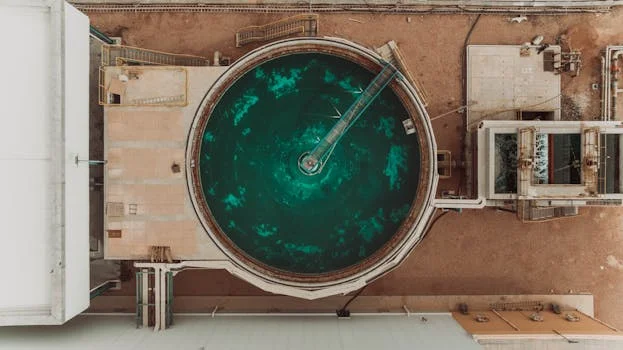
A Rhode Island supplier shortlist starts with at least three prior DEM Orders of Approval on similar decentralized plants. Coastal air is humid and salt-rich, so wetted parts are usually 304 or 316 stainless steel. Tanks are high-density polyethylene (HDPE) or epoxy-coated carbon steel. An Underground Package Sewage Treatment Plant (WSZ Series) is one compact, underground-capable layout that can use those materials where excavation is limited.
Ask for Class I/II prep and on-site training at commissioning so the operator can run the PLC. Nutrient limits can tighten, so a modular denitrification and phosphorus unit should be a priced option, not a surprise. Most coastal bids we review call for 316 stainless on wetted parts. Inland bids more often accept epoxy-coated carbon steel if the salt load is low.
| Evaluation Criterion | Requirement for RI Projects | Why It Matters |
|---|---|---|
| DEM Track Record | 3+ RI-based Orders of Approval | Ensures familiarity with 250-RICR-150-10-4. |
| Material Spec | 316 Stainless / Epoxy Coating | Prevents corrosion in humid/coastal RI climate. |
| Support | 24-hour remote monitoring | Reduces the need for full-time on-site labor. |
| Warranty | 2-year equipment / 5-year membrane | Protects against early-stage component failure. |
| Compliance Data | Verified BOD/TSS <10 mg/L | Guarantees meeting RI coastal discharge limits. |
Confirm the membrane warranty on an MBR, not only the tank warranty. Buyers should match the row of 2-year equipment coverage and 5-year membrane coverage. Seasonal temperatures in Rhode Island change biological rates, so a process guarantee has to hold across all four seasons. Skip a vendor who cannot show live New England effluent data, because warm-climate results mislead a winter design.
Step-by-Step: Deploying a Package Wastewater Treatment Plant in Rhode Island
A Rhode Island package-plant install needs at least 3 feet of vertical separation between the tank bottom and the seasonal high-water table. Start with soil tests, a FEMA flood-zone check, and the 15–60 min/inch percolation window this guide uses for subsurface disposal. Rocky ground favors a compact tank on pile foundations when bearing soil is poor. Most coastal sites we walk have seasonal high water close to that 3-foot line, so the pad elevation is a design item, not a field tweak.
After the site clears, file the DEM Order of Approval. NSF/ANSI 40 or 245 certification can cut several months from the engineering review. Still plan 6 to 12 months for full approval. A look at how Maryland’s permitting compares to Rhode Island’s shows how strict East Coast nutrient paperwork is, without copying another state's numeric limits into a Rhode Island permit.
- Site Assessment: Conduct soil testing and groundwater depth verification.
- Engineering Design: Finalize flow rates and influent characterization (BOD, TSS, TKN).
- Permit Submission: File for a DEM Order of Approval with pre-certified equipment specs.
- Procurement: Select a supplier with a local Rhode Island service footprint.
- Installation: Excavate and install the unit; typical duration is 2–4 weeks.
- Commissioning: Engage a Class I/II operator for startup and DEM-witnessed testing.
- Monitoring: Implement monthly effluent testing as required by the O&M program.
Startup may include a 30-day performance window with weekly effluent tests. SCADA helps you change dose and air before the week's sample fails. Medical campuses should read the technical requirements for hospital wastewater when pathogens or drug residuals may draw extra DEM questions. Monthly effluent testing continues under the operation and maintenance program after startup.
Who Should Buy a Package Plant, and Who Should Not
A Rhode Island package plant fits a resort, food processor, or small community that cannot justify a sewer extension measured in the millions. It also fits an industrial park in the 200–500 m³/day band when high-strength fees top $200,000 a year. Use the checklist below before you request pricing.
- Design flow and peak, in m³/day and in gallons per day, including the 5,000 GPD and 30,000 gallons per day lines.
- Influent BOD, TSS, and TKN, and whether the waste is food-plant strength near 1,200 mg/L.
- Discharge path: RIPDES surface water, or subsurface only.
- Nutrient add-ons if the outfall must approach 8 mg/L total nitrogen or 1 mg/L total phosphorus.
- Materials: 316 stainless or epoxy-coated steel for salt air.
- Power: test both $0.22/kWh and 23.74 cents/kWh.
- Soft costs: $500–$5,000 in DEM fees and $10K–$50K in engineering review.
Look elsewhere if a municipal tie-in beats the five-year total, or if the unit is only a subsurface onsite system and truly outside 250-RICR-150-10-4. Buyers comparing only the 19 major plants are on a different decision. Send the design flow, influent BOD, and discharge point with a Rhode Island package-plant budget request before the process train is frozen.
Frequently Asked Questions
Rhode Island package-plant buyers usually settle five cost and permit questions before they freeze a specification.
What is the difference between a septic tank and a package treatment plant in Rhode Island?
A septic tank only settles solids. A package plant adds biological treatment and, when specified, filtration and nutrient removal. Rhode Island projects over 5,000 GPD, or any coastal discharge that needs low BOD, move to a package plant. A unit that discharges only to subsurface waters sits outside 250-RICR-150-10-4, while a RIPDES surface discharge sits inside that rule and needs an approved operation and maintenance plan.
How much does a package wastewater treatment plant cost in Rhode Island?
Budget $120,000 for a 5 m³/day resort unit and $1,800,000 for a 500 m³/day industrial-park unit. A 50 m³/day MBR is about $450,000, and a 200 m³/day SBR can reach $1.2M. Five-year totals in the table run from $180,000 to $2,850,000 after annual operating cost. Add DEM fees of $500–$5,000 and engineering reviews of $10K–$50K, and many industrial users see payback in 3 to 5 years.
What are Rhode Island's DEM requirements for package plants?
File an operation and maintenance plan under 250-RICR-150-10-4 and a sludge plan under 250-RICR-150-10-3 before construction. The October 16, 2025 amendment adds a cyber risk plan and a named risk and resiliency coordinator. Sensitive-zone benchmarks in this guide stay under 8 mg/L total nitrogen and under 1 mg/L total phosphorus. A Class I or Class II operator covers many plants under 50,000 GPD, and each day off the approved plan is a separate violation.
Can package plants handle industrial wastewater in Rhode Island?
Yes, an MBR package plant can cut food or brewery BOD from above 1,000 mg/L to under 30 mg/L. A seafood plant near Narragansett Bay went from 1,200 mg/L to under 30 mg/L on a 20 m³/day unit and avoided about $500,000 in tie-in fees. On-site treatment also avoids high-strength surcharges when BOD or TSS exceeds domestic sewer limits. Confirm fats and TKN before you lock a year-round guarantee.
How long does it take to get a DEM permit for a package plant?
Plan on 6 to 12 months for a DEM Order of Approval, versus 24–36 months or about 2 to 3 years for a centralized expansion. NSF/ANSI 40 or 245 files can shorten the engineering review by several months. A new or upgraded plant still needs a draft operation and maintenance plan at least 60 days before startup. Field installation is typically 2–4 weeks after approval, and the 30-day weekly test window still belongs in the schedule.