Start by separating the data center's wastewater streams
A Hamilton data center needs treatment decisions made stream by stream, not one generic wastewater solution. Sanitary sewage, cooling-tower blowdown, and process or washdown water have different contaminants, reuse options, and discharge constraints. Cooling blowdown requires its own chemical profile because evaporation removes water while concentrating dissolved salts, treatment chemicals, metals, and other nonvolatile constituents. The correct train depends on flow, water chemistry, cooling-tower cycles of concentration, reuse targets, concentrate management, and the applicable Hamilton permit and receiving-system requirements.
Start with a wastewater balance. Identify the sanitary sewage flow, each cooling-tower and once-through cooling stream, evaporator or humidification discharges, floor washdown, laboratory drains, and any other process wastewater. Do not combine streams merely because they eventually reach the same discharge point. A sewer connection may accept one stream while presenting a different concentration or inhibitor load than another.
For each stream, obtain daily and peak flow, source-water analysis, the chemical-treatment program, the present cycles of concentration, intended cooling make-up water or discharge endpoint, and available recovery and disposal routes. The chemical program matters because biocides, corrosion inhibitors, pH adjusters, and antiscalants may determine whether the water is suitable for reuse, biological treatment, or membrane recovery.
Cooling-tower blowdown is also distinct from sanitary sewage because evaporation concentrates the dissolved fraction. The data-center blowdown treatment methodology explains why source-water chemistry and cooling-system operation must precede equipment selection. Industrial cooling water may support biological treatment or microalgal valorization in suitable applications, but the 2023 Environmental Science and Pollution Research study examined cooling-tower wastewater mixed with domestic wastewater for microalgal cultivation; it did not establish biological valorization as the default Hamilton data-center solution.
Before selecting a train, confirm the applicable Hamilton wastewater permit, sewer pretreatment requirements, water-supply conditions, and receiving utility capacity. A reuse project can still require discharge authorization for startup, upset, or residual concentrate, while a discharge-only design can be constrained by local treatment capacity.
Characterize blowdown before selecting a treatment train
Cooling-tower blowdown can contain elevated salts, heavy metals, biocides, corrosion inhibitors, and altered pH, with the exact composition determined by source water and the chemical-treatment program, according to Water Utility Report, updated 2026-04-14. A design must therefore begin with representative source-water and blowdown samples rather than a generic concentrate analysis or an assumed cycles-of-concentration value.
Establish the analytical brief around the contaminants that control treatment selection:
- Temperature, pH, conductivity or TDS, total hardness, calcium, alkalinity, silica, sulfate, chloride, and sodium.
- Suspended solids, turbidity, organic content, relevant metals, residual biocides, and corrosion inhibitors.
- The cooling-tower cycles of concentration calculated from measured source and blowdown constituents.
- Cooling chemistry, including chemical products, dosing rate, control limits, and expected variability.
Use temperature, conductivity, calcium, alkalinity, silica, sulfate, chloride, and the cycles-of-concentration calculation to assess scalant precipitation and corrosion risk before selecting membranes or precipitation equipment. Also establish the water-quality limits imposed by the intended cooling make-up water application.
Sampling should cover operating variability rather than only a single clean-water event. Coordinate collection with changes in heat load, cycles of concentration, chemical dosing, makeup-water source, and blowdown control. The resulting data should become the vendor’s design feed, not a preliminary snapshot used only for procurement.
Reference configurations should remain tied to their source. Open Engineering Inc.’s 2026 study evaluated depth filtration, granular activated carbon, and chlorination as a primary reuse train. That sequence is one modeled option, not a universal arrangement for Hamilton. Available water-treatment parts, valves, and media support pretreatment design, but media selection still depends on the measured contaminants and control strategy.
| Design input | Why it controls treatment | Information to obtain |
|---|---|---|
| Flow profile | Sets hydraulic and equalization requirements. | Daily flow, peak flow, minimum flow, and operating scenarios. |
| Cooling chemistry | Defines salt concentration and inhibitor carryover. | Measured cycles of concentration, chemical inventory, and dosing controls. |
| Scalant risk | Determines pretreatment and recovery limits. | Calcium, alkalinity, silica, sulfate, temperature, and pH. |
| Organics and solids | Influences filtration, membrane fouling, and biological treatment. | TSS, turbidity, organic content, and relevant metals. |
| End use or discharge | Defines final treatment and monitoring obligations. | Cooling make-up specification or receiving-system limits. |
Match each stream to its treatment objective
Sanitary sewage, blowdown recovery, and industrial wastewater clarification solve different problems and should not be evaluated against the same performance claim. Select the objective first: compliant discharge, internal cooling reuse, desalinated make-up water, or biological treatment of a wastewater stream whose organic and nutrient loads justify it.
For sanitary sewage, evaluate a packaged biological treatment route. The WSZ underground integrated sewage-treatment system uses anoxic and aerobic biological contact oxidation, sedimentation, and disinfection, with a stated capacity range of 1–80 m³/h and installation below grade. Confirm the process against the sanitary flow, loading, discharge permit, and site constraints.
For cooling make-up water, use UF pretreatment for cooling-blowdown reuse where its treatment objective is removal of bacteria, colloids, and suspended solids without chemical addition. The supplied UF specification identifies 2,000–40,000 L/h capacity, 0.03-micron PVDF membranes, feed turbidity up to 300 ppm, and automatic backwash. These are equipment specifications, not proof that any Hamilton feed will meet the operating conditions.
For desalinated reuse, an industrial RO system for data-center make-up water is an option. The supplied system specification states recovery up to 95%, but actual recovery depends on feed chemistry, scaling controls, pretreatment, and operating targets.
For wastewater containing suspended solids, oil, grease, or colloidal matter, dissolved air flotation may provide clarification. The DAF clarification machine has a stated range of 4–300 m³/h. Selection still requires influent characterization, solids loading, and destination or disposal requirements.
Do not infer that standard UF or RO automatically provides high blowdown recovery. IDE’s proprietary approach combines RO with controlled precipitation of sparingly soluble salts; the separate comparison of data-center blowdown treatment approaches distinguishes conventional membrane treatment from that chemistry-specific process.
| Stream and objective | Potential treatment route | Critical design condition |
|---|---|---|
| Sanitary sewage; compliant discharge or reuse | Anoxic/aerobic biological treatment, sedimentation, and disinfection. | Match biological loading and disinfection to the permit and receiving system. |
| Blowdown; internal cooling reuse | Solid and colloid removal, scaling control, membrane separation as required, disinfection where needed. | Define the cooling make-up specification and concentrate route. |
| Desalinated cooling make-up | Pretreatment followed by industrial RO. | Feed chemistry must support the selected recovery without uncontrolled scaling. |
| Industrial wastewater with solids, oil, grease, or colloids | DAF clarification. | Characterize oil, solids, and colloid loading before selecting capacity and flotation criteria. |
| High-salinity, scale-prone blowdown | RO combined with controlled salt precipitation. | Treat as a proprietary process and evaluate the resulting solids and brine routes. |
Build a blowdown-recovery process that protects the cooling loop
A credible blowdown-recovery train has six linked steps: characterize the feed, remove suspended solids and colloids, control scaling, separate water from salts, disinfect where required, and manage the concentrate before blending the permeate into cooling make-up water. Each step depends on the previous one, so membrane selection cannot be separated from pretreatment or concentrate planning.
For conventional brackish-water reverse osmosis, IDE reported that recovery commonly reaches 75–80% before scaling becomes unmanageable. That is an IDE-reported operational range, not a guarantee for every Hamilton blowdown stream. Temperature, calcium carbonate saturation, silica, sulfate, recovery ratio, and antiscalant strategy can move the practical limit.
IDE’s high-recovery concept first applies reverse osmosis at a conservative local recovery, then uses controlled precipitation to remove silica, calcium carbonate, and other sparingly soluble salts. The remaining concentrate becomes predominantly a sodium-chloride brine. This concept separates salt removal from the osmotic-pressure limit that constrains a single conventional RO stage, but it adds precipitation reactors, solids withdrawal, controls, and a residual-management obligation.
In one industrial application reported by IDE in 2026, the desalter operated at around 95% recovery and reduced silica in the permeate to approximately 1 mg/L. That result belonged to a blended industrial stream involving cooling towers, RO brine, and manufacturing wastewater. It must not be presented as expected Hamilton performance.
Where the intended cooling application requires disinfection, define the contact conditions and monitoring basis. The chlorine-dioxide generator for industrial cooling loops is supplied in configurations from 50 g/h to fully automated industrial units up to 20,000 g/h. Equipment capacity does not replace application-specific validation.
Finally, define where the residual concentrate goes. Recovery creates a smaller residual discharge only if the remaining salts and any precipitation solids have a lawful, technically manageable destination. An internal reuse project is incomplete without that plan. Membrane and pretreatment consumables should also be included in the operating concept; available RO and UF membrane and filter elements must be matched to the selected chemistry.
Compare the recovery options using energy, recovery and compliance
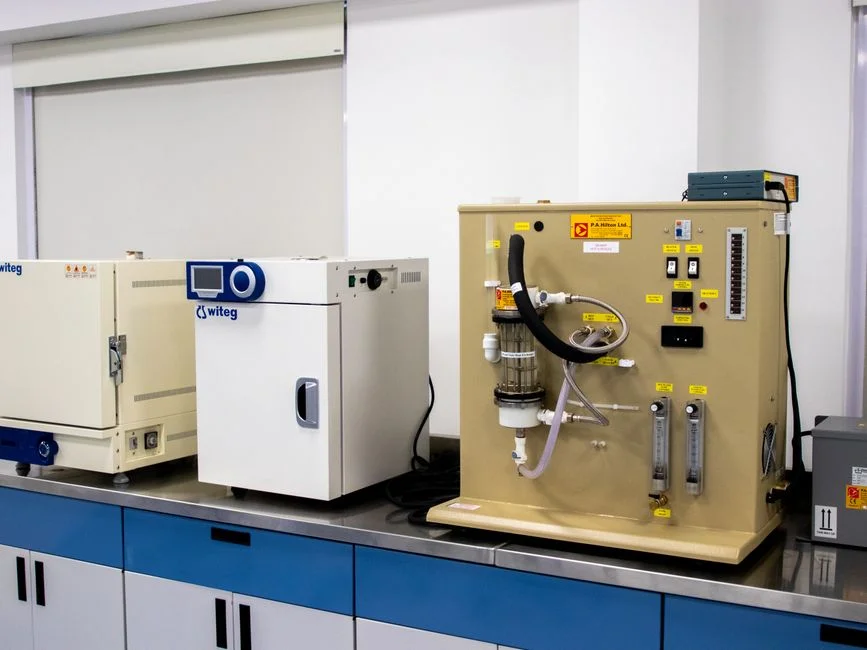
The correct recovery option is the one that meets the water-quality objective while remaining operable at the actual feed chemistry and within the Hamilton receiving-system constraints. Compare discharge, conventional reuse, and chemistry-specific high recovery on freshwater demand, treatment complexity, blowdown reduction, energy demand, concentrate management, and permitting exposure.
Open Engineering Inc.’s 2026 life-cycle study found that its wastewater-reuse scenario had about twice the global warming potential of the freshwater case, with treatment energy accounting for roughly 80% of the difference. In the UF+RO scenario, wastewater energy use grew to more than five times the freshwater case, while improved cooling-tower cycles of concentration reduced blowdown and chemical consumption.
The same study estimated an indirect water penalty of approximately 0.93 L/m³, less than 0.1% of the direct water-displacement benefit. Under a fully decarbonized electricity scenario, carbon-equivalent emissions fell significantly, while chemical production remained the main contributor. These findings apply to the study’s modeled system; they do not establish a universal result for a Hamilton facility.
Conventional and high-recovery routes should therefore be compared as integrated systems. IDE’s 75–80% conventional brackish-water RO range and approximately 95% desalter result should not be converted into unqualified lifecycle guarantees. Feed composition, scale control, energy supply, chemical use, concentrate disposal, and operating reliability all affect the result.
Where pH or inhibitor control is required, automated dosing is part of the process rather than an accessory. The PLC-controlled automatic chemical-dosing system should be specified around the measured control variable, feed condition, duty range, alarms, and manual operating strategy.
| Decision | Discharge-focused treatment | Conventional internal reuse | High-recovery reuse |
|---|---|---|---|
| Primary objective | Meet the authorized discharge route. | Reduce freshwater use with proven membrane treatment. | Recover more water while controlling scaling chemistry. |
| Treatment complexity | Depends on permit and receiving-system requirements. | Adds pretreatment, membranes, controls, and monitoring. | Adds precipitation and solids or brine handling. |
| Freshwater reduction | Limited to the selected discharge strategy. | Depends on recovery and the amount returned to the cooling loop. | Greater potential, subject to validated feed chemistry and operability. |
| Energy and chemicals | Must be included in the whole-life assessment. | Open Engineering Inc.’s 2026 UF+RO scenario used more than five times the freshwater-case energy. | Requires a project-specific life-cycle calculation. |
| Main compliance issue | Discharge quality and receiving-system capacity. | Make-up water quality, chemical control, and residual discharge. | Permitted concentrate route, precipitation solids, and brine management. |
| Supplier evidence to request | Guaranteed effluent quality on the design feed. | Recovery, membrane flux, cleaning, and monitoring guarantees. | Recovery by feed condition, solids output, brine chemistry, and operating limits. |
Plan the Hamilton compliance and procurement package
A Hamilton data center should give vendors a bounded design basis, not a list of product names. The procurement package needs source-water and blowdown analyses, flow-duration information, cooling-system configuration, chemical inventory, future-capacity plan, intended reuse rate, discharge endpoint, and the status of permit and receiving-system discussions. Without those inputs, a firm price or equipment selection will carry avoidable redesign risk.
Require each supplier to state:
- The design feed chemistry and operating envelope used for calculations and guarantees.
- The recovery method, expected recovery and permeate quality for that feed.
- Concentrate volume and composition, including precipitation solids where applicable.
- Pretreatment requirements, monitoring points, controls, alarms, and operating limits.
- Performance guarantees tied to the actual design feed.
- Contingencies for membrane cleaning, cartridge replacement, chemical control, and feed-water variability.
Confirm the applicable Hamilton discharge authorization, sewer pretreatment requirements, water-supply conditions, and receiving utility’s capacity before committing to discharge or reuse equipment. The treatment design and the permit basis should be developed together; neither should be treated as a post-award administrative task.
For pH, inhibitor, or antiscalant control, require automatic PLC-controlled dosing rather than uncontrolled manual adjustment. Specify the controlled variable, feed and discharge limits, chemical compatibility, fail-safe response, and maintenance access. Available treatment parts, valves, and media should be selected against those design conditions.
Scale context without scaling the Hamilton project to it. IDE reported that a 100-megawatt facility can use up to 2 million litres of water per day. That is industry context, not a flow estimate for a Hamilton data center; obtain site-specific cooling and water-balance data before sizing equipment.
| Vendor-ready item | Minimum information | Acceptance check |
|---|---|---|
| Design basis | Flow profile, source and blowdown chemistry, chemical program, cycles of concentration, future capacity. | Vendor states the exact feed and operating envelope used in its proposal. |
| Treatment guarantee | Recovery, permeate quality, outlet quality and applicable operating conditions. | Testable guarantees use the agreed design feed. |
| Concentrate plan | Volume, chemistry, precipitation solids, destination and operating contingency. | Route is technically identified and permitted before equipment selection. |
| Controls and monitoring | Control variables, instruments, alarms, data outputs and manual fallback. | Control narrative matches the risk identified in characterization. |
| Commercial basis | Scope, exclusions, installation basis, service support, schedule and warranty. | Price and lead time are tied to the same defined scope. |
Frequently Asked Questions
Can flow rate alone size a Hamilton data-center wastewater treatment system?
No. Equipment selection also depends on source-water chemistry, measured cooling-tower cycles of concentration, recovery target, reuse rate, pretreatment needs, concentrate route, and discharge quality. The vendor should size each treatment step against the agreed design feed and peak-flow profile.
Is discharge-only treatment cheaper than internal blowdown reuse?
Do not compare them by purchase price alone. Discharge-only treatment may have less process equipment, while internal reuse adds pretreatment, membranes, controls, disinfection where needed, and concentrate management. The lifecycle comparison should include freshwater reduction, energy, chemicals, operator labour, membrane and cartridge replacement, and the receiving-system charges or constraints associated with each route.
How should a supplier be selected beyond headline recovery?
Request a guaranteed design-feed basis, recovery methodology, treatment guarantees, control philosophy, monitoring points, service support, and a complete concentrate plan. A headline recovery percentage is not useful without feed chemistry, operating limits, and the consequences of off-design conditions.
Can treatment energy outweigh the benefit of wastewater reuse?
Yes, it can materially affect the life-cycle result. Open Engineering Inc.’s 2026 study found that treatment energy accounted for roughly 80% of the GWP difference between its wastewater and freshwater scenarios, while the UF+RO scenario used more than five times the freshwater case’s energy. Compare energy demand alongside freshwater savings, blowdown reduction, chemical use, and carbon assumptions.
What information is needed before a Hamilton supplier can quote price and lead time?
Provide the flow-duration profile, source-water and blowdown analyses, cycles-of-concentration calculation, cooling-system and chemical-program details, future-capacity plan, reuse target, discharge endpoint, available utilities, site constraints, and applicable permit or sewer requirements. Ask the supplier to identify any missing inputs and state which assumptions affect price, delivery schedule, guarantees, and permitting.