
Map the two wastewater streams before selecting equipment
A South Boston data center generally needs two separate treatment trains: treatment for low-flow domestic sewage and on-site pretreatment for the larger cooling-tower blowdown stream. The cooling train must control site-specific sewer limits for pH, temperature, TDS, chloride, metals, and residual treatment chemicals. Treatment may include filtration, softening or anti-scalant conditioning, RO recovery, chemical dosing, and disposal or further concentration of the brine. Exact limits must come from the user’s discharge authorization, while reclaimed water requires source-water testing and a complete water balance.
Domestic wastewater originates in restrooms, showers, pantry facilities, and floor drains. Cooling effluent is primarily the concentrated bleed from the recirculating cooling loop. ASCE’s March 2024 primer identifies cooling effluent as the larger data-center wastewater stream and notes that cyclic cooling concentrates pollutants such as total dissolved solids and chloride. That same source warns that reclaimed water can produce more corrosion, scaling, and microbiological growth than potable water, so source-water characterization is central to reuse decisions.
Do not issue an equipment specification from flow alone. Require separate measurements and operating records for both streams, including the domestic chemical program and floor-drain characteristics. For an integrated MBR treatment package, that sanitary data determines biological loading, treatment objectives, and residual-solids handling.
| Design input | Domestic sewage | Cooling blowdown |
|---|---|---|
| Flow | Sanitary fixture and floor-drain flow | Measured blowdown from the cooling loop |
| Temperature and pH | Diurnal and discharge-point profile | Seasonal loop profile and chemical-program excursions |
| Conductivity and TDS | Baseline and variability | Concentration basis for blowdown control |
| Hardness and alkalinity | Where relevant to reuse | Scaling and makeup chemistry |
| Chloride and silica | Where relevant to reuse | Corrosion, concentration, and membrane-scaling inputs |
| Metals | Any discharge or reuse characterization | Corrosion products, inhibitors, and heat-exchanger materials |
| Residual biocide and chemical program | Cleaning and treatment records | Biocide, dispersant, inhibitor, and antiscalant inventory |
Establish the sewer and water-reuse requirements first
For a South Boston site discharging to a public sewer, the project team must identify the receiving sewer district, the Massachusetts Water Resources Authority’s role, and the authorization that will govern the connection. The HydropureWater 2026 Boston guide states that MWRA Local Limits are set per user through the discharge authorization; it identifies the site-specific authorization, rather than a generic federal limit, as the binding design target.
Build the permit matrix before comparing treatment equipment. Obtain the applicable limits for flow, pH, temperature, TDS, chloride, metals, monitoring frequency, sampling points, and surcharge provisions. Keep preliminary design criteria separate from confirmed permit conditions, because a bidder can size equipment to one set of assumptions while the authorization requires another.
If the project will discharge directly to surface water, evaluate an NPDES permit instead. ASCE’s March 2024 primer describes a Georgia reclaimed-water data center that operated under an NPDES permit because it treated wastewater on site. That precedent explains the permit pathway; it does not establish that every South Boston site needs an NPDES permit.
The industrial pretreatment compliance workflow illustrates the same engineering logic: identify the receiving authority, obtain the controlling requirements, characterize the discharge, and demonstrate compliance at the required point of control. Do not adopt numerical pH, temperature, TDS, or chloride values from general industrial guidance until they are confirmed in the user’s authorization.
| Permit item | Evidence required | Engineering consequence |
|---|---|---|
| Receiving authority | Confirmed sewer district and agency correspondence | Identifies the approval route and responsible reviewer |
| Discharge authorization | Issued or draft permit with conditions | Establishes the binding design values |
| Monitoring | Parameters, frequency, and approved sampling points | Defines instruments, sampling equipment, and reporting controls |
| Surcharges | Applicable tariff and pollutant surcharge provisions | Adds a lifecycle cost to discharge pathways |
| Reuse | Utility supply conditions and site reuse plan | Adds corrosion, scaling, and microbiological-control requirements |
| Direct surface-water discharge | NPDES applicability determination | Changes the permit basis and treatment objectives |
Build a cooling-water and blowdown mass balance
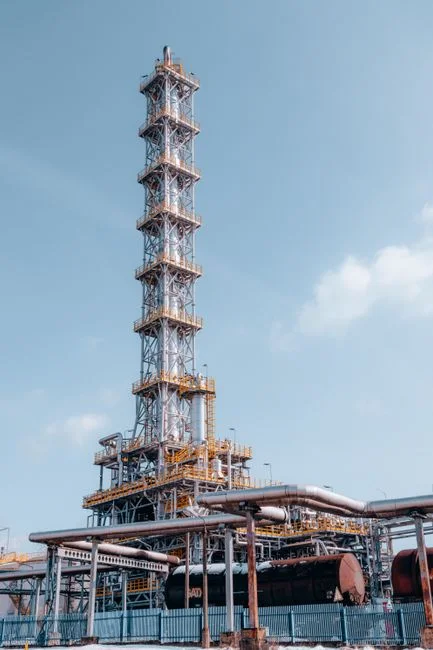
The blowdown mass balance must begin with measured site inputs rather than an assumed cooling-tower ratio. ASCE’s March 2024 primer identifies a water-balance study as the first step for evaluating water sources, cooling systems, reuse, and discharge. The site balance should cover cooling makeup, evaporation, blowdown, domestic sewage, fire-water storage, and any reclaimed-water supply.
Use the measured cycles of concentration for each operating condition. The HydropureWater 2026 Boston guide uses 4 cycles of concentration as one Boston reference case and notes that operators commonly manage conductivity below the theoretical maximum. This means the discharge controller should follow an operating limit tied to measured chemistry, not merely the ratio implied by the design loop.
For the supplied 2026 Boston reference case, cooling makeup of 1.0–1.5 MGD at 4 cycles of concentration was associated with 0.25–0.45 MGD of blowdown for a 20 MW site. This is an illustrative scenario, not a South Boston design requirement. Recalculate it using the project’s makeup, evaporation, operating cycles, and cooling configuration.
Test seasonal source-water variability because ASCE lists seasonal sampling results and parameters including pH, conductivity, TDS, chlorides, silicon, hardness, alkalinity, and microbial counts among the information needed from the utility. Size the pretreatment train for the design flow and worst credible chemistry while preserving the redundancy required by the cooling design and discharge authorization. A multi-media pretreatment filter must therefore be sized from the characterized solids load and downstream hydraulic demand, not from site area alone.
| Balance term | Required project input | Use in design |
|---|---|---|
| Cooling makeup | Metered flow and source | Establishes incoming water load |
| Evaporation | Measured or modeled cooling duty | Separates consumptive loss from blowdown |
| Cycles of concentration | Measured operating range | Defines concentration and bleed control |
| Blowdown | Continuous flow and conductivity trend | Sizes filtration, recovery, and disposal |
| Domestic sewage | Fixture schedule and sanitary flow | Sizes the separate biological train |
| Fire-water storage | Active and reserve volumes | Prevents storage volume being counted as available supply |
| Reclaimed-water supply | Seasonal quality and availability | Adjusts makeup chemistry and reuse controls |
Select the pretreatment train around the discharge limit
Start with the contaminant-to-unit-operation map, then select equipment against the confirmed discharge limits. Multi-media filtration removes suspended solids and colloids and protects downstream softening, dosing, or membrane equipment. It is a pretreatment function, however, and does not prove that the effluent meets a limit for dissolved solids, chloride, or metals.
Where hardness, silica, or metal-oxide scaling controls RO performance, evaluate ion-exchange softening, lime-soda softening, or anti-scalant conditioning. The HydropureWater 2026 Boston guide identifies this stage as necessary for protecting RO membranes. A multi-media pretreatment filter and a PLC-controlled chemical dosing skid should be coordinated because filtration performance, chemical demand, and membrane protection are linked.
Use chemical dosing for pH adjustment, coagulants, flocculants, antiscalants, and residual biocides according to the actual cooling-water program and the site’s pretreatment limits. The control narrative must state which chemical is dosed, the measurement driving the dose, the high and low interlocks, and the containment and spill response.
Where reclaimed water will be reused, add corrosion and microbiological control. ASCE’s March 2024 primer warns that reclaimed water may increase corrosion, scaling, and microbiological growth relative to potable water. Reuse therefore changes the treatment challenge rather than removing the need to treat blowdown.
Select the endpoint only after calculating the residual contaminant load. Side-stream filtration may remove particulate material, but it cannot independently control concentrated dissolved solids or site-specific metals limits. If the endpoint is RO recovery, assess concentrate treatment and its final fate. An ultrafiltration system can protect downstream membranes, but its selection still depends on source-water characterization and the recovery train’s hydraulic design.
| Contaminant or control objective | Candidate unit operation | Required confirmation |
|---|---|---|
| Suspended solids and colloids | Multi-media filtration | Particle load, filtration rate, backwash and solids fate |
| Calcium, carbonate, silica, or metal-oxide scaling | Softening, lime-soda treatment, or antiscalant conditioning | Source chemistry and membrane or cooling-system limits |
| pH and chemical residuals | Controlled chemical dosing | Authorization limits and cooling chemical program |
| Dissolved solids and chloride | RO recovery or other specified treatment | Permit target, recovery, concentrate composition, and brine route |
| Metals | Source control plus validated treatment | Metal inventory, precipitation or membrane behavior, and residual limit |
| Microbial growth in reclaimed service | Disinfection and corrosion-control program | Reuse specification, contact conditions, and monitoring plan |
Compare sewer discharge, blowdown recovery, and near-ZLD
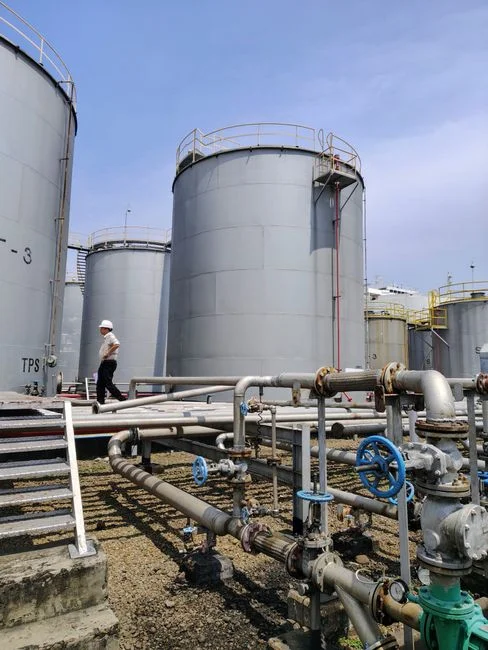
Discharge-only requires the least on-site equipment, but the entire blowdown stream must comply with the user’s authorization. It also leaves the site exposed to discharge fees, pollutant surcharges, future permit tightening, and site water-consumption objectives. Pretreatment can reduce the load, but it does not remove the obligation to meet every applicable discharge condition.
RO recovery returns permeate to cooling makeup and sends a smaller, still-concentrated brine stream for authorized disposal. Open Engineering Inc.’s 2026 study reports that its UF+RO wastewater scenario used more than five times the freshwater-case energy. The same study found that improved cycles of concentration reduced blowdown and chemical consumption, partly offsetting the energy increase. The industrial RO blowdown recovery system therefore has a lifecycle trade-off rather than a simple water-saving benefit.
Near-ZLD can minimize liquid discharge through brine concentration and crystallization. The HydropureWater 2026 Boston guide cites a published 2025 capital-cost figure of $3–8 million for 95–99% overall recovery. It identifies thermal energy, solids handling, and continued permit risk as decision factors. A filter press may be relevant to concentrate solids handling, but its selection does not establish a complete near-ZLD train.
The 2026 Boston guide presents side-stream filtration for smaller sites, RO-plus-sewer for mid-size sites, and near-ZLD for hyperscale or high-scrutiny projects. Treat that as a screening heuristic only. A project-specific water, permit, energy, and lifecycle analysis is required before selection.
| Decision factor | Sewer discharge | RO recovery with brine discharge | Near-ZLD |
|---|---|---|---|
| On-site treatment | Filtration and other confirmed pretreatment | Filtration, conditioning, RO, and brine treatment | Recovery, brine concentration, crystallization, and solids handling |
| Water recovered | None | RO permeate returned to cooling makeup | Water recovered upstream of the brine concentrator |
| Residual discharge | Full treated blowdown | Smaller concentrated brine | Reduced liquid discharge; residual solids require a route |
| Principal energy effect | Lower treatment-energy demand | Higher UF+RO energy, partly offset by lower blowdown and chemical use | Concentration and crystallization energy |
| Permit exposure | Full flow must meet authorization | Brine must meet authorization | Reduced liquid exposure, but solids and operations remain regulated |
| Lifecycle comparison | Installed cost, discharge fees, surcharges, water use, and future limits | Installed cost, energy, chemicals, membrane life, recovered water, and brine fee | Installed cost, thermal energy, solids disposal, maintenance, and residual-disposal risk |
Treat domestic sewage with the appropriate packaged system
Size and route domestic sewage separately from cooling blowdown. The streams have different contaminants, treatment objectives, hydraulic profiles, and likely monitoring requirements. Combining them before treatment can force the sanitary plant to handle a much larger flow of dissolved cooling chemicals and metals.
For a low-flow sanitary stream, compare a buried MBR system with a packaged biological treatment system. The HydropureWater guide identifies MBR or packaged activated sludge as appropriate options for domestic sewage. Selection should follow the sanitary flow, required biological performance, available footprint, automation requirements, residual-solids handling, and sanitary-sewer acceptance.
An MBR is relevant when compact installation and integrated solids separation are priorities. The WSZ series provides an underground anoxic and aerobic treatment package with sedimentation and disinfection for flows from 1–80 m³/h, according to the supplied product information. The broader MBR portfolio covers 10–2,000 m³/day for municipal sewage, industrial process water, and reuse applications.
Do not treat the product ranges as the sanitary design flow. Confirm the fixture schedule, floor-drain conditions, peak sanitary flow, BOD and TSS objectives, residual-solids removal route, groundwater intrusion, and available below-grade space. The buried integrated sewage-treatment package can then be compared with the integrated MBR treatment package using project inputs.
Verify performance with monitoring and operating controls
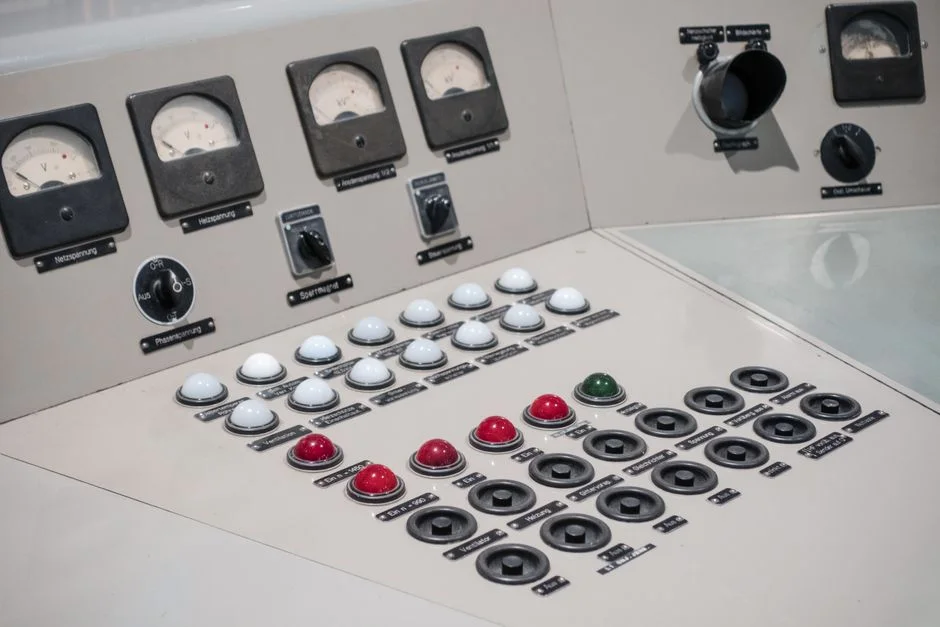
Install continuous flow and conductivity metering so blowdown controls respond to actual loop chemistry. The HydropureWater 2026 Boston guide notes that operators commonly bleed on conductivity trends rather than only at the theoretical concentration limit. The control sequence should therefore connect conductivity and flow measurements to the permitted discharge strategy.
Monitor pH, temperature, TDS or conductivity, chloride, metals, and residual treatment chemicals at the locations and frequencies required by the discharge authorization. The analyzer selection and calibration plan should follow that authorization rather than a generic parameter list.
Provide automatic interlocks for high conductivity, chemical-dosing failure, membrane differential pressure, filter backwash, permeate quality, and off-spec discharge. The response must be designed for each condition: reduce blowdown, stop dosing, isolate equipment, divert flow to an approved route, or initiate an operator alarm. A diversion route should not be assumed unless its capacity and authorization are documented.
Use a trend-based operating plan that records cycles of concentration, blowdown, chemical consumption, membrane cleaning, sludge or concentrate removal, and utility demand. This provides an auditable connection between operating decisions and permit performance.
ASCE’s March 2024 primer reported that only 51% of surveyed operators tracked water use and only 10% tracked it across all facilities. That finding supports making metering, allocation, and reporting part of the performance contract rather than an optional dashboard. The treatment valves, filter media, and monitoring components should be specified around the approved control narrative and maintenance strategy.
Build the procurement and compliance checklist
Issue the information request before requesting equipment prices. It should cover cooling design, IT load, source-water analyses, seasonal variability, chemical program, measured cycles of concentration, domestic flow, discharge authorization, local sewer requirements, redundancy, and future expansion. A data-center wastewater treatment methodology can help structure the technical review, but South Boston permit conditions must still control the design.
Require each bidder to submit the blowdown mass balance, contaminant loading, proposed treatment train, hydraulic recovery, brine fate, controls, monitoring, utilities, and expected consumables. The bidder should identify which assumptions came from the owner’s records and which remain to be verified by sampling.
Separate guaranteed discharge-compliance obligations from operating assumptions. Identify confirmed permit limits, preliminary design criteria, supplier guarantees, and proposed operator actions. If the permit is not issued, do not represent a preliminary criterion as an enforceable guarantee.
Ask for a lifecycle comparison of sewer discharge, RO reuse, and near-ZLD. It should include membrane replacement, chemical use, energy, filter media, sludge disposal, concentrate or solids removal, monitoring, and discharge charges. Use a cooling-blowdown mass balance and treatment guide as a comparison framework, not as a substitute for South Boston data.
Require site-specific acceptance testing before final selection. Generic equipment capacity or a supplier’s standard wastewater application does not establish suitability for concentrated data-center blowdown.
| Bid package item | Required deliverable | Acceptance test |
|---|---|---|
| Permit basis | Marked-up authorization and compliance matrix | Every confirmed limit traced to a design control |
| Mass balance | Makeup, evaporation, blowdown, reuse, and discharge calculations | Calculations checked against meter and operating data |
| Contaminant loading | Source analyses and conservative design basis | Loading tied to the treatment train |
| Treatment train | Flowsheet, equipment basis, controls, and utilities | Demonstration at contractual design flow |
| Brine and residuals | Quantity, chemistry, handling, and destination | Documented route and compliant collection system |
| Operations | Operator workload, maintenance, consumables, and training | Alarm, interlock, backwash, and failure-response tests |
| Lifecycle | Installed and operating-cost comparison | Consistent assumptions across alternatives |
Frequently Asked Questions
What discharge limits apply to a South Boston data center?
The user’s discharge authorization controls the numerical limits. Confirm the receiving sewer district and the applicable MWRA requirements before using any general industrial values. Obtain written limits for flow, pH, temperature, TDS, chloride, metals, monitoring, sampling, and surcharges; do not substitute generic MWRA, sewer-district, or federal figures for permit conditions.
How should the cooling-blowdown system be sized?
Size from measured cooling makeup, evaporation, cycles of concentration, operating variability, and the confirmed discharge or reuse plan. The supplied 20 MW Boston example—1.0–1.5 MGD of makeup and 0.25–0.45 MGD of blowdown at 4 cycles of concentration—is a reference scenario, not a South Boston requirement. Require the bidder to show the site-specific mass balance and size for the design flow and worst credible chemistry.
Is RO recovery worth the added energy?
Potentially, but it is a lifecycle decision. Open Engineering Inc.’s 2026 study reports more than five times the freshwater-case energy for its UF+RO scenario, while higher cycles of concentration reduced blowdown and chemical consumption. Compare recovered water, water and discharge costs, energy, chemicals, membrane life, residual brine, and permit exposure rather than evaluating water savings alone.
How should a buyer select a supplier for domestic sewage treatment?
Compare the proposed MBR or packaged biological plant against the sanitary flow, footprint, automation, residual-solids route, BOD and TSS objectives, and receiving-sewer acceptance. Require a site-specific proposal, acceptance-test protocol, utilities demand, and consumables list. Generic equipment capacity or a standard wastewater application does not establish suitability for the facility’s sanitary stream.