
What Compliance Must Be Demonstrated at the Cookeville Sewer Connection
EV and auto plants near Cookeville meet pretreatment limits by controlling industrial wastewater at the source and proving compliance where it connects to Cookeville’s municipal collection system. Cookeville requires discharge permits for significant industrial users and evaluates wastewater constituents, average and 30-minute peak flows, floor drains, proposed pretreatment and equalization facilities. Compliance combines prohibited-discharge controls, applicable categorical standards, local limits, best management practices, monitoring and certification. Treatment may include oil and grease removal, solids or colloid flotation, pH adjustment and equalization, with sampling used to verify permit compliance.
The enforceable target is the industrial discharge permit, not the plant’s downstream ability to dilute a discharge. Cookeville’s pretreatment program identifies applicable general pretreatment standards, categorical pretreatment standards, local limits, state and local laws, and best management practices as the basis for permit limits, according to the City of Cookeville’s §18-207, Charges and fees.
Local limits protect the publicly owned treatment works, its sludge and receiving waters. EPA explains that a POTW may impose numeric or narrative site-specific limits, and it enforces local limits at the end-of-pipe discharge from an industrial user—that is, at the point of connection to the POTW collection system. The same EPA guidance explains the two core risks: pass-through occurs when an industrial discharge causes a POTW permit violation; interference occurs when a discharge disrupts the POTW, treatment operations, sludge processes or sludge use and disposal in a way that causes a permit or applicable violation. EPA, Pretreatment Standards and Requirements—Local Limits
Do not treat Cookeville’s “normal domestic wastewater” concentrations as a complete industrial permit. Section 18-207 uses BOD₅, COD, TKN, ammonia, suspended solids and oil and grease values to establish sewer-service charges and surcharge calculations. Those values describe the charging baseline; they do not, by themselves, establish that an EV plant complies with prohibited-discharge rules, categorical standards or applicable local limits. Cookeville’s treatment plant has up to 14 MGD capacity and treats grit, oxidation-ditch biological flow, clarifiers and disinfection, but that treatment capacity does not authorize an industrial discharge. City of Cookeville, Sewer Treatment
For a plant engineer, the practical compliance sequence is:
- Determine whether the facility is a significant industrial user and identify the regulated connection.
- Classify manufacturing activities and determine which categorical pretreatment standards apply.
- Obtain Cookeville’s site-specific local limits and prohibited-discharge conditions.
- Design pretreatment and monitoring around the combined, more stringent applicable requirements.
- Demonstrate consistent compliance at the point of connection.
Map Every EV and Automotive Wastewater Stream
Cookeville’s permit application requires a source-by-source wastewater map because industrial process water, regulated floor drains, cooling water and sanitary sewage cannot be treated as one undifferentiated flow. The application asks for wastewater volume by category, constituents, discharge timing, average and 30-minute peak flows, daily, monthly and seasonal variation, a site plan showing floor drains and sewer connections, and a description of processes and materials that could be discharged.
The first task is not to choose a machine; it is to establish which stream enters which drain and under what operating condition.
| Plant stream | Characteristics to verify | Compliance and routing question |
|---|---|---|
| Body-shop, paint and rinse wastewater | Suspended solids, colloids, pH, oil and grease, surfactants, batch versus continuous discharge | Segregate from sanitary and clean cooling flows; characterize each coating and cleaning operation. |
| Washdown and floor drains | Flow variability, grit, oils, metals, chemicals used in the area, accidental spill exposure | Identify every floor drain on the required drawing and determine whether it is permitted, segregated, closed or diverted. |
| Machining and metalworking fluids | Oil and grease, suspended solids, colloids, metals, coolant constituents, pH | Separate high-concentration tool-room drains from general washdown before treatment selection. |
| Casting wastewater | Suspended solids, colloids, metals, pH, blowdown variability | Determine whether foundry operations are present at the Cookeville facility and obtain their own process data. |
| Coating rinsate | Soluble organics, surfactants, pH, color, batch volume | Assess segregation, compatible chemical controls and whether the stream can enter the selected treatment train. |
| Battery-room washwater | Metals, pH, suspended solids, chemicals, accidental-release exposure | Evaluate source controls, spill response and analytical coverage rather than assuming sanitary handling is acceptable. |
| Cooling blowdown and once-through cooling | Flow variability, heat, chemicals, metals, scaling constituents | Establish whether segregation or another discharge route is technically and regulatorily permissible. |
| Stormwater | Site drainage, contaminants, rainfall response, floor-drain cross-connection | Keep regulated process areas from discharging uncontrolled stormwater to the sanitary sewer. |
| Sanitary sewage | Flow pattern, employee and contractor contributions | Evaluate separately from regulated industrial streams, subject to Cookeville approval. |
Oil and grease, suspended solids, colloids, pH, metals, surfactants and biodegradable organics are screening categories, not assumptions about concentration. The supplied research does not establish EV or automotive stream-specific pollutant concentrations or flow rates. Request actual analyses, production schedules, drain-routing drawings and accidental-discharge controls from each operating area. A broader technology comparison can help frame treatment alternatives, but it cannot replace plant-specific characterization.
Segregation matters because dilution can make a final sample appear acceptable while masking a treatment failure or prohibited discharge. Keep paint-bearing, oily, metal-bearing, high-solids and chemically adjusted streams separate until their treatment requirements are understood. Do not route a floor drain to sanitary sewer merely because it appears diluted in the discharge.
Turn the Permit Application into an Engineering Design Basis
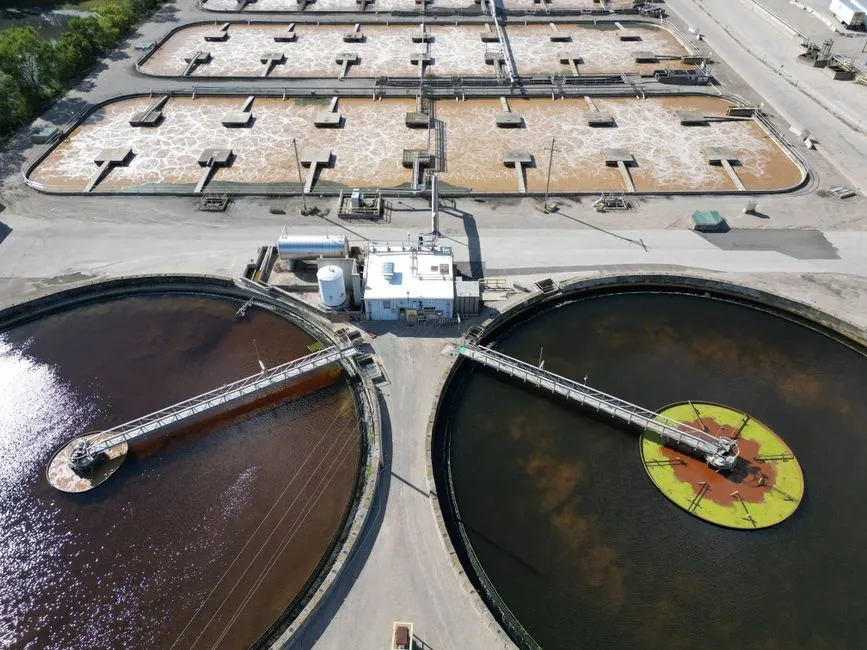
The permit application becomes an engineering design basis only when every quantity, constituent and discharge condition is tied to a specific source, connection and operating scenario. Cookeville’s application requires applicant identity and SIC number; wastewater volumes by contact-cooling, non-contact-cooling, process-waste and sanitary-sewage categories; constituents and known concentrations; discharge timing; and average and 30-minute peak wastewater flow rates with daily, monthly and seasonal variations. It also requires a scaled site or floor plan showing the water system, sewer layout, proposed pretreatment or equalization, floor drains and connections, plus a process description and inventory of materials on site that could be discharged.
Build the design basis in the following order:
- List each regulated discharge point and the streams entering it.
- Provide average flow and 30-minute peak flow for every point.
- Add production shifts, batch dumps, cleaning cycles and seasonal operating changes.
- Attach representative analyses and identify where additional sampling is needed.
- Map treatment, equalization, monitoring and sampling access onto the same drawing set.
| Design input | Minimum submission | Why the designer needs it |
|---|---|---|
| Facility and process | Name, address, SIC code, activities, facilities, plant processes and onsite materials | Supports significant-industrial-user and categorical-standard determinations. |
| Flow by category | Contact cooling, non-contact cooling, process waste and sanitary sewage volumes | Defines which flows require treatment, metering and permit coverage. |
| Flow dynamics | Average flow, 30-minute peak flow, discharge timing, daily, monthly and seasonal variation | Establishes hydraulic and equalization requirements. |
| Wastewater quality | Known constituents and concentrations plus the application form’s pollutant list | Defines analytical scope and treatment objectives. |
| Site routing | Floor plan with floor drains, sewer connections, pretreatment and equalization | Prevents equipment sizing from overlooking cross-connections or inaccessible sample points. |
| Standards review | Manufacturing-category review and comparison with applicable categorical pretreatment standards | Confirms whether the proposed process can consistently meet the controlling requirements. |
Do not assume that every characteristic used in Cookeville’s sewer-fee calculation must be monitored at every EV plant. Cookeville states that only parameters determined to be present are included in a pretreatment permit and therefore subject to surcharge. The analytical plan should follow the permit, applicable categorical standards, local limits and prohibited-discharge provisions, while still addressing pollutants that could interfere with treatment. The permit and applicable regulations remain controlling; EPA’s 2021 Local Limits Development Guidance expressly states that guidance does not replace a permit or regulation.
Equipment vendors should receive the completed flow profile, analyses, drain drawings and applicable limits—not merely the plant area or expected vehicle-production rate. A fabricated-metals wastewater technology comparison may help structure questions about solids and biological treatment, but the final selection must follow the EV plant’s actual waste streams and Cookeville’s enforceable requirements.
Select Pretreatment Around the Actual Pollutant Load
The correct pretreatment train is the one that addresses the pollutants present in the segregated streams while proving compliance at the point of connection. Start with source control, segregation and equalization. Then apply unit processes according to the removal target: physical treatment for oil, grease and solids; chemical treatment for pH or coagulation objectives; and filtration or membranes only where wastewater data and permit requirements justify their operating burden.
For suspended solids, oil and grease, FOG and colloidal loads, dissolved air flotation is a physical separation option. The industrial DAF pretreatment system offered by HydropureWater has a stated range of 4–300 m³/h across 13 standard models, with automatic skimming and micro-bubble flotation. Those specifications describe available equipment, not a recommendation for every EV plant; selection still requires wastewater characteristics, hydraulic profile, loading criteria and a demonstrated treatment objective.
For pH control, coagulation or flocculation, the automatic chemical dosing and pH control system uses PLC-controlled injection of coagulants, flocculants, pH adjusters and specialty chemicals. Vendor selection should require chemical demand calculations, control logic, chemical storage, fail-safe behavior, operator interface and integration with flow and monitoring data—not just an equipment schedule.
| Treatment objective | Potential route | Design evidence required | Main operating issue to evaluate |
|---|---|---|---|
| Oil, grease, FOG and floatable solids | DAF with appropriate oil collection and skimming | Representative analyses, flow profile, loading basis, separated-solids handling | Hydraulic surge, skimming reliability and sludge characteristics |
| Suspended solids and colloids | DAF, coagulation-flocculation and filtration where needed | Solids loading, settleability or flotation data, target residual concentration | Chemical use, sludge production and fouling |
| pH | Equalization followed by controlled chemical addition | Inlet range, required outlet range, mixing and control response | Overdosing, chemical inventory and fail-safe diversion |
| Dissolved metals | Chemical precipitation or another process specifically demonstrated for the metal | Metal species, concentration, precipitation chemistry and residual-solids testing | Sludge handling and residual contaminant stability |
| Very low suspended-solids or turbidity target | Filtration or membrane treatment | Permit target, feed quality, pilot or equivalent performance evidence | Fouling, solids management, monitoring and recovery |
| Biodegradable dissolved organics | Biological treatment only if the wastewater and permit support it | Organic loading, biodegradability, nutrients, temperature and toxicity information | Process stability, sludge production and pretreatment compatibility |
UF is more directly aligned with suspended-solids, colloid and turbidity control than with dissolved-metal removal, but that distinction does not make it automatically necessary. Membrane or filtration systems add solids-management, fouling, cleaning and monitoring burdens that must be justified against the required result. The EV plant DAF capacity calculation illustrates the type of site-specific analysis needed; a different plant’s waste streams, peak profile and applicable limits cannot be substituted.
Size equalization and treatment equipment against the permitted 30-minute peak and the documented production and cleaning profile—not average flow alone. Compare each route for removal reliability, chemical consumption, sludge quantity and disposal route, footprint, redundancy, controls, operator burden, sampling representativeness and ability to maintain performance through production variation.
Build a Sampling and Compliance Verification Program
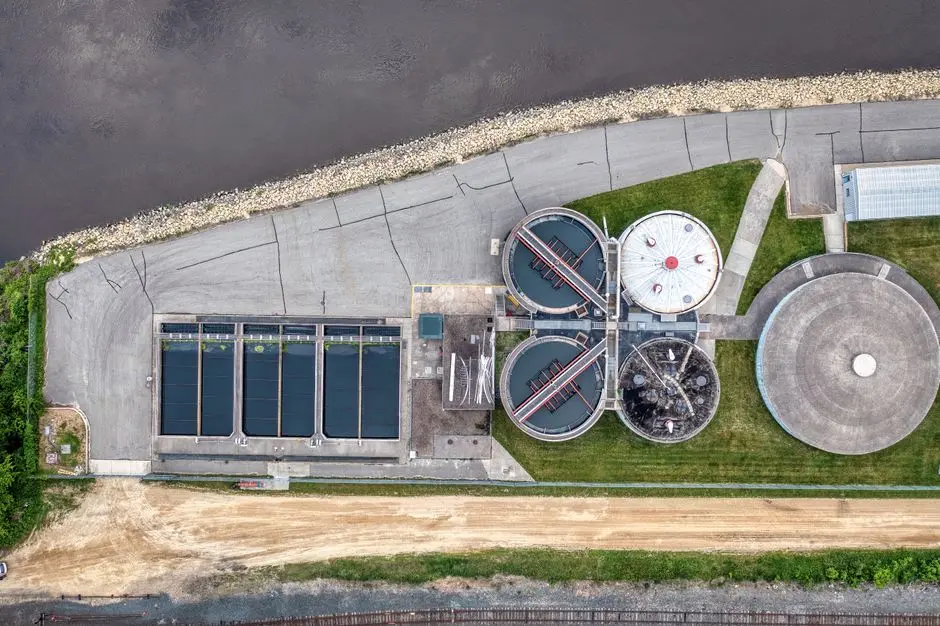
Compliance must be demonstrated at a representative final pretreatment outlet immediately before the Cookeville sewer connection, not merely at an upstream treatment inlet. The monitoring point should be accessible, protected from unauthorized manipulation, and located so the sample represents the combined discharge at the regulated point of connection. Use the sampling method and frequency required by the permit; where the permit requires compositing, document whether it is flow-proportional or time-proportional.
Develop a pollutant-specific monitoring plan. Each analytical requirement should trace to the industrial discharge permit, an applicable categorical pretreatment standard, a Cookeville local limit, or a prohibited-discharge concern. Do not sample indiscriminately or assume that one passing result establishes ongoing compliance.
For every monitoring event, preserve a defensible record:
- Sample point, date, time, flow and production condition.
- Operating parameters for pumps, skimming, chemical dosing, pH control and other treatment functions.
- Calibration status for meters and samplers.
- Laboratory identity, analytical method, results, chain of custody and report review.
- Any upset, bypass, spill, diversion, maintenance or corrective action associated with the sample.
Evaluate both concentration and mass loading where required. Concentration establishes whether the sampled discharge meets a concentration limit; flow and load determine the contribution to the POTW and help identify changes that a single concentration result can conceal. EPA’s 2021 local-limits guidance treats both collection-system loading and industrial-user data as necessary inputs for evaluating whether a discharge causes pass-through or interference.
One compliant sample does not resolve systemic risks. The operating program must prevent prohibited discharges, untreated floor-drain inflows, spills, treatment bypasses and monitoring errors. Establish trend thresholds and escalation procedures before an upset becomes a noncompliance event. The industrial pretreatment compliance workflow provides a useful cross-industry control framework, but the sampling analytes and frequencies must come from the Cookeville permit and plant data.
Document Consistency and Respond to Regulatory Change
Cookeville requires recurring evidence that pretreatment standards are met consistently, not a single commissioning result. The City’s §18-207 calls for a statement reviewed by an authorized industrial-user representative and certified by a qualified professional. It must indicate whether pretreatment standards are met consistently and, if not, whether additional operation and maintenance, additional pretreatment, or both are required. A schedule must identify dates for major events through completion of any added treatment.
For a new source, Cookeville requires the intended pretreatment method to be reported at least 90 days before discharge begins. After final compliance with applicable categorical standards—or within 90 days after commencement of discharge for a new source—the required compliance documentation must be submitted to the Control Authority.
Maintain a management-change procedure for events that can alter wastewater quality or hydraulic loading:
- A new paint line, body-shop operation, casting line or battery-room activity.
- Production expansion or a changed production schedule.
- A new coating, solvent, cleaning chemical, coolant or process chemical.
- Floor-drain rerouting, a new sewer connection or a changed treatment train.
- Equipment replacement, control-system modification or increased cleaning frequency.
Review the permit and treatment performance after operating changes, relevant changes in POTW loading or receiving-water conditions, and revisions to applicable standards. Cookeville controls the permit decision, while the plant must maintain current drawings, analytical results, standard operating procedures, O&M records, calibration records, training records, bypass-prevention controls and corrective-action documentation. Keep the technical basis synchronized with the installed system; otherwise, the permit file may describe a treatment train that the facility no longer operates.
Annual review and periodic reevaluation are part of the local-limits process described by EPA in its 2021 guidance, but the plant’s own review schedule should be event-driven as well as calendar-driven. A changed chemical or rerouted drain can affect compliance before the next formal sampling cycle.
Frequently Asked Questions
What will pretreatment cost for an EV or automotive plant near Cookeville?
There is no responsible generic price without a flow profile and wastewater data. Ask bidders for a transparent cost breakdown tied to average and 30-minute peak flow, batch and seasonal loading, pollutant concentrations, required removal targets, equalization, pretreatment unit processes, chemical use, sludge handling, monitoring, controls and redundancy. Also request installation, commissioning, training, maintenance, consumables and permit-support deliverables. A quotation based only on plant size or vehicle-production rate is not a defensible basis for comparison.
How should pretreatment equipment be sized for an auto plant?
Require the supplier to size the system from average flow, 30-minute peak flow, production and cleaning schedules, pollutant loading and the applicable permit limits. Batch dumps and production changes must be visible in the hydraulic model. Do not select equipment from plant area or vehicle-production rate alone, and do not rely on average flow when a permitted peak or equalization requirement governs.
Which supplier qualifications reduce industrial sewer compliance risk?
Require bidders to demonstrate a process matched to the submitted wastewater data, show the sizing calculations, identify redundancy assumptions, describe controls and monitoring integration, define O&M requirements and list the permit-support deliverables. Ask how the equipment handles upset conditions, chemical failure, sludge removal, representative final sampling and maintenance access. Verify references for comparable wastewater duties, but treat operating evidence—not sales claims—as the key check.
What should the plant do if a pretreatment sample fails?
Quarantine and investigate the affected discharge under the permit’s response procedures; confirm sample integrity, flow, treatment status, production conditions and possible prohibited inputs before concluding that the treatment process failed. Escalate to responsible operations and regulatory personnel, preserve all records and implement corrective action before normal discharge resumes. A failed sample is not the only compliance risk: bypasses, spills, floor-drain diversion, pass-through, interference and inaccurate monitoring records can create separate liability even when sampled concentrations appear compliant.