What changes for Hamburg manufacturers in 2026
Hamburg manufacturers treating high-COD trade waste generally use a staged train: characterize and equalize the wastewater, remove oil, FOG and settleable solids, then reduce dissolved organics through biological treatment before polishing or disposal. DAF is a strong front-end option for suspended solids, FOG and colloidal material; MBBR or MBR can provide biological COD reduction with tighter solids separation. Performance must be demonstrated on the actual waste: one MBBR study using 1,000–3,500 mg/L industrial COD found more than 80% removal at 1,000–2,000 mg/L, while eight hours of HRT at 1,000 mg/L produced over 80% removal. Hamburg's full-scale Köhlbrandhöft plant demonstrates local scale, but its municipal nutrient-recovery processes are not substitutes for factory pretreatment.
Hamburg’s Köhlbrandhöft wastewater-treatment plant normally handles 3.5–4 m³/s and can receive as much as 9 m³/s during heavy rainfall, according to IVL’s September 2024 site account. Those figures describe a municipal installation operated by Hamburg Wasser; they are not spare treatment capacity available to trade-waste producers. A manufacturer therefore cannot infer sewer acceptance, dilution capacity or biological loading from the plant’s peak hydraulic performance.
The local treatment sequence combines mechanical and biological treatment, sludge digestion and phosphorus recovery through the Remondis TetraPhos route. IVL reported that the TetraPhos pilot plant was built in 2015, the full-scale plant started in 2019 and full operation was expected in 2025. That chronology is a useful engineering warning: moving from pilot work to dependable full-scale operation takes time and does not eliminate commissioning and performance risks.
For a factory, the relevant decisions are more specific: characterize the industrial effluent, equalize production variation, remove contaminants that inhibit biology, select biological or polishing equipment, verify performance in pilot or site trials, and document the resulting discharge or reuse proposal for the receiving authority. Municipal resource-recovery performance may provide useful context, but it does not establish manufacturer-side pretreatment performance or compliance.
Characterize the trade waste before selecting equipment
A high COD result identifies an organic load, but it does not identify which unit operation will remove it or whether biological treatment can tolerate the stream. The procurement file should begin with COD and BOD, flow and batch variation, pH, temperature, suspended solids, oil and grease, colloids, nutrients and relevant process chemicals. It should also record the wastewater origin, production batch, reject stream and chemical inventory so refractory COD and toxicity can be assessed rather than hidden behind an average COD value.
The distinction between biodegradable and non-biodegradable COD is central to process selection. A biological reactor can reduce soluble, biodegradable organics, but it may perform poorly on refractory compounds, inhibitory chemicals or fluctuating industrial discharges. Temperature and equalization also affect biological activity; they should not be treated as minor operating details after the tank has been selected.
The MDPI electrocoagulation study illustrates why waste-specific evidence matters. It examined wastewater from a Pb/Zn sulfide mineral flotation plant with an initial COD of 424.29 mg/L, testing anode material, current density, initial pH and additives. This is evidence about one mineral-processing stream under study conditions, not a universal electrocoagulation threshold or an expected Hamburg removal rate.
| Characterization input | Decision it informs | Evidence the buyer should request |
|---|---|---|
| COD and BOD, including batch variation | Biodegradable loading and reactor volume | Waste-specific test results and the analytical method used |
| Suspended solids, oil and grease, colloids | DAF, clarification and solids-liquid separation | Removal and flotation evidence for the actual waste |
| pH, temperature and nutrients | Equalization, chemical control and biological conditions | Operating envelope and supplementary heating or dosing requirements |
| Waste origin, rejects and chemical inventory | Toxicity, refractory COD and material compatibility | Representative samples across production batches |
| Discharge or reuse objective | Final polishing and documentation | Current receiving-authority conditions and acceptance tests |
For a front-end DAF evaluation, specify an industrial DAF pretreatment system against the measured FOG, oil, solids and colloid fractions. Do not use total COD as the sole selection criterion.
Build a pretreatment train that protects downstream biology
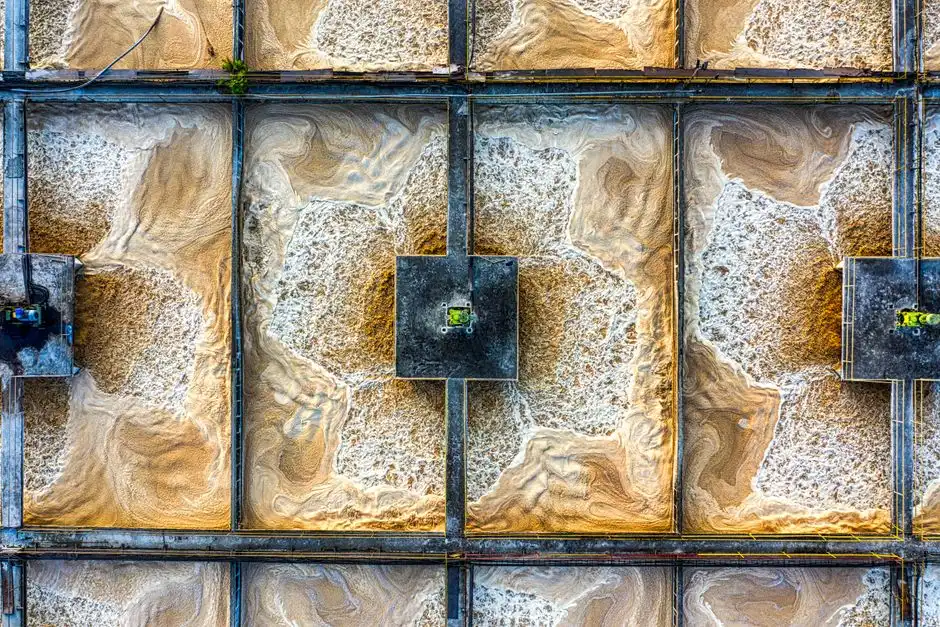
The defensible sequence is screening and equalization, pH control where necessary, DAF for FOG and floatable material, solids separation, biological COD reduction, polishing and sludge dewatering. The exact order depends on the waste profile. A practical sequence separates material that can foul or inhibit downstream processes before selecting biological loading.
- Screen and equalize: remove coarse material and buffer batch peaks before treatment units see the highest flow or contaminant concentrations.
- Control pH where needed: protect biological activity and chemical dosing while avoiding uncontrolled chemical use.
- Remove floatable contaminants: use DAF where oil, FOG and floatable solids are material targets.
- Separate solids: select DAF or lamella clarification according to flotation behaviour and settled-solids characteristics, not COD alone.
- Reduce biodegradable COD: feed the biological stage a controlled stream with documented temperature, pH and toxicity conditions.
- Polish, dewater and dispose: match final treatment and sludge handling to the discharge, reuse or sewer-acceptance objective.
HydropureWater specifies its DAF system for suspended solids, FOG, oil and grease, and colloidal matter across 4–300 m³/h in 13 standard models. These are product specifications, not guaranteed removal rates for an unspecified effluent. The industrial DAF pretreatment system therefore needs waste-specific verification.
Lamella clarification is appropriate where the objective is separation of flocculated or settled solids. DAF is generally the stronger fit when floatable contaminants are the target; a DAF versus clarifier for industrial wastewater comparison can support that process decision.
Equalization and temperature control protect the biological stage from shock loads. In the supplied MBBR study, COD removal at an average influent COD of 1,000 mg/L rose sharply from approximately 72% to approximately 92% as temperature increased from 20°C to about 25°C, showing why seasonal and batch variation must be included in biological sizing.
Solids are part of the treatment train, not a residual issue. Equipment for screening, sedimentation and dewatering must be coordinated with the sludge route. A mechanical bar screen addresses coarse material, while a sedimentation tank can provide solids separation where its operating basis fits the waste. The plate-frame filter press is relevant where dewatering is required, but the filter press for mineral-processing sludge comparison should be treated as adjacent technical evidence, not performance data for Hamburg trade waste.
Select biological treatment using verified COD performance
The MBBR study tested industrial wastewater containing 1,000–3,500 mg/L COD. At 1,000 mg/L influent COD, eight-hour hydraulic retention time produced more than 80% COD removal, while 12 hours produced approximately 86%. The researchers selected eight hours as the optimum compromise because the longer process improved removal by only about three percentage points. These are lab-scale findings and should be confirmed through pilot or site trials on the manufacturer’s waste.
Temperature materially changes biological performance. At average influent COD of 1,000 mg/L, removal increased from approximately 72% to approximately 92% between 20°C and about 25°C. The same study reported COD removal above 80% for influent COD between 1,000 and 2,000 mg/L. The complete dataset covered 1,000–3,500 mg/L COD, so a supplier should not generalize the upper loading condition without testing the actual mixture.
MBBR retains a carrier biofilm and requires downstream solids-liquid separation. MBR combines activated sludge with submerged membrane filtration; the supplied MBBR evidence does not establish performance for an integrated MBR wastewater treatment system. If the project requires tighter solids separation, the MBR membrane bioreactor module should be assessed for membrane configuration, cleaning, replacement and solids-management implications.
| Process | Primary function | Performance basis | Main selection constraint |
|---|---|---|---|
| MBBR | Biological removal of biodegradable COD | Lab study: over 80% removal at 1,000 mg/L influent COD and eight-hour HRT | Temperature, toxicity, equalization and downstream solids separation |
| MBR | Biological treatment with integrated membrane solids separation | Process configuration described; no waste-specific performance established by the supplied studies | Effluent target, membrane maintenance and sludge handling |
| Electrocoagulation | Case-specific COD reduction and treatment of selected mineral-processing wastewater | Study stream had initial COD of 424.29 mg/L | Anode material, current density, initial pH, additives and waste chemistry |
Electrocoagulation remains a candidate when the waste and study conditions support it, not a universal substitute for biological treatment. Require the supplier to identify the tested waste, analytical method, operating conditions and limits of applicability. The Hamburg Water Cycle provides a useful integrated-reuse example, but its greywater application should not be used to guarantee industrial COD removal.
Compare the unit operations by job to be done
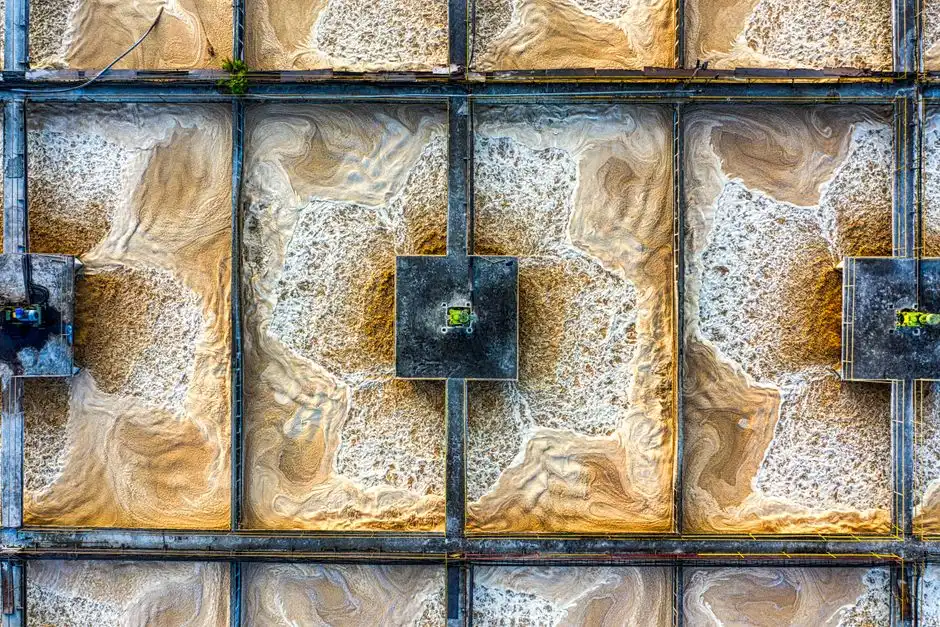
DAF, lamella clarification, MBBR, MBR, electrocoagulation and ultrafiltration solve different problems, so the procurement comparison should be organized by contaminant and required outcome rather than by a preference for one “advanced” system. The supplier must state what each process removes, where the separated solids go, and what evidence supports the claim.
DAF primarily addresses suspended solids, FOG, oil and grease, and colloidal matter. Lamella clarification primarily separates flocculated solids. MBBR targets biodegradable organics and retains biomass on carriers, so downstream solids separation remains necessary. MBR combines biological treatment with membrane solids separation. Electrocoagulation is a case-specific option for streams such as the mineral-processing wastewater studied by MDPI, where initial COD was 424.29 mg/L.
| Unit operation | Primary contaminant or objective | Solids-management implication | Supplier evidence required |
|---|---|---|---|
| DAF | Suspended solids, FOG, oil and grease, colloids | Produces floatable sludge requiring removal and dewatering | Waste-specific flotation and removal data |
| Lamella clarification | Flocculated or settled solids | Produces settled sludge | Solids loading and clarified-effluent performance |
| MBBR | Biodegradable COD | Requires downstream separation of carrier-biomass solids | HRT, temperature, COD and toxicity evidence |
| MBR | Biodegradable COD plus membrane solids separation | Requires membrane cleaning and concentrated-residue management | Filtrate quality, cleaning and replacement obligations |
| Electrocoagulation | COD reduction for a specifically studied waste | Generates coagulated solids or flocs | Exact waste, current density, pH and additive conditions |
| UF | Bacteria, colloids and suspended solids | Creates a concentrated retentate requiring management | Recovery, cleaning and retentate-disposal data |
IVL reported that the Hamburg Water Cycle treats 25 m³ of greywater per day in an MBBR combined with an ultrafilter. This is a local integrated-reuse example, not industrial COD-removal evidence. HydropureWater specifies its ultrafiltration system for bacteria, colloids and suspended solids using 0.03 μm PVDF membranes. UF is therefore most relevant as a polishing or membrane-retentate-management step, not as the primary COD-removal process.
Pilot, commission and document performance
Acceptance testing must use representative wastewater and capture production-batch variation; synthetic-water or clean-water results cannot demonstrate treatment of the manufacturer’s discharge. Define COD removal, effluent COD, flow, temperature, pH, suspended solids and any FOG or toxicity limits around the actual discharge or reuse objective.
The MBBR study provides a useful structure for the pilot: hydraulic retention time, temperature, inlet COD and biomass behaviour were important operating variables. They should be monitored rather than copied as universal settings. Use the automatic chemical dosing system assessment to verify control response, chemical demand and compatibility with the complete process.
Commissioning should extend beyond the treated-water outlet. Confirm downstream solids handling, sludge dewatering, chemical consumption, alarm response and performance during the highest representative loading condition. The practical sequence is to characterize the waste, determine hydraulic and contaminant peaks, select pretreatment, calculate biological loading and confirm performance in pilot testing.
The supplied research does not establish Hamburg-specific discharge limits for trade waste. The proposal must therefore be checked against the current sewer-acceptance conditions or discharge authorization issued by the relevant authority. The pretreatment implications described in this pretreatment-limits case illustrate why acceptance boundaries must be defined; it does not provide the applicable Hamburg limits.
Frequently Asked Questions
How should a Hamburg manufacturer size a treatment train for high-COD trade waste?
Start with characterization, not a COD-to-flow rule. Determine average flow and hydraulic peaks, COD and BOD variation, FOG, suspended solids, pH, temperature, toxicity and biodegradability; then select pretreatment, calculate biological loading and verify the integrated train in pilot testing. Neither the supplied studies nor the product information supports a universal sizing formula for Hamburg trade waste.
What should a supplier provide before equipment is selected?
Require waste-specific performance data, an operating envelope, control philosophy, material compatibility, sludge-handling details, service support and acceptance criteria. A generic capacity statement is not enough. For biological systems, ask for evidence at the proposed COD range and temperature; for DAF, ask for removal performance on the actual oil, FOG and solids mixture.
How should a buyer establish the budget for high-COD treatment?
Request a priced process proposal rather than compare equipment prices alone. Total cost depends on flow, COD, pretreatment needs, temperature, reuse targets and solids handling, but the supplied research contains no defensible Hamburg price range. The proposal should separate equipment, civil works, controls, chemicals, energy, sludge handling, commissioning, performance guarantees and long-term service costs.
Does Hamburg’s municipal treatment capacity guarantee that trade waste will be accepted?
No. Köhlbrandhöft’s reported municipal flow and resource-recovery processes do not constitute manufacturer-side treatment capacity or sewer permission. Obtain current discharge or sewer-acceptance conditions from the relevant authority and align pretreatment, effluent quality and documentation with those requirements.
Should the plant choose MBBR or MBR?
Choose MBBR when carrier-based biological treatment is appropriate and downstream solids separation can be managed; choose MBR when the required effluent quality and operating model justify integrated membrane solids separation. The decision should follow the effluent objective, temperature, toxicity, sludge constraints and waste-specific pilot results—not a generic claim that one process is more advanced.
Related Equipment
- integrated MBR wastewater treatment system — specifications, capacity range, and technical data