Which Rules Control Sewer Discharge?
Chemical plants discharging process wastewater to a sewer in Burlington Township are indirect dischargers to a publicly owned treatment works, or POTW. Their design basis is the more stringent combination of applicable categorical pretreatment standards and Burlington’s site-specific conditions, not the federal metal-finishing values alone. Burlington administers its Discharge Permit program under North Carolina pretreatment rules and its Sewer Use Ordinance. The plant must characterize pollutants and flows, eliminate prohibited discharges, provide equalization and slug protection where required, remove regulated metals, solids, ammonia and other pollutants, and document compliance. Equipment should not be sized until the current local-limit schedule, flow criteria and permit conditions are obtained.
The controlling distinction is where and how the wastewater enters the sewer system. The EPA’s “Pretreatment Standards and Requirements—Local Limits” guidance states that POTWs impose local limits at the industrial user’s end-of-pipe discharge, meaning the point of connection to the POTW collection system, under 40 CFR 403.5(c). Federal categorical standards establish the floor; the Sewer Use Ordinance and Discharge Permit establish Burlington’s operating ceiling. For comparison, the mining and metals sewer pretreatment compliance framework illustrates the same hierarchy, although chemical manufacturing has different contaminant profiles.
Metal-finishing limits illustrate why categorical compliance is not enough. The HydropureWater article dated 2024-11 reports federal limits under 40 CFR 433.15 of 3.38 mg/L copper and 2.77 mg/L total chromium as daily maxima, with monthly averages of 2.07 mg/L copper and 1.71 mg/L total chromium. The same article cites 2026 local POTW ranges of 0.3–1.0 mg/L zinc and 0.3–0.5 mg/L copper on a monthly-average basis. Those are cited local ranges, not Burlington requirements; confirm the current Burlington schedule before design.
Burlington also maintains North Carolina’s prohibited-discharge provisions and its own discharge authorization. A separate NPDES permit may still be necessary for a direct or stormwater outfall, so sewer pretreatment coverage should not be treated as approval of every discharge pathway. The comparison of MBR and conventional activated sludge for fabricated-metals wastewater addresses downstream biological treatment, but the sewer-side acceptance criteria must first be established.
Build the Compliance Pathway from Characterization to Discharge
A defensible treatment train begins with a representative waste characterization and ends with verified compliance at the authorized connection. Sampling should cover normal production, cleaning, batch dumps and other conditions likely to produce high-strength slugs. The analytical panel should include pH, flow, metals, solids, ammonia, toxicity indicators and constituents specific to the chemical process; assumed values should not replace permit-panel data or process records.
Before selecting equipment, obtain Burlington’s current Sewer Use Ordinance schedule, discharge authorization, monitoring requirements and headworks-analysis information. The permit should identify the sampling point, averaging periods, monitoring frequency, recordkeeping duties and slug-control conditions. If treatment facilities are new, written Authorization to Construct is required before construction, according to the HydropureWater article dated 2024-11.
The same 2024-11 article describes Burlington’s permit sequence: application to the Pretreatment Compliance Specialist, facility inspection, permit drafting, NCDENR review, a 30-day comment window and up to 60 days for the City to respond to objections. A new categorical discharge requires submission of categorical-process information at least 180 days before discharge. That submission requirement is separate from equipment fabrication and should be placed on the project schedule before a vendor is selected.
North Carolina’s prohibited-discharge rules, as summarized by HydropureWater in 2024-11, cover corrosive wastewater, fire or explosion hazards, obstructions, treatment interference, POTW permit violations and wastewater above 104°F (40°C). For chemical plants, these are process-design inputs: segregate incompatible streams, prevent uncontrolled dumps and evaluate temperature before combining them.
| Workflow stage | Required evidence | Design consequence |
|---|---|---|
| Waste characterization | Representative sampling across production and cleaning conditions | Define unit operations, analytical targets and control ranges |
| Local-limit confirmation | Current Burlington ordinance schedule and discharge permit | Set the end-of-pipe residual required at the POTW connection |
| Industrial-user classification | Flow, categorical status, POTW-capacity contribution and adverse-impact assessment | Apply the applicable monitoring and permitting obligations |
| Permit approval | Application, inspection, construction authorization where applicable, NCDENR review and permit | Do not construct or discharge before authorization |
A facility is a Significant Industrial User if it discharges a daily average of 25,000 gallons of process wastewater, is a categorical industry, contributes 5% or more of POTW design capacity, or is determined to adversely affect the treatment plant, receiving stream or City sludge-disposal options, according to the HydropureWater article dated 2024-11. The regional industrial pretreatment permit workflow provides a useful cross-check on document sequencing, but Burlington’s current procedures remain controlling.
Match Chemical Wastewater Risks to Treatment Steps
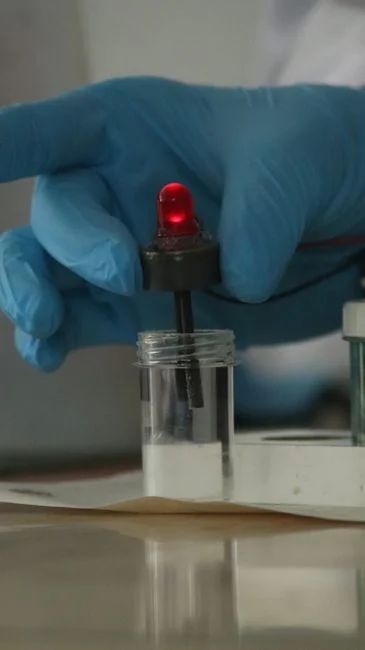
Chemical-plant treatment should follow the contaminant and hydraulic risks rather than a generic “pretreatment package.” Suspended solids, oil and grease, and colloidal material require a physical-removal step; variable pH and soluble pollutants require controlled chemical dosing; soluble metals and ammonia require a route demonstrated to achieve the permitted residual. Equalization should protect downstream units from batch dumps and production swings, while monitoring must verify the result at the permit sampling point.
For suspended solids, oil and grease, or colloidal material, evaluate dissolved air flotation as a physical-removal option. The HydropureWater equipment catalog lists a DAF range of 4–300 m³/h across 13 standard models. A DAF system for chemical-plant wastewater pretreatment should therefore be checked against the confirmed hydraulic and contaminant basis rather than selected from a generic wastewater profile. The mechanical bar screen may protect downstream equipment from gross solids, but it does not remove dissolved contaminants.
For pH adjustment and chemical precipitation, use an automatic dosing system for pH and pollutant control configured around the approved treatment train. Specify coagulants, flocculants, pH adjusters and specialty chemicals from jar or pilot results. Dosing controls should be tied to measured flow and process signals so a chemical-manufacturing batch change does not create a permit exceedance.
Physical clarification alone should not be assumed to remove soluble metals or ammonia. Select precipitation, polishing or biological treatment only where bench or pilot evidence supports the required residual. For polishing, the multi-media filtration equipment should be evaluated against the actual contaminant mechanism rather than presented as a universal compliance solution.
Equalization is a process-control asset as well as a volume requirement. HydropureWater’s 2024-11 article specifies a design basis of peak 2-hour flow with 20–30% turndown capacity. Use flow-paced controls for chemical-blower and high-strength slug risks, and verify that the selected equipment remains controllable across that operating envelope.
Where Burlington requires pathogen control, compare UV with on-site chlorine dioxide generation. The Sewer Use Ordinance, collection-system configuration and permit determine the route; a UV sterilizer and an on-site chlorine dioxide generator should be compared on permit requirements, hydraulics, site utilities and operational controls rather than assumed interchangeable.
| Chemical-process risk | Potential treatment step | Selection test |
|---|---|---|
| Suspended solids, oil and grease, colloids | Equalization followed by physical separation such as DAF | Representative performance and solids-handling disposition |
| Variable pH | Automatic chemical adjustment | Flow-paced response and permit residual |
| Soluble metals | Precipitation followed by solids separation and, if required, polishing | Pilot or bench support for the local residual |
| Ammonia or soluble organics | Biological or validated polishing route | Residual target, loading and turnaround |
| Batch dumps and chemical slugs | Equalization and controlled feed | Peak 2-hour flow with 20–30% turndown |
| Pathogen control required | UV or on-site chlorine dioxide | Burlington ordinance and permit conditions |
On-site reuse is part of the plant mass balance, not a bypass. Residual blowdown must still meet Burlington’s limits before entering the sewer, as stated in HydropureWater’s 2024-11 article. The comparison of DAF and clarifier for industrial wastewater offers useful selection questions, but the final choice must be based on the chemical stream.
Size Equalization and Polishing from Permit Data
Equalization and polishing equipment should be sized from Burlington’s enforceable requirements and the plant’s confirmed hydraulic envelope, not from concentration limits alone. Before releasing a selection, request the local limit for every pollutant on the analytical panel, maximum daily and instantaneous loading rates, slug-control conditions, flow-equalization requirements and the authorized sampling point. The 2024-11 HydropureWater article identifies these permit items as the necessary inputs before equalization, reagent and polishing equipment are sized.
A concentration limit does not establish treatment capacity by itself. Maximum daily and instantaneous loading rates connect contaminant mass to the flow that the treatment train must handle. The hydraulic basis should reflect the peak 2-hour flow and 20–30% turndown cited by HydropureWater in 2024-11, while also checking any different condition in Burlington’s Discharge Permit.
Verify both ends of the operating envelope. The selected equalization and treatment system must accommodate the confirmed peak without loss of control and must maintain stable performance at the low-flow end. Obtain a written flow-range check from the vendor that ties equipment capacity, controls and chemical feed to the confirmed hydraulic basis. For polishing, define permit-specific residual targets and select a technology whose validated performance addresses the relevant metal, ammonia or organic mechanism.
| Permit or process input | Why it affects design | Required supplier response |
|---|---|---|
| Local limit for each analytical pollutant | Defines the required treated residual | State treatment target and basis of performance |
| Maximum daily and instantaneous loading rates | Links pollutant mass to required treatment capacity | Confirm capacity against both loading conditions |
| Peak 2-hour flow and 20–30% turndown | Establishes the hydraulic operating envelope | Provide written minimum and maximum flow confirmation |
| Slug and equalization conditions | Controls batch dumps and hydraulic surges | Document equalization and flow-paced control response |
| Sampling point and averaging period | Determines where and how compliance is demonstrated | Align instruments, sample access and operating records |
The permit review and equipment selection should be treated as one technical review. Permit language determines the residual and monitoring obligations; process testing determines whether the proposed train can achieve it; hydraulics then determine the required basin and equipment capacity. Closing one of those gaps with a generic assumption risks either an undersized equalization system or polishing equipment that does not control the regulated pollutant.
Turn the Permit into an Operating and Procurement Checklist

A procurement-ready package converts Burlington’s authorization into documents, controls and testable acceptance criteria. Request the current Sewer Use Ordinance schedule and draft headworks-analysis summary from Burlington’s Pretreatment Compliance Specialist. Confirm the complete analytical panel, sampling point, averaging period, monitoring frequency, recordkeeping requirements and slug-discharge provisions in the Discharge Permit.
Obtain written confirmation of the local limits, maximum daily and instantaneous loading rates, peak 2-hour flow, required turndown, temperature ceiling and construction-authorization requirements. Engineering should then trace each permit condition to a treatment step, instrument, alarm or operating procedure. Equipment submittals should identify the sampling location and show how the train responds to production changes.
For budget planning, the principal cost drivers are equalization civil work, treatment capacity, reagent consumption, sludge handling, instrumentation and monitoring. The supplied research does not support a plant-specific cost range, so a defensible estimate requires the confirmed wastewater characterization, flow basis, permit targets, civil conditions and selected treatment train.
Validate the complete train with representative wastewater before final sizing. Establish operating limits that prevent production changes from creating a permit exceedance, and define who reviews analytical results, initiates corrective action and maintains permit records. If solids must be dewatered before disposal, the plate-and-frame filter press should be evaluated as part of the residual-solids mass balance rather than as an isolated purchase.
Frequently Asked Questions
What flow and wastewater data are needed to size treatment for Burlington sewer discharge?
Size the train around Burlington’s permit requirements and the confirmed peak 2-hour flow with 20–30% turndown identified in HydropureWater’s 2024-11 design basis. Also request the actual analytical panel, maximum daily and instantaneous loading rates, slug conditions and any added equalization requirement. A vendor should provide a written flow-range check against these inputs.
What will a chemical-plant wastewater pretreatment system cost?
No reliable plant-specific price can be stated from the supplied research. Ask for a cost breakdown covering equalization civil work, treatment capacity, reagents, sludge handling, instrumentation and monitoring. Obtain quotations only after Burlington’s local limits, wastewater characterization and hydraulic basis are confirmed; otherwise the treatment capacity and civil scope may change.
How long should permit review be allowed before equipment delivery?
Schedule the project around the requirement in HydropureWater’s 2024-11 article to submit categorical-process information at least 180 days before a new discharge. Burlington’s permit workflow also includes a 30-day NCDENR comment window and up to 60 days for the City to respond to objections. Equipment lead time should run in parallel with review, but installation must not bypass construction authorization or permit approval.
Are federal categorical limits the same as Burlington’s sewer discharge targets?
No. Federal categorical standards establish the regulatory floor, while Burlington’s current Sewer Use Ordinance and Discharge Permit establish the site-specific operating ceiling at the industrial connection. Use the current local limits and permit conditions as the design basis, and confirm them with Burlington before purchasing equipment.