Why Burlington-Area Mining and Metals Plants Are Regulated Through the Sewer, Not the River
Burlington-area mining and metals operations that discharge process wastewater to the municipal collection system are regulated under Clean Water Act §307(b) and 40 CFR Part 403, not under the National Pollutant Discharge Elimination System (NPDES) program. A sewer discharge is an indirect discharge to surface water, so the local publicly owned treatment works (POTW) — through its sewer-use ordinance — sets and enforces the numerical limits, not an EPA regional office (per 40 CFR 403.3(j)).
Mining and metals operations typically qualify as Categorical Industrial Users under 40 CFR Part 437 (Ore Mining and Dressing) and, where plating, pickling, or anodizing lines exist, 40 CFR Part 433 (Metal Finishing) layers on top with copper capped at 3.38 mg/L daily max / 2.07 mg/L monthly average and total chromium at 2.77 mg/L daily max / 1.71 mg/L monthly average (per 40 CFR 433.15). A single excursion on either pathway can trigger a CWA §309 civil penalty of up to $25,000 per day per violation, and that number frames every sizing decision downstream.
Most plants carry both a Burlington Discharge Permit and an NPDES permit in parallel because they have separate stormwater outfalls. The sewer path is the binding constraint for the rest of this article because the local limits, sampling protocols, and enforcement triggers are tighter and more frequent than NPDES self-monitoring. Conflating the two pathways is the single most common reason a plant invests in the wrong treatment train (per HydropureWater, 2024-11).
How the City of Burlington's Pretreatment Program Actually Works
The City of Burlington administers its program under North Carolina's pretreatment regulations and its own Sewer Use Ordinance, and it is the local control authority a mining or metals plant will negotiate with directly. The State of North Carolina's Pretreatment Regulations apply to all industrial water users regardless of any other federal, state, or local standards (per burlingtonnc.gov S4).
A "Significant Industrial User" under Burlington's program is any industry that discharges a daily average of 25,000 gallons of process wastewater, is classified as a categorical industry by federal regulation, contributes 5% or more of any design capacity of the receiving POTW, or is determined to adversely impact the wastewater treatment plant, receiving stream, or limit the City's sludge disposal options (per burlingtonnc.gov S4). The City also has the authority to develop local limits through a headworks analysis, setting the maximum amount of metals, solids, ammonia, and other pollutants an industry may introduce into the system.
The Discharge Permit pathway runs on a defined clock. An industrial user submits an application to the Pretreatment Compliance Specialist; once the application is complete, a facility inspection is conducted; if the facility is to be built, written Authorization to Construct must be obtained before any construction. Burlington then drafts a permit and sends it to the NC Department of Environment and Natural Resources (NCDENR) for review. Both the State and the industrial user have 30 days to comment, and if NCDENR objects the City must respond within 60 days (per burlingtonnc.gov S4). Federal categorical processes require information 180 days prior to discharge.
Permits are issued for a standard 5-year term, and a renewal application must be made 180 days before expiration. North Carolina's parallel state standards prohibit discharge of pollutants that are corrosive, create a fire or explosion hazard, obstruct flow, upset treatment processes, cause the City's effluent to violate State or Federal standards, or push wastewater temperature above 104°F (40°C) (per burlingtonnc.gov S4). Contact points are the Burlington Pretreatment Compliance Specialist at (336) 222-5133 and the NC Division of Pollution Prevention and Environmental Assistance at 919-715-6500 or 800-763-0136.
Federal Categorical Floors vs the Burlington POTW Ceiling
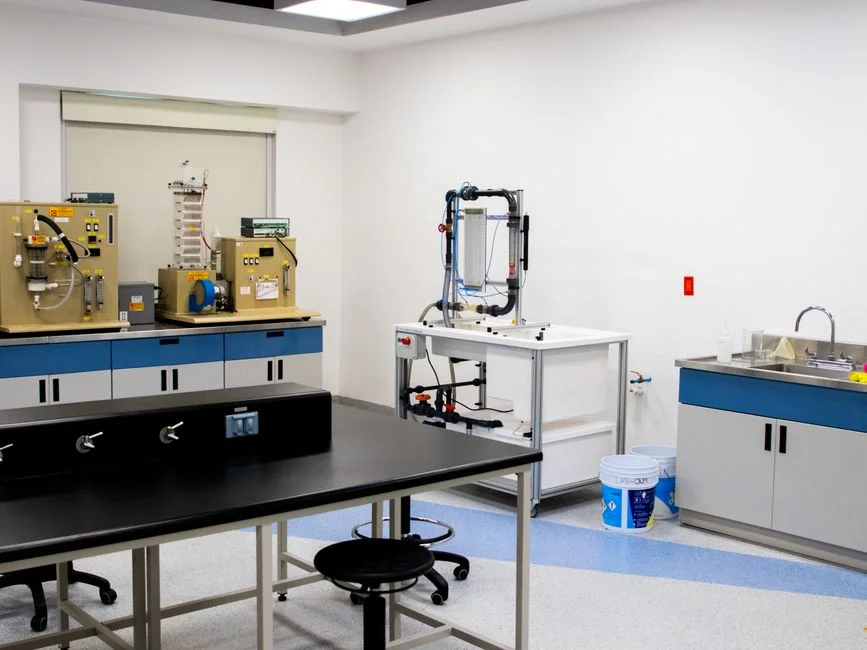
Federal categorical standards set the floor; Burlington's local POTW ceiling almost always sets a tighter number, especially for zinc, copper, lead, and ammonia. The POTW is protecting its own biomass and sludge quality, and a categorical industrial user has no automatic exemption from local limits developed through headworks analysis (per epa.gov S3; per HydropureWater, 2024-11).
The 40 CFR Part 433 ceilings for metal finishing — copper 3.38 mg/L daily max / 2.07 mg/L monthly average, total chromium 2.77 mg/L daily max / 1.71 mg/L monthly average — are well above what most 2026 sewer-use ordinances permit (per 40 CFR 433.15). Typical 2026 local POTW limits run zinc 0.3–1.0 mg/L monthly average and copper 0.3–0.5 mg/L monthly average (per HydropureWater, 2024-11). Lead is being driven downward by the Lead and Copper Rule Revisions (LCRR) to roughly 10 µg/L as the action level, one to two orders of magnitude below the Part 437 floor, so hydroxide-only precipitation is no longer a defensible endpoint against a strict POTW.
| Parameter | 40 CFR Part 433 Daily Max (mg/L) | 40 CFR Part 433 Monthly Avg (mg/L) | Typical 2026 Local POTW Limit (mg/L) |
|---|---|---|---|
| Copper | 3.38 | 2.07 | 0.3–0.5 monthly avg |
| Total Chromium | 2.77 | 1.71 | Confirm against Burlington Sewer Use Ordinance |
| Zinc | Confirm against 40 CFR 433.15 | Confirm against 40 CFR 433.15 | 0.3–1.0 monthly avg |
| Lead | Confirm against 40 CFR 433.15 | Confirm against 40 CFR 433.15 | ~0.01 (10 µg/L) action level trend under LCRR |
Three things must be confirmed on the actual permit before any equipment is sized: the local limits for each metal on the analytical panel, the maximum daily and instantaneous loading rates, and any slug-control or flow-equalization requirements the City has added to the discharge authorization (per HydropureWater, 2024-11).
The Influent Envelope You Are Designing Against
Raw acid mine drainage and spent process solutions typically arrive at the headworks at pH 2–4 with total suspended solids in the hundreds to several thousand mg/L, dissolved heavy metals (Pb, Cu, Zn, Cd, Ni, As), and elevated sulfate and TDS in leach-pad runoff and brine streams (per HydropureWater, 2024-11). The dissolved heavy metals define categorical applicability under 40 CFR Part 437 and the local POTW limit, and they come from a specific source: acid rock drainage, the persistent reaction of water and oxygen with sulfide minerals such as pyrrhotite and pyrite (per SME, cited in HydropureWater, 2024-11). ARD is not event-driven; it is persistent, which is why the equalization basin, not the clarifier, is the unit operation that decides whether a spike becomes a violation.
Elevated sulfate and TDS push the reagent choice toward NaOH rather than lime in high-TDS service, because lime generates 3–5× more sludge at the same neutralization duty and that sludge has to be dewatered, hauled, and disposed of. Legacy sites near Burlington can carry mercury and cyanide from historic gold processing where legacy streams commingle with modern circuits, so a full analytical panel (TSS, pH, total and dissolved metals, sulfate, TDS, cyanide where applicable) should precede any equipment selection (per HydropureWater, 2024-11).
Equalization: The Unit Operation That Decides Compliance
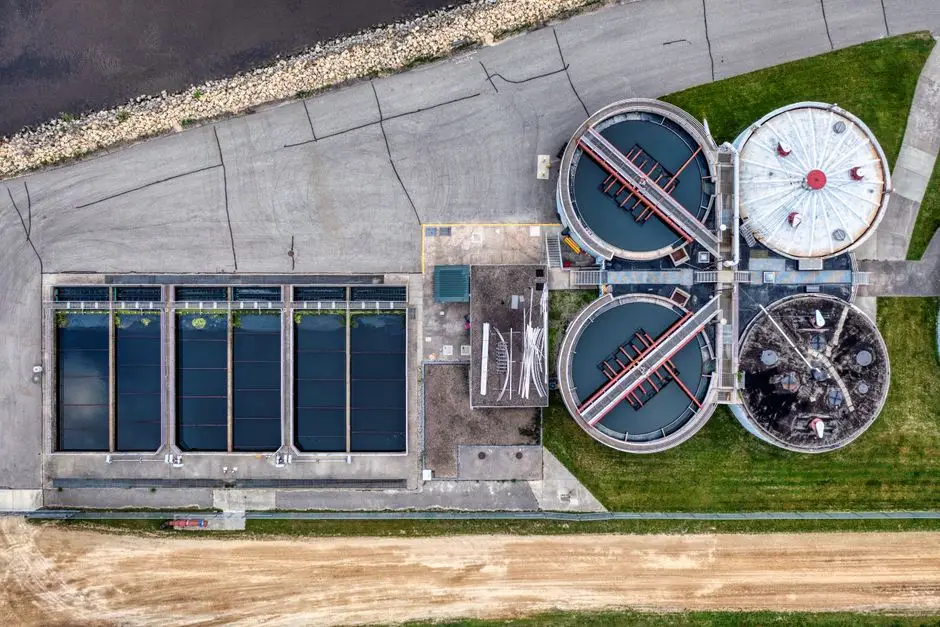
The equalization basin is the most undersized piece of equipment in most mining/metals pretreatment plants, and the most expensive to retrofit. Spec the basin at 8–24 hours of average daily flow to dampen batch discharges from shift changes, dump-leach cycles, and mill clean-outs; a 4-hour basin passes every upstream spike straight into the clarifier (per HydropureWater, 2024-11). For headworks protection, the standard approach is a rotary mechanical bar screen placed ahead of the equalization basin.
Worked example at 100 m³/h average flow with one 2-hour mill clean-out spike of 250 m³/h carrying 1,200 mg/L TSS and 8 mg/L zinc. A 4-hour (200 m³) basin yields roughly 3.9 mg/L zinc in the daily composite, settling the rolling 30-day monthly average right at or above a 0.3–1.0 mg/L local ceiling. A 24-hour (2,400 m³) basin dilutes the same spike to roughly 2.1 mg/L instantaneous zinc and drops the monthly average to about 0.8 mg/L, well below a 0.3–1.0 mg/L local ceiling (per HydropureWater, 2024-11).
Translate the difference into CWA §309 risk: a single monthly-average excursion is a violation; a sustained excursion is a pattern of violations. The marginal cost of a 24-hour basin over a 4-hour basin is small compared to a $25,000/day civil penalty, and the basin is the only unit operation in the train that can be installed once and never replaced (per HydropureWater, 2024-11). The single number that justifies the investment is the monthly average, not the daily max.
pH Correction and Reagent Choice
Lime (Ca(OH)₂), caustic soda (NaOH), or sodium hydroxide are the workhorses for pH correction. Lime is cheaper per ton but generates 3–5× more sludge, so high-TDS mining streams often justify the higher reagent cost of NaOH (per HydropureWater, 2024-11). Target pH 6.5–9.0 to satisfy virtually every POTW's instantaneous range, and stage the dosing in two reactors if the influent swings more than 2 pH units.
The downstream consequence of sloppy pH control is severe: each 1 pH unit away from the metals-precipitation optimum can cut removal efficiency by an order of magnitude, sending zinc from <1 mg/L to 10+ mg/L with no other change to the chemistry. An automatic chemical dosing skid that handles both pH adjustment and coagulant feed on a single PLC cuts the operator-attention burden and keeps pH inside a ±0.2 band, which is the difference between meeting and missing a 0.3 mg/L zinc monthly average. For a deeper engineering read on skid design, see the auto dosing for wastewater treatment 2026 engineering guide.
Hydroxide vs Sulfide Precipitation
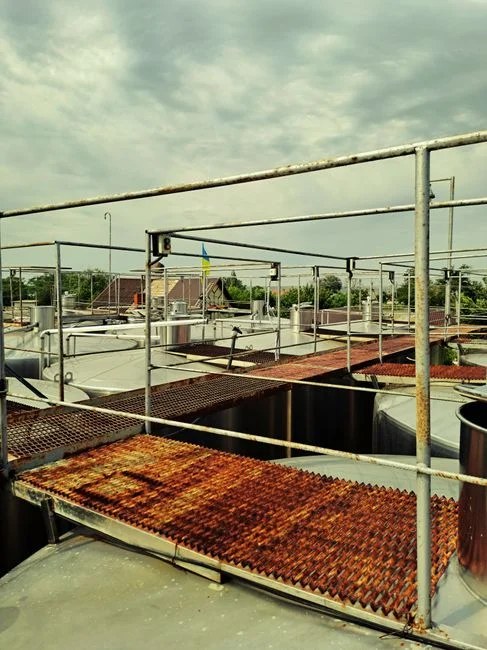
Hydroxide precipitation with NaOH or lime is the default for most plants because the reagent is cheap and the chemistry is well understood. Properly controlled precipitation systems in operating mining/metals installations routinely achieve 85–95% total metals removal (per Fluence, 2024-11).
Sulfide precipitation (NaHS, FeS, Na₂S) is reserved for streams where residual metal must drop below 0.1 mg/L. Sulfide residuals are typically 0.01–0.05 mg/L for Cu, Zn, Cd, and Ni, an order of magnitude lower than hydroxide (per HydropureWater, 2024-11). The reagent cost runs 2–4× higher, and operators must control H₂S off-gassing with sealed reactors and scrubbed vents.
For most Burlington-area mining flows, hydroxide precipitation with sulfide polishing on a slipstream is the cost-effective compromise when the local limit is below 0.3 mg/L. The optimum pH window is parameter-specific and must be locked in with jar testing, not vendor literature. A polymer coagulant aid dosed at 0.5–3 mg/L flocs the metal-hydroxide particles fast enough for the clarifier to operate at 20–40 m/h hydraulic loading without carryover (per HydropureWater, 2024-11).
DAF vs Lamella: Choosing the Right Solids Separator
This is the decision most engineers actually face in a real project: DAF or lamella. Both work; neither is universally better. The DAF system operates at 5–25 m/h hydraulic loading, floats oil-coated and colloidal particles with microbubbles, and achieves 90–98% TSS removal and 85–95% oil/grease removal in mining/metal-finishing service. The standard product range covers 4–300 m³/h across 13 models, which fits most plant scales without civil redesign (per HydropureWater, 2024-11).
A lamella clarifier operates at 20–40 m/h surface loading in roughly one-third the footprint of a conventional clarifier, has lower chemical consumption because the sludge blanket is denser, and handles heavy metal-hydroxide flocs very well. It does not remove free oil or colloidal fines as effectively as DAF.
| Separator | Hydraulic Loading | TSS Removal | Oil/Grease Removal | Best Fit |
|---|---|---|---|---|
| DAF system | 5–25 m/h | 90–98% | 85–95% | Oil, colloidal fines, flow <200 m³/h |
| Lamella clarifier | 20–40 m/h | Lower than DAF on fines | Poor | Metal-bearing sludge, flow >100 m³/h |
Use the heuristic: DAF when the stream carries oil, grease, or fine colloidal metals; lamella when the stream is primarily a metal-hydroxide sludge at high flow and the footprint is constrained. Below 10 m³/h, packaged DAF skids are common; above 100 m³/h, multiple DAF trains in parallel or a lamella clarifier typically becomes more economical (per HydropureWater, 2024-11). For a side-by-side on a specific municipal example, see the DAF vs clarifier for mining wastewater in Luverne decision guide.
Polishing, Disinfection, and Sludge Dewatering
A multimedia filter (anthracite over sand over garnet) is the safety net between the clarifier and the sewer manhole. At 1–2 m/h filtration rate with backwash triggered on differential pressure, it strips residual TSS to <10 mg/L and provides a buffer for the days when the clarifier underperforms because of a polymer mis-dose or a hydraulic surge (per HydropureWater, 2024-11).
UV or chlorine dioxide disinfection shows up in the local sewer-use ordinance whenever the POTW's collection system has long force mains or siphons, or whenever the discharge could plausibly carry pathogens. Chlorine dioxide dosed at 1–5 mg/L provides the residual the POTW asks for without forming the regulated trihalomethanes that chlorine produces (per HydropureWater, 2024-11).
Sludge from the clarifier and DAF is itself a regulated waste. A plate and frame filter press dewaters the sludge to 25–35% dry solids, producing a stackable cake that can be hauled to a subtitle-D landfill or, in the case of recoverable metals, returned to a smelter. Filtrate returns to the head of the plant to keep the recycle loop closed (per HydropureWater, 2024-11).
The 2026 Risk Trifecta Reshaping Burlington Permit Cycles
Three 2024–2026 EPA trends are reshaping what counts as compliant, and a plant specifying equipment today is not blindsided in the next permit cycle. First, the Lead and Copper Rule Revisions (LCRR) are pushing lead action levels toward 10 µg/L and forcing POTWs to re-derive local limits at much lower numbers (per HydropureWater, 2024-11). A plant designing to today's 0.3 mg/L lead ceiling should expect lead to be the binding constraint within two permit cycles, which means hydroxide precipitation alone is no longer a defensible endpoint for a strict POTW.
Second, EPA's 2024 Multi-Sector General Permit, finalized 2024-09, added PFAS monitoring requirements for PFOS, PFOA, PFHxS, and PFNA across sectors that include metal mining, and local control authorities are adopting the same analytical suite even for sewer discharges. If the Burlington self-monitoring report now carries a PFAS panel, GAC or ion-exchange polishing needs to be in the design envelope even if today's permit does not require it (per HydropureWater, 2024-11).
Third, the 2025 ore-mining BAT revisions, dated 2025-03, tightened the cost-benefit envelope on total recoverable metals, and plants that relied on hydroxide precipitation to 0.5–2.0 mg/L residuals are now installing sulfide polishing or ion exchange where hydroxide used to be enough. Treat all three as the next permit-cycle risk in 2026, not as background reading (per HydropureWater, 2024-11).
Burlington-Specific Pre-Design Checklist
Before sizing any unit operation, confirm against the Burlington Sewer Use Ordinance: local limits for each metal on the analytical panel, maximum daily and instantaneous loading rates, and any slug-control or flow-equalization requirements the City has added to the discharge authorization. Submit the Discharge Permit application with categorical-process information at least 180 days ahead of any new discharge, and build in time for a 30-day NCDENR comment window and up to 60 days for the City to respond to objections (per burlingtonnc.gov S4).
Design for the peak 2-hour flow with 20–30% turndown capacity, and treat to the local POTW's sewer-use ordinance, not just the federal categorical standard. Build the recycle loop in from the start; on-site reuse lowers permit risk, but the residual blowdown must still meet Burlington local POTW limits before it reaches the sewer manhole. For a parallel compliance blueprint covering adjacent sectors, see the mining/metals plants near Maple Valley 2026 pretreatment guide and the Tenino mining pretreatment 2026 framing of the same hierarchy.
| Item | Burlington-Specific Input | Source |
|---|---|---|
| Significant Industrial User threshold | 25,000 gpd process wastewater | burlingtonnc.gov S4 |
| Permit term | 5 years | burlingtonnc.gov S4 |
| NCDENR comment window | 30 days | burlingtonnc.gov S4 |
| City response to NCDENR objections | 60 days | burlingtonnc.gov S4 |
| Categorical renewal trigger | 180 days prior to discharge | burlingtonnc.gov S4 |
| Thermal cap | 104°F (40°C) | burlingtonnc.gov S4 |
Frequently Asked Questions
Do I need an NPDES permit if I already have a Burlington Discharge Permit?
No. NPDES permits govern direct discharge to surface water under Clean Water Act §402. Sewer discharge to a POTW is regulated under CWA §307(b) and 40 CFR Part 403, with categorical standards in 40 CFR Part 437 (Ore Mining and Dressing) and 40 CFR Part 433 (Metal Finishing) where applicable. Most plants carry both authorizations because they have separate stormwater outfalls, and the local POTW enforces the sewer-side limits directly (per HydropureWater, 2024-11).
How tight are Burlington's local limits compared to the federal categorical standard, and what capex impact should I plan for?
Typical 2026 local POTW limits run zinc 0.3–1.0 mg/L monthly average and copper 0.3–0.5 mg/L monthly average, tighter than the 40 CFR Part 437 floor of 1.0 mg/L daily max / 0.5 mg/L monthly average; lead is being driven toward 10 µg/L under LCRR. Request the actual Sewer Use Ordinance schedule from the Burlington Pretreatment Compliance Specialist and a draft headworks-analysis summary before sizing the equalization basin and reagent skid, because the basin is the single most expensive retrofit and the dollar value of oversizing it from 4 hours to 24 hours at specification stage is far less than civil expansion later (per HydropureWater, 2024-11; per burlingtonnc.gov S4).
When is sulfide precipitation worth the 2–4× reagent premium over hydroxide?
Sulfide precipitation (NaHS, FeS) achieves residual metals of 0.01–0.05 mg/L versus 0.5–2.0 mg/L for hydroxide, which matters when the local limit is below 0.3 mg/L. Reagent cost runs 2–4× higher and the system requires sealed reactors with H₂S scrubbing. For most mining flows, hydroxide precipitation with sulfide polishing on a slipstream is the cost-effective compromise (per HydropureWater, 2024-11).
What DAF or lamella capacity do I need for a 50 m³/h mining wastewater stream, and what is the realistic lead time?
Standard DAF system units cover 4–300 m³/h across 13 models, with hydraulic loading of 5–25 m/h. A 50 m³/h stream typically lands in the mid-range factory-built modular band with a single DAF train. Above 100 m³/h, multiple DAF trains in parallel or a lamella clarifier becomes more economical, especially when the stream is a metal-hydroxide sludge rather than an oily emulsion. Request a flow-range confirmation in writing from the vendor against the 2-hour peak flow plus 20–30% turndown, and confirm the delivery window against the 180-day categorical renewal trigger on the Burlington calendar (per HydropureWater, 2024-11).