What Changes When Samsung SDI Transfers the Hungary Plant?
Wastewater at a newly acquired Samsung SDI battery plant in Hungary must be managed as a permit-transfer and re-permitting issue, not merely an operating upgrade. On 10 October 2025, the Budapest District Court annulled the December 2023 environmental permit for the Göd lithium-ion cell plant, and production had to remain suspended until a fresh IPPC permit was issued, according to the Samsung SDI Hungary wastewater compliance guide. The buyer therefore needs to establish whether the existing plant can lawfully operate, discharge and expand before treating the acquisition as an operating asset.
The legal position is not cured by signing the sale. The acquisition analysis states that Hungarian environmental authorizations are attached to the operator and the facility’s technical state. A share or asset transfer therefore requires formal transfer and regulatory review; it does not transfer the right to continue an activity under a permit that has been annulled or materially changed.
The proposed expansion is a separate issue from the existing operation. It comprises 43,000 m² of additional halls, four further battery-cell production lines and an increase in annual capacity to 157,000 tonnes, described in the compliance guide as a 20% increase. Because the expansion changes the project, the guide states that a revised Environmental Impact Assessment is required under Government Decree 314/2005. Continued enforcement of the annulled December 2023 permit was also found likely to cause significant harm to citizens.
Three decisions must therefore remain separate in transaction documents: whether the existing permit status can be regularized, whether the transfer itself is accepted by the authority, and whether the expansion receives an amended or new authorization. “Transfer,” “amendment” and “new authorization” are not interchangeable labels, and the buyer should require the responsible Hungarian counsel and permitting consultant to identify which route applies to each activity and consent.
Build a 90–180 Day Wastewater Due-Diligence Plan
A defensible acquisition plan treats permit work, stream characterization, engineering design and procurement as one gated process. The Hungary battery-plant acquisition due-diligence workflow recommends opening a document room containing the IPPC permit, water-rights authorizations, sewer agreements, five years of self-monitoring reports, discharge records, hazardous-waste files and inspectorate correspondence.
Sampling must then move downstream from records to source streams. Cathode coating, cleaning, equipment washing, floor and process drainage, laboratory wastewater and sanitary sewage should be sampled separately. The acquisition design basis includes NMP and COD, fluoride, cobalt, nickel, manganese, TSS, conductivity or TDS, pH and process-specific solvents identified in the BAT documentation. Composite final effluent may be useful for permit compliance, but it cannot establish which unit process must remove which contaminant.
Measured peak flows and pollutant loads should be reconciled with the installed ETP’s operating envelope, because the acquisition guide warns that legacy equipment may be undersized relative to current production-line loading. This is a hydraulic and mass-balance check: feed each proposed treatment stage with documented flow, batch discharge, bypass and maximum-production scenarios rather than relying on nameplate capacity alone.
| Gate | Required evidence | Decision released |
|---|---|---|
| Legal and document review | Permit history, transfer position, appeal status, water rights, sewer agreement and five years of compliance records | Whether the plant may operate or discharge at closing |
| Stream characterization | Separate flow and laboratory data for every process stream, including peak and batch conditions | Contaminant-specific design basis |
| ETP verification | Installed-versus-current hydraulic and load comparison, bypass review and performance records | Retrofit scope and equipment envelope |
| Permit and BAT evidence | Applicable limits, BAT-AEL assessment, monitoring plan, discharge route and supporting calculations | Application or modification strategy |
| Engineering and procurement | P&ID, mass balance, control philosophy, guarantees, commissioning tests and long-lead schedule | Equipment award and execution plan |
The acquisition guide gives a 60–105 day typical IPPC review window and 30–60 days for a sewer agreement. These are planning assumptions, not guaranteed statutory outcomes, so legal confirmation is required for the specific transaction. Design, BAT verification, monitoring specification and long-lead procurement should run in parallel with the application; otherwise, a permit may describe a plant that cannot be built or commissioned on the required timetable.
Characterize Each Wastewater Stream Before Selecting Equipment
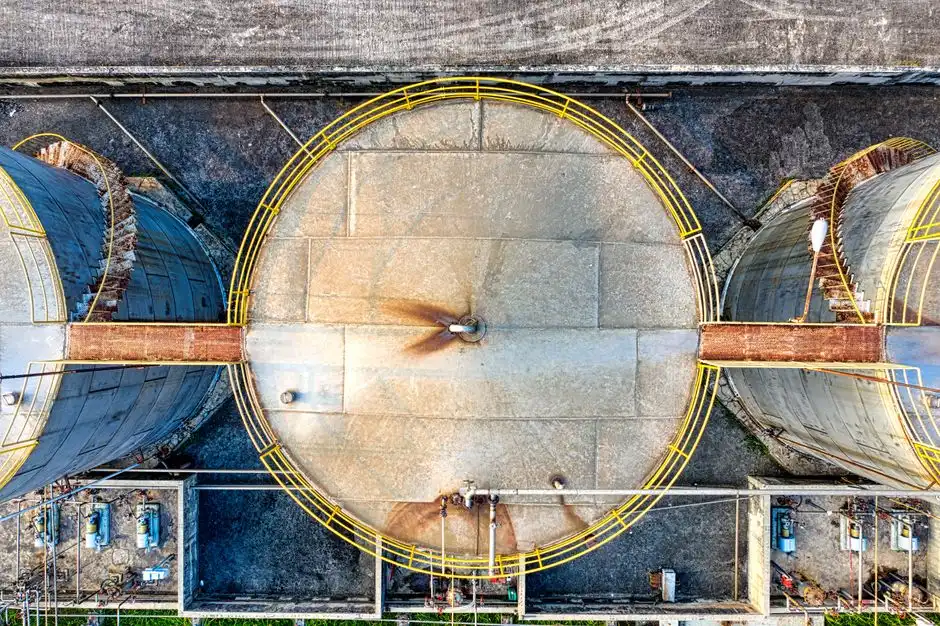
Battery cell manufacturing wastewater cannot be designed from the plant name alone because the contaminant load changes by production step. NMP is the primary carrier solvent for cathode and anode slurry and a major COD contributor; its theoretical COD is approximately 1.67 g O₂ per gram of NMP, according to the 2026 compliance guide. Fluoride must also be treated as a priority parameter because the guide links it to LiPF6 electrolyte hydrolysis when slurry water contacts humid air or alkaline cleaning solutions.
Cobalt, nickel and manganese belong in the metal-removal design basis because cathode active-material handling can introduce them into wastewater. Solids treatment must also address PVDF binder fines and carbon black, which the research describes as fine, low-density particles that do not settle readily. These contaminants point to different mechanisms: organics require biological treatment and solvent control, dissolved metals and fluoride require suitable removal or polishing, and low-density solids require reliable flotation or membrane capture.
| Stream or contaminant group | Characterization requirement | Treatment implication |
|---|---|---|
| Cathode and anode slurry streams | NMP, COD, pH, flow variability and emulsion characteristics | Equalization, solvent-compatible pretreatment and biological treatment |
| Cleaning and hydrolysis-affected streams | Fluoride, pH, alkalinity and source-specific alkalinity demand | pH control, solids removal and fluoride polishing or ion exchange |
| Cathode active-material handling | Cobalt, nickel and manganese, including insoluble fractions | Solids separation followed by dissolved-metal removal |
| PVDF and carbon black residuals | TSS, particle-size distribution and settleability | DAF or equivalent solids capture before membrane stages |
| Floor, equipment and process drainage | Batch contaminants, metals, salts, pH and flow profile | Segregated collection and controlled equalization |
| Sanitary sewage | Hydraulic load and applicable sewer or discharge conditions | Separate treatment route |
Process and sanitary streams should remain segregated. The 2026 compliance guide states that a single combined sewer is not acceptable for an IPPC-permitted installation. The receiving route must be confirmed before equipment selection because discharge to a municipal sewer, surface water or internal reuse creates different consent, monitoring and water-quality obligations. A DAF pretreatment system for NMP-bearing battery wastewater should therefore be specified against measured oil, emulsion and solids behavior, not merely a generic solids-removal duty.
Design a Treatment Train That Survives Permit Review
The defensible sequence in the acquisition research is EQ → DAF → MBR → ion exchange → RO → UV/ClO₂, with sanitary handling segregated. Each stage has a distinct permit-evidence function, and removing a stage without demonstrating equivalent performance would leave the application exposed.
| Stage | Primary objective | Evidence for the permit and design file |
|---|---|---|
| Equalization | Buffer hydraulic and concentration peaks | Measured flow and load curves, tank working volume, mixing and duty sequence |
| DAF | Remove TSS, PVDF fines, carbon black and oil/NMP emulsion | Particle and emulsion testing, polymer-assisted performance, sludge handling and bypass controls |
| MBR | Biologically remove degradable organics and separate solids | Influent characterization, membrane flux and cleaning strategy, redundancy and effluent quality |
| Ion exchange | Polish residual fluoride and selected dissolved ions | Competing-ion analysis, resin selection, regeneration and waste-disposal route |
| RO | Reduce dissolved salts and residual contaminants | Feed chemistry, recovery assumptions, concentrate management and reuse-water quality |
| UV or ClO₂ | Disinfect the selected reuse or discharge stream | Validated dose, contact conditions, by-product assessment and residual control |
EQ should absorb hydraulic and concentration peaks before biological and polishing stages. Chemical addition should reflect actual pH and coagulation demand; where these vary, PLC-controlled, skid-mounted dosing is easier to reconcile with the operating envelope. The guide specifies 4–300 m³/h per DAF unit and describes polymer-aided operation.
The MBR stage combines biological treatment with membrane separation. HydropureWater product data cited in the acquisition guide specifies submerged 0.1 µm PVDF membranes and effluent below 1 µm filtration, while the guide gives an integrated MBR range of 10–2,000 m³/day. These figures describe equipment ranges, not the Göd plant’s required capacity. The submerged PVDF MBR wastewater treatment system must be sized from measured loads and required redundancy.
Ion exchange and RO provide the final dissolved-contaminant and TDS barrier before reuse or discharge. The reverse-osmosis water-purification system should be selected only after the feed-water chemistry and concentrate route are defined. A validated disinfection stage must then match the receiving route. Continuous flow, pH, TOC and fluoride instrumentation should be specified where required by the permit, with valid calibration, data ownership and alarm logic.
No unverified site-specific concentration should be converted into a universal limit. The equipment offer and final design must be checked against the current permit, sewer rules, influent testing, BAT documentation and the applicable BAT-AEL conditions. An automatic chemical-dosing system also requires confirmation of chemical inventory, compatibility and containment.
Turn Permit Conditions into Monitoring and Operating Controls
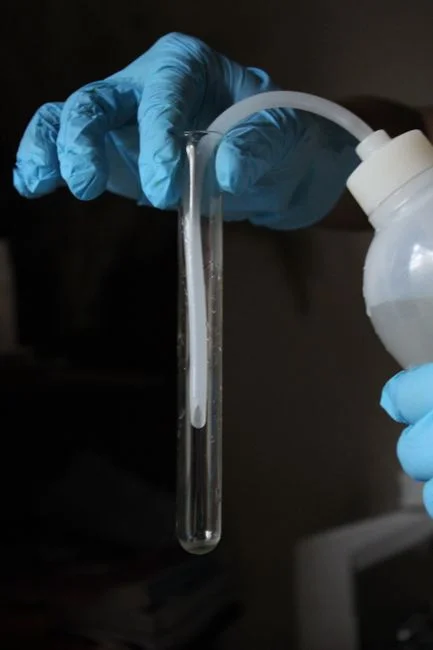
Permit compliance should be converted into a controlled evidence system before handover. A permit-compliance matrix should link every applicable parameter to its legal source, limit, monitoring frequency, analytical method, responsible operator and evidence repository. This distinguishes enforceable conditions from internal targets and shows the buyer which results demonstrate compliance, which trigger corrective action and which require immediate escalation.
Samsung SDI’s published environmental practices provide useful corporate due-diligence benchmarks. Its resource-circulation information reports reducing water consumption, increasing reuse, managing water quality and reducing effluent through process changes. It also reports altering process methods to reduce hydrochloric acid and caustic soda and thereby mitigate effluent generation. These are relevant management practices, but the buyer still needs site-specific consumption, chemical-use and effluent data to test whether the Göd operation can reproduce them.
Chemical inventory and process modifications should therefore be linked to wastewater performance. A change in cleaning chemistry, cathode-slurry solvent use or floor-washing practice can alter COD, fluoride, pH and salinity even if the installed ETP remains unchanged. Change control should identify the affected treatment unit, required sampling, operating envelope and notification obligations.
Hazardous sludge belongs in the acquisition scope. Characterization, storage, containment, transport and disposal must be assigned to responsible parties and linked to the wastewater process. The plate-and-frame filter press can dewater separated solids, but its selected filter area, cake moisture target and filtrate-return route must follow the solids mass balance and downstream water quality.
The operating plan should also define escalation for flow imbalance, abnormal pH, rising conductivity, failed or off-line analyzers and unauthorized batch discharge. Any recovered RO permeate counted against a reuse target must first be reconciled with process-water quality, seasonal demand and the site water balance. A UV disinfection system should be selected against the validated reuse or discharge route rather than included merely because disinfection appears in a reference train.
Budget, Schedule and Procurement Decision Framework
Retrofit cost must be compared as a complete treatment chain, including the residual solids, reagent and solvent-management consequences of each option. HydropureWater’s 2026 field-data estimate places a 500 m³/day retrofit ETP comprising screening, EQ, DAF, MBR, RO and sludge handling at approximately EUR 2.8–4.5 million in capital expenditure. This is an indicative band for that defined retrofit scope, not a quotation for the Göd acquisition.
The same research estimates annual electricity and membrane replacement expenditure at approximately 18–25% of capital expenditure. Reagent consumption, sludge disposal and solvent recovery can materially change that outcome. An earlier Samsung Hungary guide gives a broader EUR 15–45 million envelope for industrial battery-production WWTP capability when high-salinity and organic-solvent recovery complexity is included; it should not be presented as an alternative quote for the same 500 m³/day retrofit.
| Bid item | Evidence the buyer should require | Commercial decision affected |
|---|---|---|
| Guaranteed performance | Defined influent envelope, guaranteed outlet parameters and test methods | Risk retained by supplier or owner |
| BAT-AEL design margin | Basis of design, sensitivity analysis and regulatory reconciliation | Long-term compliance and operating reserve |
| Operating costs | Membrane life, energy, chemicals, sludge and concentrate disposal assumptions | Life-cycle cost |
| Controls and monitoring | PLC scope, analyzer compatibility, calibration, data export and cybersecurity boundary | Operability and permit evidence |
| Commissioning | Factory and site tests, performance demonstration and training | Start-up readiness |
| Schedule | Critical path, approval dates, long-lead items and liquidated remedies | Permit-supported operating date |
Bidders should price the complete DAF–MBR–RO and sludge chain, not isolated products. The 60–105 day IPPC review assumption should be placed on the programme schedule, with membrane, RO and dosing equipment identified before award. For preliminary hydraulics, the Hungary EV wastewater DAF capacity calculation provides a method for testing flow assumptions, while the comparison of MBR and conventional activated sludge can support an alternatives review. Neither substitutes for site-specific testing and the current permit.
Frequently Asked Questions
Can the buyer operate the Göd plant under the previous environmental permit after closing?
No—not merely because the sale has been signed. The acquisition research states that the buyer inherits the recorded permit status, including a pending annulment or other challenge, and that a signed sale does not cure a defective permit. Formal transfer and regulatory review are required, with production kept suspended until a fresh IPPC permit is issued if the December 2023 permit remains annulled.
What wastewater treatment train should be specified for a Samsung SDI-class battery plant?
The supported reference sequence is EQ → DAF → MBR → ion exchange → RO → UV/ClO₂, with sanitary handling segregated. Final selection must reflect measured stream composition, the current BAT documentation, discharge route and reuse requirements rather than the plant name alone.
How much does an acquisition-related wastewater retrofit cost in Hungary in 2026?
HydropureWater’s 2026 field-data estimate gives EUR 2.8–4.5 million for a 500 m³/day retrofit ETP covering screening, EQ, DAF, MBR, RO and sludge handling. The broader Samsung Hungary guide cites EUR 15–45 million for industrial battery-production WWTP capability where solvent recovery and greater complexity are included. Buyers should request a site-specific scope, contingency, exclusions and lifecycle-cost breakdown rather than treat either band as a quotation.
Should a buyer choose DAF, MBR or RO as the primary unit?
DAF addresses suspended solids, oil or NMP emulsion and colloidal material; MBR provides biological treatment with membrane separation; RO performs final dissolved-solids polishing. The defensible choice is an integrated sequence based on measured loads and permit objectives, with each bidder demonstrating how its complete chain handles the documented contaminants.
What should be completed before closing?
Request the permit and monitoring files, sample every production stream separately, reconcile installed ETP capacity with current line loading, confirm the discharge route and obtain written advice on permit-transfer steps. Then launch BAT, engineering and procurement workstreams in parallel, with the acquisition-time wastewater compliance workflow used only as a comparative diligence framework; local Hungarian permit counsel must determine the controlling route.