
Why the 2025 Göd Ruling Reshapes Samsung Hungary Plant Acquisitions
On 10 October 2025, a Hungarian court annulled the operating permits of Samsung SDI's battery plant in Göd after nearly two years of litigation by local environmental groups, ordering production suspension until new permits are issued (per Daily News Hungary, 2025-10). The legal basis was not operating record but substantive defects in the IPPC permit procedure: insufficient public consultation under Hungary's Act LIII of 1995 on Environmental Protection and Government Decree 314/2005, plus gaps in the BAT (Best Available Techniques) assessment for the cathode-coating line. For an acquirer entering Hungary in 2026, this is the controlling precedent. Under Hungarian permit-transfer doctrine, the buyer inherits the permit status as recorded at the time of share or asset transfer, including any pending annulment, modification, or public-interest challenge. A signed share-purchase agreement does not cure a defective permit. The following sections outline the legal, engineering, and community-engagement requirements an M&A environmental due-diligence lead must follow in the 90–180 days after deal close. For an analogous acquisition-time compliance workflow applied to a US brownfield, see the GM Texas plant acquisition compliance guide; for the pre-close audit checklist itself, the ETP due diligence audit checklist for factory acquisition sets the same baseline structure.
EU and Hungarian Regulatory Stack Governing a Hungary Plant Acquisition
Four parallel regimes govern a Hungary plant acquisition wastewater pathway in 2026. EU Industrial Emissions Directive 2010/75/EU, transposed through Government Decree 314/2005 (IPPC permits), covers any activity listed in Annex I, including battery cell manufacturing, semiconductor fabs, and surface treatment of metals. Government Decree 28/2004 (NHKV) sets non-hazardous wastewater quality limit values for discharge to surface water. Government Decree 27/2008 Annex 2 sets threshold and emission limit values for wastewater discharged to receiving waters and to public sewer, with tighter values in sensitive zones such as Lake Balaton and the Tisza watershed. EU Urban Waste Water Directive 91/271/EEC applies where site effluent reaches a municipal collection system, requiring conformity with the local sewer bylaws of the receiving POTW (publicly owned treatment works). On the chemical-input side, EU REACH (EC 1907/2006), RoHS (2011/65/EU), and the U.S. TSCA substances list govern hazardous-substance compliance, and Samsung's own Planet page documents group-wide compliance with all three (per Samsung sustainable operations page, 2025). Inspection and penalty risk sits with Hungary's Inspectorate for Environmental Protection (KTVF), and civil-society standing is broad, as the Göd ruling confirmed. For a new operator, the IPPC permit review window typically runs 60–105 days, necessitating that design and procurement run in parallel with the application.
| Regime | Instrument | Controls | Typical review window |
|---|---|---|---|
| EU IED + Hungarian IPPC | Directive 2010/75/EU; Government Decree 314/2005 | Operating permit, BAT-AEL compliance, monitoring | 60–105 days |
| Surface-water discharge | Government Decree 28/2004 (NHKV) | COD, BOD, TSS, total N, total P at discharge point | Part of IPPC review |
| Municipal / industrial sewer | Government Decree 27/2008 Annex 2; UWWTD 91/271/EEC | Sewer inlet limits, sensitive-zone tightening | 30–60 days for sewer agreement |
| Chemicals / product compliance | REACH (EC 1907/2006), RoHS 2011/65/EU, TSCA | Substance authorisation, restriction, declaration | Continuous; PFAS phase-in by 2026 |
Site and Process Audit Steps Before Close of Acquisition
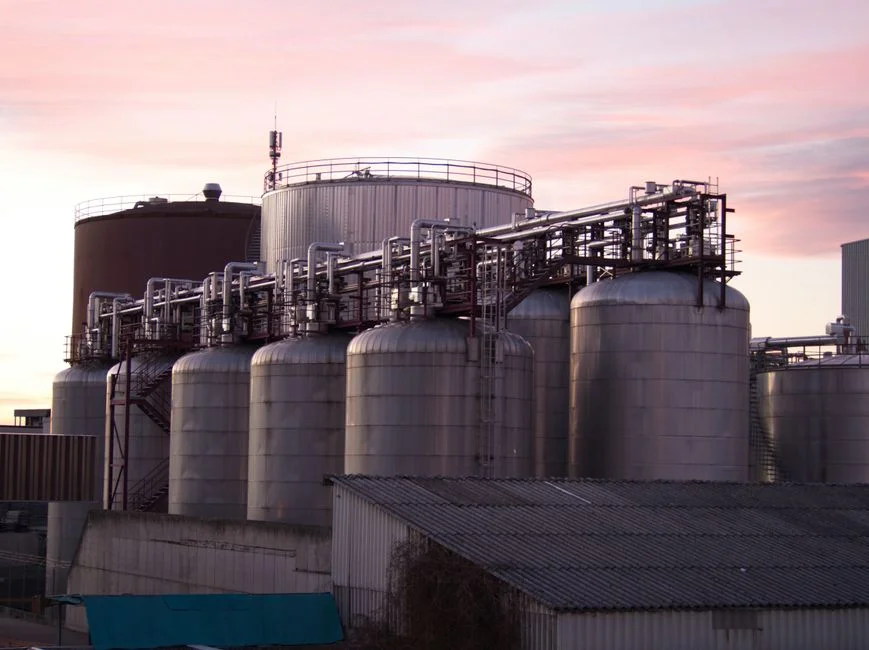
A practical pre-close audit has four steps, each tied to a documented deliverable that can be priced into the SPA (share purchase agreement). Step 1 is document collection: every permit file, every prior self-monitoring report (on-site measurements under 27/2008 Annex 4), and every inspectorate correspondence for the trailing 5 years; verify whether a 2025 Göd-style civil-litigation window is still open for neighbours or NGOs, because the limitation period for substantive permit challenges in Hungary runs 2 years from permit notification. Step 2 is legacy-stream sampling: battery cell plants carry NMP (N-methyl-2-pyrrolidone, a cathode solvent), PVDF binder, LiPF6 residue, and cobalt/nickel/lithium trace metals at concentrations that often violate 27/2008 Annex 2 default municipal limits without pretreatment; semiconductor fabs carry fluoride (up to 1,000 mg/L HF-equivalent in concentrated streams), TMAH (tetramethylammonium hydroxide, a developer chemical), organic strippers, and copper at concentrations that exceed 28/2004 NHKV values by factors of 10–100. Step 3 is ETP-versus-line-loading comparison: inspect the existing effluent treatment plant's actual operating envelope against its design basis, because many Hungarian brownfield sites have aeration tanks sized for half the current line loading, and this mismatch is a substantive defect. Step 4 is receiving-water classification: confirm the receiving water body classification under 28/2004, because tighter BOD, total N, and total P limits apply in Lake Balaton and Tisza watershed sensitive zones. The structure of this pre-close audit is laid out in detail in the ETP due diligence audit checklist for factory acquisition.
Process Train for a Samsung-Class Hungary Brownfield
The process train below translates the regulatory envelope into equipment for a Samsung-class battery or semiconductor brownfield. Pretreatment starts with rotary mechanical bar screening at 2–6 mm aperture to protect downstream pumps, followed by flow and load equalization sized for 8–24 hours of hydraulic residence to dampen the 5,000–40,000 mg/L COD NMP-bearing streams typical of cathode coating (per cathode-process flow data referenced in industry guides). Primary treatment uses DAF for cathode-coating NMP-bearing wastewater to remove FOG (fats, oils, and grease), suspended solids, and LiPF6-derived fluoride colloidal matter; standard frames cover 4–300 m³/h. Secondary treatment is an MBR (membrane bioreactor) for combined BOD (biochemical oxygen demand), total N, and TSS (total suspended solids) polishing, using a PVDF flat sheet MBR module with 0.1 µm pore size producing near-reuse effluent; the DF module delivers 32–135 m³/day per cassette, allowing staged scale-up. Tertiary treatment is an industrial RO polishing system with selective ion exchange for residual fluoride before recycle or discharge; RO recovery up to 95% cuts fresh-water withdrawal, supporting Samsung's 2022-to-2025 group water reuse target of returning total withdrawal to 2021 levels despite the 2× semiconductor capacity expansion planned by 2030 (per Samsung Planet page). Sludge handling uses a plate-and-frame filter press to dewater the Li/Ni/Co-loaded biosludge, with filter pressate recycled to the head of the plant.
| Stage | Unit operation | Design load | Effluent target |
|---|---|---|---|
| Pretreatment | Bar screen + equalization | 5,000–40,000 mg/L COD; 8–24 h HRT | CV (coefficient of variation) < 0.3 |
| Primary | DAF (4–300 m³/h) | FOG ≤ 500 mg/L; SS ≤ 800 mg/L | FOG ≤ 50 mg/L; SS ≤ 100 mg/L |
| Secondary | MBR (PVDF 0.1 µm) | BOD 1,500–4,000 mg/L; NH4-N 200 mg/L | BOD ≤ 20 mg/L; NH4-N ≤ 5 mg/L |
| Tertiary | RO (95% recovery) + IX | F⁻ 50–200 mg/L feed | F⁻ ≤ 8 mg/L; TDS (total dissolved solids) ≤ 50 mg/L |
| Sludge | Plate-and-frame press | MLSS 8,000–12,000 mg/L | Cake dryness 22–28% |
Water Reuse, Recycling, and Zero-Liquid-Discharge Economics
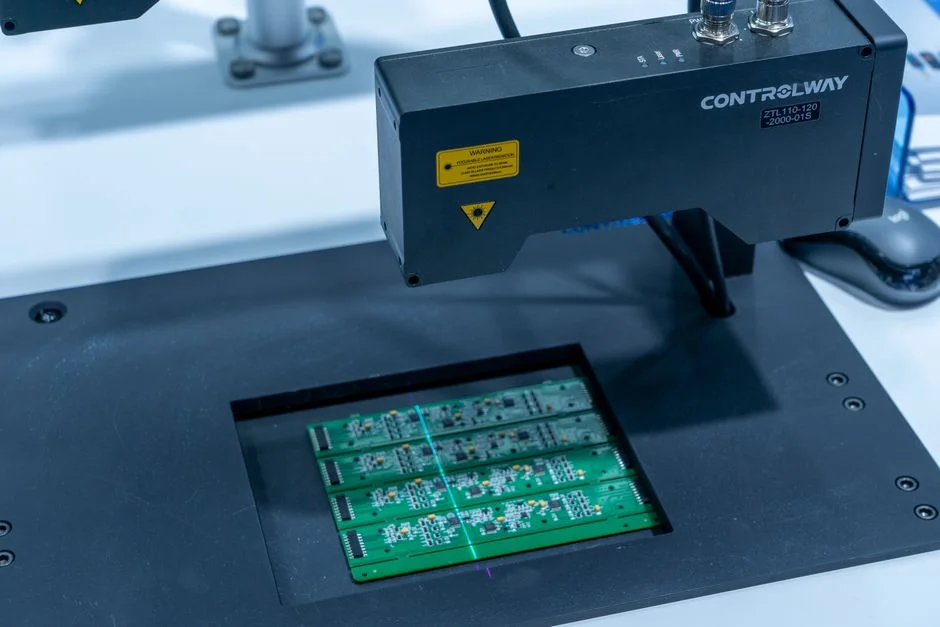
Samsung's group target is Platinum Zero Waste to Landfill (100% diversion) across all global manufacturing sites as of 2025, and a 98% waste-recycling rate was achieved in 2025 (per Samsung Planet page, 2025). The acquirer's Hungarian ETP must be designed for near-zero landfill sludge discharge. Industrial RO polish water can supply roughly 60–75% of incoming fresh-water demand for battery-cell rinsing and semiconductor ultrapure-water pretreatment, cutting the water-withdrawal pressure flagged by Samsung's 2× capacity expansion plan. Indicative capex band for a 500 m³/day retrofit ETP (screening + EQ + DAF + MBR + RO + sludge) in Hungary in 2026 is roughly EUR 2.8–4.5 million, with electricity plus membrane replacement driving approximately 18–25% OPEX as a share of capex per year (HydropureWater field data, 2026); an acquirer can compress this by 10–15% with a packaged skid approach. Exceeding BAT-AEL (Best Available Techniques – Associated Emission Levels) set out in the 2019/903 Electrochemical Industry BAT Conclusions by 15–20% provides the practical design margin that gives the operator headroom against the type of substantive review that overturned the Göd permits. For fluoride-specific design and zero-liquid-discharge cost data, the microelectronics HF wastewater treatment guide gives a peer comparison; for footprint and reuse-spec trade-offs between MBR and conventional activated sludge, the MBR-vs-extended-aeration analysis in our library is the relevant benchmark.
Permit Re-Application and Community Engagement Plan
File the new IPPC permit application as part of the share-purchase agreement, not after closing, so the new operator is the legal applicant of record from day one of ownership. Publish a non-technical summary of the proposed discharge profile in line with the Aarhus Convention and EU Directive 2003/35/EC public-participation framework, which is the procedural route Hungarian NGOs used to challenge Samsung SDI at Göd. Build a documented community engagement plan covering local drinking-water and air-quality monitoring, supported by an independent third-party review of the BAT case, to insulate a new operator against a repeat annulment.
Frequently Asked Questions
Which Hungarian decree governs the IPPC permit for an acquired Samsung-class site in 2026?
Government Decree 314/2005 on IPPC permits transposes EU Industrial Emissions Directive 2010/75/EU and is the controlling instrument, with a typical review window of 60–105 days for a new operator.
What emission limit values apply to municipal sewer discharge from a Hungary battery plant?
Government Decree 27/2008 Annex 2 sets the sewer-discharge emission limit values, with site-specific tightening under the local POTW bylaws required by EU Urban Waste Water Directive 91/271/EEC.