What GM Actually Buys on Day One: The Texas Wastewater Compliance Picture
When General Motors acquires a Texas plant, the buyer inherits the seller's TPDES permit under 30 TAC Chapter 307 and must file a change-of-ownership with TCEQ within 30 days of closing. Metal-finishing body shop streams must meet 40 CFR 433 categorical standards — total nickel and total cobalt below 1.0 mg/L — and combined flows above 50,000 gpd push the site into individual-permit territory. EPCRA Section 313 Form R filings for nickel, cobalt, and NMP travel as successor liability.
The reframe matters because deal teams tend to treat the permit file as a closing checklist item. It is not. The TPDES permit number transfers, but the seller's Discharge Monitoring Report (DMR) history, Notice of Violation (NOV) ledger, and any open Enforcement Actions or Agreed Orders travel with the asset and become the buyer's exposure on Day 1. TCEQ re-issues the permit in the successor's legal name, not a fresh permit — a critical distinction when reviewers pull the two-year exceedance window before signing. Pre-acquisition due diligence should pull at least 8 quarters of DMRs from EPA ECHO; anything shorter misses the rolling compliance history reviewers will examine first (per EPA ECHO, 2026).
The Robstown 2026 incident surfaced a separate rail that a TPDES-only diligence pass misses. Nueces County Drainage District No. 2 discovered a pipe crossing its easement and discharging dark water during routine ditch maintenance in February 2026, just 12 months after the TPDES permit was issued (KRIS 6 / EnvNewsBits, 2026-02-17). The permit explicitly stated it did "not grant to the permittee the right to use private or public property for conveyance of wastewater along the discharge route" — language a buyer tends to read past. Conveyance rights, drainage-district notifications, and EPCRA Section 313 reporting obligations travel on independent legal rails, and each must be diligenced separately before closing.
The Four Compliance Rails a GM Deal Team Has to Walk Simultaneously
Federal categorical standards under 40 CFR 433 cap total nickel and total cobalt below 1.0 mg/L in metal-finishing discharge, and the metal-finishing subcategory is the dominant categorical overlay for an auto-assembly acquisition regardless of whether EV lines are present. Texas Surface Water Quality Standards under 30 TAC Chapter 307 set the discharge-quality floor, and site-specific permit limits in the Colorado River basin may be tighter than the federal ceiling if the receiving stream's assimilative capacity is constrained. Travis County and similar jurisdictions add TPDES stormwater construction requirements — verify Notice of Intent (NOI) and SWPPP currency for any active expansion on the same site.
EPCRA Section 313 Toxic Release Inventory reporting is the rail most often missed in M&A diligence. Form R filings are required July 1 for nickel, cobalt, and NMP because each exceeds the threshold quantity, and the liability survives closing if the seller failed to file. A buyer who does not pull the seller's TRI history inherits the prior non-filing as a successor-liability claim (per EPA TRI guidance, 2026). The fourth rail — drainage-district and pipeline-easement notifications — is the one the Robstown incident put on the map. A TPDES permit authorizes discharge; it does not authorize a pipeline crossing, and the easement map is diligenced independently of the permit file.
| Compliance Rail | Governing Authority | Trigger for GM Texas Site | Closing-Day Action |
|---|---|---|---|
| Federal categorical effluent limits | 40 CFR 433 (Metal Finishing) | Body shop streams with Ni, Co, lubricants | Pull seller's 8-quarter DMR exceedance history |
| State water quality standards | 30 TAC Chapter 307 | Site-specific effluent limits in Colorado River basin | Compare site limits vs. federal ceiling; flag tighter terms |
| EPCRA Section 313 TRI | 40 CFR Part 372 | Ni, Co, NMP exceed threshold quantities | Confirm prior-year Form R; schedule July 1 successor filing if missed |
| Drainage-district / easement | County drainage district rules | Active pipeline crossing or outfall to district easement | Diligence easement map independently; do not assume permit covers it |
| Stormwater construction | TXR150000 general permit | Any active site expansion under construction | Verify NOI and SWPPP currency; flag open NOVs |
For broader M&A wastewater context, see this ETP due diligence checklist for OEM M&A transactions.
What Comes Out of a GM Texas Plant: Stream-by-Stream Load Map
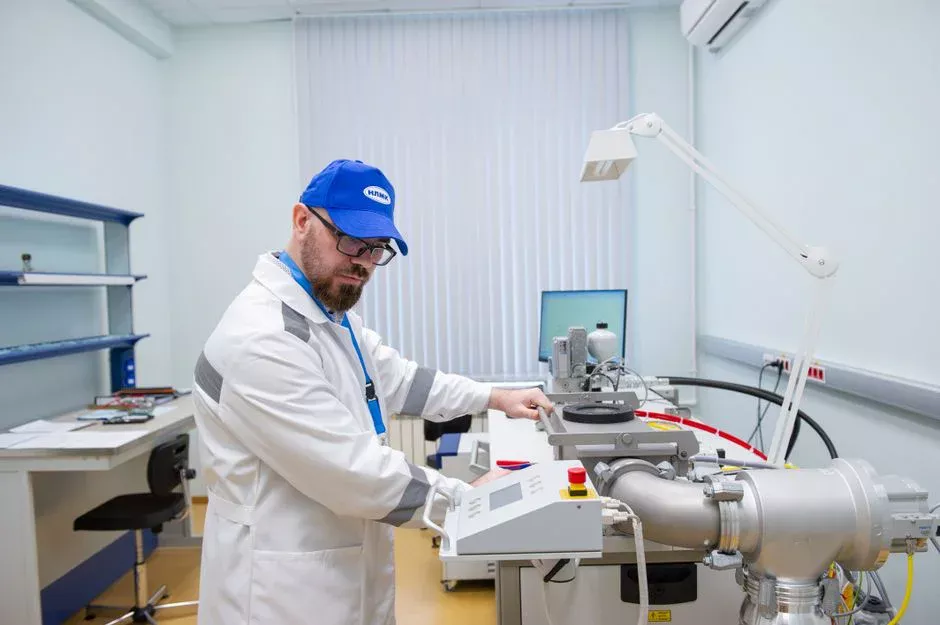
Body-in-white streams carry metalworking fluids, drawing compounds, and rinse water loaded with nickel, cobalt, and lubricant emulsions. Equalization must absorb pH swings from 2 to 11 when these streams converge. Paint shop streams add phosphate pretreatment, E-coat rinse, and solvent-bearing overspray washwater with high COD from paint detackifier chemistry. General assembly streams — low-contamination rinse water and cooling-tower blowdown — are typically the cleanest industrial stream on site and the strongest RO-reuse candidate. EV/battery streams, if applicable, add cathode coating with NMP solvent, anode rinse with graphite slurries, and electrolyte salt flushes from formation cycling. Sanitary flow stays segregated for conventional biological treatment; mixing it with industrial streams inflates CAPEX and creates permit-limit conflicts at the outfall.
For an engineer walking an acquired site, the visual diagnostic is the equalization-basin influent channel count. One channel means streams were never segregated, and segregation retrofit becomes the single highest-impact Phase 1 CAPEX line. Five or more channels means the prior owner already paid for the discipline. That single visual typically cuts the retrofit CAPEX estimate by a factor of two or more, and it is information any due-diligence team can collect in a one-hour site walk (HydropureWater field data, 2026).
The Seven-Stage Treatment Train Benchmark for a GM-Scale Texas Plant
The reference P&ID below is the benchmark a buyer's engineer should gap any acquired site's drawings against. It is reverse-engineered from TCEQ permit structures, public OEM Impact Report disclosures, and documented best practice at comparable auto and EV sites. Use it to size retrofit CAPEX, not to copy a vendor proposal.
Stage 1 equalization: surge basins balance 6–12 hours of hydraulic and load variation; a PLC-controlled coagulant and pH dosing system brings mixed pH to 6.5–7.5 before downstream treatment. Stage 2 dissolved air flotation: a DAF system for body shop and cathode coating streams in the 4–300 m³/h skid range delivers 80–95% FOG removal with TSS below 100 mg/L downstream. Stage 3 coagulation/flocculation and lamella clarification: ferric chloride or polyaluminum chloride at pH 9–10 precipitates dissolved nickel, cobalt, and lithium as hydroxides; a lamella clarifier for nickel, cobalt, and lithium precipitation at 20–40 m/h surface loading handles the solids separation.
Stage 4 NMP recovery (closed loop): a vacuum distillation column recovers NMP from cathode wastewater concentrate for reuse in coating operations — this is solvent management, not treatment. Plants outsourcing cathode production to a Tier 1 cell supplier can skip this stage entirely. Stage 5 MBR: a submerged MBR for the biological treatment stage with PVDF hollow-fiber modules delivers effluent turbidity below 1 NTU at MLSS 8,000–12,000 mg/L, with reactor volume sized to peak flows near 5,000 m³/day at full EV scale. Stage 6 reverse osmosis: a two-pass industrial RO polishing train for cooling-tower makeup reuse drops permeate conductivity below 50 µS/cm; system recovery 70–85% with 15–30% reject. Stage 7 disinfection: a chlorine dioxide generator for final disinfection in the 50 g/h to 20,000 g/h range, or a UV bank, at the final reuse or discharge point.
| Stage | Unit Operation | Key Design Parameter | Typical Performance |
|---|---|---|---|
| 1 | Equalization / neutralization | 6–12 hr HRT; pH 6.5–7.5 | Smooths pH 2–11 swings |
| 2 | Dissolved air flotation | 4–300 m³/h skids | 80–95% FOG; TSS < 100 mg/L |
| 3 | Coagulation + lamella clarifier | pH 9–10; 20–40 m/h surface loading | Ni/Co/Li precipitated as hydroxides |
| 4 | NMP vacuum distillation (closed loop) | Cathode coating sites only | NMP returned to process; COD reduced |
| 5 | MBR (PVDF hollow fiber) | MLSS 8,000–12,000 mg/L | Turbidity < 1 NTU |
| 6 | Two-pass RO | Recovery 70–85% | Permeate < 50 µS/cm |
| 7 | ClO₂ or UV disinfection | 50 g/h – 20,000 g/h ClO₂ | Final reuse or discharge compliant |
For technology selection on the FOG and TSS stages, see this DAF vs clarifier buyer's guide for fabricated metals wastewater. For parallel context on heavy industrial process wastewater in Texas, see this Houston industrial process wastewater engineering guide.
CAPEX, OPEX, and the Retrofit Decision a Buyer Has to Make
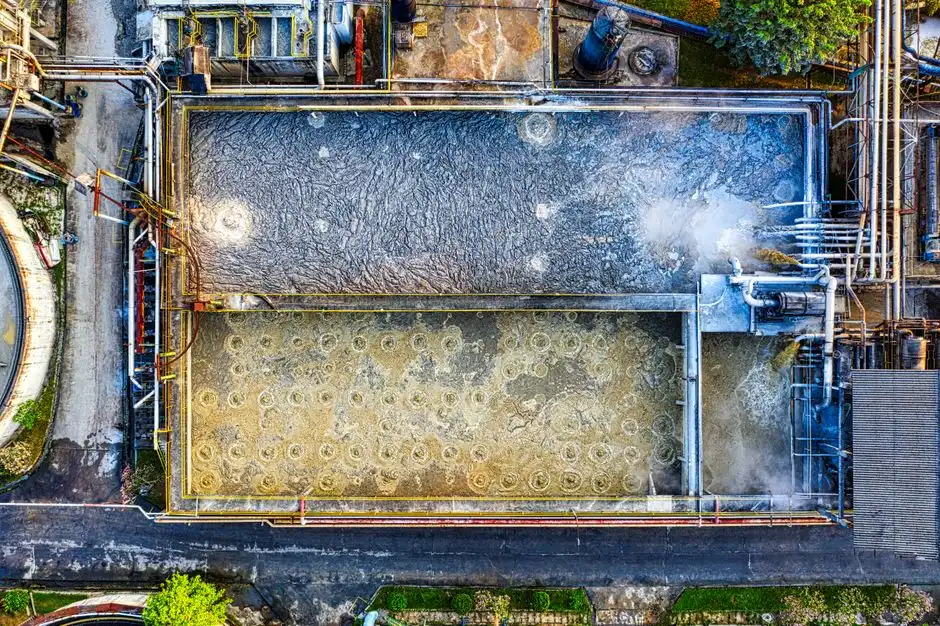
The full treatment train (excluding NMP distillation) for a 1,500 m³/day plant fits a $1.5M–$6M CAPEX envelope, or roughly $1,000–$4,000 per m³/day of design capacity ($4–$16 per gallon). Adding NMP vacuum distillation for in-house cathode coating, or an evaporator/crystallizer for ZLD alignment, pushes spend to the upper end of the range or above. A ZLD-ready configuration adds roughly 1.5x–2.5x base-train CAPEX, which aligns with automaker 2030 zero liquid discharge targets (HydropureWater field data, 2026).
The hidden ongoing cost is brine hauling. At a 15–30% reject ratio on a 1,500 m³/day plant, that is 225–450 m³/day of liquid leaving the site, with a disposal tariff of $0.40–$0.90 per 1,000 gallons. A worked example: at 300 m³/day reject and a $0.60/1,000-gal avoided-disposal credit, the site captures roughly $48/day, or about $17,500/year. Not enough to retire an evaporator CAPEX, but enough to make brine minimization a real lever in the financial model. Sludge dewatering belongs as a discrete budget line — not buried in "treatment upgrades." A filter press for metal-rich sludge dewatering is the standard unit operation for Ni/Co/Li hydroxide sludges, and the spend is small enough to be a one-line add.
| Configuration | CAPEX Range (1,500 m³/day) | Notes |
|---|---|---|
| DAF + MBR + RO (no NMP, no evaporator) | $1.5M–$6M ($1,000–$4,000 per m³/day) | Outsource cathode coating case |
| Full train incl. NMP vacuum distillation | Upper end + distillation column | In-house cathode coating only |
| Sludge dewatering (metal-rich) | Add filter press as discrete line | Not buried in treatment upgrades |
| ZLD-ready (evaporator/crystallizer) | 1.5x–2.5x base train CAPEX | Aligns with 2030 ZLD target |
| Brine hauling (15–30% reject) | $0.40–$0.90 per 1,000 gal | 225–450 m³/day off-site at full scale |
The 90-Day Post-Close Action Calendar for the GM Integration Team
Days 0–30: file the TCEQ change-of-ownership using the CORE form, with attached NOV and Agreed Order history; confirm all satellite operations have active TXR050000 NOI coverage. Days 30–60: verify SWPPP currency for any active construction on site; pull the 8-quarter DMR trend and flag any parameter that has been within 80% of its limit — those are the parameters most likely to tip into non-compliance under new operating conditions. Days 60–90: confirm EPCRA Section 313 Form R status for nickel, cobalt, and NMP for the prior calendar year; schedule the July 1 successor filing if the seller missed it.
Day 90 onward: commission the equalization-basin influent channel count as a single visual retrofit diagnostic. One channel means streams were never segregated and the Phase 1 CAPEX number in the deal model is wrong; five or more means the prior owner already paid for the discipline. This single one-hour observation at Day 90 routinely resets the integration CAPEX estimate by a factor of two or more, and it is information the engineering team can collect on the first site walk after closing (HydropureWater field data, 2026).
Frequently Asked Questions
What is the TCEQ change-of-ownership deadline after GM closes on a Texas plant?
The buyer must file the CORE form with TCEQ within 30 days of closing. The existing TPDES permit number transfers, but the permit is re-issued in the successor's legal name — and the seller's DMR history, NOV ledger, and open Enforcement Actions travel with the asset (per 30 TAC §305.64, 2026).
What is the 50,000-gpd threshold for an individual TPDES permit in Texas?
Combined process flows above 50,000 gpd require an individual TPDES permit. Smaller satellite operations on the same campus — paint shops, R&D pilot lines, training centers — may stay under multi-sector general permit TXR050000 provided each files its own Notice of Intent and the SIC codes fit the eligibility list.
What are the 40 CFR 433 metal-finishing effluent limits for a GM body shop?
The metal-finishing subcategory caps total nickel and total cobalt below 1.0 mg/L in discharge. Site-specific permit limits may be tighter than the federal ceiling if the receiving stream's assimilative capacity in the Colorado River basin is constrained.
When is the EPCRA Section 313 Form R filing date, and does it survive closing?
Form R is due July 1 for the prior calendar year. The obligation applies to nickel, cobalt, and NMP at typical auto-plant throughputs because each exceeds the threshold quantity. Liability survives closing as a successor obligation if the seller failed to file.
Related Equipment
- MBR for the biological treatment stage — specifications, capacity range, and technical data
Further Reading
- DAF vs clarifier buyer's guide for fabricated metals wastewater