
What the October 2025 Göd Court Ruling Changed for Samsung SDI Hungary
On 10 October 2025, the Budapest District Court annulled the December 2023 environmental permit covering Samsung SDI's lithium-ion cell plant in Göd, ruling that continued enforcement of the permit "would cause significant harm to the citizens" (source: atlatszo.hu, 2024-05-03, citing the court order). The permit challenge was brought by the Göd-ÉRT Association, a local civic group that argued the Pest County Government Office had been "overly permissive" in four specific areas: long-standing noise pollution, air emissions, water pollution, and battery-waste handling from the production process.
For an acquirer, the practical effect is immediate and binary. Production at the existing facility must be suspended until a fresh integrated pollution prevention and control (IPPC) permit is issued by the Pest County Government Office, and the legal pathway for the planned Phase 3 expansion — 43,000 m² of new halls, four additional battery cell production lines, and a capacity lift to 157,000 tonnes per year (a 20% increase) — is now blocked because "there is currently no legal basis for carrying out a new procedure for the extension of the factory and issuing an amended permit" (source: atlatszo.hu, 2024-05-03). The October ruling converts wastewater compliance from a back-office EHS task into a deal-gating issue: any acquirer inherits both a non-producing asset and a re-permitting obligation on Day 1.
EU and Hungarian Wastewater Rules That Govern a Battery Plant Acquisition
A Hungary battery-plant acquisition operates within a four-layer regulatory stack, and each layer produces its own document that must be transferred or reissued at close.
- EU Industrial Emissions Directive 2010/75/EU (IED) — battery cell manufacturing using organic solvents and surface treatment of metals falls within IED Annex I activity scope, triggering an IPPC permit and binding BAT-AEL ranges from the Surface Treatment of Metals and Plastics BREF.
- Water Framework Directive 2000/60/EC — sets the receiving-water quality baseline for the Danube tributary system near Göd; any discharge must not cause the water body to drop a status class.
- Urban Waste Water Treatment Directive 91/271/EEC — governs discharge to municipal sewer if the plant does not run full on-site treatment, and applies to the sanitary segregated stream.
- Hungarian Government Decree 220/2004 (water-pollution charges) and Decree 27/2006 (emission limit values for point-source discharges) — these are the actual enforceable numeric limits, not the EU texts.
Decree 314/2005 on EIA procedure is the additional trigger for the 43,000 m² expansion, requiring a revised Environmental Impact Assessment to accompany the IPPC application. A 2026-07-03 Reuters report also flags a new EV-battery pollution watchdog launching in Hungary in July 2026 (source: reuters.com, dated 2026-07-03), which will add a continuous-monitoring and enforcement layer to the existing permit regime.
| Layer | Instrument | What it requires at deal close |
|---|---|---|
| EU | IED 2010/75/EU | IPPC permit; BAT-AEL compliance demonstration |
| EU | WFD 2000/60/EC | Receiving-water status assessment |
| EU | UWWTD 91/271/EEC | Municipal sewer discharge conformity |
| National | Decree 220/2004 | Water-pollution charge self-reporting |
| National | Decree 27/2006 | Numeric ELV compliance for point-source discharge |
| National | Decree 314/2005 | EIA for >43,000 m² expansion |
| Forward | July 2026 watchdog (Reuters) | Continuous monitoring instrumentation |
What Pollutants a Lithium-Ion Battery Plant Actually Discharges
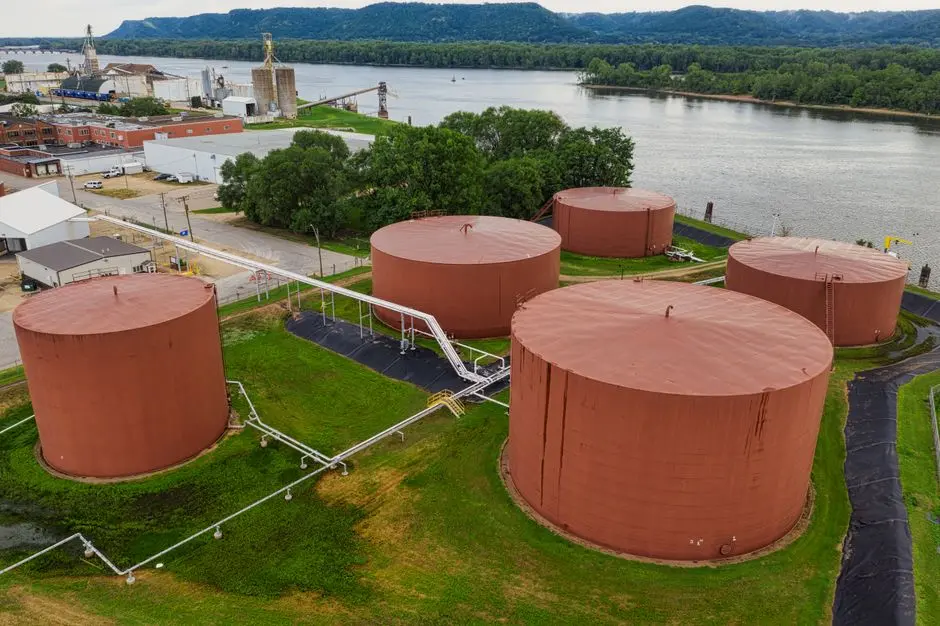
Cell-coating wastewater from a lithium-ion plant carries a specific chemical fingerprint that maps directly onto Decree 27/2006 and the IED BAT-AEL tables. Five parameter groups drive the design basis.
NMP (N-methyl-2-pyrrolidone) is the primary carrier solvent for cathode and anode slurry; it is a major COD contributor (theoretical COD ≈ 1.67 g O₂/g NMP) and is toxic to aquatic life above 50 mg/L. Fluoride enters the wastewater stream through LiPF6 electrolyte hydrolysis when slurry water contacts humid air or alkaline cleaning solutions; Hungarian regulation treats inorganic fluoride as a priority parameter under Decree 27/2006. Heavy metals — cobalt, nickel, and manganese — leach from cathode active material handling and must meet the BAT-AEL benchmarks for the surface-treatment BREF. PVDF binder fines and carbon black generate a high TSS load with a fine, low-density particle distribution that does not settle readily. Process and sanitary streams must be segregated per the IED BREF for surface treatment of metals and plastics — a single combined sewer is not acceptable for an IPPC-permitted installation.
Recommended Wastewater Treatment Train for a Hungary Battery Plant
The treatment train must be robust enough for regulatory scrutiny, requiring each stage to remove specific parameters. The defensible sequence for a 157,000 t/yr cell plant is five stages, run in series with segregated sanitary handling.
- Equalization + pH adjustment — NMP hydrolyzes under acidic or alkaline swing conditions; a 24-hour EQ basin with pH trim to 6.5–7.5 stabilizes downstream biology.
- DAF (Dissolved Air Flotation) — removes PVDF binder fines, carbon black, and emulsified NMP carry-over. A dissolved air flotation system rated 4–300 m³/h is typical for this duty range, with a 5–10% recycle ratio and polymer addition.
- MBR (Membrane Bioreactor) — handles COD/BOD reduction and partial NMP biodegradation, with an integrated MBR membrane bioreactor using submerged PVDF modules for chemical resistance against residual NMP and fluoride.
- Selective ion exchange or chemical precipitation — polishing step for fluoride and heavy metals (Ni, Co, Mn); calcium precipitation for fluoride, chelating resin for trace metals.
- RO polishing + UV or ClO₂ disinfection — required if the receiving water is the Danube tributary system, or for a water-reuse target that supports the Phase 3 sustainability case.
Process flow summary: EQ → DAF → MBR → Ion Exchange → RO → UV/ClO₂. Dosing of coagulants, polymers, and pH reagents is handled by an automatic chemical dosing system sized to the hydraulic peaks.
| Stage | Target parameter | Typical removal | Operating note |
|---|---|---|---|
| EQ + pH | Flow / pH swing | Hydraulic dampening | 24-h retention, pH 6.5–7.5 |
| DAF | TSS, PVDF fines, oil/NMP emulsion | 85–95% TSS | 4–300 m³/h per unit, polymer-aided |
| MBR | COD, BOD, partial NMP | 90–95% COD | PVDF submerged modules, chemical-resistant |
| Ion exchange / precipitation | F⁻, Ni, Co, Mn | 90–99% metals; F⁻ to <15 mg/L | Resin or Ca precipitation |
| RO + UV/ClO₂ | TDS, residual organics, pathogens | 95–99% TDS | Required for reuse or sensitive receiver |
Discharge Limits an Acquirer Must Hit in Hungary
Decree 27/2006 sets the enforceable numeric effluent quality values for point-source discharge; surface-water limits are typically 30–50% tighter than sewer-discharge limits. EU IED BAT-AEL ranges for the relevant activity provide the binding ceiling. Exceedance of even one parameter is sufficient to trigger the same permit-annulment pathway that closed Samsung SDI's Göd plant in 2025.
| Parameter | Typical surface-water ELV (Decree 27/2006) | BAT-AEL range (IED) | Design target |
|---|---|---|---|
| COD | 125 mg/L | 50–150 mg/L | ≤ 100 mg/L |
| BOD₅ | 25 mg/L | 10–25 mg/L | ≤ 20 mg/L |
| TSS | 35 mg/L | 5–30 mg/L | ≤ 10 mg/L |
| Fluoride (F⁻) | 15 mg/L (Decree 27/2006) | 2–15 mg/L | ≤ 10 mg/L |
| Nickel (Ni) | 0.5 mg/L | 0.05–0.5 mg/L | ≤ 0.2 mg/L |
| Cobalt (Co) | 0.5 mg/L | 0.05–0.2 mg/L | ≤ 0.1 mg/L |
| Manganese (Mn) | 2 mg/L | 0.2–2 mg/L | ≤ 0.5 mg/L |
| pH | 6.5–8.5 | 6.5–8.5 | 7.0–7.5 |
| NMP | Not separately listed; tracked as TOC | TOC < 30 mg/L | ≤ 20 mg/L as TOC |
| Total N | 15 mg/L | 10–25 mg/L | ≤ 10 mg/L |
Compliance Roadmap and CAPEX Range for a 2026 Hungary Deal
The compliance pathway has three gates, and the July 2026 watchdog launch means continuous-monitoring instruments (flow, pH, TOC, fluoride) must be specified upfront.
- Phase 1 — 0 to 3 months post-close: independent environmental baseline audit of the existing Samsung SDI ETP, engagement with the Pest County Government Office, and confirmation of the IPPC permit reissuance timeline. This is also the window to benchmark against the GM Texas plant acquisition compliance guide and the Tesla Germany plant wastewater requirements guide for EU IED precedent.
- Phase 2 — 3 to 9 months: submit the revised EIA under Decree 314/2005 and the IPPC application under IED; design the EQ → DAF → MBR → IX → RO train to handle the 157,000 t/yr Phase 3 production envelope.
- Phase 3 — 9 to 18 months: permit issuance, construction, commissioning. European battery ETP CAPEX typically falls in the €15–35 million range for a 5,000–15,000 m³/day plant (HydropureWater field data, 2026), with the wide range driven by fluoride-removal resin selection and whether RO is sized for reuse. Resource recovery — including NMP recovery and battery material wastewater recycling system approaches — can offset 5–10% of OPEX through solvent resale credits.
Frequently Asked Questions
Which EU and Hungarian laws govern wastewater discharge from a battery plant in Göd?
The applicable stack is the EU Industrial Emissions Directive 2010/
Frequently Asked Questions
What wastewater permits does Samsung SDI need in Hungary after the 2025 court ruling?
Following the 2025 judicial mandate, the Göd facility must hold a comprehensive Uniform Environmental Use Permit (Egységes Környezethasználati Engedély - IPPC) that specifically accounts for updated hazardous waste handling and water protection protocols. The plant is required to maintain a renewed water rights authorization (vízjogi üzemeltetési engedély) issued by the regional disaster management authority, which mandates real-time monitoring of discharge parameters and adherence to strict hydrogeological protection zones.
Which EU directive applies to lithium-ion battery plant effluent in Hungary?
The facility is primarily governed by the Industrial Emissions Directive (IED) 2010/75/EU, which mandates the application of Best Available Techniques (BAT) as defined in the Reference Document for Common Waste Water and Waste Gas Treatment/Management Systems in the Chemical Sector (WGC BREF). Furthermore, the discharge must comply with the Water Framework Directive (2000/60/EC) and the Environmental Quality Standards Directive (2008/105/EC), which set strict concentration limits for priority substances in surface waters.
What is the discharge limit for NMP solvent in Hungarian industrial wastewater?
In accordance with local authority requirements and the technical specifications of the plant's wastewater treatment technology, the concentration of N-Methyl-2-pyrrolidone (NMP) in effluent must typically be kept below 0.1 mg/L at the point of discharge into the municipal sewer system. Given NMP’s status as a reproductive toxicant, regulators often impose a "non-detectable" target for final discharge into sensitive surface water bodies, necessitating advanced oxidation processes or multi-stage membrane filtration to reach these stringent thresholds.
How much does a battery-plant wastewater treatment system cost in Europe?
The capital expenditure for an industrial-scale wastewater treatment plant (WWTP) capable of handling the high-salinity and organic-solvent loads typical of battery production ranges from €15 million to €45 million, depending on capacity and the complexity of the solvent recovery system. Annual operational expenditure (OPEX) for such facilities, including chemical reagents, energy consumption for evaporation units, and hazardous waste disposal for concentrated sludge, typically accounts for 10% to 15% of the initial investment cost.
Can an acquirer restart Samsung SDI's Göd plant under the old permit?
No, an acquirer cannot operate the plant under the previous permit as environmental authorizations in Hungary are tied to the specific operator and the current technical state of the facility. Any change in ownership requires a formal transfer of the environmental permit, which triggers an immediate mandatory review by the environmental authority to ensure the plant meets 2026 compliance standards, including updated groundwater monitoring and the latest BREF requirements for battery manufacturing.