Why the Grünheide Standoff Defines the Question
The Strausberg-Erkner Water Association (WSE) alleges that Tesla is "constantly and significantly" exceeding wastewater limits at its 300-hectare gigafactory in Grünheide, just outside Berlin, naming refractory phosphorus and total nitrogen as the two parameters in breach (smartwatermagazine.com, March 2026). The WSE warned that continued non-compliance could cost the association millions of euros in additional treatment and trigger a ban on disposing of all association wastewater at the Münchehofe STP. An extraordinary WSE member assembly was scheduled for March 2026 to decide whether to discontinue wastewater acceptance from the plant. Tesla's counter-position is that industrial wastewater is treated entirely on-site; only sanitary and kitchen streams leave the site, characterised by the company as "typical municipal wastewater" (smartwatermagazine.com, March 2026). The standoff is the live case study for any acquirer, EPC, or compliance officer scoping a German EV or battery plant, because the contested parameters — not flow volume — are the legal pinch points. The engineering response is a DAF or Clarifier for EV/Auto Wastewater in 2026: Which Should Factories Choose? question that determines whether the indirect-discharge signature can pass the WZV inlet check.
The German and EU Compliance Stack That Activates on Acquisition
Five legal layers stack on top of each other when an industrial buyer takes over a German plant, and each must be re-papered on change of operator.
- EU Industrial Emissions Directive 2010/75/EU — sets Best Available Techniques (BAT) conclusions and BAT-AEL ranges. Relevant BREFs for a gigafactory are STS (Surface Treatment Using Organic Solvents) and the Waste Treatment BREF.
- Bundes-Immissionsschutzgesetz (BImSchG) — the federal immission control act and the 4. BImSchV require a Genehmigungsbescheid (permit) for the facility, covering air, noise, and waste.
- Wasserhaushaltsgesetz (WHG) — the Federal Water Act. WHG §8/§9 govern direct discharge (Direkteinleitung) into surface waters; WHG §58 plus the Indirekteinleiterverordnung (IndV) govern indirect discharge (Indirekteinleitung) to a municipal STP — which is Tesla's situation at Grünheide.
- Abwasserverordnung (AbwV) — sector-specific limit values. For a gigafactory the typical applicable Annexes are Annex 3 (manufacturing of basic inorganic chemicals, lithium compounds) and Annex 22 (chemical/thermal surface treatment of metals).
- Wasserzweckverband (WZV) permit — at Grünheide, the WSE issues the indirect-discharge permit and may impose stricter local limits than the AbwV ceiling, particularly for refractory phosphorus and total nitrogen. The WZV permit is the binding constraint in practice, not the EU directive.
On acquisition, the Genehmigungsbescheid must be re-issued or amended to reflect the change of operator under BImSchG, and the WZV must be re-notified so the IndV indirect-discharge permit can be re-issued in the new operator's name. BAT-AEL ranges under the IED are typically tighter than local WZV limits, but a WZV may impose parameters the BREF does not even address — which is precisely the situation at the Münchehofe STP.
| Layer | Instrument | What it controls | Trigger on acquisition |
|---|---|---|---|
| EU | IED 2010/75/EU + BAT-AEL | Emission ceilings, monitoring | BREF review for changed process fingerprint |
| Federal | BImSchG / 4. BImSchV | Air, noise, waste permit | Operator change notification, permit re-issue |
| Federal water | WHG §58 + IndV | Indirect discharge to STP | New IndV indirect-discharge permit in buyer's name |
| Federal water | AbwV (Annex 3 / 22) | Sector limit values | Re-baseline influent against target process |
| Local | WZV (WSE) permit + Satzung | Local inlet specs, liability, flow cap | Re-issue and re-negotiate local limits |
Refractory Phosphorus and Total Nitrogen: The Parameters That Trip Gigafactories
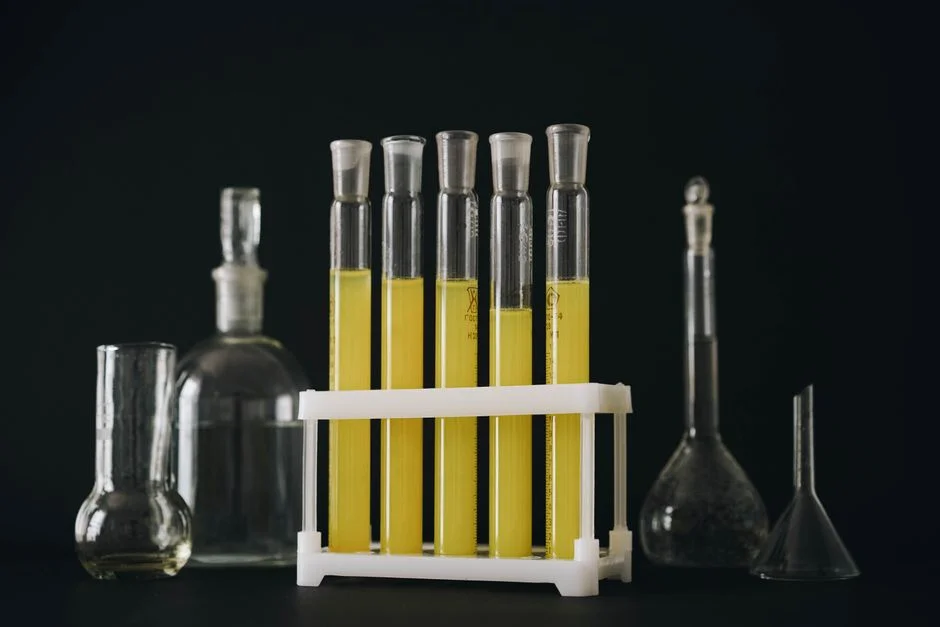
Flow volume is rarely the binding constraint at a gigafactory; refractory phosphorus and total nitrogen are. Refractory phosphorus is P bound in organophosphates, polyphosphates, or complexing agents used in cathode-coating chemistries; it bypasses conventional biological P removal, which only strips orthophosphate. Total nitrogen at the Münchehofe STP is sized for typical municipal loading (NH4-N, organic N); industrial spikes from electrolyte spillage, cleaning agents, and cathode-line rinse water push the receiving STP past its design capacity. Conventional nitrification/denitrification removes total N but cannot remove refractory P; chemical precipitation with FeCl3 or polyaluminium chloride (PAC) is the standard polish step, with effluent total P typically <1 mg/L at design dose (HydropureWater field data, 2026).
The wastewater streams that concentrate these parameters at a lithium or EV plant are predictable: cooling-tower blowdown (high TDS, low P/N), boiler blowdown (low volume, hot), water-softener regeneration brine (high NaCl, periodic discharge), and — the one that drives permit exposure — cathode-coating line rinse water, where refractory P and organic N concentrate. The on-site pre-treatment train that brings an indirect-discharge signature within WSE inlet specs is typically DAF for suspended solids and emulsified oil, biological treatment for organics and NH4-N, automatic chemical dosing of FeCl3 or PAC for refractory P, and a polishing stage for residual TSS.
| Stream | Typical volume | Refractory P risk | Total N risk | Pre-treatment unit |
|---|---|---|---|---|
| Cooling-tower blowdown | High, continuous | Low (P-free corrosion inhibitors possible) | Low | Side-stream filtration, TDS bleed |
| Boiler blowdown | Low, intermittent | Low (phosphate treatment chemicals) | Low | Cooling + neutralisation |
| Softener regeneration brine | Low, periodic | Negligible | Negligible | Equalisation + chloride-resistant biological |
| Cathode-coating rinse water | Medium, batched | High (organophosphate binders) | High (organic N, NH4-N) | DAF → biological → chemical precipitation |
| Electrolyte spillage / CIP | Low, episodic | Medium-High | Medium | Segregated equalisation, FeCl3 precipitation |
Water Protection Zone (Wasserschutzgebiet) Overlays
Wasserschutzgebiete are designated under §51 WHG by the competent Landesamt — in Brandenburg, the Landesamt für Umwelt (LfU) — to protect drinking-water abstractions. Part of the 300-hectare Grünheide site sits inside a water protection zone, which is the legal anchor activists cite against expansion (smartwatermagazine.com, March 2026). Operating inside a Wasserschutzgebiet triggers stricter IndV limits, mandatory groundwater monitoring wells, and a Verbotstatbestand (prohibition clause) for certain substance classes — hydrocarbons, halogenated solvents, heavy metals — under the applicable Schutzgebietsverordnung. Acquirer due diligence must pull the Schutzgebietsverordnung text and confirm that none of the planned process chemistry triggers a Verbotstatbestand before closing, because a Verbotstatbestand is not a permit condition you can negotiate; it is a statutory prohibition. A non-binding local vote against expansion in Grünheide (smartwatermagazine.com, March 2026) is the political-risk indicator that always sits on top of the WSG overlay in Brandenburg.
Acquisition Due-Diligence Checklist: What Counsel and an EHS Lead Must Verify
Seven items must clear before closing on a German industrial plant where wastewater is material:
- Operator change notification under BImSchG and WHG. Confirm the existing Genehmigungsbescheid can be re-issued to the new operator without a fresh Genehmigungsverfahren.
- Existing IndV indirect-discharge permit and WZV posture. Pull the current permit and check whether the WZV (here, WSE) has the contractual right to refuse amended limits on the basis of STP hydraulic or treatment capacity. The WSE posture at Grünheide is the cautionary case (smartwatermagazine.com, March 2026).
- WZV Schmutzwasserbeseitigungssatzung. Review the wastewater disposal byelaw for admissible substances, flow ceilings, and Haftungsregelungen (liability clauses) — these survive a share purchase.
- Re-baseline influent against AbwV Annex values. Characterise the planned post-acquisition wastewater fingerprint against Annex 3 (inorganic chemicals, lithium) and Annex 22 (surface treatment) — not the seller's historic permit, which was written for the old process.
- Overlay check: WSG, Heilquellenschutzgebiet, Überschwemmungsgebiet. Confirm whether the site sits inside a Wasserschutzgebiet under §51 WHG, a Heilquellenschutzgebiet, or a flood-risk area under §76 WHG; each carries a different Verbotstatbestand register.
- On-site pre-treatment capacity audit. Map existing MBR membrane bioreactor, DAF, biological, and polishing units against the revised wastewater fingerprint; identify the gap to the WZV's stricter local limits.
- Water-supply contract novation. The WSE draft agreement with Tesla cuts the facility's water-supply commitment and releases 377,000 m³ of water back to the association (ilovetesla.com, 2025); any novated supply contract will inherit a similar volumetric ceiling.
How the 2026 EU Recast and Local Water Scarcity Shift the Calculus
Three forward-looking shifts will reshape every German indirect-discharge permit between now and 2027. First, the EU Urban Wastewater Treatment Directive recast (Directive 2024/3019, in force 2024, transposition deadline 2026) tightens nitrogen and phosphorus removal, extends monitoring to micropollutants (PFAS, pharmaceuticals), and obliges energy neutrality at large STPs — which re-opens every WZV indirect-discharge permit because the receiving STP's design assumptions change. Second, Brandenburg is a water-scarcity region; the WSE's draft agreement with Tesla cuts the facility's water-supply commitment and offers 377,000 m³ of released water back to the association (ilovetesla.com, 2025), signalling that any future plant will face volumetric caps, not just concentration limits. Third, local referenda against expansion (smartwatermagazine.com, March 2026) are now a binding political risk: under Brandenburg state administrative practice, large industrial permits with documented public opposition increasingly see Genehmigungsverfahren extended by months. The pragmatic 2026 answer for any acquirer is to design the on-site treatment train so the indirect-discharge signature looks municipal — which is, not coincidentally, the legal route Tesla itself argues at Grünheide. A well-tuned Ultrafiltration System Troubleshooting: 2026 Field Guide to Membrane Fouling, TMP & CIP Recovery discipline is what keeps that "municipal" signature defensible year over year.
Frequently Asked Questions
Which German law governs indirect discharge from a Tesla-style plant to a municipal STP?
Indirect discharge is governed by §58 of the Wasserhaushaltsgesetz (WHG) together with the Indirekteinleiterverordnung (IndV), which set the framework for the local Wasserzweckverband to issue an indirect-discharge permit. Sector-specific limit values come from the Abwasserverordnung (AbwV), typically Annex 3 (inorganic chemicals, lithium) and Annex 22 (surface treatment) for a gigafactory. The local WZV permit is the binding constraint and may impose stricter parameters than the AbwV ceiling.
Why are refractory phosphorus and total nitrogen the contested parameters at Grünheide?
Refractory phosphorus is bound in organophosphates or polyphosphates that bypass conventional biological P removal; total nitrogen at the Münchehofe STP is sized for municipal loading and is pushed past design capacity by industrial inputs of NH4-N and organic N from cathode-coating rinse water and electrolyte spillage. The WSE alleges Tesla is "constantly and significantly" exceeding both limits, which is the basis of the March 2026 extraordinary assembly to consider discontinuing wastewater acceptance (smartwatermagazine.com, March 2026).
What does an acquirer need to verify on the Genehmigungsbescheid during a German plant acquisition?
Confirm the existing Genehmigungsbescheid can be re-issued to the new operator under BImSchG and WHG without a fresh Genehmimmgsverfahren, re-issue the IndV indirect-discharge permit in the buyer's name, re-baseline the wastewater fingerprint against the AbwV Annex values for the planned process (not the seller's historic permit), and check for WSG, Heilquellenschutzgebiet, and Überschwemmungsgebiet overlays that may impose statutory Verbotstatbestände.
How does the 2024 EU UWWTD recast affect gigafactory discharge permits?
Directive 2024/3019, due for transposition by 2026, tightens nitrogen and phosphorus removal, extends monitoring to micropollutants including PFAS, and requires energy neutrality at large STPs. Because the receiving STP's design assumptions shift, every WZV indirect-discharge permit is effectively re-opened, and a gigafactory's on-site pre-treatment must be sized for the new municipal inlet envelope — not the old one.