Which treatment should a Selinsgrove food and beverage factory choose?
For most food and beverage wastewater streams containing FOG, emulsified oils, or relatively light suspended solids, DAF is usually the stronger pretreatment choice in 2026. Microbubbles attach to conditioned solids, float them to the surface, and allow a skimmer to remove them; Clearwater specifies 30–50 micron bubbles. A lamella clarifier can be preferable when the priority is compact separation of heavier, readily settleable solids. The correct choice depends on measured flow, FOG, TSS, settleability, chemical conditioning, footprint, sludge handling, and discharge requirements—not the label “clarifier” alone.
That distinction matters because DAF systems are also described as dissolved air flotation clarifiers, according to Clearwater’s 2026 equipment page. The practical comparison is therefore flotation-based separation versus settling-based clarification. A buyer comparing an industrial DAF system for food and beverage wastewater with a lamella unit should compare the pollutants each process can actually collect from the plant’s wastewater.
Food and beverage wastewater can contain FOG, TSS, and BOD associated with processing, cleaning, and production, according to Ecologix. Ecologix also observes that DAF is particularly effective for lighter, emulsified pollutants that tend to float rather than settle. Before selecting either process, obtain measured flow and peak-flow data, FOG and TSS concentrations, particle buoyancy or settleability, required pretreatment performance, chemical requirements, available footprint, sludge route, receiving-facility limits, and any water-reuse objectives.
How food and beverage wastewater should be characterized
A defensible equipment selection requires representative samples taken across production, cleaning, and discharge periods, because a single composite result can conceal the streams that control treatment performance.
Collect flow data for normal production, shutdown, washdown, and cleaning cycles. Test representative samples for FOG, TSS, BOD, pH, and temperature, then examine whether the relevant solids settle or float under the proposed operating conditions. Keep cleaners, sanitizers, product losses, oils, and high-solids production waste separate where their treatment behavior differs materially.
The scale of possible variability is illustrated—not resolved—by an ASABE study of poultry-processing wastewater. The American Society of Agricultural and Biological Engineers reported mean COD of 5,263 mg/L and total solids of 3,355 mg/L in raw poultry-processing wastewater. That 2012 study does not establish performance for a Selinsgrove food or beverage plant; it demonstrates why stream-specific characterization is needed rather than transferring another sector’s data.
| Required input | What the buyer should establish | Why it affects selection |
|---|---|---|
| Flow profile | Average flow, peak flow, operating shifts, cleaning events, and discharge-surge duration | Determines hydraulic loading, equalization needs, and equipment architecture |
| Pollutant concentrations | FOG, TSS, BOD, pH, and temperature from representative samples | Defines the separation objective and conditioning need |
| Separation behavior | Settleability or floatability of the solids and behavior of emulsified oil | Supports DAF versus lamella selection |
| External requirements | Current discharge, pretreatment, FOG, monitoring, and monitoring-reporting requirements from the receiving sewer authority or POTW | Sets the performance and compliance basis; local limits were not supplied in the research |
| Water-side goals | Reuse requirements, downstream treatment, and sludge destination | Influences polishing needs, footprint, and operating strategy |
Ask the receiving facility for its applicable requirements in writing. The supplied research provides no Selinsgrove numerical discharge or pretreatment limits, so do not accept generic specifications in their place. A rotary mechanical bar screen may be relevant to upstream solids control where screening is required, but it does not replace FOG characterization or clarification selection.
How DAF removes FOG and suspended solids
DAF separates floatable material by attaching conditioned particles to microbubbles, concentrating them at the water surface, and removing the resulting float with a skimmer.
Clearwater states that its DAF systems use 30–50 micron microbubbles to lift suspended solids, oils, and fats to the surface for skimmer removal. The normal treatment sequence is equalization or screening as appropriate, chemical conditioning, flocculation, microbubble contact, flotation, surface skimming, clarified-water collection, and sludge withdrawal.
Chemical conditioning is not incidental to the process. Clearwater explains that coagulation and flocculation increase the size of suspended material and improve its ability to contact microbubbles. An automatic chemical dosing system should therefore be evaluated as part of the DAF treatment train, not as an accessory added after process selection.
DAF does not imply that every pollutant enters the float. Clearwater explains that heavier solids settle into a bottom collection zone and are removed separately, while skimmers remove the floated fraction. This split removal behavior is important for plants with both light FOG and heavier settleable solids: the design must provide an intentional route for each sludge stream.
The mechanism aligns with Ecologix’s food and beverage assessment that DAF is particularly effective for lighter, emulsified pollutants that tend to float rather than settle. That technical fit supports a DAF preference for emulsified-oil or floatable-FOG problems, but it does not eliminate the need for chemical testing. Coagulant, flocculant, pH, and mixing requirements must be established against the plant’s actual wastewater.
Where lamella clarification fits into the comparison
Lamella clarification is the stronger candidate when the treatment objective is compact separation of solids that reliably settle rather than recovery of floatable FOG.
Lamella units use inclined plates within a tank to shorten the effective settling path and separate settleable solids. HydropureWater’s catalog description for its high-efficiency lamella clarifier includes sludge recirculation and flocculation within the offered system.
The catalog lists surface loading rates of 20–40 m/h and chemical consumption reduced by up to 30%. These are manufacturer specifications, not guaranteed outcomes for a Selinsgrove project. A buyer still needs wastewater analysis, a vendor design basis, and confirmation that the stated loading and chemical conditions apply to the selected configuration.
Lamella clarification is most defensible where the solids are heavier, settleable, and present at loads the proposed plate arrangement can handle. FOG and emulsified pollutants can make that condition less favorable. They may require upstream removal, suitable conditioning, or both before relying on settling to deliver the required result.
No supplied source provides comparable food and beverage removal efficiency for the catalog lamella clarifier and a DAF system. Accordingly, avoid universal removal claims. Compare each proposal against measured FOG, TSS, flow variability, chemical use, sludge characteristics, footprint, and the receiving facility’s applicable requirements.
DAF versus clarifier for common factory conditions
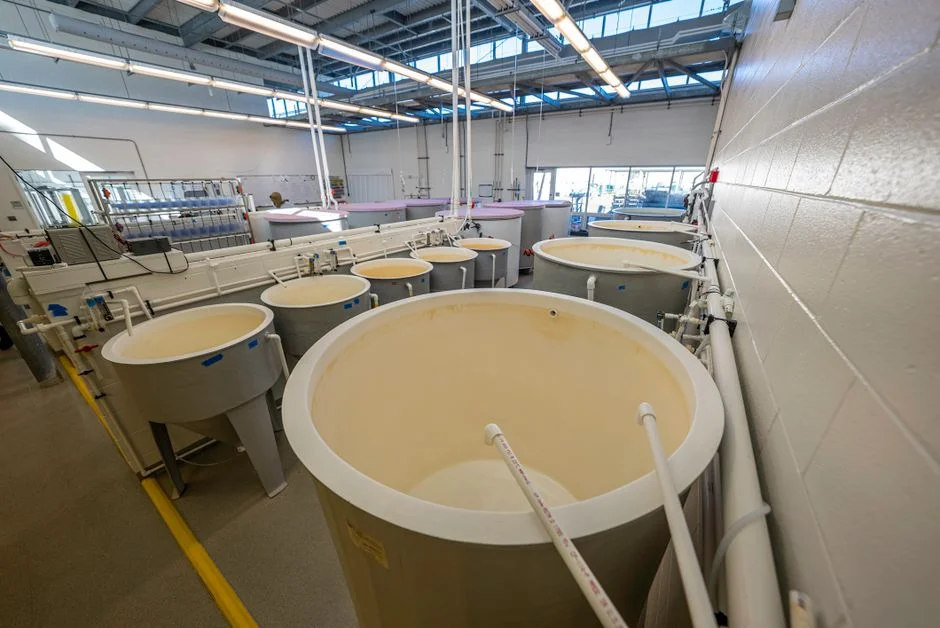
DAF has the clearer process advantage when floatable FOG or emulsified oil drives the treatment requirement; lamella clarification becomes more practical when the objective is compact removal of heavier, readily settleable solids.
| Factory condition | Choose DAF if | Consider lamella if | Pilot first if |
|---|---|---|---|
| FOG-heavy wastewater | FOG is sufficiently floatable and surface recovery is the primary objective | Most FOG has already been removed and the remaining target is settleable solids | Emulsification, temperature, or chemical demand changes floatability |
| Emulsified oil | Conditioning can create flocs that attach effectively to microbubbles | Upstream oil removal makes remaining solids predominantly settleable | Oil dispersion is unstable or emulsion-breaking conditions are uncertain |
| Mixed or variable solids | Both floatable material and light solids require collection at the surface | Heavier solids dominate and a separate bottom-solids route is acceptable | Production and cleaning streams differ materially |
| Low-to-moderate flow with limited footprint | A compact flotation package can meet hydraulic and solids-loading needs | Compact plate separation is advantageous and FOG is not the primary target | Available footprint constrains equalization, controls, or access |
| High-solids loads requiring frequent sludge removal | The proposal provides adequate float accumulation, skimming, and bottom withdrawal | The proposal provides continuous sludge recirculation and removal | Solids accumulation, sludge consistency, or labor demand is uncertain |
Packaged-system capacity is not the same as plant sizing. Clearwater’s 2026 page states that one COMPACT skid handles 66 GPM or less, while larger flows use two skid modules. DAF Corp reports systems from 48 GPM to 11,000 GPM. These figures illustrate available DAF architectures, but neither establishes the appropriate capacity for a Selinsgrove factory.
Compare operating consequences directly. DAF requires conditioning, bubble generation, flotation, skimming, controls, and management of bottom solids. Lamella emphasizes settling, plate separation, recirculation, and sludge withdrawal. Automation, maintenance access, chemical consumption, utilities, and the destination of separated solids must be evaluated under each supplier’s proposed design.
Defer the final order until engineering review closes the missing local permit data, project-specific performance criteria, sludge route, and comparable cost information. These gaps can change the technical choice as much as the treatment mechanics.
Size the system using measured wastewater data
System capacity should follow measured flow and pollutant loading; the supplied research provides no universal sizing factor for food and beverage wastewater.
Provide suppliers with average flow, peak flow, operating shifts, cleaning events, discharge-surge duration, and representative FOG, TSS, BOD, pH, temperature, settleability, or floatability data. Treat Clearwater’s 66 GPM single-skid threshold as an example of packaged-system architecture, not as a design rule. DAF Corp’s 48–11,000 GPM equipment range likewise demonstrates the breadth of configurations available, not the required size for your plant.
| Sizing package input | Buyer action | Design question to resolve |
|---|---|---|
| Hydraulic profile | Submit average, peak, and event-driven flow records | Can the selected architecture manage surges and equalization? |
| Pollutant profile | Submit representative FOG, TSS, BOD, pH, and temperature data | What separation and conditioning performance does the stream require? |
| Solids behavior | Document settleability and floatability for representative solids | Will the target fraction rise, float, or require separate withdrawal? |
| System interfaces | List equalization, screening, chemical delivery, flocculation, controls, and sludge handling | Is the treatment train complete, including auxiliary equipment? |
| Site and future needs | Provide footprint, utilities, materials, access, sludge route, and expansion requirements | Can operators clean, maintain, and safely expand the system? |
Ask each bidder to state the design flow, loading basis, chemical assumptions, equipment arrangement, controls, utilities, sludge-removal frequency, and proposed performance criteria. A wastewater treatability study should precede a major commitment when the wastewater is variable or the separation mechanism remains uncertain.
DAF Corp explicitly performs laboratory DAF feasibility analysis and on-site pilot feasibility studies. A pilot is especially useful when FOG floatability, chemical demand, or peak loading could materially change the result. For a broader equipment comparison outside food processing, the broader DAF versus clarifier comparison explains the same method in another factory context.
Compare purchase and operating risk before ordering
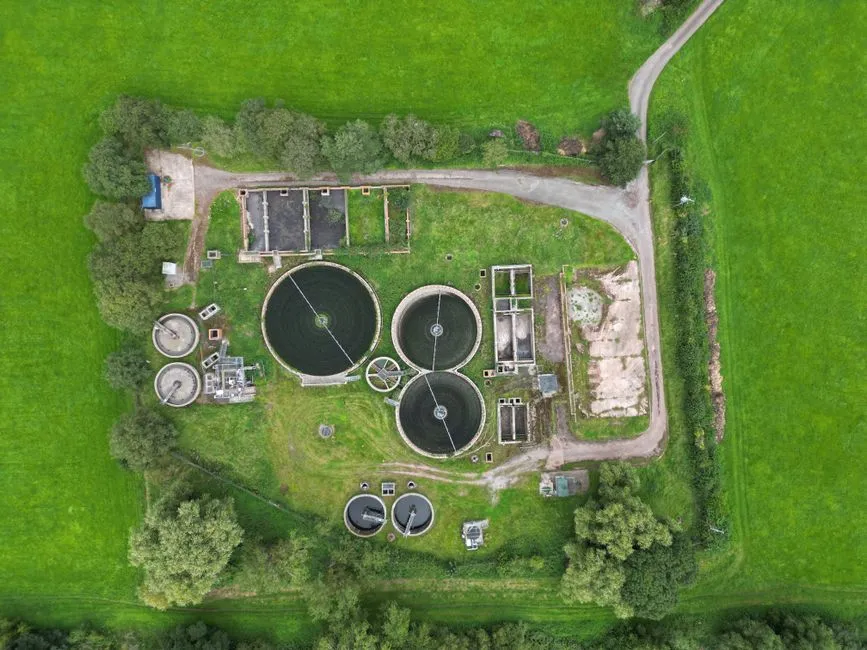
A comparable proposal should reveal the full treatment-train cost and performance risk; the supplied research contains no comparable project prices for DAF and lamella systems.
Request itemized pricing for equipment, equalization, screening, chemical conditioning, flocculation, controls, sludge handling, installation, commissioning, training, spares, maintenance, and downstream treatment. Ask suppliers to provide proposed performance criteria, chemical demand per unit volume, skimming or sludge-removal labor, utilities, footprint, controls, equipment materials, and expansion provisions.
| Commercial or technical check | Information to require | Risk exposed |
|---|---|---|
| Performance basis | Design flow, pollutant loading, and proposed treatment results tied to measured wastewater | Equipment selected from generic industry descriptions |
| Operating resources | Chemical consumption, utilities, controls, maintenance, and sludge-removal frequency | Unpriced labor, chemicals, or downstream disposal |
| Materials and cleanability | Wetted materials, surface finish, access points, and cleaning procedures | Food-processing fouling, corrosion, or difficult maintenance |
| Scope responsibility | Equipment, controls, auxiliaries, installation, commissioning, training, and service boundaries | Gaps between suppliers |
| Compliance support | Monitoring provisions, operating flexibility, and defined sludge route | A system that cannot demonstrate applicable receiving-facility performance |
For material selection, Clearwater states that its standard DAF clarifiers use 304SS and can be supplied in 316SS, polypropylene, and other materials on request. Do not equate stainless construction with cleanability by itself; inspect welds, accessible surfaces, skimmer mechanisms, sludge withdrawal points, and the proposed cleaning regime.
Flag compliance risk when a proposal lacks a treatment guarantee, suitable monitoring, operating flexibility, or a defined sludge route. If the system is intended to precede a filter press or another dewatering step, include that downstream train in the evaluation. A plate-frame filter press may be relevant to sludge dewatering, but its suitability depends on the actual separated-solids characteristics.
A practical evaluation and procurement sequence
A wastewater study and pilot test should precede a final DAF-or-lamella order because both technologies can perform differently on the same plant’s variable streams.
- Characterize the wastewater. Collect representative samples across production, cleaning, and discharge periods. Measure flow, peak flow, FOG, TSS, BOD, pH, temperature, and settleability or floatability.
- Obtain the receiving requirements. Ask the sewer authority or POTW for current discharge, pretreatment, FOG, monitoring, and applicable reporting requirements. No numerical local limits were supplied in the research.
- Compare treatment concepts. Evaluate DAF and lamella configurations against floatable FOG, emulsified oil, settleable solids, flow variability, footprint, sludge route, downstream treatment, and reuse objectives.
- Run feasibility testing. Use laboratory analysis or an on-site pilot where DAF recovery, lamella settling, chemical demand, or loading remains uncertain. DAF Corp states that it provides laboratory DAF feasibility analysis and on-site pilot feasibility studies.
- Issue one common specification. Require each bidder to price the same treatment train and state the design basis, conditioning, controls, materials, skid arrangement, commissioning, training, service scope, and performance criteria.
- Verify installed performance. Establish baseline results, sample after commissioning, and compare treated effluent with applicable receiving requirements. Adjust chemical dosing or sludge-disposal practices only from operating data and defined procedures.
This sequence is a decision framework, not a substitute for site-specific engineering or local regulatory review. It converts vendor claims into testable assumptions and gives procurement a basis for comparing alternatives on the same scope. Where discharge reuse is also a goal, the ultrafiltration guide for fruit-processing wastewater can help identify whether clarification should be followed by a polishing step rather than treated as the final barrier.
Frequently Asked Questions
Which is cheaper, DAF or a lamella clarifier for food and beverage wastewater?
Total cost depends on measured flow, FOG, TSS, chemical demand, footprint, sludge handling, and downstream treatment; the supplied research contains no comparable project prices, so a dollar estimate would be unsupported. Ask each supplier for an itemized quotation using the same treatment-train scope, chemical consumption assumptions, labor estimate, utilities, installation, commissioning, training, spares, and maintenance terms.
How do I size a DAF system for a food processing plant?
Base sizing on average and peak flow, operating shifts, cleaning surges, FOG, TSS, BOD, pH, temperature, and measured floatability or settleability. Clearwater’s 66 GPM or less threshold is only its packaged single-skid configuration, not a universal sizing rule. Require the supplier to state the design flow, loading basis, chemical assumptions, equalization needs, and performance criteria in its proposal.
Should I buy from the DAF manufacturer, a clarifier specialist, or a local integrator?
Select the supplier that can demonstrate relevant food and beverage wastewater analysis, pilot support, transparent performance criteria, and responsibility for the complete treatment train—not simply the lowest equipment price. Require wastewater analysis, relevant references, proposed guarantees, controls and auxiliary-equipment scope, commissioning support, service coverage, and a clearly defined sludge route. Also consider the broader food and beverage wastewater sewer-limit guide when evaluating receiving-facility obligations.
Can a clarifier replace DAF for FOG wastewater?
Clarification can be considered for readily settleable solids, but emulsified oils and floatable FOG generally strengthen the case for DAF and may require upstream removal or chemical conditioning. Confirm the decision with representative wastewater testing and a pilot where behavior is uncertain rather than relying on the equipment label.
What should a food and beverage plant test before purchase?
Obtain representative FOG, TSS, BOD, flow, pH, temperature, settleability, and floatability data across production, cleaning, and discharge periods. Compare pilot or analytical results with the current receiving-facility requirements, then verify installed performance through baseline and post-treatment sampling.