Start with the permit, not a generic COD limit
Copenhagen manufacturers generally treat high-COD trade waste through a staged train: characterize the wastewater, equalize variable flows, remove separable solids and fats, reduce biodegradable COD biologically, then polish or reuse the effluent where required. Danish rules require a discharge permit and permit-specific concentration and quantity limits; more than 1,000 sewage treatment plants serve enterprises and institutions nationwide. Equipment selection should therefore follow the waste profile and permit—not a universal COD value. DAF is relevant for suspended solids, oil and grease, while MBR can combine biological treatment with membrane separation. Copenhagen utility experience also shows the importance of aeration, sludge management and controlled chemical dosing.
The Danish Environmental Protection Agency states that wastewater discharge requires a permit, with conditions covering discharge quantities and pollutant concentrations. That framework determines whether a manufacturer is discharging directly to a receiving environment, sending wastewater through an approved pretreatment train to a municipal sewer, or pursuing a defined reuse application. It also separates this industrial treatment question from the nationwide municipal system: the more than 1,000 Danish sewage treatment plants receive wastewater from households, enterprises and institutions, but their aggregate performance does not establish a Copenhagen site’s allowable COD concentration.
No universal Copenhagen COD limit was supplied in the research. The permit and sewer authority’s requirements must therefore control; municipal treatment performance and the mineral-processing electrocoagulation study cannot be used to infer one.
| Record to request | Decision supported | What must be confirmed |
|---|---|---|
| Current Danish discharge permit | Direct discharge route | Permitted flow, pollutant limits, monitoring and reporting conditions |
| Sewer authority requirements | Indirect discharge route | Connection conditions, pretreatment performance, sampling and acceptance requirements |
| Flow and load history | Equalization and equipment sizing | Average, peak, diurnal, weekly and seasonal variation |
| Sampling results and process descriptions | Waste characterization | COD, BOD, solids, oil and grease, nutrients, toxicity, pH and temperature |
| Reuse specification | Polishing and reuse case | Receiving process, water-quality requirements and validation method |
A useful starting point is the permit-to-compliance workflow for industrial wastewater discharging to a sewer. It should be adapted to the Copenhagen authority’s actual requirements rather than treated as a substitute for them.
Characterize the wastewater before selecting a COD process
COD is the oxygen-equivalent measure used to characterize oxidizable pollution, but it does not show whether the load is biodegradable, soluble or particulate. A manufacturer therefore needs a COD load calculation based on flow and concentration, not a single high-COD result.
The strongest worked evidence point in the research comes from an MDPI AG academic study on electrocoagulation for mineral-processing wastewater. It tested wastewater from a Pb/Zn sulfide mineral flotation plant with an initial COD of 424.29 mg/L. The study treated electrocoagulation performance as a function of operating conditions, including anode materials, current density, initial pH and additives (MDPI AG, Sustainability, 2018). This demonstrates why COD alone is insufficient: the chemical and operating conditions determine the treatment response.
The 424.29 mg/L value must not be transferred to a Copenhagen factory. The wastewater source, mineral-processing matrix and treatment objective differ, so the study is evidence for characterization and control—not a design load or expected effluent value.
| Design input | Why it changes treatment selection | Evidence needed |
|---|---|---|
| COD and flow | Defines organic loading and peak-rate demand | Time-aligned flow and laboratory COD results |
| BOD or biodegradability | Indicates whether biological treatment is realistic | BOD/COD relationship or a relevant biodegradability test |
| Suspended solids | Sets the need for solids removal before biological treatment | Total and dissolved solids; settleability |
| Oil and grease | Can foul equipment and inhibit biological treatment | Representative oil and grease and free-emulsion results |
| pH, nutrients, toxicity and temperature | Determine biological operability and chemical demand | Seasonal and shift-based measurements |
| Flow distribution | Determines equalization and peak treatment requirements | Diurnal, weekly, production and clean-in-place records |
Request monitoring across production, shutdown, cleaning and abnormal-operation periods. One grab sample cannot represent variable industrial trade wastewater Copenhagen. The trade-waste and high-COD treatment methodology provides a comparable characterization framework, but it does not replace site data. Buyers should insist on the sampling regime, analytical methods and individual production-state results behind any sizing proposal.
Build a pretreatment train that protects the downstream process
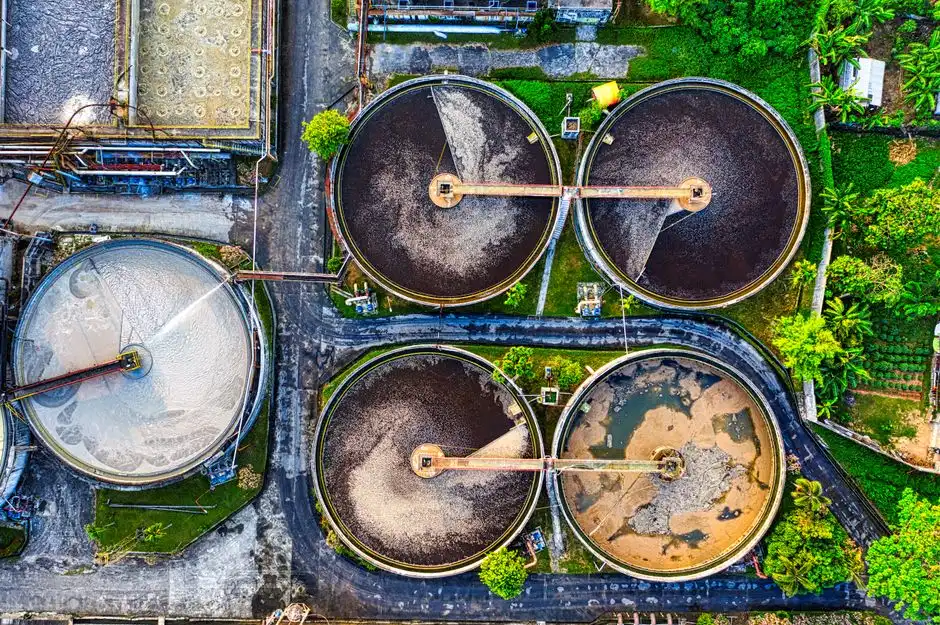
A defensible treatment train normally progresses from characterization to equalization, screening or solids removal, DAF where applicable, biological COD reduction, and final polishing or reuse. Each unit needs a defined role; adding equipment because a generic process diagram contains it does not establish a sound design.
Equalization handles flow and concentration peaks before treatment. Mechanical screening protects downstream pumps and biological systems from coarse material, but it is not the principal COD-removal step. Where wastewater contains suspended solids, oil and grease, FOG or colloidal material, an industrial DAF pretreatment system may provide front-end separation before biological treatment. The manufacturer’s catalogue gives a capacity range of 4–300 m³/h and automatic skimming; those are catalogue specifications, not a Copenhagen site selection or compliance claim.
The BIOFOS case shows why FOG deserves explicit attention. Fat accumulated in primary clarifiers, produced odour, coated sensors and machines, and slowed operations, according to Kemira’s account. For an industrial plant, that supports early oil and grease characterization, protected sampling, and a defined solids-removal and sludge route. A mechanical bar screen can protect downstream equipment where the waste contains screenings, but soluble COD and emulsified oils require a different treatment role.
| Unit | Primary role | Sizing inputs | Main operating issue |
|---|---|---|---|
| Equalization | Buffer flow and load peaks | Average and peak flow; production cycles | Mixing, residence time, odor and sludge accumulation |
| Screening | Protect pumps and downstream processes | Solid character and peak flow | Screenings removal and manual intervention |
| DAF | Remove recoverable solids, FOG and oil where applicable | Peak flow, solids, oil and grease, floc performance | Chemical demand, skimming and sludge concentration |
| Biological treatment | Reduce biodegradable COD | Organic load, biodegradability, nutrients, pH and toxicity | Sludge, aeration and process stability |
| Final polishing | Meet discharge or reuse requirements | Permit or reuse specification | Filtration, membrane maintenance and monitoring |
Chemical dosing should respond to changing demand rather than remain a fixed-volume assumption. In the BIOFOS case, raw-wastewater load is higher during the day than at night and varies through the week and seasons; Kemira identifies chemical dosing as an important control (Kemira, Sustainability steers innovation at Copenhagen’s wastewater treatment plants). An automatic chemical dosing system should therefore be specified around measured flow, contaminant loading and defined control responses.
Choose biological treatment and membrane polishing for the required outcome
Biological treatment is the central COD-reduction step when the organic load is sufficiently biodegradable, but pH, nutrients, temperature, toxicity and flow stability determine whether that step remains controllable. A manufacturer should establish those inputs before deciding between conventional activated sludge, an MBR route or another biological configuration.
The manufacturer-published integrated MBR membrane bioreactor combines activated sludge with submerged PVDF membrane filtration below 1 μm. Its catalogue specifies a 60% smaller footprint than conventional systems and a capacity range of 10–2,000 m³/day. These are manufacturer-published specifications, not discharge guarantees for Copenhagen. Actual compliance depends on the influent, process design, operation and permit.
For a plant considering an MBR, the value proposition is not simply “more filtration.” The route can consolidate biological treatment and solids separation, but it introduces membrane maintenance, aeration, energy and cleaning requirements. The procurement package must compare those consequences with a conventional biological route rather than compare unsupported COD-removal percentages. A detailed comparison of MBR and conventional activated sludge can support that engineering review.
Solids management must appear in the conceptual design from the beginning. Pretreatment creates recoverable solids, while biological treatment creates excess sludge. A plate-and-frame filter press may be included where the sludge characteristics and required destination support it; capacity, cake handling and disposal must be verified separately.
| Decision point | Conventional biological route | MBR route |
|---|---|---|
| Primary purpose | Biodegradable COD reduction with separate solids separation | Integrated activated-sludge treatment and membrane separation |
| Key site inputs | Biodegradability, nutrients, pH, temperature, toxicity and sludge handling | Same inputs plus membrane-loading, cleaning and solids-retention requirements |
| Principal operating concerns | Biomass control, aeration, settling and sludge separation | Biomass control, aeration, membrane condition, cleaning and permeate quality |
| Published capacity information | Not established by the supplied research | 10–2,000 m³/day, manufacturer catalogue |
| Compliance evidence | Site-specific pilot and acceptance testing | Site-specific pilot and acceptance testing |
BIOFOS provides a process-control precedent, not an industrial-equipment guarantee. The utility changed aeration levels, varied the biological population degrading organic compounds and adjusted sludge concentration to reduce nitrous-oxide emissions (Kemira, Sustainability steers innovation at Copenhagen’s wastewater treatment plants). The transferable lesson is to design aeration, biomass and sludge control as one operating strategy.
Compare the main equipment routes by decision criteria
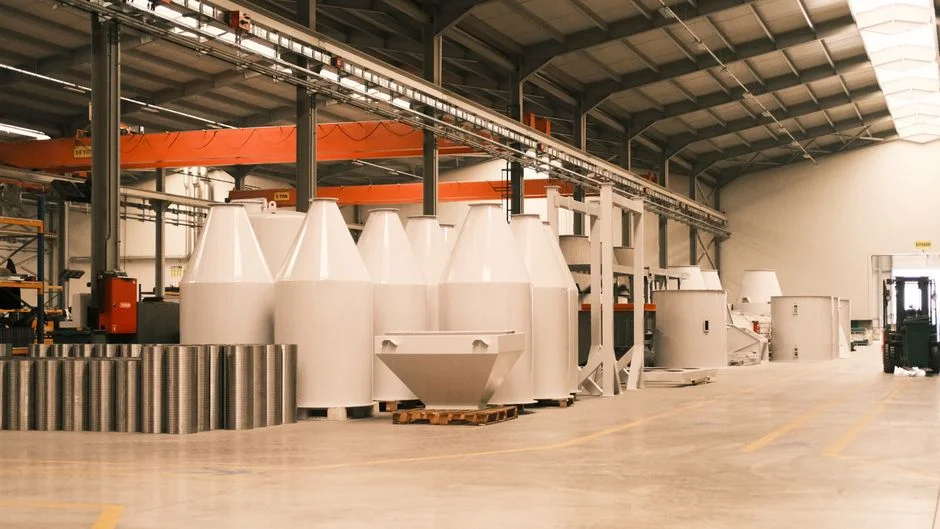
The correct route is determined by contaminant role, available wastewater data, permit requirements, operating burden and reuse objectives—not by generic COD-removal claims. The supplied research does not provide comparable COD-removal performance values for DAF, biological treatment and MBR, so procurement should not rank them using invented percentages.
DAF is a front-end separator for recoverable solids, FOG and oil where the wastewater characteristics support flotation. MBR is an integrated biological and membrane route. Electrocoagulation remains a case-specific option: in the MDPI AG study, its operation was controlled by anode materials, current density, initial pH and additives, and the wastewater had an initial COD of 424.29 mg/L. That result cannot be converted into a generic Copenhagen design.
| Route | Target role | Inputs required | Operational issue | Evidence for sizing |
|---|---|---|---|---|
| DAF | Remove separable solids, FOG and oil before biological treatment | Peak flow, solids, oil and grease, particle characteristics | Chemical conditioning, skumming and sludge removal | 4–300 m³/h manufacturer catalogue range; site pilot and peak-flow review |
| Biological treatment | Reduce biodegradable COD | Organic load, biodegradability, pH, nutrients, temperature and toxicity | Aeration, biomass, sludge and process stability | Site characterization and relevant biological validation |
| MBR | Combine biological treatment with membrane solids separation | All biological inputs plus membrane-loading and cleaning requirements | Membrane maintenance, aeration and sludge concentration | 10–2,000 m³/day manufacturer catalogue range; site-specific validation |
| Electrocoagulation | Evaluate for a defined wastewater matrix | COD, electrode materials, current density, pH and additives | Electrode consumption, pH control and residues | Matrix-specific study or pilot; no transferable generic guarantee |
Use a simple screening rule: select a route only when its purpose in the overall train is clear and the available wastewater data support pilot testing or performance validation. For DAF, calculating DAF capacity from peak flow and loads explains why nominal treatment flow alone is insufficient.
Both published ranges also trigger a design review rather than automatic selection. The DAF catalogue reaches 300 m³/h, while the MBR catalogue reaches 2,000 m³/day. A site outside a standard configuration—or with peaks, wastewater variability or loads that challenge the catalogue basis—needs engineering review and site-specific validation.
Apply Copenhagen’s operational lessons to an industrial plant
BIOFOS manages wastewater from 1.2 million people through the Lynetten, Avedøre and Damhusåen plants, according to Kemira’s commercial account. That municipal scale is not an analogue for an individual factory, but it provides relevant lessons about control rather than equipment capacity.
The transferable practices are aeration control, biological-carbon management, sludge optimization, chemical dosing and real-time process control. BIOFOS changed aeration levels, adjusted the biological population and managed sludge concentration to reduce nitrous-oxide emissions; it also treats chemical dosing as an important control because Copenhagen’s raw-wastewater load changes by time of day, week and season (Kemira, Sustainability steers innovation at Copenhagen’s wastewater treatment plants). For industrial treatment, the equivalents are measured dissolved oxygen, load-responsive aeration, controlled carbon addition where needed, and reagents linked to actual demand.
The BIOFOS pre-precipitation example is also relevant. Working with Kemira from 2019, the utility used pre-precipitation to capture more sludge in the primary step, send more to digestion and reduce secondary-treatment load (Kemira, Sustainability steers innovation at Copenhagen’s wastewater treatment plants). The industrial lesson is not to copy municipal chemistry, but to evaluate upstream solids capture against sludge destination, downstream load and operating cost.
Energy belongs in the lifecycle comparison. BIOFOS was already energy positive and continued to pursue incremental efficiency gains, as reported by Kemira. An industrial proposal should therefore disclose aeration demand, pumping, membrane cleaning, chemical use and dewatering energy rather than treating energy as a post-award issue. The BIOFOS account is a commercial utility source, not independent proof of any particular equipment product.
Build the procurement and pilot-test package
A procurement-ready workflow has seven steps: define the permit target; collect seasonal flow and load data; characterize contaminants; select pretreatment; validate biological performance; verify polishing; and freeze the acceptance criteria.
The first step fixes what the equipment must achieve: sewer pretreatment conditions, direct-discharge limits or a reuse specification. The second establishes average, peak and production-linked loads. The third determines whether the contaminants are soluble, biodegradable, particulate, oily or toxic. Pretreatment is selected only after those inputs are understood; biological performance is then validated; polishing is checked against the receiving requirement; and acceptance criteria are frozen before commercial comparison.
| Package item | Minimum content required from suppliers | Why it matters |
|---|---|---|
| Design basis | Design flow, peak-load assumptions and COD loading basis | Prevents comparison of unlike proposals |
| Process performance | Measurable influent and effluent acceptance criteria | Connects guarantees to the permit or reuse target |
| Residuals | Sludge yield, characteristics and proposed destination | Includes downstream treatment and disposal |
| Operating resources | Reagent consumption, aeration, maintenance and cleaning assumptions | Defines the long-term operating burden |
| Controls | Instrumentation, control philosophy, alarms and data logging | Supports stable operation and verification |
| Installation | Footprint, utilities, civil interfaces and delivery requirements | Defines whether the equipment fits the plant |
| Acceptance test | Test protocol, sampling method and acceptance duration | Creates an auditable compliance decision |
Pilot or side-stream testing is appropriate where variability, toxicity, FOG or unknown composition could make a generic guarantee unreliable. Operational controls should cover COD, flow, pH, dissolved oxygen, nutrients where relevant, sludge solids and reagent use. The high-COD trade-waste treatment workflow supports the sequence, but the research contains no Copenhagen equipment prices, delivery lead times or universal performance guarantees; qualified suppliers must provide those commercially.
Frequently Asked Questions
How do manufacturers in Copenhagen, Denmark treat trade waste and high-COD effluent in 2026?
They should begin with the Danish discharge permit and sewer authority requirements, then characterize the waste and construct a staged train: equalization, solids and FOG removal where needed, biological COD reduction and final polishing or reuse. Equipment selection follows the measured waste profile, COD loading basis and permit conditions. The research does not establish a universal Copenhagen COD limit.
What information is needed before sizing DAF or MBR capacity?
Require average and peak flow, COD load, suspended solids, oil and grease, biodegradability and permit conditions. The manufacturer’s published ranges—4–300 m³/h for DAF and 10–2,000 m³/day for MBR—can identify when engineering review is needed, but they cannot size a plant. Validate the selected route against site data and pilot or acceptance testing.
How much does industrial trade wastewater pretreatment cost in Copenhagen?
The supplied research contains no Copenhagen equipment-price data, so no defensible price can be stated. Request itemized quotations covering equipment, civil works, installation, controls, chemicals, sludge handling, commissioning and long-term operation. Compare alternatives using the same influent basis, acceptance criteria and lifecycle assumptions.
How should a supplier be selected without relying on an unsupported performance guarantee?
Require a wastewater-specific proposal stating design assumptions, measurable acceptance criteria, reference projects, control philosophy and documented O&M requirements. Pilot-test variable or chemically uncertain waste where needed. An equipment datasheet cannot replace site-specific permit review, representative characterization and compliance verification.